:root{
–ink:#2B2E33;
–ink-soft:#5B5F66;
–paper:#F3F2ED;
–paper-raised:#FFFFFF;
–line:#DEDCD3;
–sage:#6B7F76;
–sage-dark:#4F5F58;
–sage-bg:#EAEEEC;
–clay:#A85D45;
–clay-bg:#F3E7E2;
–water:#3E6E8E;
–water-bg:#E6EEF2;
}
*{ box-sizing:border-box; }
body{ margin:0; background:var(–paper); color:var(–ink); font-family:’Inter’,-apple-system,sans-serif; font-size:16.5px; line-height:1.72; }
.wrap{ max-width:820px; margin:0 auto; padding:0 22px 50px; }
h1,h2,h3{ font-family:’Fraunces’,Georgia,serif; color:var(–ink); margin:0; }
.mono{ font-family:’JetBrains Mono’,monospace; }
a{ color:var(–sage-dark); }
p{ margin:0 0 15px; }
.header-band{ background:var(–ink); color:var(–paper); padding:44px 0 30px; }
.header-band .eyebrow{ font-family:’JetBrains Mono’,monospace; font-size:11.5px; letter-spacing:0.18em; text-transform:uppercase; color:#B7C4BE; margin-bottom:14px; }
.header-band h1{ font-size:clamp(27px,5vw,42px); font-weight:600; line-height:1.2; color:#fff; margin-bottom:14px; max-width:680px; }
.header-band p.lede{ color:#C7C9C6; font-size:16.5px; max-width:640px; margin-bottom:0; }
.grout-strip{ height:8px; display:flex; }
.grout-strip span{ flex:1; border-right:2px solid var(–paper); }
.grout-strip span:last-child{ border-right:none; }
h2{ font-size:26px; font-weight:600; margin:48px 0 14px; padding-bottom:10px; border-bottom:2px solid var(–ink); }
h3{ font-size:19px; font-weight:600; margin:24px 0 8px; }
.quick-answer{ background:var(–water-bg); border-left:4px solid var(–water); border-radius:4px; padding:16px 18px; margin:24px 0; }
.quick-answer p{ margin:0; font-size:15.5px; color:#294456; }
.quick-answer p strong{ color:var(–ink); }
.tg-tagrow { display: flex; gap: 8px; flex-wrap: wrap; margin: 16px 0 8px; }
.tg-tag { font-family: ‘JetBrains Mono’, monospace; font-size: 11px; letter-spacing: 0.06em; text-transform: uppercase; border: 1px solid var(–ink); color: var(–ink); padding: 4px 9px; border-radius: 3px; }
.scale-box{ margin:22px 0 8px; padding:22px 20px 18px; background:var(–paper-raised); border:1px solid var(–line); border-radius:8px; }
.scale-row{ display:flex; align-items:center; gap:14px; margin-bottom:14px; }
.scale-row:last-child{ margin-bottom:0; }
.scale-label{ width:170px; flex-shrink:0; font-size:14px; font-weight:600; }
.scale-track{ flex:1; height:14px; background:var(–sage-bg); border-radius:7px; overflow:hidden; }
.scale-fill{ height:100%; background:var(–water); border-radius:7px; }
.scale-val{ width:90px; flex-shrink:0; font-family:’JetBrains Mono’,monospace; font-size:12px; color:var(–ink-soft); text-align:right; }
.scale-note{ font-family:’JetBrains Mono’,monospace; font-size:11.5px; color:var(–ink-soft); margin-top:14px; }
.correction-box{ background:var(–clay-bg); border-left:4px solid var(–clay); border-radius:4px; padding:16px 18px; margin:22px 0; }
.correction-box p{ margin:0; font-size:15px; color:#5C3122; }
.correction-box p.lbl{ font-family:’JetBrains Mono’,monospace; font-size:11px; text-transform:uppercase; letter-spacing:0.06em; font-weight:700; color:var(–clay); margin:0 0 8px; }
/* ———- plant cards ———- */
.plant-block{ margin-top:32px; padding-top:20px; border-top:1px dashed var(–line); }
.plant-block:first-of-type{ margin-top:20px; padding-top:0; border-top:none; }
.plant-head{ display:flex; align-items:baseline; gap:12px; margin-bottom:4px; }
.plant-num{ font-family:’JetBrains Mono’,monospace; font-size:13px; color:var(–sage-dark); border:1px solid var(–sage-dark); border-radius:3px; padding:2px 7px; flex-shrink:0; }
.plant-block h3{ margin:0; }
.aquatic-tag{ display:inline-block; font-family:’JetBrains Mono’,monospace; font-size:10.5px; text-transform:uppercase; letter-spacing:0.05em; background:var(–water-bg); color:var(–water); padding:3px 8px; border-radius:3px; margin:6px 0 10px; }
.plant-specs{ font-family:’JetBrains Mono’,monospace; font-size:12px; color:var(–ink-soft); background:var(–paper-raised); border-left:3px solid var(–sage); padding:8px 12px; margin:10px 0 4px; }
.plant-specs span{ display:block; margin-bottom:2px; }
.plant-specs span:last-child{ margin-bottom:0; }
.tip-list{ display:flex; flex-direction:column; gap:10px; margin:18px 0; }
.tip-list .item{ display:flex; gap:12px; align-items:flex-start; }
.tip-list .dot{ width:8px; height:8px; border-radius:50%; background:var(–sage-dark); margin-top:8px; flex-shrink:0; }
.tip-list .txt strong{ display:block; font-size:15px; margin-bottom:2px; }
.tip-list .txt p{ margin:0; font-size:14.5px; color:var(–ink-soft); }
.mistake-list{ display:flex; flex-direction:column; gap:12px; margin:18px 0; }
.mistake-list .item{ display:flex; gap:14px; background:var(–paper-raised); border:1px solid var(–line); border-radius:6px; padding:14px 16px; }
.mistake-list .num{ font-family:’Fraunces’,serif; font-weight:600; font-size:22px; color:var(–clay); flex-shrink:0; line-height:1.3; }
.mistake-list .txt strong{ display:block; font-size:15.5px; margin-bottom:3px; }
.mistake-list .txt p{ margin:0; font-size:14.5px; color:var(–ink-soft); }
.table-wrap{ overflow-x:auto; border:1px solid var(–line); border-radius:6px; margin:16px 0; }
table.compare{ width:100%; border-collapse:collapse; font-size:14px; min-width:600px; }
table.compare th{ background:var(–ink); color:#fff; text-align:left; padding:10px 12px; font-family:’JetBrains Mono’,monospace; font-size:10px; letter-spacing:0.04em; text-transform:uppercase; }
table.compare td{ padding:9px 12px; border-bottom:1px solid var(–line); }
table.compare tr:nth-child(even) td{ background:#FAFAF7; }
table.compare td:first-child{ font-weight:600; }
.faq-item{ border-top:1px solid var(–line); padding:18px 0; }
.faq-item:last-child{ border-bottom:1px solid var(–line); }
.faq-item .q{ font-family:’Fraunces’,serif; font-weight:600; font-size:17px; margin-bottom:6px; }
.faq-item .a{ font-size:15px; margin:0; color:var(–ink-soft); }
@media (max-width:600px){ .scale-label{ width:130px; } }
Backyard Wildlife Guide · Updated 2026
Plants That Attract Dragonflies
Dragonflies never actually feed on flowers, so “nectar-rich plants dragonflies love” isn’t quite the right idea. Here’s what genuinely draws them in, backed by real research on how many mosquitoes they eat.
A lot of dragonfly-garden advice repeats the same line: plant nectar-rich flowers and dragonflies will show up to feed. There’s a problem with that claim. Dragonflies are strict carnivores at every life stage, adults and aquatic nymphs alike, and they never feed on nectar, pollen, or any part of a plant. What actually draws them in is water for egg-laying, sturdy stems for perching, and a steady supply of the small flying insects they hunt, which flowering plants attract in large numbers even though dragonflies themselves ignore the flowers.
This guide covers what the research actually says about how many mosquitoes a dragonfly eats, 12 plants worth growing for a genuine dragonfly habitat, and how to set up water and planting so they actually stick around.
Quick answer: dragonflies are drawn by water, sun, and perching structures, not flower nectar. Plant a mix of tall native perennials near a fish-free water feature, and you’ll draw in both the small insects dragonflies hunt and the dragonflies that come to hunt them.
Why Dragonflies Are Nature’s Best Mosquito Hunters
Dragonflies have been refining their hunting technique for roughly 300 million years, and it shows. A 2013 study tracking dragonflies in a flight enclosure found they successfully caught prey on about 95% of attempts, a hunting success rate that dwarfs most predators most people would call efficient.
Hunting success rate per attempt. Dragonfly figure from a 2013 flight-enclosure study; raptor figure is a commonly cited comparison point in the same research coverage.
Part of that success comes from how they hunt. Rather than chasing prey directly, dragonflies calculate an intercept course, predicting where their target will be and meeting it there, closer to how a guided system tracks a moving object than how most insects hunt.
Do Dragonflies Really Eat Hundreds of Mosquitoes?
The honest answer is more specific, and more interesting, than the headline version. A 2023 meta-analysis covering 485 effect sizes across 31 studies found that a single dragonfly or damselfly nymph eats an average of 40 mosquito larvae per day under experimental conditions, reducing the local larval population by roughly 45% per day in that setting. That’s a real, measured number, not a guess.
Adult dragonflies are harder to measure in the wild, since nobody’s counting individual mosquitoes caught mid-flight. Estimates commonly cited range from 30 to 100 mosquitoes per day, though the National Park Service has noted the real figure is likely closer to the lower end of that range rather than the more dramatic “hundreds” some sources repeat.
Worth knowing
Dragonflies genuinely help, but they’re not a complete mosquito solution on their own. Even the 40-larvae-per-day lab figure doesn’t come close to matching real-world mosquito breeding rates in a wet season. Treat a dragonfly-friendly garden as one layer of mosquito control, alongside removing standing water in gutters, buckets, and other containers, not a replacement for it.
12 Best Plants That Attract Dragonflies
None of these feed dragonflies directly. What they do is provide strong, upright stems for perching and draw in the small pollinating insects, gnats, flies, tiny moths, that dragonflies actually hunt. The last two on this list are true aquatic plants, and if you only add two things to a water feature, make it these.
Lavender

Compact, fragrant, and covered in small pollinating insects through early summer, which is the real draw for a hunting dragonfly. Its stiff flower spikes also double as a perch.
Bee Balm
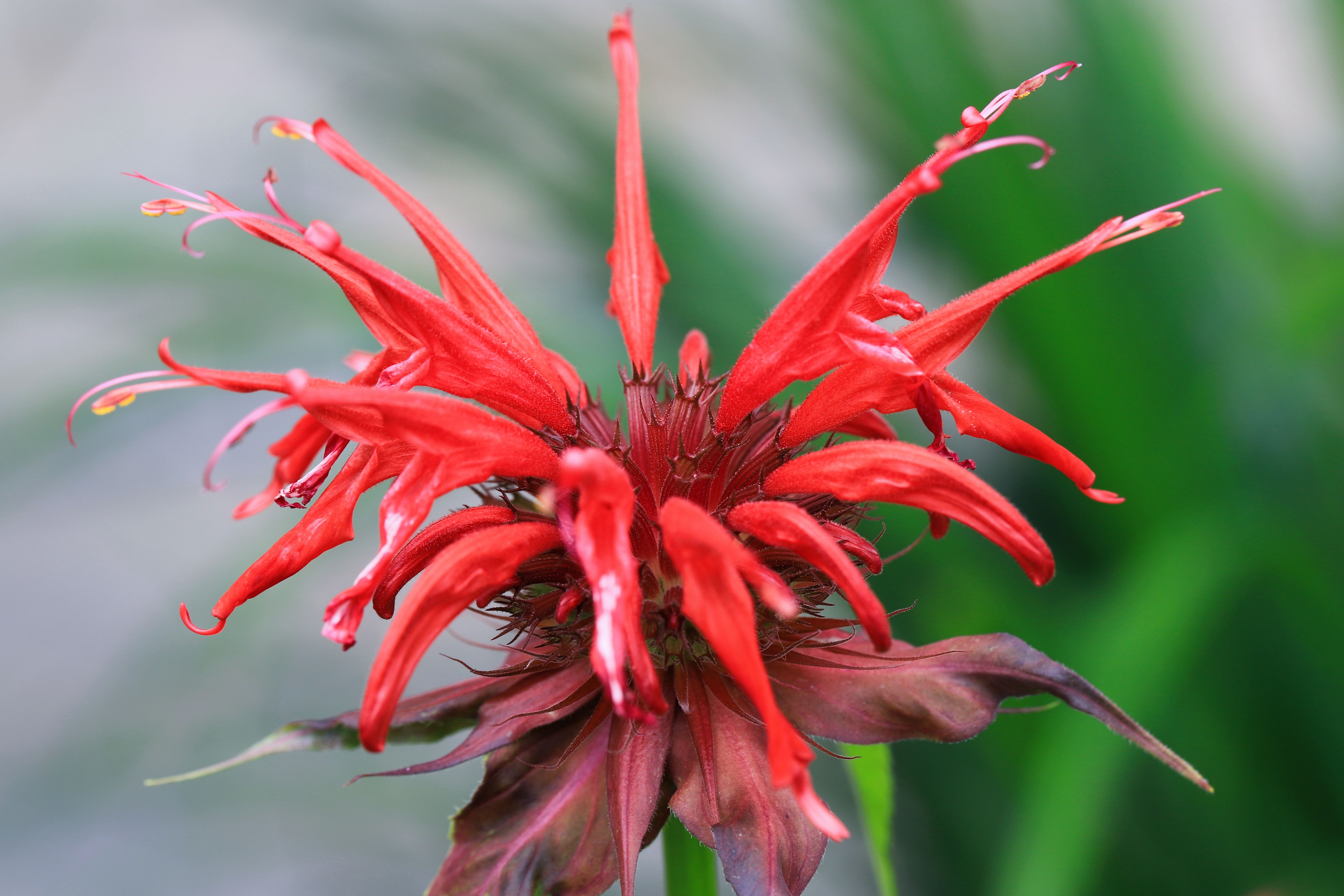
Bright red, pink, or purple blooms that pull in bees, small moths, and other pollinators from mid-summer through fall, all of it prey traffic a dragonfly will patrol.
Black-Eyed Susan
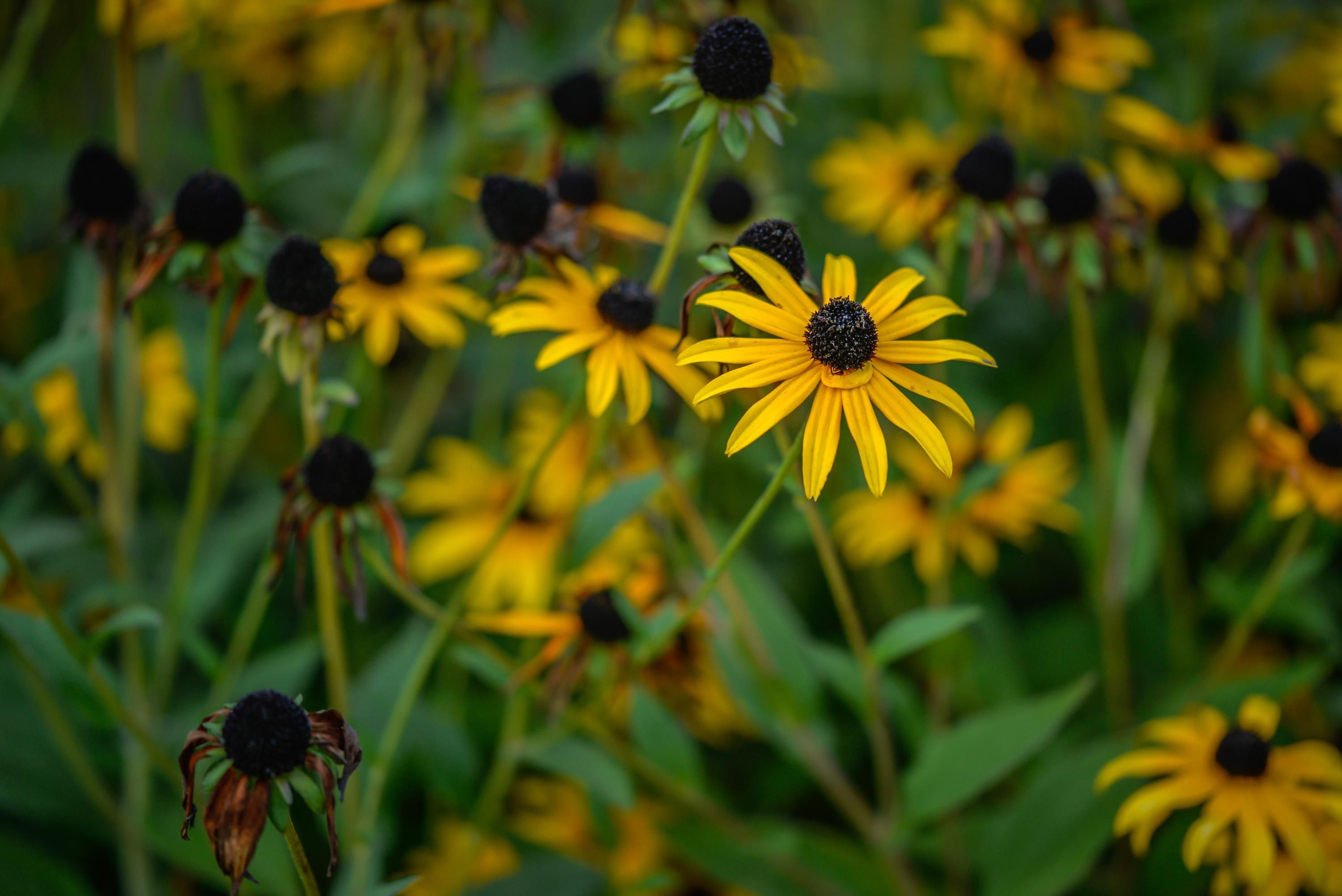
A long bloom window and sturdy stems make this a reliable, low-maintenance perch and pollinator draw most of the season.
Joe-Pye Weed

Tall and fluffy with pinkish-purple blooms, this one thrives in the same moist soil a garden pond’s edge often provides, and its height gives dragonflies a genuine vantage point.
Swamp Milkweed
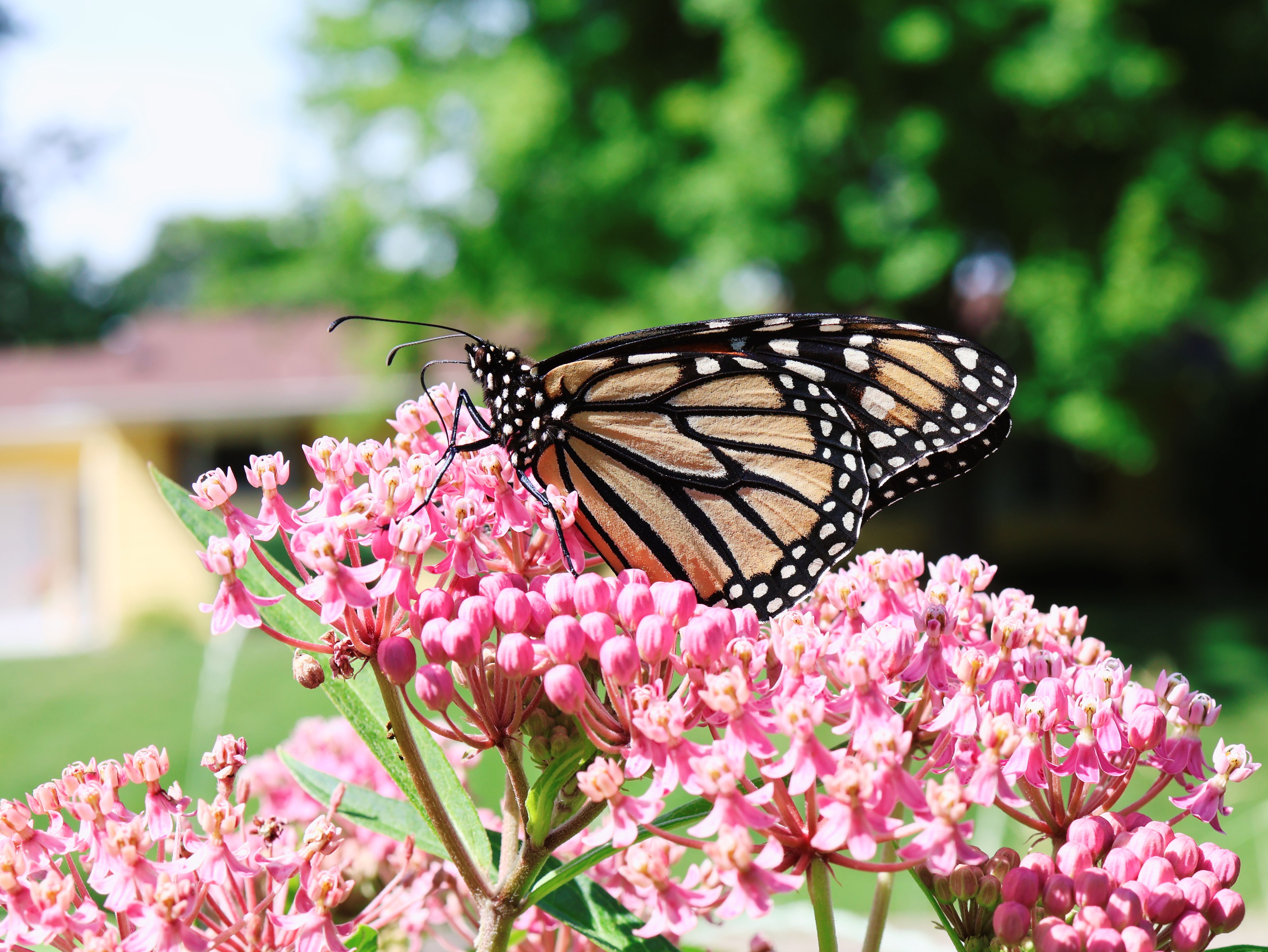
Built for damp, sunny spots, this one pulls double duty for a wildlife garden, monarch butterflies use it too, adding to the overall insect traffic near your water feature.
Yarrow

Flat-topped flower clusters are an easy landing pad, and yarrow tolerates dry spells well if your water feature is elsewhere in the yard.
Coneflower
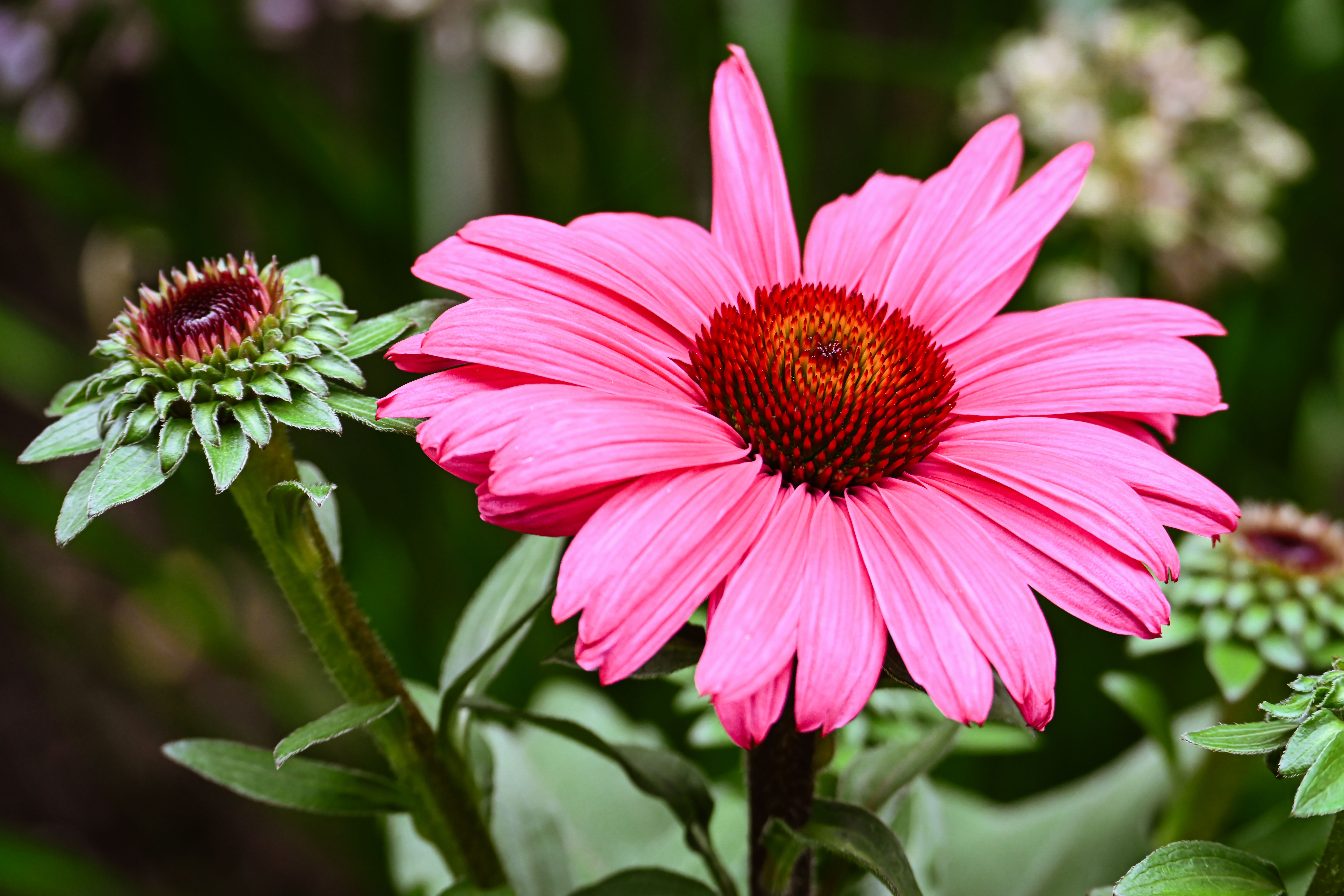
Flat-top
Drought and heat-tolerant with a sturdy central cone that makes an ideal dragonfly perch once the petals fade.
Goldenrod
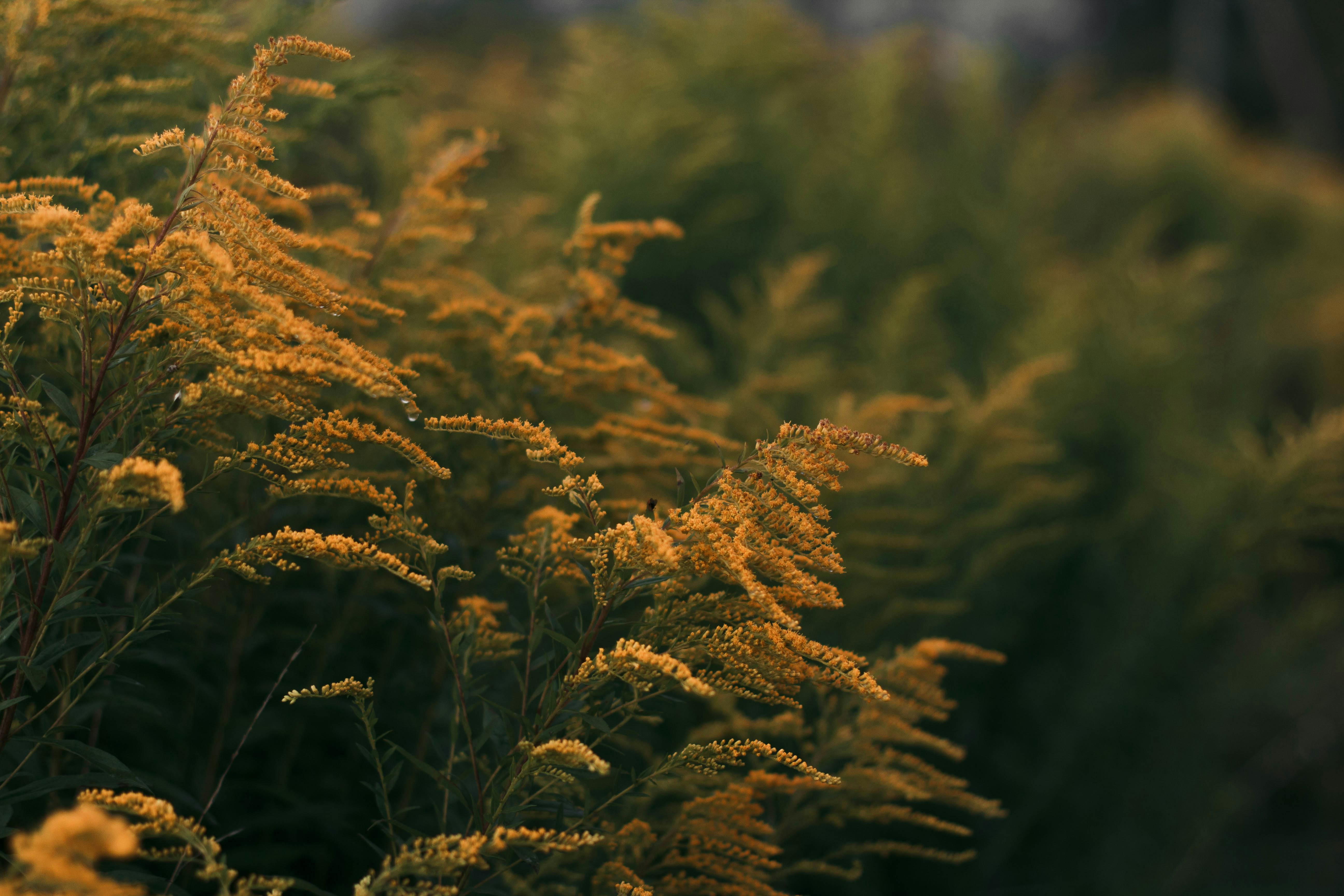
Blooms late in the season when many other flowers have finished, keeping prey insects (and by extension, dragonflies) around your garden longer into fall.
Blazing Star (Liatris)
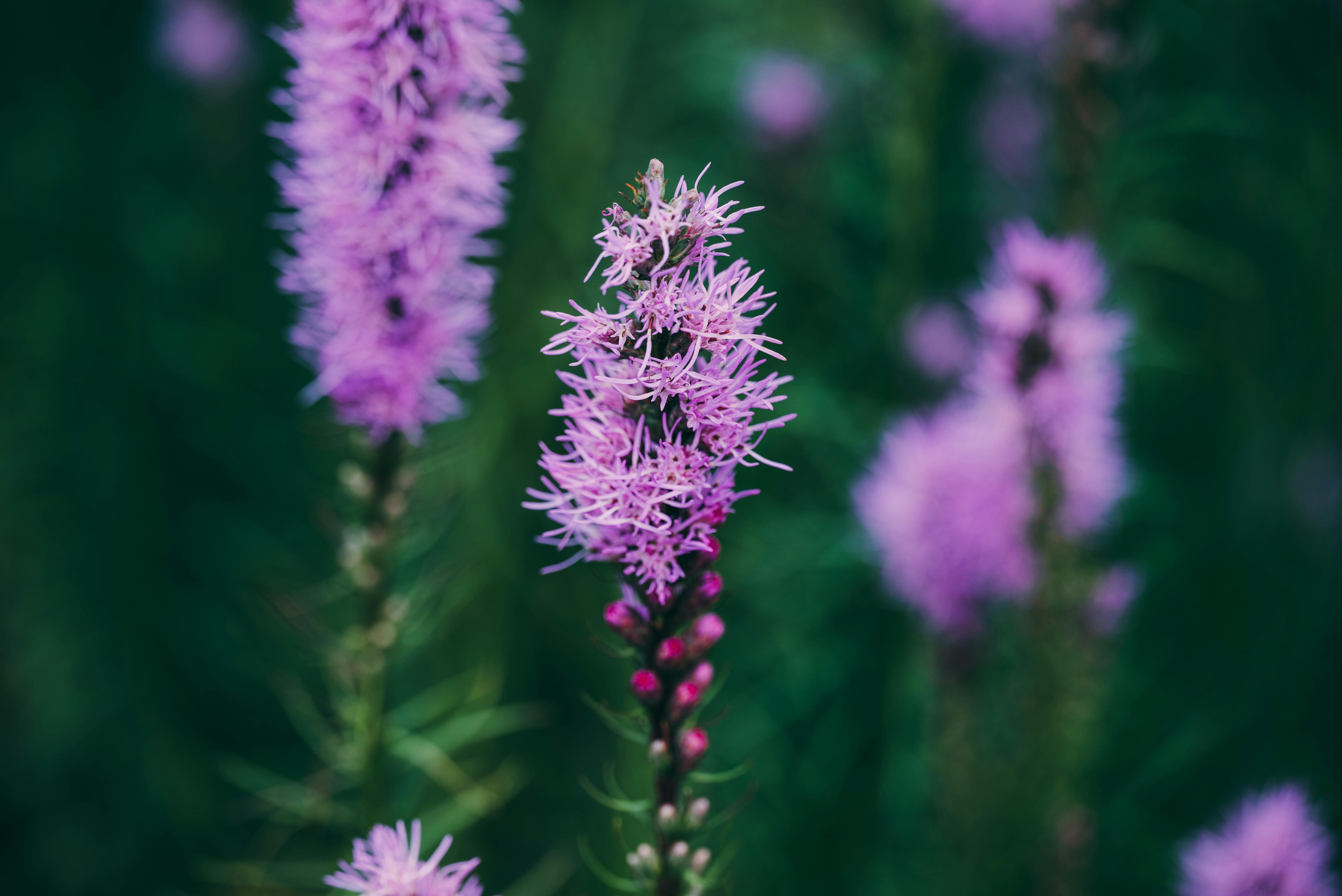
Tall purple spikes add real height to a border, and the vertical structure is exactly the kind of perch dragonflies favor while scanning for prey.
Aster
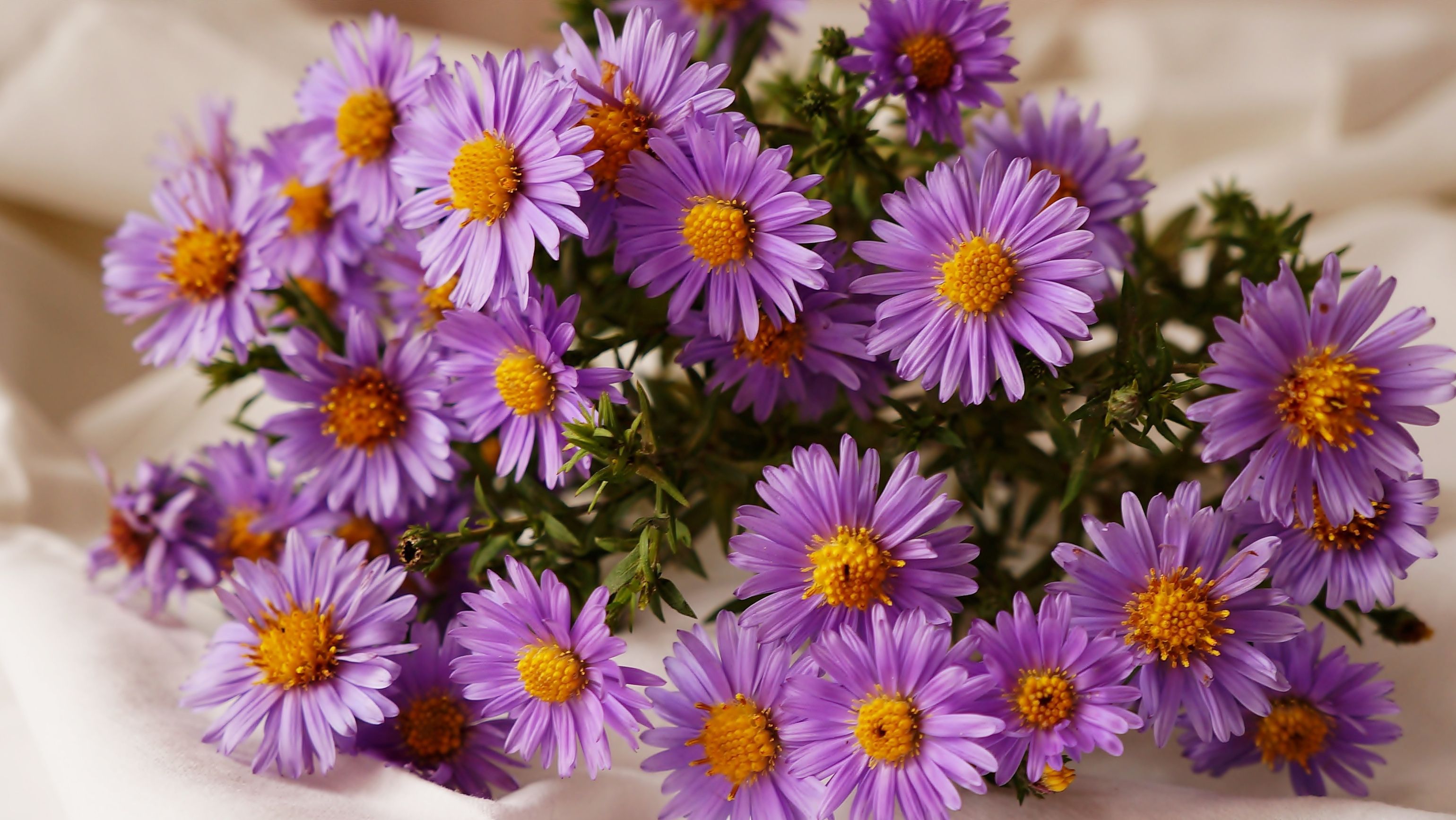
A fall-blooming source of pollen and nectar for other insects right as most of the garden is winding down, extending the prey supply into cooler weeks.
Pickerel Weed
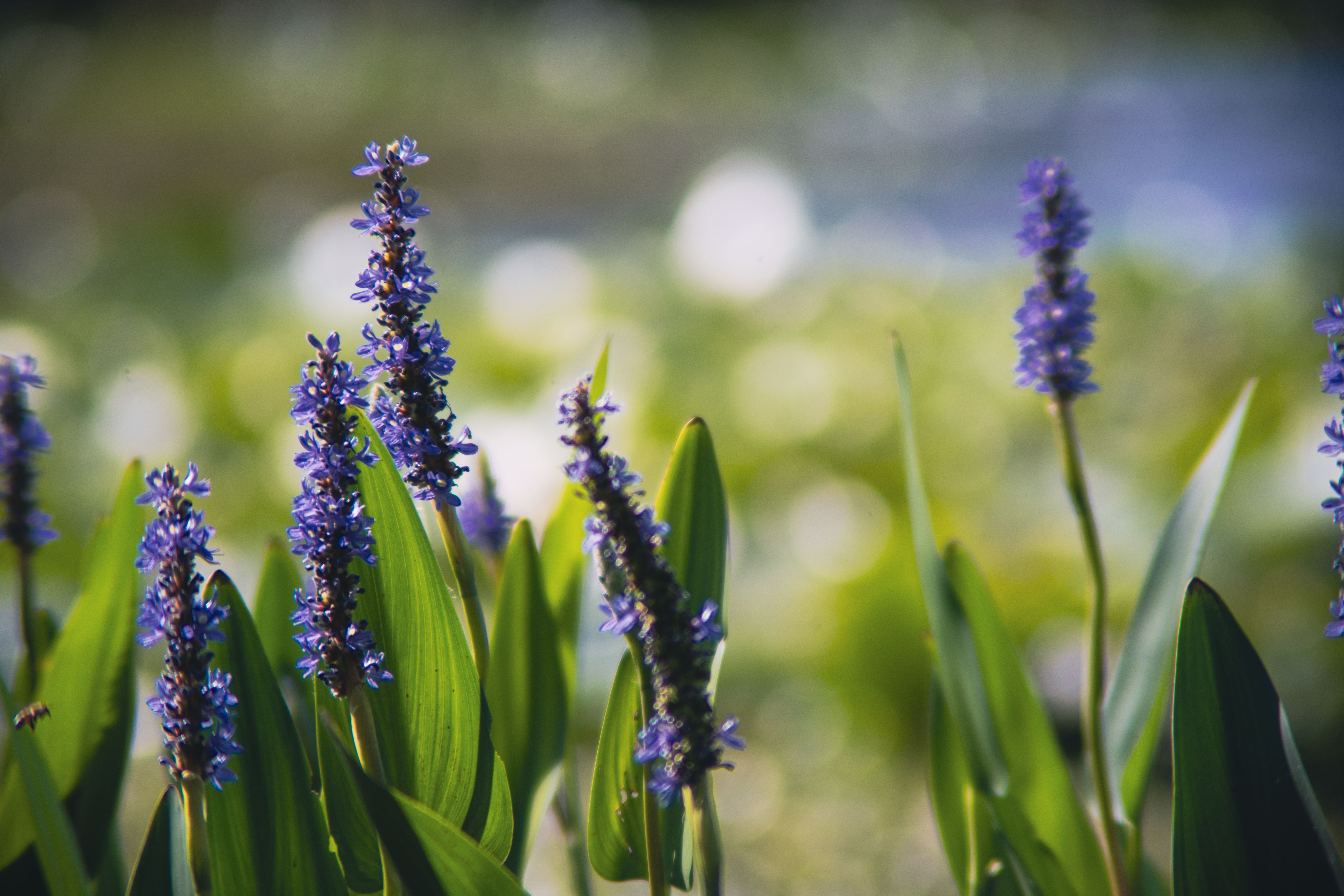
True aquatic plant
A native emergent pond plant with blue-purple flower spikes that grows directly in shallow water at a pond’s edge. This is exactly the kind of vegetation dragonflies use for egg-laying and for nymphs to climb out on when they emerge as adults, not just a flower nearby.
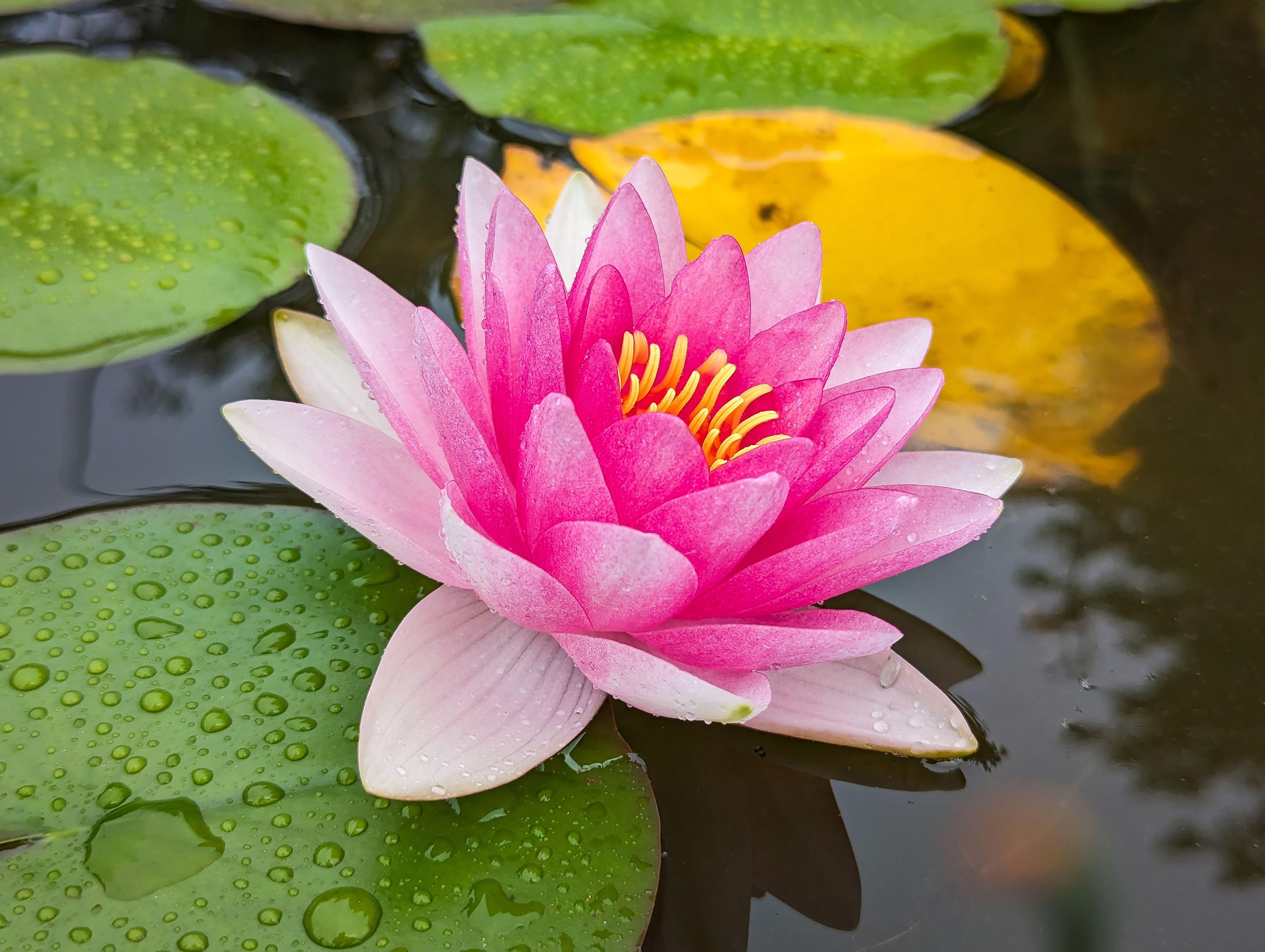
Water Lily
True aquatic plant
Floating pads give dragonflies a place to perch directly over open water, prime real estate for spotting prey and for nymphs to shelter beneath before they emerge.
How to Create a Dragonfly-Friendly Garden
No water source, no dragonflies, since they need it to lay eggs and for nymphs to develop. This matters more than any single plant on this list.
A mix of low groundcover, mid-height perennials, and tall spikes like Liatris gives dragonflies options for perching at different heights while scanning for prey.
Broad-spectrum sprays kill the small insects dragonflies hunt right along with the pests you’re targeting, which removes their food supply and can harm dragonflies directly.
Dragonflies are cold-blooded and rely on sun to stay active, so a shaded garden will see far less activity even with the right plants.
Clusters read as habitat. A single isolated plant is easy for a dragonfly to ignore.
Add Water Features to Attract More Dragonflies
A pond doesn’t need to be elaborate, shallow, sunny, and still is the formula. A few specific details matter more than people expect:
6 to 12 inches deep at the margin gives emergent plants like pickerel weed room to root and gives nymphs a spot to climb out when they’re ready to emerge as adults.
Ornamental pond fish like koi and goldfish readily eat dragonfly eggs and nymphs. A fish-free pond, or a pond with a plant-heavy area fish can’t easily access, supports a far larger dragonfly population.
Dragonflies patrol open surfaces to hunt and to lay eggs. A pond entirely choked with plants is nearly as unwelcoming as one with none.
Unlike mosquitoes, which also favor standing water, dragonfly nymphs need a permanent or semi-permanent water source, not one that dries up between rains.
Common Mistakes That Keep Dragonflies Away
This removes the prey insects dragonflies need and can harm the dragonflies themselves directly.
Koi and goldfish are effective predators of dragonfly eggs and nymphs, which defeats the purpose of the pond.
Leaving some structure standing through fall keeps perching spots and shelter available longer.
Flowers help by attracting prey insects, not by feeding dragonflies directly. Water and perching structure matter just as much.
Dragonfly nymphs need consistent water to complete their development, which can take anywhere from weeks to a few years depending on species.
Benefits of Attracting Dragonflies to Your Garden
Beyond the mosquito angle, dragonflies are a reasonable sign of a healthy water feature, since their nymphs are sensitive to poor water quality and won’t establish in a badly polluted pond. They don’t bite or sting people in any meaningful way, despite old nicknames suggesting otherwise, and watching them hunt is genuinely one of the more entertaining things happening in a backyard on a summer evening. A garden that supports dragonflies is also, almost by definition, supporting the broader insect population they depend on, which usually means a healthier pollinator presence overall.
Dragonflies vs Mosquitoes: Nature’s Pest Control
| Factor | Dragonfly Nymphs | Adult Dragonflies |
|---|---|---|
| Hunting ground | Underwater | In flight |
| Prey | Mosquito larvae, small aquatic life | Flying mosquitoes, gnats, flies, moths |
| Documented rate | ~40 larvae/day (lab conditions) | Estimated 30-100/day, real-world figure likely lower |
| Real-world impact | Meaningful in a small, contained pond | Helpful, not a standalone solution |
The most effective approach pairs both: a dragonfly-friendly pond that supports nymphs through their aquatic stage, and eliminating other standing water around the property (gutters, plant saucers, unused containers) so mosquitoes have fewer places to breed in the first place.
Best Companion Plants for Pollinator Gardens
Everything on this list already doubles as a solid pollinator planting, which is really the point. Bee balm and coneflower draw bees directly, swamp milkweed supports monarch butterflies, and the overlapping bloom times across lavender, black-eyed susan, goldenrod, and aster keep a steady supply of flowering plants, and the insects they attract, from spring through fall. Building a dragonfly garden and a general pollinator garden turns out to be nearly the same project, with a pond as the one addition that’s specific to dragonflies.
Frequently Asked Questions About Dragonflies
Do dragonflies really eat hundreds of mosquitoes?
Sometimes, but the more reliable figure is lower. Research puts nymphs at roughly 40 mosquito larvae per day under lab conditions, while adult dragonflies are estimated at 30 to 100 mosquitoes daily, with real-world numbers likely closer to the lower end.
How many mosquitoes can one dragonfly eat?
A dragonfly nymph eats around 40 mosquito larvae per day on average in studied conditions. An adult dragonfly is estimated to eat 30 to 100 mosquitoes a day, though this is harder to measure precisely in the wild.
What plants attract dragonflies?
Tall, sturdy native perennials like bee balm, coneflower, and blazing star provide perching spots and draw in the small insects dragonflies hunt. True aquatic plants like pickerel weed and water lily matter even more, since they’re part of the actual breeding habitat.
How do you attract dragonflies naturally?
Add a shallow, sunny water feature, plant a mix of native flowering perennials nearby, skip pesticides entirely, and avoid stocking the pond with fish that prey on dragonfly eggs and nymphs.
What flowers do dragonflies like?
Dragonflies don’t feed on flowers at all, they’re strict carnivores. They’re drawn to flowering plants indirectly, because those plants attract the small insects dragonflies hunt, and because sturdy flower stems make good perches.
Can dragonflies reduce mosquito populations?
Yes, meaningfully in a small, contained pond, but they’re not a complete solution on their own. Pair a dragonfly-friendly water feature with removing other standing water sources around the property for the best results.
Are dragonflies good for gardens?
Yes. They help control mosquitoes and other small flying pests, don’t damage plants, and don’t pose any real risk to people or pets.
How do I make my backyard attractive to dragonflies?
Add a shallow, sunny, fish-free (or mostly fish-free) water feature, plant a layered mix of native perennials nearby, and leave some open water surface for them to patrol.
What is the best plant for attracting dragonflies?
Pickerel weed, since it’s a true aquatic plant that grows directly in a pond’s shallow margin and doubles as breeding habitat, not just a nearby flower.
Do dragonflies lay eggs in gardens?
Only if there’s a water source. Dragonflies lay eggs in or near still water, on emergent plants or directly on the water’s surface, so a garden without a pond or similar feature won’t see egg-laying regardless of what’s planted.
Leave a Reply