Welcome to WordPress. This is your first post. Edit or delete it, then start writing!
Author: iqbalumer989@gmail.com
-
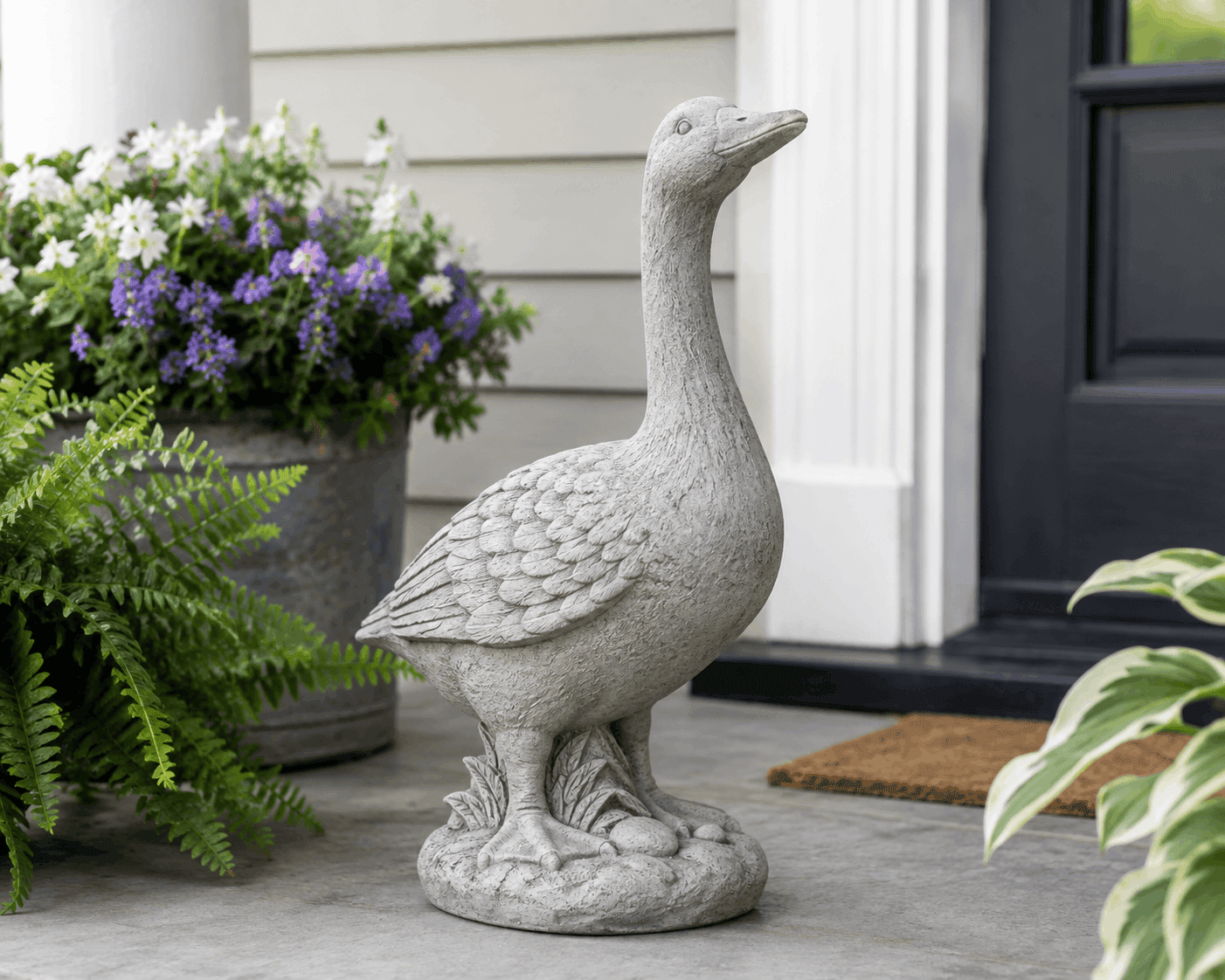
What Is a Porch Goose? The Complete Guide to the Trend, History, and Best Statues
.pg-root{
–ink:#2B2E33;
–ink-soft:#5B5F66;
–paper:#F3F2ED;
–paper-raised:#FFFFFF;
–line:#DEDCD3;
–sage:#6B7F76;
–sage-dark:#4F5F58;
–sage-bg:#EAEEEC;
–clay:#A85D45;
–clay-bg:#F3E7E2;
–water:#3E6E8E;
–water-bg:#E6EEF2;
}
.pg-root *{ box-sizing:border-box; }
.pg-root{ margin:0; background:var(–paper); color:var(–ink); font-family:’Inter’,-apple-system,sans-serif; font-size:16.5px; line-height:1.72; }
.pg-wrap{ max-width:820px; margin:0 auto; padding:0 22px 50px; }
.pg-root h1,.pg-root h2,.pg-root h3{ font-family:’Fraunces’,Georgia,serif; color:var(–ink); margin:0; }
.pg-root a{ color:var(–sage-dark); }
.pg-root p{ margin:0 0 15px; }.pg-header-band{ background:var(–ink); color:var(–paper); padding:44px 0 30px; }
.pg-header-band .pg-eyebrow{ font-family:’JetBrains Mono’,monospace; font-size:11.5px; letter-spacing:0.18em; text-transform:uppercase; color:#B7C4BE; margin-bottom:14px; }
.pg-header-band h1{ font-size:clamp(24px,4.4vw,38px); font-weight:600; line-height:1.24; color:#fff; margin-bottom:14px; max-width:680px; }
.pg-header-band p.pg-lede{ color:#C7C9C6; font-size:16.5px; max-width:640px; margin-bottom:0; }
.pg-grout-strip{ height:8px; display:flex; }
.pg-grout-strip span{ flex:1; border-right:2px solid var(–paper); }
.pg-grout-strip span:last-child{ border-right:none; }.pg-root h2{ font-size:25px; font-weight:600; margin:48px 0 14px; padding-bottom:10px; border-bottom:2px solid var(–ink); }
.pg-root h3{ font-size:19px; font-weight:600; margin:24px 0 8px; }.pg-quick-answer{ background:var(–water-bg); border-left:4px solid var(–water); border-radius:4px; padding:16px 18px; margin:24px 0; }
.pg-quick-answer p{ margin:0; font-size:15.5px; color:#294456; }
.pg-quick-answer p+p{ margin-top:10px; }
.pg-quick-answer p strong{ color:var(–ink); }.pg-tagrow{ display:flex; gap:8px; flex-wrap:wrap; margin:16px 0 8px; }
.pg-tag{ font-family:’JetBrains Mono’,monospace; font-size:11px; letter-spacing:0.06em; text-transform:uppercase; border:1px solid var(–ink); color:var(–ink); padding:4px 9px; border-radius:3px; }.pg-idea-placeholder{ width:100%; height:130px; border-radius:6px; margin:14px 0; border:1px dashed var(–water); background:var(–water-bg); display:flex; align-items:center; justify-content:center; padding:12px; text-align:center; }
.pg-idea-placeholder span{ font-family:’JetBrains Mono’,monospace; font-size:11.5px; color:#294456; }.pg-timeline{ margin:20px 0; }
.pg-timeline-row{ display:flex; gap:16px; margin-bottom:18px; }
.pg-timeline-row:last-child{ margin-bottom:0; }
.pg-timeline-year{ font-family:’JetBrains Mono’,monospace; font-weight:600; font-size:13px; color:var(–clay); width:90px; flex-shrink:0; padding-top:2px; }
.pg-timeline-body{ flex:1; border-left:2px solid var(–line); padding-left:16px; }
.pg-timeline-body strong{ display:block; font-size:15.5px; margin-bottom:3px; }
.pg-timeline-body p{ margin:0; font-size:14.5px; color:var(–ink-soft); }.pg-table-wrap{ overflow-x:auto; border:1px solid var(–line); border-radius:6px; margin:16px 0; }
.pg-table{ width:100%; border-collapse:collapse; font-size:14px; min-width:600px; }
.pg-table th{ background:var(–ink); color:#fff; text-align:left; padding:10px 12px; font-family:’JetBrains Mono’,monospace; font-size:10px; letter-spacing:0.04em; text-transform:uppercase; }
.pg-table td{ padding:9px 12px; border-bottom:1px solid var(–line); }
.pg-table tr:nth-child(even) td{ background:#FAFAF7; }
.pg-table td:first-child{ font-weight:600; }.pg-tip-list{ display:flex; flex-direction:column; gap:10px; margin:18px 0; }
.pg-tip-list .item{ display:flex; gap:12px; align-items:flex-start; }
.pg-tip-list .dot{ width:8px; height:8px; border-radius:50%; background:var(–sage-dark); margin-top:8px; flex-shrink:0; }
.pg-tip-list .txt strong{ display:block; font-size:15px; margin-bottom:2px; }
.pg-tip-list .txt p{ margin:0; font-size:14.5px; color:var(–ink-soft); }.pg-mistake-list{ display:flex; flex-direction:column; gap:12px; margin:18px 0; }
.pg-mistake-list .item{ display:flex; gap:14px; background:var(–paper-raised); border:1px solid var(–line); border-radius:6px; padding:14px 16px; }
.pg-mistake-list .num{ font-family:’Fraunces’,serif; font-weight:600; font-size:22px; color:var(–clay); flex-shrink:0; line-height:1.3; }
.pg-mistake-list .txt strong{ display:block; font-size:15.5px; margin-bottom:3px; }
.pg-mistake-list .txt p{ margin:0; font-size:14.5px; color:var(–ink-soft); }.pg-group-label{ font-family:’JetBrains Mono’,monospace; font-size:12px; letter-spacing:0.1em; text-transform:uppercase; color:var(–water); background:var(–water-bg); display:inline-block; padding:6px 12px; border-radius:4px; margin:34px 0 4px; }
.pg-shop-box{ background:var(–paper-raised); border:1px solid var(–line); border-radius:8px; padding:16px 18px; margin:14px 0; }
.pg-shop-box .label{ font-family:’JetBrains Mono’,monospace; font-size:11px; letter-spacing:0.08em; text-transform:uppercase; color:var(–clay); font-weight:600; margin-bottom:6px; }
.pg-shop-box p{ margin-bottom:8px; font-size:14.5px; }
.pg-shop-box .meta{ font-family:’JetBrains Mono’,monospace; font-size:12px; color:var(–ink-soft); margin-bottom:10px; }
.pg-shop-box a.shop-link{ display:inline-block; font-family:’JetBrains Mono’,monospace; font-size:13px; background:var(–sage-dark); color:#fff; padding:8px 14px; border-radius:6px; text-decoration:none; margin-right:8px; margin-top:4px; }
.pg-shop-box a.shop-link:hover{ background:var(–ink); }.pg-faq-item{ border-top:1px solid var(–line); padding:18px 0; }
.pg-faq-item:last-child{ border-bottom:1px solid var(–line); }
.pg-faq-item .q{ font-family:’Fraunces’,serif; font-weight:600; font-size:17px; margin-bottom:6px; }
.pg-faq-item .a{ font-size:15px; margin:0; color:var(–ink-soft); }Home & Porch Trends · Updated 2026
What Is a Porch Goose? The Complete Guide to the Trend
History, sizing, materials, outfits, care, and real places to buy one, everything behind the statue that’s currently taking over American front porches.

If you’ve seen a plastic or concrete goose wearing a tiny raincoat on someone’s front step and wondered what was going on, you’ve met a porch goose. It’s not a one-off joke yard decoration. It’s a genuine, decades-old American tradition that quietly disappeared for a while and then came roaring back through TikTok, Facebook groups, and a wave of national news coverage in 2025 and 2026.
Most of what’s written about porch geese right now is either a quick trend explainer from a major outlet or a thin buying page from a retailer. This guide puts everything in one place: where the tradition actually started, why it’s back, what to actually buy, how to size and care for one, and how to join in without making the rookie mistakes that trip up first-time goose owners.
Full history, not just “it’s trending”
Material and sizing guide
Real products, not just “search Amazon”Quick answer: A porch goose is a life-size decorative statue, usually 17 to 23 inches tall and made of concrete, resin, or plastic, that homeowners dress in seasonal outfits and display on their front porch or lawn. The tradition started in the Midwest in the 1980s, faded for a couple of decades, and made a major comeback starting around 2022 through TikTok’s #porchgoose community. A 23-inch resin goose and a starter outfit typically run $20 to $60 total.
What Is a Porch Goose, Exactly?
A porch goose is a decorative statue of a goose, standing roughly upright, usually somewhere between 13 and 23 inches tall, made from cast concrete, molded resin, or lightweight plastic. It’s placed on a front porch, by the door, or in a garden bed, and the entire point of owning one is dressing it in interchangeable outfits that change with the seasons, holidays, or just the owner’s mood. A goose in a Santa hat and scarf in December might be wearing a raincoat and rain boots by April and a swimsuit with sunglasses by July.
It’s a close cousin to other American lawn ornament traditions, garden gnomes, pink flamingos, lawn jockeys, but the porch goose is distinct because the outfit-changing is the actual hobby, not an occasional novelty. Many owners name their goose, some join dedicated online communities built entirely around sharing outfit ideas, and the statue functions less like static decor and more like a low-stakes, ongoing creative project.
The History of the Porch Goose Trend
This isn’t a trend that started on the internet. It has real roots, and understanding them is most of what separates a genuinely useful guide from a quick news blurb.
1980sThe original Midwest traditionConcrete goose statues became a genuine porch fixture across the Midwest, with Ohio in particular known for households that dressed their goose for every season and holiday. The statues were typically cast concrete, heavy enough to stay put outdoors year-round without tipping.
1990s-2010sA quiet fadeThe trend never fully disappeared, plenty of households kept their goose dressed through the decades, but it dropped out of the broader design conversation and mostly persisted as a regional, generational habit rather than a national one.
2022-2024The TikTok revivalThe #porchgoose hashtag took off on TikTok, with homeowners sharing outfit reveals and seasonal transformations. Communities like The Porch Goose Club of America formed on Facebook, turning individual owners into an actual online community trading outfit ideas and goose-naming stories.
2025-2026Mainstream breakoutRetailers noticed. Walmart’s roughly $20 Mainstays resin porch goose became a viral bestseller, and major outlets including the Washington Post, NPR, and HGTV covered the trend as a genuine cultural moment, not just a niche decorating quirk. Long-running catalog brand Miles Kimball leaned into its decades-old Gaggleville® goose line as the “official” heritage option.
Why Is the Porch Goose Trend Back?
A few things are converging at once. There’s straightforward nostalgia, a lot of the people embracing the trend now grew up seeing a dressed goose on a grandparent’s or neighbor’s porch, and bringing one home taps directly into that memory. There’s also the fact that a porch goose is a genuinely low-cost, low-commitment way to add personality to a home’s exterior, a single statue plus a rotation of outfits costs far less than most other porch decor projects and can be swapped out in under a minute.
And there’s the community layer, which is arguably what’s kept the trend going past a single viral moment. Naming a goose, choosing its outfits, and sharing the reveal online turns a static decoration into an ongoing, shareable activity, which is exactly the kind of format that spreads well on TikTok and sustains itself through group participation rather than a single influencer post.
Concrete vs. Resin vs. Plastic: Choosing the Right Material
This is the first real decision, and it matters more than color or brand.
Material Weight Durability Price range Best for Concrete Heavy, 20-30+ lbs Very durable, but can crack in hard freeze-thaw cycles $60-$150+ Permanent outdoor placement, windy areas Resin Moderate, 6-10 lbs Weather-resistant, won’t crack from freezing $20-$50 Most buyers, easiest balance of durability and price Plastic Light, 3-6 lbs Durable but can fade faster in direct sun $15-$35 Budget buyers, moving the goose indoors seasonally Concrete is the original, heritage material and what most people picture from the 1980s tradition, but it’s genuinely heavy to move once it’s in place and can develop cracks over years of freeze-thaw cycles in colder climates. Resin has become the most popular current choice for good reason: it’s weatherproof, holds paint and detail well, and is light enough to bring inside during severe weather. Plastic is the budget option and the material behind most of the sub-$25 viral statues, a completely reasonable choice as long as you’re prepared to touch up or replace it after a few years of sun exposure.
What Size Porch Goose Should You Get?
Two sizes dominate the market, and they’re not interchangeable when it comes to outfits.
23 inches is the standard size.The large majority of outfits sold, from single Halloween costumes to 8-piece holiday bundles, are cut specifically for a 23-inch statue. If you want the widest possible outfit selection, this is the size to buy.
17 inches is the “baby goose” companion size.Sold as a pair with a 23-inch adult goose to create a small family scene, popular for anyone who wants a fuller porch display. Fewer outfits are made specifically for this size, so check compatibility before buying costumes.
Measure your space before buying, not after.A 23-inch statue needs real clearance next to a door or on a step. Measure the actual spot you’re planning to use, porch steps and narrow stoops fill up faster than they look in photos.
How to Dress and Accessorize Your Porch Goose
Outfits are sold two ways: as single seasonal or holiday costumes, or as multi-piece bundles covering most of the year’s major holidays in one purchase. An 8-piece bundle covering Valentine’s Day, St. Patrick’s Day, Easter, the Fourth of July, summer, Halloween, Thanksgiving, and Christmas is the most common bundle format and the best value if you know you’ll dress your goose year-round rather than for one occasion.
Bandanas and scarves are the easiest starting point.They fit almost any goose regardless of exact statue size and are the simplest way to try the hobby before committing to fitted costumes.
DIY wings add a lot for very little effort.A popular community trick is repurposing a child’s costume wing set from a thrift store, wired or tied onto the goose, to give an outfit real dimension beyond a simple hat and bandana.
Rotate outfits seasonally, not just for major holidays.Some of the most popular looks in online goose communities aren’t holiday-specific at all, sports team gear, a raincoat for a rainy week, sunglasses for a heat wave. The goose doesn’t need an occasion.
Where to Buy a Porch Goose and Outfits
A few real, currently available options worth knowing about, from the budget viral pick to the heritage brand:
StatuesGaggleville® by Miles Kimball
The closest thing to an “official” porch goose. Miles Kimball has sold this exact goose line for decades and leaned into the TikTok revival rather than getting caught off guard by it, including a large 23″ statue and a bundled large-plus-baby-goose family set.
Budget resin 23″ statues
Several sellers offer resin 23″ geese in the $20-$40 range, hand-painted with a smooth finish designed to make outfit changes easy. This is the size and price bracket the current viral wave is built on.
Outfits8-set seasonal holiday bundles
Multiple brands (CAMDUCK, Bafeil, Weysat, and others) sell nearly identical 8-piece bundles covering Valentine’s Day through Christmas, cut for 23″ statues, made of polyester meant to hold up outdoors.
Single seasonal outfits
Individual costumes for a specific holiday, Easter bunny sets, patriotic 4th of July looks, and summer/Hawaiian styles are all sold individually if you’d rather build a wardrobe piece by piece than buy a full bundle at once.
How to Care for and Maintain Your Porch Goose
Weight it down in high wind, especially resin and plastic geese.Lighter materials can tip or blow over in a strong storm. A sandbag or decorative stone base inside a hollow statue solves this without changing the look.
Bring concrete geese in, or cover them, ahead of hard freezes.Repeated freeze-thaw cycles are the main way concrete statues eventually crack. This isn’t a concern for resin or plastic.
Wash outfits according to their care label, not the statue’s.Most fabric outfits are machine washable on a gentle cycle, but check the specific listing since bundle materials vary by brand.
Touch up paint on plastic and resin geese with outdoor-rated acrylic paint.Sun exposure fades painted details, especially the beak and feet, faster than the body. A small acrylic touch-up kit extends the statue’s life by years.
Porch Goose Etiquette and Joining the Community
Part of what makes this trend different from a typical yard decoration purchase is the social layer around it. Naming your goose is close to universal among enthusiasts, and it’s common to see the name included in outfit-reveal posts rather than just referring to “my goose.” Online spaces like The Porch Goose Club of America on Facebook function as genuine hobbyist communities, trading outfit patterns, sourcing tips, and seasonal ideas the way any collector community would.
One practical note before buying: if you live somewhere with a homeowners association, it’s worth a quick check of the HOA’s exterior decor rules before committing to a large statue, some HOAs have specific language about lawn ornaments that predates the current trend entirely.
Common Mistakes to Avoid
01Buying outfits before checking statue sizeMost outfits are cut specifically for 23″ statues. A 17″ goose in a 23″ outfit will look loose and won’t sit right.
02Choosing concrete for a small porch or apartment balconyConcrete’s weight is a feature for permanent lawn placement and a real liability if you ever need to move it, especially up or down stairs.
03Skipping wind protection on an elevated porchA lightweight resin or plastic goose on an exposed, elevated porch is far more likely to blow over than the same statue at ground level in a sheltered spot.
04Not checking HOA rules firstA quick look at the community’s exterior decor policy avoids an awkward conversation after the goose is already on the porch.
Frequently Asked Questions
What does “porch goose” mean?
A porch goose is a decorative statue of a goose, typically 17 to 23 inches tall, placed on a front porch or lawn and dressed in interchangeable seasonal outfits. It’s a decorating trend with roots in 1980s Midwest lawn ornament culture.
Where did the porch goose trend originate?
It started in the American Midwest in the 1980s, with Ohio households especially known for keeping a dressed concrete goose on their porch year-round. The tradition faded from mainstream attention for a couple of decades before a major TikTok-driven revival starting around 2022.
Is the porch goose trend still popular in 2026?
Yes. It’s moved well past a single viral moment into sustained mainstream coverage, with major national outlets, dedicated retailer product lines, and active online hobbyist communities all still active.
What size porch goose should I buy?
23 inches is the standard size and has by far the widest selection of compatible outfits. A 17-inch “baby goose” is typically bought as a companion piece alongside a 23-inch adult goose.
What material is best for a porch goose statue?
Resin offers the best balance for most buyers: weatherproof, lighter than concrete, and less prone to cracking than concrete in cold climates. Concrete is the traditional, heaviest, most permanent option. Plastic is the lightest and most affordable, with a shorter lifespan in direct sun.
How much does a porch goose cost?
A resin or plastic statue typically runs $20 to $50. Concrete statues run higher, often $60 to $150 or more due to weight and material cost. Outfits run roughly $15 to $35 individually, or $30 to $60 for an 8-piece seasonal bundle.
Do porch goose outfits fit all statue sizes?
Most outfits are made specifically for 23-inch statues. Always check the listing for size compatibility before buying, especially if you own the smaller 17-inch companion goose.
Can a porch goose stay outside year-round?
Yes, resin and plastic geese are designed for year-round outdoor use. Concrete geese can also stay outside long-term but are more susceptible to cracking from repeated freezing and thawing in cold climates.
Why do people name their porch goose?
Naming is part of the hobby’s community culture. Many owners share their goose’s name alongside outfit-change posts online, and it’s one of the details that separates the current trend from a simple lawn decoration purchase.
Are there online communities for porch goose owners?
Yes, groups like The Porch Goose Club of America on Facebook bring together owners who share outfit ideas, sourcing tips, and seasonal displays, functioning as an active hobbyist community rather than just a shared purchase.
Final Thoughts
A porch goose isn’t really about the statue. It’s a decades-old tradition that happens to have found a second life through a format, quick outfit-reveal videos and a built-in community, that fits exactly how trends spread now. If you’re picking one up for the first time, resin in the 23-inch size gives you the easiest path in: durable enough to leave outside year-round, light enough to move if a storm rolls in, and sized to fit the widest range of outfits on the market. Everything past that decision is just picking out the goose’s first outfit.
-
How to Match a Kitchen Table With Your Decor (Colors, Wood Tones, and Styles)
.km-root{
–ink:#2B2E33;
–ink-soft:#5B5F66;
–paper:#F3F2ED;
–paper-raised:#FFFFFF;
–line:#DEDCD3;
–sage:#6B7F76;
–sage-dark:#4F5F58;
–sage-bg:#EAEEEC;
–clay:#A85D45;
–clay-bg:#F3E7E2;
–water:#3E6E8E;
–water-bg:#E6EEF2;
}
.km-root *{ box-sizing:border-box; }
.km-root{ margin:0; background:var(–paper); color:var(–ink); font-family:’Inter’,-apple-system,sans-serif; font-size:16.5px; line-height:1.72; }
.km-wrap{ max-width:820px; margin:0 auto; padding:0 22px 50px; }
.km-root h1,.km-root h2,.km-root h3{ font-family:’Fraunces’,Georgia,serif; color:var(–ink); margin:0; }
.km-root a{ color:var(–sage-dark); }
.km-root p{ margin:0 0 15px; }.km-header-band{ background:var(–ink); color:var(–paper); padding:44px 0 30px; }
.km-header-band .km-eyebrow{ font-family:’JetBrains Mono’,monospace; font-size:11.5px; letter-spacing:0.18em; text-transform:uppercase; color:#B7C4BE; margin-bottom:14px; }
.km-header-band h1{ font-size:clamp(24px,4.4vw,38px); font-weight:600; line-height:1.24; color:#fff; margin-bottom:14px; max-width:680px; }
.km-header-band p.km-lede{ color:#C7C9C6; font-size:16.5px; max-width:640px; margin-bottom:0; }
.km-grout-strip{ height:8px; display:flex; }
.km-grout-strip span{ flex:1; border-right:2px solid var(–paper); }
.km-grout-strip span:last-child{ border-right:none; }.km-root h2{ font-size:25px; font-weight:600; margin:48px 0 14px; padding-bottom:10px; border-bottom:2px solid var(–ink); }
.km-root h3{ font-size:19px; font-weight:600; margin:24px 0 8px; }.km-quick-answer{ background:var(–water-bg); border-left:4px solid var(–water); border-radius:4px; padding:16px 18px; margin:24px 0; }
.km-quick-answer p{ margin:0; font-size:15.5px; color:#294456; }
.km-quick-answer p+p{ margin-top:10px; }
.km-quick-answer p strong{ color:var(–ink); }.km-tagrow{ display:flex; gap:8px; flex-wrap:wrap; margin:16px 0 8px; }
.km-tag{ font-family:’JetBrains Mono’,monospace; font-size:11px; letter-spacing:0.06em; text-transform:uppercase; border:1px solid var(–ink); color:var(–ink); padding:4px 9px; border-radius:3px; }.km-hero-img{ margin:22px 0; border-radius:8px; overflow:hidden; border:1px solid var(–line); }
.km-hero-img img{ width:100%; height:340px; object-fit:cover; display:block; }
.km-hero-caption{ font-family:’JetBrains Mono’,monospace; font-size:11.5px; color:var(–ink-soft); padding:9px 12px; background:var(–paper-raised); border-top:1px solid var(–line); }.km-idea-placeholder{ width:100%; height:110px; border-radius:6px; margin-bottom:10px; border:1px dashed var(–water); background:var(–water-bg); display:flex; align-items:center; justify-content:center; padding:12px; text-align:center; }
.km-idea-placeholder span{ font-family:’JetBrains Mono’,monospace; font-size:11.5px; color:#294456; }.km-group-label{ font-family:’JetBrains Mono’,monospace; font-size:12px; letter-spacing:0.1em; text-transform:uppercase; color:var(–water); background:var(–water-bg); display:inline-block; padding:6px 12px; border-radius:4px; margin:34px 0 4px; }
.km-block{ margin-top:34px; padding-top:20px; border-top:1px dashed var(–line); }
.km-block:first-of-type{ margin-top:20px; padding-top:0; border-top:none; }
.km-block-head{ display:flex; align-items:baseline; gap:12px; margin-bottom:4px; }
.km-block-num{ font-family:’JetBrains Mono’,monospace; font-size:13px; color:var(–clay); border:1px solid var(–clay); border-radius:3px; padding:2px 7px; flex-shrink:0; }
.km-block h3{ margin:0; }
.km-block-tag{ display:inline-block; font-family:’JetBrains Mono’,monospace; font-size:10.5px; text-transform:uppercase; letter-spacing:0.05em; background:var(–sage-bg); color:var(–sage-dark); padding:3px 8px; border-radius:3px; margin:6px 0 10px; }
.km-block-specs{ font-family:’JetBrains Mono’,monospace; font-size:12px; color:var(–ink-soft); background:var(–paper-raised); border-left:3px solid var(–sage); padding:8px 12px; margin:10px 0 12px; }
.km-block-specs span{ display:block; margin-bottom:2px; }
.km-block-specs span:last-child{ margin-bottom:0; }.km-table-wrap{ overflow-x:auto; border:1px solid var(–line); border-radius:6px; margin:16px 0; }
.km-table{ width:100%; border-collapse:collapse; font-size:14px; min-width:600px; }
.km-table th{ background:var(–ink); color:#fff; text-align:left; padding:10px 12px; font-family:’JetBrains Mono’,monospace; font-size:10px; letter-spacing:0.04em; text-transform:uppercase; }
.km-table td{ padding:9px 12px; border-bottom:1px solid var(–line); }
.km-table tr:nth-child(even) td{ background:#FAFAF7; }
.km-table td:first-child{ font-weight:600; }.km-tip-list{ display:flex; flex-direction:column; gap:10px; margin:18px 0; }
.km-tip-list .item{ display:flex; gap:12px; align-items:flex-start; }
.km-tip-list .dot{ width:8px; height:8px; border-radius:50%; background:var(–sage-dark); margin-top:8px; flex-shrink:0; }
.km-tip-list .txt strong{ display:block; font-size:15px; margin-bottom:2px; }
.km-tip-list .txt p{ margin:0; font-size:14.5px; color:var(–ink-soft); }.km-mistake-list{ display:flex; flex-direction:column; gap:12px; margin:18px 0; }
.km-mistake-list .item{ display:flex; gap:14px; background:var(–paper-raised); border:1px solid var(–line); border-radius:6px; padding:14px 16px; }
.km-mistake-list .num{ font-family:’Fraunces’,serif; font-weight:600; font-size:22px; color:var(–clay); flex-shrink:0; line-height:1.3; }
.km-mistake-list .txt strong{ display:block; font-size:15.5px; margin-bottom:3px; }
.km-mistake-list .txt p{ margin:0; font-size:14.5px; color:var(–ink-soft); }.km-shop-box{ background:var(–paper-raised); border:1px solid var(–line); border-radius:8px; padding:16px 18px; margin:14px 0; }
.km-shop-box .label{ font-family:’JetBrains Mono’,monospace; font-size:11px; letter-spacing:0.08em; text-transform:uppercase; color:var(–clay); font-weight:600; margin-bottom:6px; }
.km-shop-box p{ margin-bottom:8px; font-size:14.5px; }
.km-shop-box a.shop-link{ display:inline-block; font-family:’JetBrains Mono’,monospace; font-size:13px; background:var(–sage-dark); color:#fff; padding:8px 14px; border-radius:6px; text-decoration:none; margin-right:8px; margin-top:4px; }
.km-shop-box a.shop-link:hover{ background:var(–ink); }.km-faq-item{ border-top:1px solid var(–line); padding:18px 0; }
.km-faq-item:last-child{ border-bottom:1px solid var(–line); }
.km-faq-item .q{ font-family:’Fraunces’,serif; font-weight:600; font-size:17px; margin-bottom:6px; }
.km-faq-item .a{ font-size:15px; margin:0; color:var(–ink-soft); }@media (max-width:600px){ .km-hero-img img{ height:220px; } }
Home Decor Guide · Updated 2026
How to Match a Kitchen Table With Your Decor
Not the same question as “how do I decorate my table.” This is about choosing the table itself, color, wood tone, and shape, so it actually belongs in the kitchen you already have.
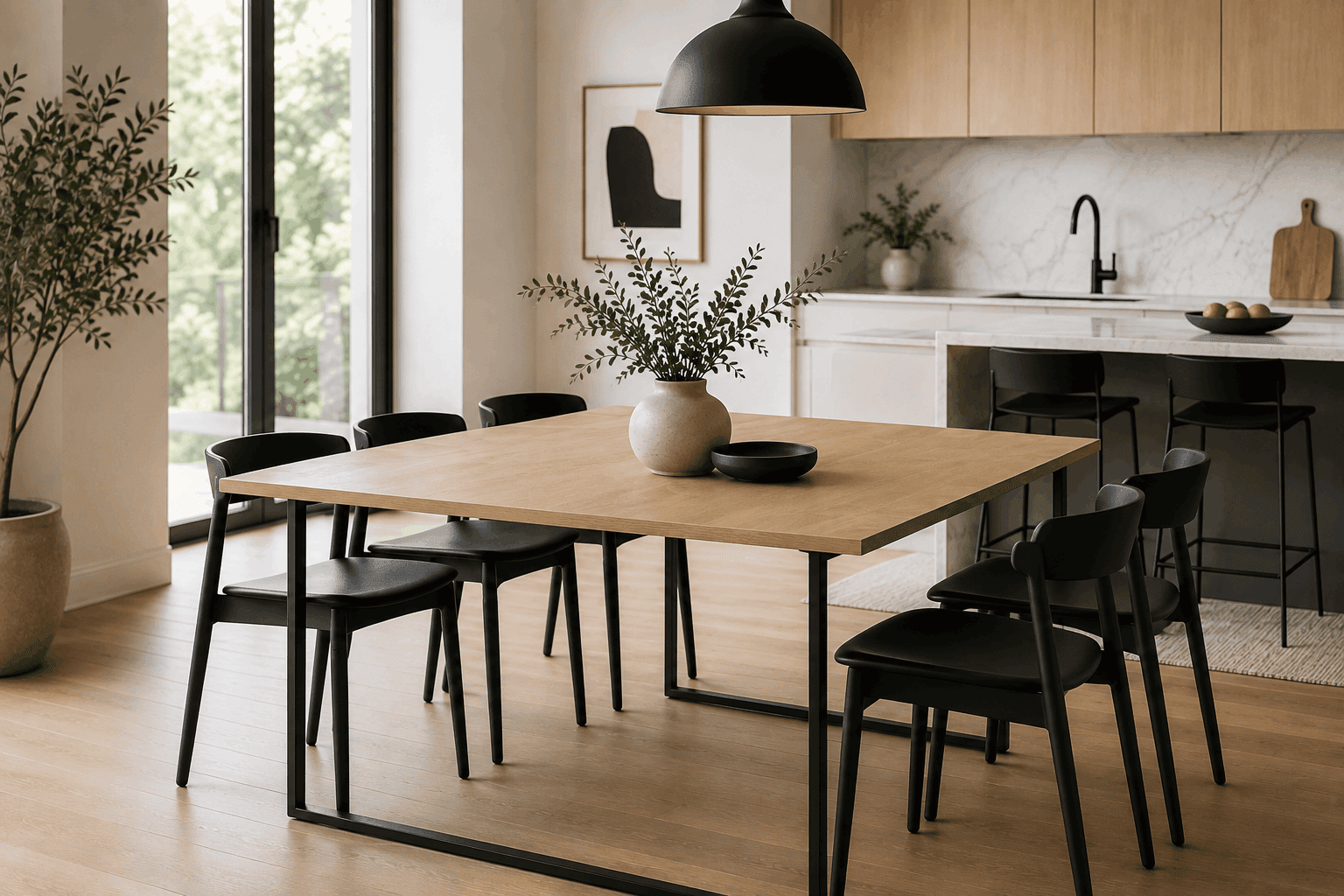
 A white table works here because the wood tones in the floor and chair legs carry the warmth the table itself doesn’t.
Search this exact question and most of what comes back is actually about decorating a table you already own, centerpieces, runners, seasonal styling. That’s a different problem. If you’re standing in a kitchen trying to figure out whether a table needs to match your cabinets, whether the wood tones need to be identical, or whether mismatched chairs will look curated or chaotic, none of that helps you.
This guide is about the decision that comes before styling: choosing a table color, material, and shape that actually belongs in the kitchen you have, whether your cabinets are white, gray, dark, or somewhere in between.
Color and wood-tone matching, not styling
Specific guidance by cabinet color
Real spacing and sizing numbersQuick answer: Your table doesn’t need to match your cabinets exactly, matching the temperature (warm vs. cool undertones) matters more than matching the exact shade. A wood table that’s one shade lighter or darker than your floors reads as intentional; matching them exactly makes furniture disappear into the background. Chairs don’t need to match the table either, matching material or wood tone while varying the shape is what makes a mixed set look curated instead of accidental.
Should Your Kitchen Table Match Your Cabinets?
No, and trying to match them exactly usually backfires. When a table’s wood tone or color is identical to the cabinets, the eye stops registering the table as its own piece of furniture, it just reads as more cabinet. What actually creates a cohesive look is coordination, not duplication: sharing an undertone, echoing a hardware finish, or picking up a color that already exists somewhere else in the room.
The exception is a fully custom or built-in kitchen where the table top is literally fabricated from the same material as the countertop or cabinet doors, a look some kitchen manufacturers offer for a deliberately seamless, architectural effect. For a standard freestanding table, though, coordinated beats identical almost every time.
How to Choose the Right Kitchen Table Color
Start with temperature before you start with shade. Every cabinet color, and every wood tone, leans either warm (yellow, orange, or red undertones) or cool (blue, gray, or green undertones). Pairing a warm-toned table with cool-toned cabinets, or vice versa, is the single most common reason a kitchen feels visually “off” even when the individual pieces are each attractive on their own.
Cabinet color Undertone Table colors that work White (warm) Cream, ivory undertones Warm woods: oak, honey pine, natural walnut White (cool) Blue-gray, stark white Cool woods: ash, whitewashed oak, gray-washed finishes Gray Cool, sometimes greige/warm-leaning Black metal base, ash, walnut, or matching greige-toned wood Dark (navy, charcoal, black) Cool to neutral Light oak, natural wood for contrast; black for a monochrome look Wood cabinets Varies by species See wood-tone matching below rather than color alone How to Mix Wood Tones in Your Kitchen
You don’t need every wood surface in the kitchen to match, in fact, an exact match usually looks flatter than a deliberate variation. Two rules cover most situations:
Go one shade lighter or darker than your floors, not the same shade.If your floors are a warm honey oak, a table in a slightly deeper chestnut or a slightly lighter natural oak both work, matching the exact same finish makes the table visually disappear into the floor.
Keep the temperature consistent even when the shade varies.Pair cool-toned gray floors with cool-toned ash or whitewashed furniture. Pair warm amber floors with woods that lean gold or reddish. Mixing warm and cool wood tones in the same sightline is what usually reads as a mistake, not the difference in how light or dark they are.
Limit yourself to two to three wood tones per room.Floor, table, and one more (cabinets or an accent piece) is a workable ceiling. A fourth and fifth distinct wood tone in the same sightline is where a room starts to feel unplanned rather than layered.
How to Match Your Kitchen Table With Your Chairs
Chairs matching the table exactly is a choice, not a requirement, and an intentionally mixed set is one of the more popular current approaches specifically because it looks collected rather than bought as a single set. The trick is keeping one element consistent while letting others vary:
Keep the wood tone or material consistent, vary the shape.A set of different chair silhouettes, a bench on one side, wishbone chairs on the others, in the same wood finish reads as curated. The same mix in three different wood tones reads as leftover furniture.
Anchor a mismatched set with a symmetrical pair.Matching chairs at the head and foot of the table, even if every side chair is different, gives the eye a structural anchor point that keeps the whole arrangement from feeling random.
A metal base or metal chair legs can bridge a table and chairs that don’t otherwise match.Black metal table legs paired with black metal chair frames tie the set together even when the seat material and tabletop finish are completely different.
Choosing a Kitchen Table for Different Decor Styles
Modern01Modern Kitchen Tables
Clean lines, minimal ornamentation

Look for a slim profile, a single-material top (solid wood, stone, or a stone-look laminate), and a base that’s either a simple pedestal or thin metal legs. Matte black, white, or a natural light wood like ash or white oak all work. Avoid heavily carved legs or ornate detailing, which reads as traditional no matter what color you choose.
BEST COLORS: Matte black, white, natural ash or white oakBASE: Pedestal or thin metal legsAVOID: Turned or carved wood legsFarmhouse02Farmhouse Kitchen Tables
Warm, sturdy, a little imperfect

A trestle or turned-leg base in a warm wood tone, ideally with visible grain or a distressed finish, is the classic farmhouse marker. An extendable top is especially fitting here, since farmhouse style leans into a table that’s actually used and gathered around often, not a showpiece.
BEST COLORS: Warm oak, weathered brown, whitewashed woodBASE: Trestle or turned legsPAIR WITH: Ladder-back or windsor chairsTraditional03Traditional Kitchen Tables
Classic proportions, richer wood tones

Deeper wood tones, cherry, mahogany, or a rich walnut, paired with a table that has some architectural detail in the legs or apron. This style tolerates, and often benefits from, a table and chair set that genuinely matches, since the cohesive formality is part of the look.
BEST COLORS: Cherry, mahogany, deep walnutBASE: Turned or fluted legsPAIR WITH: Upholstered or matching wood chairsBoho04Boho Kitchen Tables
Mixed materials, relaxed

This is the style most tolerant of mismatched chairs and mixed materials, rattan, woven seats, and a live-edge or naturally imperfect wood top all fit. Consistency here comes less from matching wood tones and more from a shared warm, natural material palette across the whole grouping.
BEST COLORS: Natural, unfinished, or lightly stained woodBASE: Live-edge, turned wood, or rattan-wrappedPAIR WITH: Mixed rattan, cane, or woven chairsOrganic Modern05Organic Modern Kitchen Tables
Natural material, simplified shape

The middle ground between modern and farmhouse: a natural, visibly grained wood top on a simplified, unfussy base, no heavy carving, but not stark minimalism either. Curved edges and rounded tabletops fit this style especially well.
BEST COLORS: Natural warm wood, light oak, walnutBASE: Simple pedestal or rounded legsSHAPE: Round or organically shaped tops work especially wellKitchen Table Ideas for White, Gray, and Dark Cabinets
White Cabinets
White cabinets give you the most flexibility of any base color. A warm wood table (oak, walnut, honey pine) adds contrast and keeps an all-white kitchen from feeling clinical. A black metal base or black-topped table echoes matte black hardware if that’s already in the room. The one combination to watch is stark white cabinets paired with a stark white table, which can flatten the whole room into a single plane with no depth.
Gray Cabinets
Gray reads as cool in most kitchens, so a table with cool wood undertones (ash, gray-washed oak) or a black metal base coordinates cleanly. A warm honey-toned table isn’t off-limits, but it needs another warm element in the room, brass hardware, warm lighting, a warm-toned floor, or it can feel like it’s fighting the cabinets rather than complementing them.
Dark Cabinets
Dark cabinets (navy, charcoal, black) benefit most from contrast. A light oak or natural wood table keeps the room from feeling heavy, especially in a kitchen with limited natural light. Going matching-dark on the table is a real option too, for a moodier, more monochrome look, but it works best in a room with strong overhead or pendant lighting to keep definition between the pieces.
How to Style Your Kitchen Table
Once the table itself is chosen, keep the everyday styling simple: a runner or a low, wide centerpiece works better than anything tall enough to block sightlines across an open-concept space. A shallow bowl, a small plant, or a stack of everyday dishware does more for a lived-in kitchen table than a formal arrangement that has to get cleared for every meal.
Common Kitchen Table Decorating Mistakes to Avoid
01Matching the table to the cabinets exactlyIdentical wood tones or colors make the table disappear into the cabinetry instead of reading as its own piece of furniture.
02Mixing warm and cool wood tones in the same sightlineThis causes more visual friction than mixing light and dark tones does. Check undertone before shade.
03Buying the table before measuring clearanceLeave a minimum of 36 to 48 inches between the table’s edge and the nearest wall or cabinet so chairs can be pulled out and people can walk behind seated guests.
04Choosing a round table for a large family without checking seating capacityRound tables seat fewer people per foot of floor space than rectangular ones. Great for daily use and small spaces, worth double-checking against your actual headcount for holidays.
05Mismatching chairs with no unifying elementTotally random chairs in different woods, colors, and styles reads as leftover furniture. Keep one thing consistent, material, wood tone, or color, while varying the rest.
Where to Shop
A few starting points by style, since the right table depends heavily on your specific cabinet color and square footage:
Farmhouse & extendable
Trestle-base and extendable farmhouse tables are widely available in the $300-$800 range and are worth prioritizing if you regularly host beyond your everyday headcount.
Modern & black metal base
Look for a slim pedestal or trestle base in matte black paired with a light wood or white top for a modern-white-kitchen pairing.
Round pedestal tables
A strong pick for open-concept kitchens and smaller dining nooks, since the lack of hard corners keeps walkways clear.
Mismatched dining chair sets
Sold individually or in curated mixed sets, useful for the boho or eclectic approach covered above.
Frequently Asked Questions
Should my kitchen table match my cabinets?
No. Coordinating undertone and finish matters more than matching color exactly. A table identical to the cabinets tends to visually disappear rather than look intentional.
What color kitchen table goes with white cabinets?
Warm wood tones like oak or walnut add contrast and depth. A black metal base or black top works well if the kitchen already has black hardware or fixtures. Avoid pairing stark white cabinets with an equally stark white table, which can flatten the room.
What color dining table goes with gray cabinets?
Cool-toned wood, ash or gray-washed oak, or a black metal base both coordinate cleanly with gray’s cool undertone. A warm wood table can work too, but pairs best when another warm element, like brass hardware, is already present in the room.
How do I mix wood tones in a kitchen without it looking mismatched?
Keep the temperature (warm vs. cool undertone) consistent even as the specific shade varies, and aim for one shade lighter or darker than your floors rather than an exact match. Limit the room to two or three distinct wood tones total.
Should kitchen chairs match the table?
Not necessarily. A mismatched set works well as long as one element, wood tone, material, or color, stays consistent across the pieces, and a matching pair at the head and foot of the table helps anchor a mixed set.
What’s the best kitchen table shape for a small kitchen?
Round tables generally work best in small or open-concept spaces since they have no hard corners to navigate around, which keeps walkways feeling open even in a tight footprint.
What’s the best kitchen table for an open-concept space?
A rectangular or extendable table often works best as a visual anchor, since its straight lines can define the dining zone within a larger open floor plan. Round tables are the better choice if softening sharp sightlines matters more than zoning the space.
How much space should be around a kitchen table?
Leave a minimum of 36 to 48 inches between the table’s edge and the nearest wall or cabinet, enough room for chairs to be pulled out and for people to walk behind seated guests comfortably.
What wood table goes with white kitchen cabinets?
Oak, walnut, and honey pine are the most reliable choices, since their warm undertones contrast with white cabinets rather than blending into them or clashing with a cooler white.
Does a round table seat fewer people than a rectangular one?
Generally yes. Rectangular tables use their length more efficiently for seating, while round tables trade some capacity for a more intimate, evenly-spaced conversation layout.
Final Thoughts
Choose temperature and undertone first, exact shade and style second. A table that shares a warm or cool undertone with your cabinets and floors will coordinate even if nothing matches precisely, and that coordination is what actually makes a kitchen feel put together. Once the table itself is right, the styling, a runner, a low bowl, seasonal touches, is the easy part.
-
20 Fall Front Porch Decor Ideas on a Budget | Real Costs & Product Picks (2026)
.cb-root{
–ink:#2B2E33;
–ink-soft:#5B5F66;
–paper:#F3F2ED;
–paper-raised:#FFFFFF;
–line:#DEDCD3;
–sage:#6B7F76;
–sage-dark:#4F5F58;
–sage-bg:#EAEEEC;
–clay:#A85D45;
–clay-bg:#F3E7E2;
–water:#3E6E8E;
–water-bg:#E6EEF2;
}
.cb-root *{ box-sizing:border-box; }
.cb-root{ margin:0; background:var(–paper); color:var(–ink); font-family:’Inter’,-apple-system,sans-serif; font-size:16.5px; line-height:1.72; }
.cb-wrap{ max-width:820px; margin:0 auto; padding:0 22px 50px; }
.cb-root h1,.cb-root h2,.cb-root h3{ font-family:’Fraunces’,Georgia,serif; color:var(–ink); margin:0; }
.cb-root a{ color:var(–sage-dark); }
.cb-root p{ margin:0 0 15px; }.cb-header-band{ background:var(–ink); color:var(–paper); padding:44px 0 30px; }
.cb-header-band .cb-eyebrow{ font-family:’JetBrains Mono’,monospace; font-size:11.5px; letter-spacing:0.18em; text-transform:uppercase; color:#B7C4BE; margin-bottom:14px; }
.cb-header-band h1{ font-size:clamp(25px,4.6vw,40px); font-weight:600; line-height:1.22; color:#fff; margin-bottom:14px; max-width:680px; }
.cb-header-band p.cb-lede{ color:#C7C9C6; font-size:16.5px; max-width:640px; margin-bottom:0; }
.cb-grout-strip{ height:8px; display:flex; }
.cb-grout-strip span{ flex:1; border-right:2px solid var(–paper); }
.cb-grout-strip span:last-child{ border-right:none; }.cb-root h2{ font-size:25px; font-weight:600; margin:48px 0 14px; padding-bottom:10px; border-bottom:2px solid var(–ink); }
.cb-root h3{ font-size:19px; font-weight:600; margin:24px 0 8px; }.cb-quick-answer{ background:var(–water-bg); border-left:4px solid var(–water); border-radius:4px; padding:16px 18px; margin:24px 0; }
.cb-quick-answer p{ margin:0; font-size:15.5px; color:#294456; }
.cb-quick-answer p+p{ margin-top:10px; }
.cb-quick-answer p strong{ color:var(–ink); }
.cb-quick-answer.warn{ background:var(–clay-bg); border-left-color:var(–clay); }
.cb-quick-answer.warn p{ color:#6E3A2A; }
.cb-quick-answer.warn p strong{ color:var(–ink); }.cb-tagrow{ display:flex; gap:8px; flex-wrap:wrap; margin:16px 0 8px; }
.cb-tag{ font-family:’JetBrains Mono’,monospace; font-size:11px; letter-spacing:0.06em; text-transform:uppercase; border:1px solid var(–ink); color:var(–ink); padding:4px 9px; border-radius:3px; }/* ———- scale bars ———- */
.cb-scale-box{ margin:22px 0 8px; padding:22px 20px 18px; background:var(–paper-raised); border:1px solid var(–line); border-radius:8px; }
.cb-scale-row{ display:flex; align-items:center; gap:14px; margin-bottom:14px; }
.cb-scale-row:last-child{ margin-bottom:0; }
.cb-scale-label{ width:190px; flex-shrink:0; font-size:14px; font-weight:600; }
.cb-scale-track{ flex:1; height:14px; background:var(–sage-bg); border-radius:7px; overflow:hidden; }
.cb-scale-fill{ height:100%; background:var(–water); border-radius:7px; }
.cb-scale-fill.clay{ background:var(–clay); }
.cb-scale-val{ width:190px; flex-shrink:0; font-family:’JetBrains Mono’,monospace; font-size:12px; color:var(–ink-soft); text-align:right; }
.cb-scale-note{ font-family:’JetBrains Mono’,monospace; font-size:11.5px; color:var(–ink-soft); margin-top:14px; }/* ———- image blocks ———- */
.cb-img-block{ margin:22px 0; border-radius:8px; overflow:hidden; border:1px solid var(–line); }
.cb-img-block img{ width:100%; height:320px; object-fit:cover; display:block; }
.cb-img-caption{ font-family:’JetBrains Mono’,monospace; font-size:11.5px; color:var(–ink-soft); padding:9px 12px; background:var(–paper-raised); border-top:1px solid var(–line); }/* ———- entry blocks ———- */
.cb-block{ margin-top:36px; padding-top:22px; border-top:1px dashed var(–line); }
.cb-block:first-of-type{ margin-top:20px; padding-top:0; border-top:none; }
.cb-block-head{ display:flex; align-items:baseline; gap:12px; margin-bottom:4px; }
.cb-block-num{ font-family:’JetBrains Mono’,monospace; font-size:13px; color:var(–clay); border:1px solid var(–clay); border-radius:3px; padding:2px 7px; flex-shrink:0; }
.cb-block h3{ margin:0; }
.cb-block-tag{ display:inline-block; font-family:’JetBrains Mono’,monospace; font-size:10.5px; text-transform:uppercase; letter-spacing:0.05em; background:var(–sage-bg); color:var(–sage-dark); padding:3px 8px; border-radius:3px; margin:6px 0 10px; }
.cb-block-tag.clay{ background:var(–clay-bg); color:var(–clay); }
.cb-block-specs{ font-family:’JetBrains Mono’,monospace; font-size:12px; color:var(–ink-soft); background:var(–paper-raised); border-left:3px solid var(–sage); padding:8px 12px; margin:10px 0 12px; }
.cb-block-specs span{ display:block; margin-bottom:2px; }
.cb-block-specs span:last-child{ margin-bottom:0; }.cb-group-label{ font-family:’JetBrains Mono’,monospace; font-size:12px; letter-spacing:0.1em; text-transform:uppercase; color:var(–water); background:var(–water-bg); display:inline-block; padding:6px 12px; border-radius:4px; margin:34px 0 4px; }
/* ———- shop pick ———- */
.cb-shop-pick{ margin:12px 0 4px; padding:10px 14px; background:var(–sage-bg); border-radius:6px; display:flex; justify-content:space-between; align-items:center; gap:10px; flex-wrap:wrap; }
.cb-shop-pick .cb-sp-text{ font-size:13.5px; }
.cb-shop-pick .cb-sp-name{ font-weight:600; color:var(–sage-dark); }
.cb-shop-pick .cb-sp-price{ font-family:’JetBrains Mono’,monospace; font-size:12px; color:var(–ink-soft); margin-left:6px; }
.cb-shop-pick a{ font-family:’JetBrains Mono’,monospace; font-size:11px; letter-spacing:0.04em; text-transform:uppercase; background:var(–sage-dark); color:#fff !important; padding:5px 11px; border-radius:4px; text-decoration:none; white-space:nowrap; }.cb-table-wrap{ overflow-x:auto; border:1px solid var(–line); border-radius:6px; margin:16px 0; }
.cb-table{ width:100%; border-collapse:collapse; font-size:14px; min-width:600px; }
.cb-table th{ background:var(–ink); color:#fff; text-align:left; padding:10px 12px; font-family:’JetBrains Mono’,monospace; font-size:10px; letter-spacing:0.04em; text-transform:uppercase; }
.cb-table td{ padding:9px 12px; border-bottom:1px solid var(–line); }
.cb-table tr:nth-child(even) td{ background:#FAFAF7; }
.cb-table td:first-child{ font-weight:600; }.cb-tip-list{ display:flex; flex-direction:column; gap:10px; margin:18px 0; }
.cb-tip-list .item{ display:flex; gap:12px; align-items:flex-start; }
.cb-tip-list .dot{ width:8px; height:8px; border-radius:50%; background:var(–sage-dark); margin-top:8px; flex-shrink:0; }
.cb-tip-list .txt strong{ display:block; font-size:15px; margin-bottom:2px; }
.cb-tip-list .txt p{ margin:0; font-size:14.5px; color:var(–ink-soft); }.cb-mistake-list{ display:flex; flex-direction:column; gap:12px; margin:18px 0; }
.cb-mistake-list .item{ display:flex; gap:14px; background:var(–paper-raised); border:1px solid var(–line); border-radius:6px; padding:14px 16px; }
.cb-mistake-list .num{ font-family:’Fraunces’,serif; font-weight:600; font-size:22px; color:var(–clay); flex-shrink:0; line-height:1.3; }
.cb-mistake-list .txt strong{ display:block; font-size:15.5px; margin-bottom:3px; }
.cb-mistake-list .txt p{ margin:0; font-size:14.5px; color:var(–ink-soft); }.cb-faq-item{ border-top:1px solid var(–line); padding:18px 0; }
.cb-faq-item:last-child{ border-bottom:1px solid var(–line); }
.cb-faq-item .q{ font-family:’Fraunces’,serif; font-weight:600; font-size:17px; margin-bottom:6px; }
.cb-faq-item .a{ font-size:15px; margin:0; color:var(–ink-soft); }@media (max-width:600px){ .cb-scale-label{ width:110px; } .cb-scale-val{ width:100px; } .cb-img-block img{ height:220px; } .cb-shop-pick{ flex-direction:column; align-items:flex-start; } }
Budget Porch Decor Guide · Updated 2026
20 Fall Front Porch Decor Ideas on a Budget
Most fall porch roundups are forty photos and zero numbers. Here’s what pumpkins, mums, wreaths, and lights actually cost this year, what’s worth buying once, and where the real fire risks are hiding.
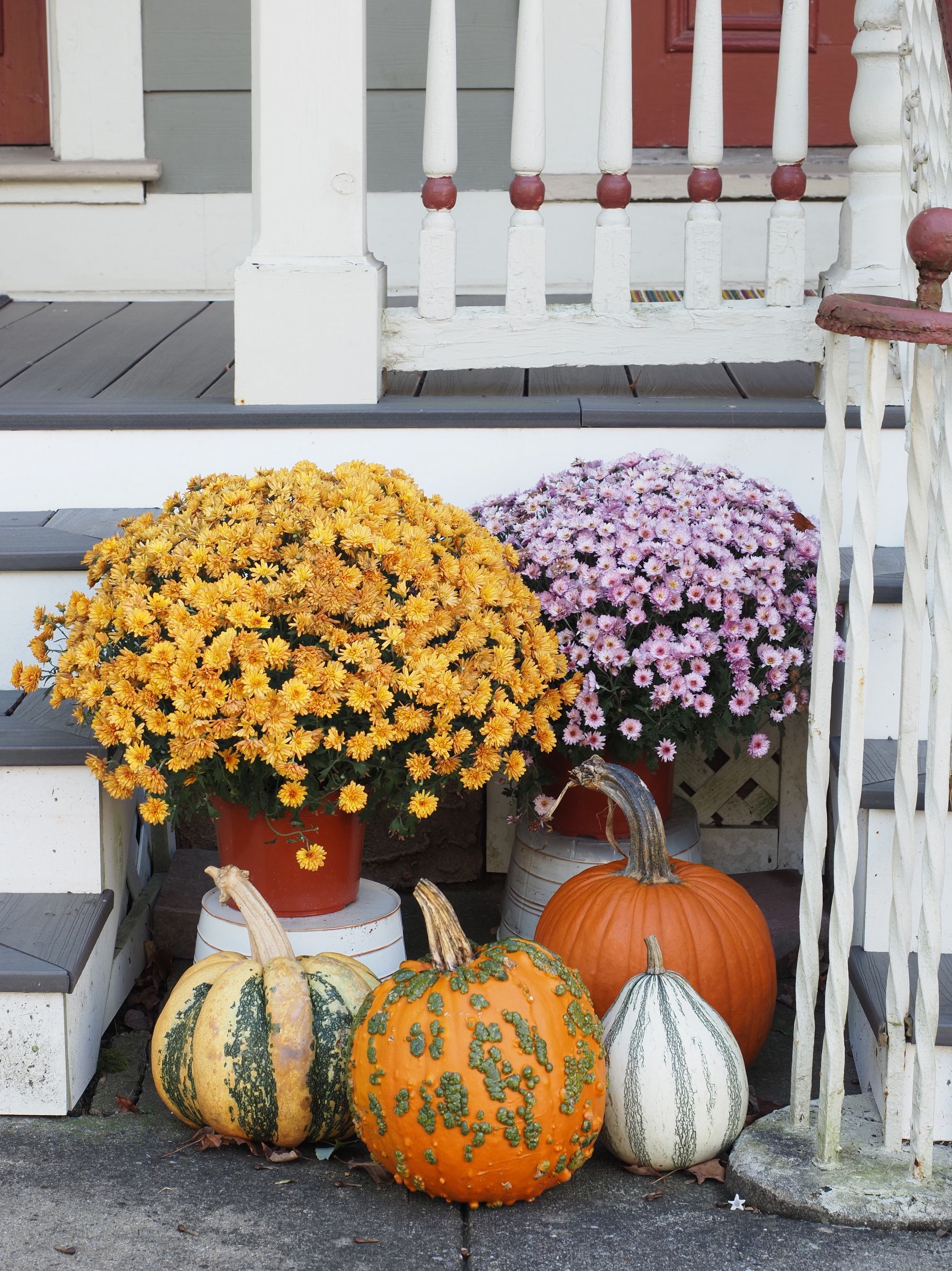 A repeated color palette and a couple of anchor pieces do more work than a dozen small trinkets.
The front porch is the one part of fall decorating everyone actually sees: neighbors on a walk, trick-or-treaters, the delivery driver, anyone pulling into the driveway. That’s probably why so much of the advice about it is just a photo grid with captions like “add a wreath” and “layer in some pumpkins.” Nobody tells you what the wreath costs, how long the pumpkins actually hold up outside, or that lit candles in jack-o-lanterns are a documented fire risk and not just a mood-lighting choice.
This guide covers what a real fall porch refresh costs in 2026, which materials are worth buying once versus rebuying every year, and 20 specific ideas with real prices attached, plus a few actual product picks instead of another stock photo of a pumpkin.
Quick answer: A DIY fall refresh for a small porch, one wreath, a couple of mums, a handful of pumpkins, a doormat, and a strand of lights, runs about $125 to $235 in materials. Add pillow covers, a wood sign, and a couple of faux pumpkins that carry over every year, and a fuller display lands around $165 to $325. Hiring a “pumpkin concierge” service to source and install it for you starts around $259 to $300 for a modest package and can climb past $1,000, even to $1,275, for a large, pumpkin-heavy entryway. The National Retail Federation’s 2025 Halloween survey found that 78 percent of shoppers planned to buy decorations, spending a combined $4.2 billion nationally, so a $150 porch is already leaner than what most households budget for the season.
Why the Budget Is Worth Planning First
A porch is a small, high-visibility space, which cuts both ways. It doesn’t take much to make it look finished, but it also doesn’t take much clutter to make it look chaotic. The advice that works for a whole yard, buy in bulk, layer everything, add one of each seasonal item, tends to overwhelm a porch that’s ten feet wide.
It also helps to know that decorating porches for money is now an actual industry. Fox Business and Axios have both covered the rise of “pumpkin concierge” services, businesses that source, deliver, and arrange a full pumpkin display for a fee that starts around $259 to $300 and regularly runs past $1,000 for a large installation. That’s useful context for a DIY budget: even a $200 porch is already doing more, for less, than a lot of households are paying someone else to do.
Small space, high visibility
Real vs. faux changes the math
Fire safety isn’t optionalWhat a Small Porch Fall Refresh Actually Costs
These are current retail ranges for the core pieces of a small porch display, not the cheapest possible option or the nicest possible one.
Wreath (artificial)$25-$50Mums (2 potted)$12-$24Pumpkins & gourds$15-$35Doormat$20-$30String lights (25ft)$20-$35Lanterns or candles$25-$40Garland or cornstalks$10-$20Core total for a small porch: roughly $125-$235. Skip any one row (most porches don’t need all seven) and the total drops accordingly.
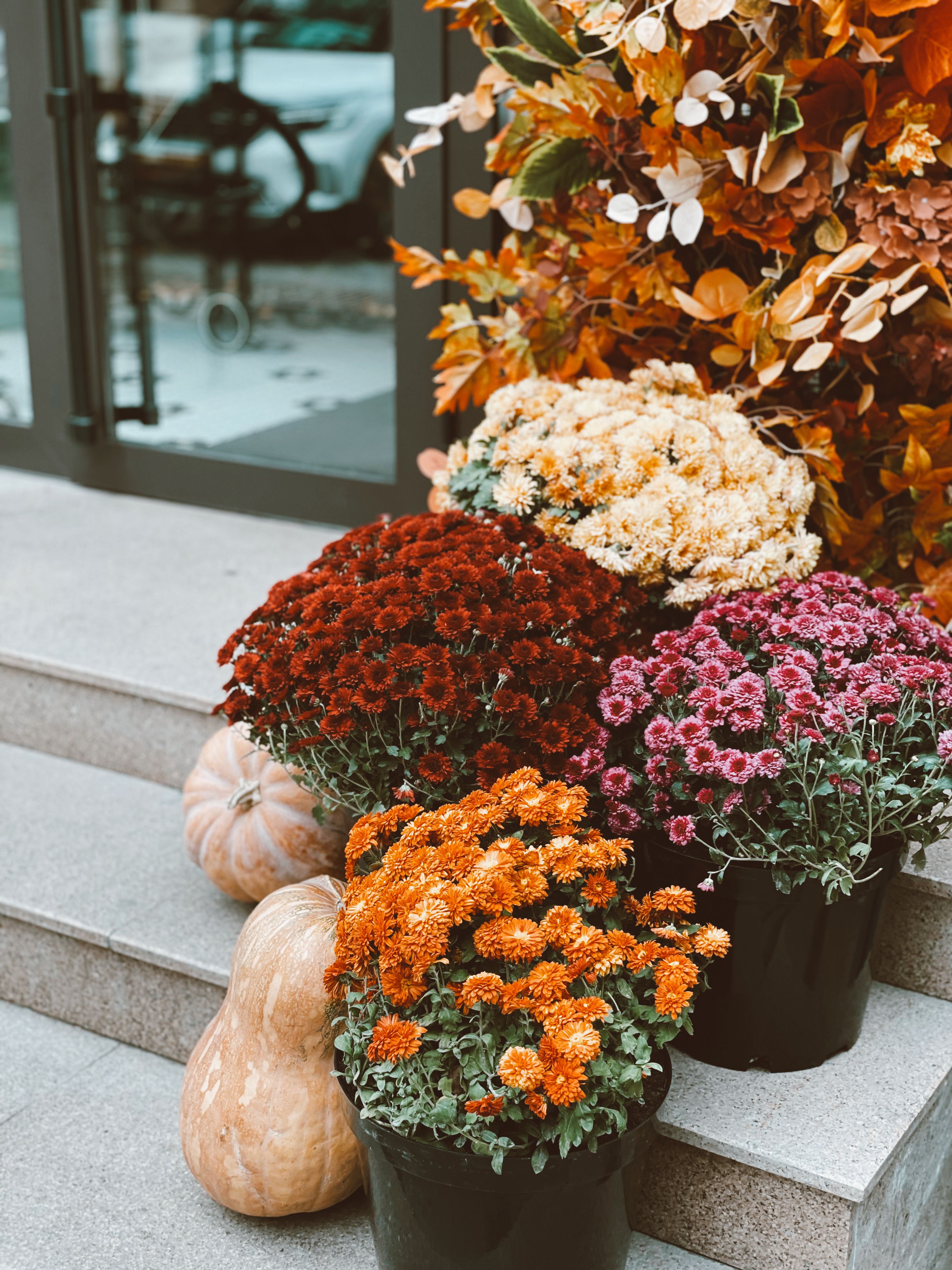 Steps do a lot of the display work for free. Stack pumpkins by size instead of spreading them flat.
Real vs. Faux: What’s Worth Buying Once
This is the comparison almost nobody runs, and it’s where most of the long-term savings actually live. Some fall porch materials are genuinely single-season; others pay for themselves after year two.
Real carving pumpkin4-8 wks, $4-$20 ea/yrFaux/foam pumpkin5-10+ yrs, $8-$25 onceStraw bale, cornstalksOne season, $4.50-$14/yrArtificial wreathMany years, $25-$50 onceBar length shows how often you’re replacing it, not cost per item. A real pumpkin at a patch is $0.50-$0.75 a pound (about $4-$6 for an 8-pounder); the same pumpkin at a grocery or big-box store, priced closer to $1-$1.50 a pound, can run $14-$20 for a 10-14 pound jack-o-lantern.
None of this means skip real pumpkins. A porch with zero real pumpkins usually looks a little stiff. The practical split most budget-conscious displays land on: a couple of real ones out front for carving and smell, faux ones doing the bulk of the color and height, since those get reused every October instead of rebought.
DIY vs. Hiring a Porch Decorator
Yes, this is a real choice now. “Pumpkin concierge” businesses have opened in Minneapolis, Denver, Washington D.C., Nashville, Charlotte, and several other cities over the past two seasons, according to reporting from Axios and Fox Business. They source the pumpkins, hay, and gourds, design the arrangement, install it, and in some cases haul it away afterward for a fee.
Factor DIY Porch decorator Small porch cost $125-$235 in materials $259-$300 for a modest package Large, full-entryway cost $300-$500 in materials $750-$1,275+ Time from you An afternoon of sourcing and setup None; delivered and arranged Sourcing You pick pumpkins, hunt for deals Included in the package Off-season removal Your own trash or compost Sometimes included, often for an extra fee Best fit Anyone with a free Saturday and a budget in mind Busy households who want it done and don’t mind paying for the labor For a single small porch, DIY wins on cost by a wide margin, and none of the steps here require special skill. Hiring it out mostly buys back time, not a better result.
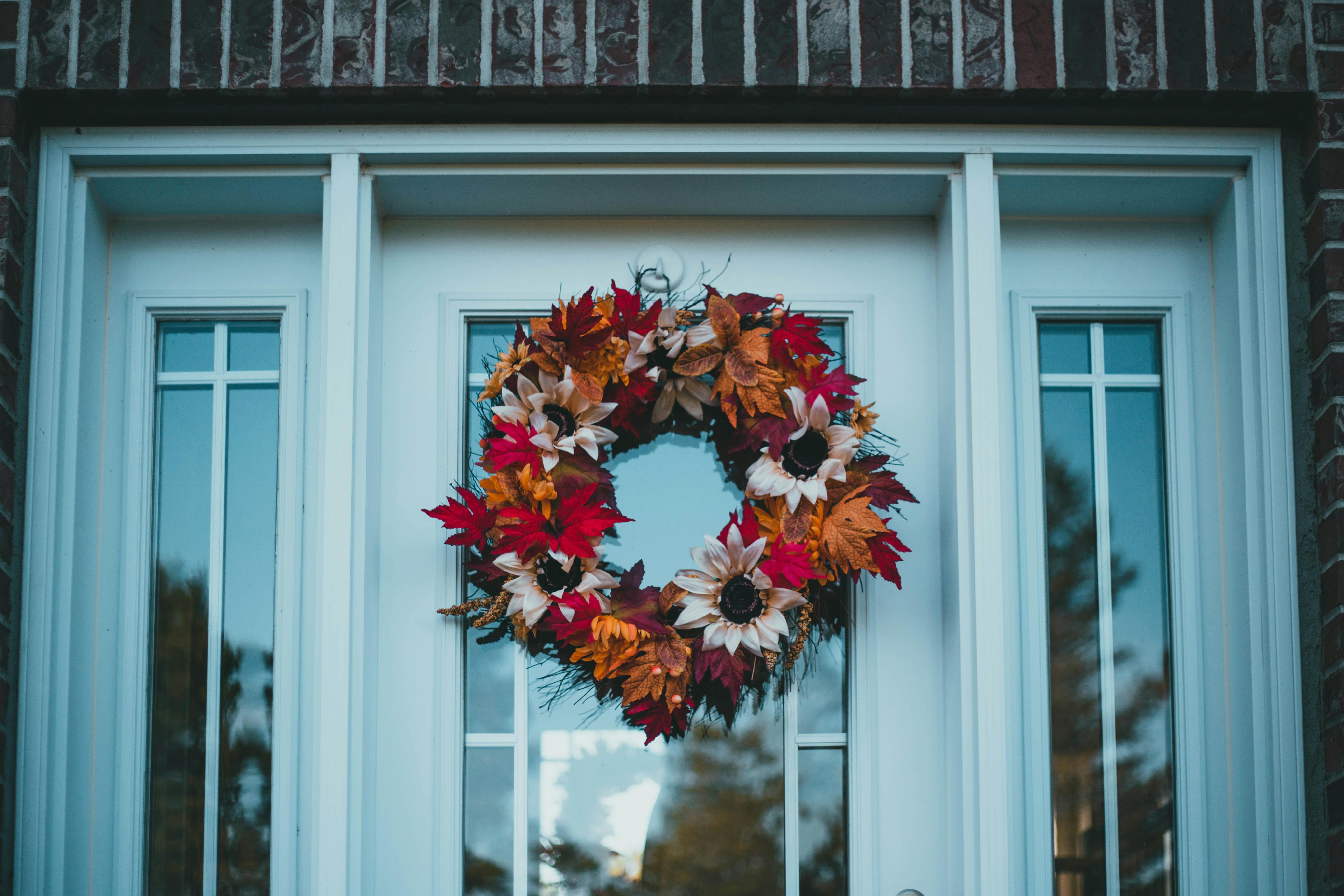 One well-made wreath, reused every year, usually beats three smaller seasonal pieces bought new each time.
20 Budget Fall Front Porch Decor Ideas
Grouped by what they actually change on the porch, with a real cost attached to each and a product pick where one made sense.
Pumpkins & Gourds01Buy Pumpkins by the Pound, Not by the Pumpkin
Cuts the single biggest line item
A local patch or farm stand almost always prices pumpkins by weight, typically $0.50 to $0.75 a pound, while grocery and big-box stores price by the pumpkin at a rate that works out closer to $1 to $1.50 a pound. On a 10 to 14 pound carving pumpkin, that’s the difference between about $6 and about $18 for the exact same size.
BEST FOR: The one or two large carving pumpkins anchoring the displayCOST: $4-$8 at a patch versus $14-$20 at a grocery or big-box store for the same sizeTIP: Ask if the patch sells “seconds,” slightly bruised or oddly shaped pumpkins sold at a discount and just as good for a porch display02Mix Real Pumpkins with a Few Reusable Faux Ones
Splits the cost across years
Foam and plastic pumpkins hold their color and shape for five to ten years with basic off-season storage, so the upfront cost of $8 to $25 each amortizes down fast. Put them toward the back or on a step riser where texture matters more than authenticity, and save the real ones for the front where people actually touch and smell them.
BEST FOR: Anyone tired of rebuying the same display every OctoberCOST: $8-$25 per faux pumpkin, one-time, versus $4-$20 per real one every yearTIP: Store faux pumpkins somewhere dry and out of direct sun between seasons; UV exposure is what fades them, not age03Paint or Gild Plain Pumpkins
Elevates a $5 pumpkin for a few dollars more
A can of matte spray paint or a small pot of gold leaf adhesive turns a plain orange pumpkin into something that looks intentional, without the higher price tag of specialty white or heirloom varieties at the patch. Metallic and black-and-white palettes photograph especially well against brick or a painted door.
BEST FOR: A modern or monochrome porch aestheticCOST: $8-$14 for spray paint or a small gold leaf kit, enough for several pumpkinsTIP: Paint outdoors and let pumpkins dry fully before moving them; wet paint smears if pumpkins are stacked too soon04Cluster Mini Pumpkins and Gourds on the Steps
Cheapest per-piece item on this list
Mini pumpkins and gourds typically run $1 to $3 each, or less when bought by the half dozen, and a cluster of eight or ten adds color and texture without needing a single large (and pricier) pumpkin at all.
BEST FOR: Narrow steps or a railing where a large pumpkin won’t fitCOST: $1-$3 each, or roughly $10 for six at most farm standsTIP: Group by color rather than spacing them evenly; three or four of the same shade read as more intentional than one of everythingMums, Planters & Greenery05Buy Mums in the Grower Pot, Skip the Decorative One
Same flower, lower price
A mum in its plain plastic grower pot costs $6 to $10 for a small 6 to 8 inch plant, versus $18 to $20 or more once it’s already potted into a decorative ceramic or whiskey-barrel-style container at a garden center. Buy the plant on its own and drop it into a planter you already have.
BEST FOR: Anyone who already owns porch planters or urnsCOST: $6-$10 for a small potted mum, up to $18-$20 for a fuller 10-12 inch potTIP: Mums wilt fast in full sun without water; check the soil daily during the first hot week after buying06Flank the Door with Planters You Already Own
Reuses what’s already on the porch
Summer’s planters don’t need replacing, just refilling. Pull the spent annuals, add a mum or two and a few stems of ornamental grass, and the same urns that held petunias in July do the job for fall at a fraction of buying new containers.
BEST FOR: Porches with existing urn or planter pairs by the doorCOST: $12-$24 in new plants if the containers are already on handTIP: If starting from scratch, a mum pre-planted in a small barrel-style planter runs about $20-$25 for a pair and skips the extra step entirely07Mix Ornamental Cabbage or Kale In with the Mums
Adds texture without adding much cost
Ornamental cabbage and kale cost about the same as a mum plant and hold up to frost far better, so they keep a planter looking full well past the point mums have dropped their blooms, straight through Thanksgiving in most climates.
BEST FOR: Extending a display’s life into NovemberCOST: $4-$8 per plant, similar to a small mumTIP: Plant kale toward the back or center of a container; its structure works better as a backdrop than a front-row accent08Bundle Cornstalks at the Door Frame
Height and texture, low material cost
A bundle of two or three cornstalks tied to a porch post or door frame runs $4.50 to $10 at most garden centers. Farm stands that sell direct sometimes do noticeably better: one farm in Missouri bundles about 25 stalks for roughly what a big-box store charges for a dozen.
BEST FOR: Framing a doorway or porch postCOST: $4.50-$10 for a small bundle, less per stalk when bought larger from a farm standTIP: Zip-tie stalks to a post rather than leaning them; wind knocks unsecured bundles over more often than people expect09Anchor the Display with a Straw or Hay Bale
A tiered base for pumpkins and mums
A full straw bale runs $11 to $14 at a garden center chain, though farm stands selling direct often charge closer to $6 to $8. Setting pumpkins and potted mums on top of one instead of flat on the porch floor adds height and makes a small pumpkin collection look considerably fuller.
BEST FOR: A porch with floor space but not much built-in height, like a step or a railingCOST: $6-$14 depending on where it’s sourcedTIP: A bale left out through a rainy fall gets moldy and heavy fast; set it where it drains, not in a low spot that pools waterWreaths, Garlands & Door Accents10One Good Wreath Instead of Several Small Pieces
Reusable for years
A solid artificial fall wreath, pip berries, faux foliage, a simple bow, runs $25 to $50 and, stored indoors between seasons, lasts for years. That makes it a better long-term value than three or four smaller seasonal accents bought fresh every year for a similar combined price.
BEST FOR: The single highest-visibility spot on the whole porch, the front doorCOST: $25-$50 once, reused for multiple seasonsTIP: A neutral base (natural greenery, wheat, or berries rather than bright orange) transitions from early fall through Thanksgiving without needing a swap11Run a Leaf Garland Along the Railing
Covers a lot of visual ground cheaply
A single maple leaf garland, six to nine feet long, wraps a railing or door frame for $15 to $20 and reads as a much bigger gesture than its price suggests, since it covers a long visible line rather than a single point like a wreath does.
BEST FOR: Railings, banisters, or a door frame without a wreath hookCOST: $15-$20 for a garland set of two 6-9 foot strandsTIP: Wire-wrap the garland to the railing every foot or so; a garland only tacked at the ends sags visibly within a week12DIY a Dried-Leaf or Grapevine Wreath
Close to free
A plain grapevine wreath base costs $5 to $10, and pressed leaves, dried hydrangea, or wheat stems gathered from a yard fill it in for nothing. It won’t last as many seasons as an artificial one, but for a single year’s display it’s the cheapest wreath option on this list by a wide margin.
BEST FOR: A one-season display or anyone who enjoys the craft itselfCOST: $5-$10 for the base, often free for the fill materialTIP: Seal dried leaves with a light coat of clear spray sealant so they hold their color and don’t crumble in wind and rainLighting & After-Dark Ambience13Flameless Lanterns Along the Steps
Warmth without the fire risk
A wood or metal candle lantern runs $25 to $40, and paired with battery-operated flameless candles instead of real ones, it gives the same warm glow at the door without an open flame sitting unattended on a step where trick-or-treaters, wind, or a dry cornstalk display can reach it.
BEST FOR: Steps, railings, or flanking the front door after darkCOST: $25-$40 for a lantern, plus $10-$15 for a set of flameless candlesTIP: Look for flameless candles with a timer function so they turn on at dusk automatically instead of needing to be switched on by hand every evening14Warm-White String Lights on the Roofline or Railing
Extends the porch’s use into evening
A 25 foot strand of Edison-style outdoor string lights runs $20 to $35 and does more to make a porch feel finished after sunset than almost anything else on this list, since it lights the whole space rather than one accent piece.
BEST FOR: A porch used for evening trick-or-treating or just sitting outside once it’s dark earlierCOST: $20-$35 for a 25 foot connectable strandTIP: Check that the strand is rated IP44 or higher for outdoor use before buying; indoor-rated string lights fail fast in rainTextiles & Seating15Swap Pillow Covers, Not the Whole Pillow
A fraction of the cost of new pillows
A set of two fall-print pillow covers runs $13 to $20 and slides over the same pillow inserts already on a porch bench or chair. Buying entirely new outdoor pillows for the same look easily runs three to four times as much.
BEST FOR: Any porch with an existing bench, chair, or swingCOST: $13-$20 for a set of two coversTIP: Check the insert size before buying; covers a size smaller than the insert give pillows a fuller, less deflated look16Layer a Plaid or Buffalo-Check Throw
Instant coziness for one item
Draped over a bench arm or rocking chair, a single outdoor-rated throw blanket adds warmth and color for around $20 to $35 and photographs as “cozy” more reliably than almost any other single purchase on this list.
BEST FOR: Porches with a bench, glider, or rocking chairsCOST: $20-$35 for one outdoor-rated throwTIP: Confirm it’s labeled outdoor or all-weather fabric; an indoor throw left out overnight in dew or rain mildews fast17A Seasonal Doormat, Layered Over a Plain One
Sets the tone before anyone reaches the door
A checked or plaid doormat runs $20 to $30 and, layered on top of a plain coir mat already at the door, adds a designed look without replacing anything. It’s also one of the few items on this list that gets literal daily foot traffic, so it’s worth choosing something durable over the cheapest option.
BEST FOR: Layering over an existing plain doormatCOST: $20-$30 for a woven cotton or coir seasonal matTIP: Machine-washable cotton mats hold up better through a wet fall than printed vinyl ones, which crack in cold weatherFinishing Touches18A Leaning Wood or Metal Welcome Sign
Ties a simple display together
A small hanging or leaning sign, a pumpkin cutout, a harvest phrase, a set of house numbers, costs as little as $9 to $25 and does a similar job to a fresh coat of paint on the door: it makes a modest display look finished rather than assembled piece by piece.
BEST FOR: The gap between a wreath and a bare wall or door panelCOST: $9-$25 depending on size and materialTIP: Lean larger signs against the house rather than hanging them from a nail; wind is harder on a hanging sign than a leaning one19One Painted Accent: the Door or the House Numbers
Biggest visual return per dollar
None of this is technically fall decor, but a freshly painted front door or a repainted set of house numbers pulls a simple pumpkin-and-mum display together more than another purchase would. A quart of exterior paint covers most doors for less than the cost of one wreath.
BEST FOR: Anchoring the whole display around one accent colorCOST: $25-$40 for a quart of exterior door paintTIP: Match the door color to something already in the pumpkin or mum palette (deep red, black, or forest green) instead of introducing a new color to the porch20A DIY Scarecrow from Clothes Already in the Closet
Often free
An old flannel shirt, a pair of jeans, and straw stuffing (leftover from a hay bale works fine) make a scarecrow for close to nothing. It’s the single most photogenic item on this list relative to its cost, and it packs flat for storage once the season ends.
BEST FOR: A porch chair, bench, or rocking chair that needs a focal pointCOST: Often free using clothes and straw already on handTIP: Stuff the head and hands with plastic grocery bags before straw; it holds shape better and won’t attract birds the way loose straw can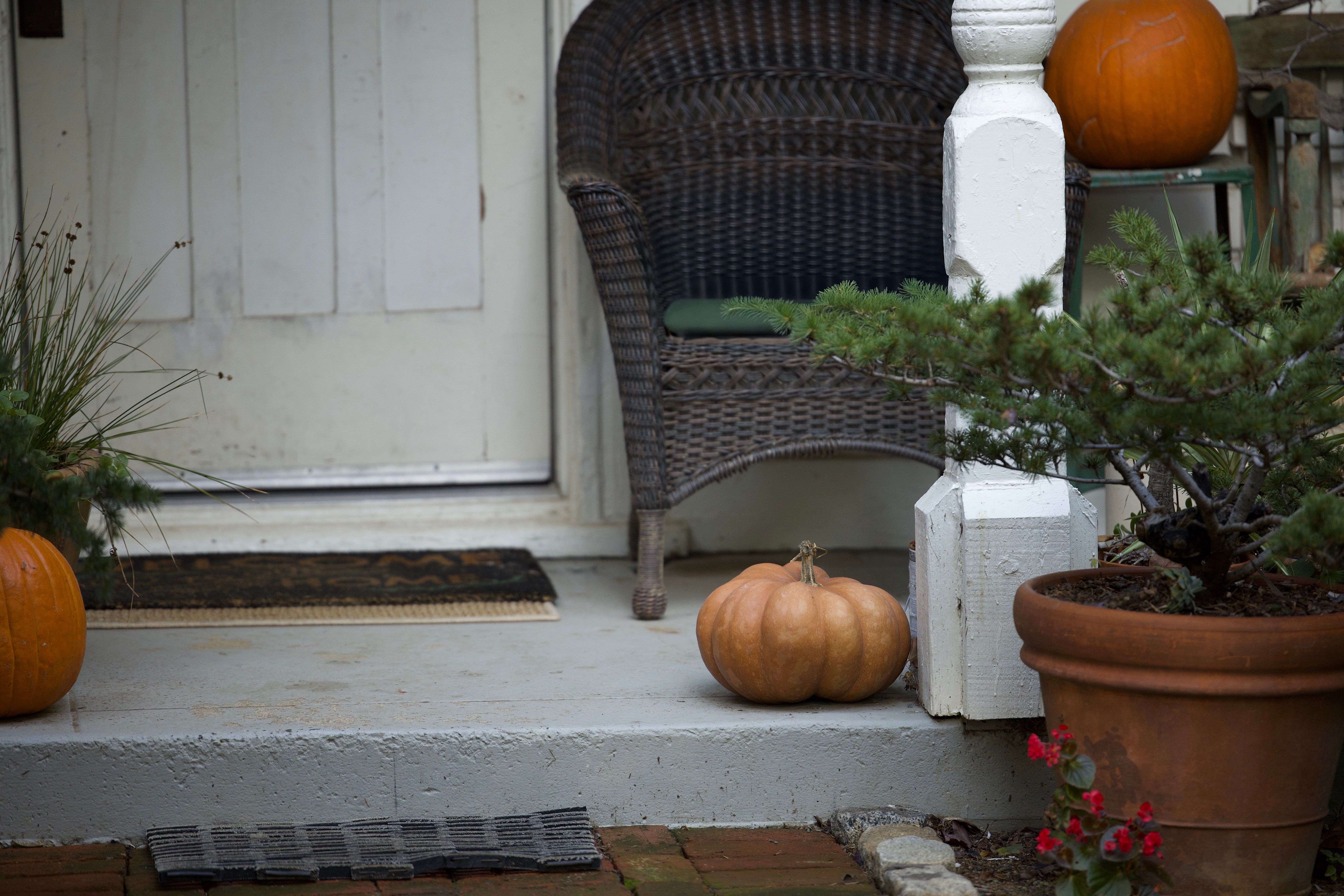 A single throw and a pair of pillow covers turn existing porch furniture into part of the display.
Fire Safety Worth Building Into the Budget
The numbers most fall decor guides skip: the National Fire Protection Association’s most recent data shows decorations were the first item ignited in an estimated 860 home structure fires a year, causing an average of one death, 41 injuries, and $13.4 million in property damage annually. Nearly half of those fires started because a decoration was too close to a heat source, and 38 percent were started by candles specifically. The NFPA also flags dried flowers, cornstalks, and crepe paper by name as materials that catch fire easily.
None of that means skipping candles or cornstalks entirely. It means a few cheap swaps: flameless candles instead of real ones inside jack-o-lanterns and lanterns, cornstalk and hay bale displays kept a few feet from the door light or any wired fixture, and exits (the actual walkway to the door) left clear of decorations rather than narrowed by a wide pumpkin display. All three cost nothing extra and remove most of the risk this data points to.
Common Budget Mistakes to Avoid
01Real candles in pumpkins and lanterns near the doorThis is the single fire-risk swap worth making. Flameless candles cost a little more upfront and remove the leading cause of decoration fires according to NFPA data.
02Buying a full-size pumpkin for every spot on the porchMixing in mini pumpkins and gourds at $1-$3 each fills the same visual space as several $6-$8 pumpkins for a fraction of the cost.
03Stacking dried cornstalks or hay against the doorway itselfBeyond the fire-safety issue, a bale or bundle set right against the door blocks the exit path and gets in the way of anyone actually using it.
04Replacing whole pillows instead of just the coversNew outdoor pillows can run three to four times the cost of covers alone for the same seasonal look.
05No plan before shoppingBuying whatever’s discounted that week without a rough idea of the porch’s layout usually means mismatched colors, uneven heights, and leftover items that never get used.
Where the Real Savings Are
Buy pumpkins by weight at a patch, not by the piece at a store.The per-pound price at a farm stand runs roughly half of what grocery and big-box stores charge for the same size.
Buy the wreath once, in a neutral palette.A reusable artificial wreath in natural tones works from September through Thanksgiving and saves buying a new one every year.
Swap covers, not furniture.Pillow covers and a single throw update the whole seating area for a fraction of new cushions.
Reuse containers already on the porch.Refilling existing planters with mums costs only the plants, not a new pot.
Go faux for anything staying out more than one season.Foam pumpkins and artificial garland cost more upfront but stop being a yearly expense entirely.
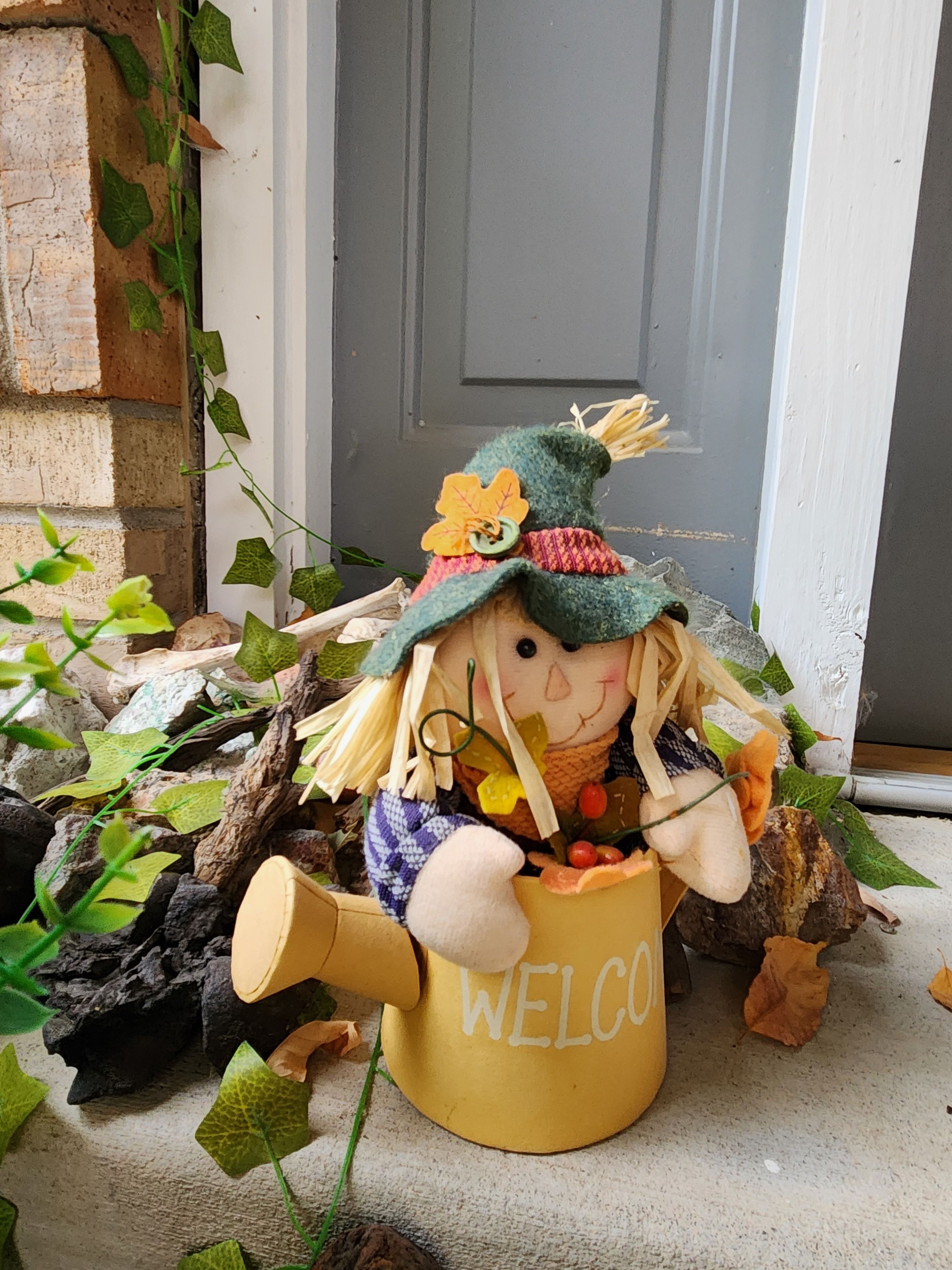 A scarecrow built from clothes already in the closet is often the cheapest single item on the whole porch.
Which Approach Offers Better Value?
For a single small porch, DIY wins on cost by a wide margin, and none of the twenty ideas above require special skills or tools beyond a staple gun or zip ties. The materials add up to $125-$325 depending on how full a display you’re after, well under even the least expensive professional package.
A porch decorator starts to make more sense for a genuinely large entryway (a wide wraparound porch, a commercial storefront, or a household that simply doesn’t have a free afternoon) where the $750-$1,275+ packages include design, sourcing, and end-of-season removal as part of the price. For most homes, that’s paying for convenience, not a better-looking porch.
Frequently Asked Questions
How much does it cost to decorate a small front porch for fall?
A DIY refresh with a wreath, mums, pumpkins, a doormat, and lights typically runs $125 to $235 in materials. A fuller display with pillow covers, a sign, and reusable faux pumpkins lands around $165 to $325.
What is the cheapest way to decorate a porch for fall?
Buy pumpkins by the pound at a patch instead of by the piece at a store, refill planters already on the porch instead of buying new ones, and swap pillow covers rather than whole pillows. A DIY grapevine wreath filled with dried leaves from the yard can bring the wreath cost close to zero.
Are real or fake pumpkins cheaper in the long run?
Real pumpkins are cheaper for a single season but need rebuying every year at $4-$20 each. Faux pumpkins cost more upfront, $8-$25 each, but last five to ten years, so they’re cheaper over multiple seasons. A mix of both is common: real ones for carving and smell, faux ones for the bulk of the display.
Is it safe to use candles in porch decorations?
NFPA data shows decorations were the first item ignited in an average of 860 home structure fires a year, with candles responsible for 38 percent of them. Battery-operated flameless candles give the same look without that risk and cost only slightly more than real ones.
How much do professional pumpkin decorators charge?
Reported pricing runs from about $259-$300 for a modest small-porch package up to $750-$1,275 or more for a large, pumpkin-heavy entryway, based on reporting from Axios and Fox Business on the growing “pumpkin concierge” industry.
When should I put up fall porch decor?
Most households start in early-to-mid September, ahead of Halloween shopping. Neutral pieces like a natural-tone wreath, mums, and pumpkins work straight through Thanksgiving without needing to be swapped out.
Can I reuse fall porch decorations for both Halloween and Thanksgiving?
Yes, if the palette stays neutral. Natural wreaths, mums, cornstalks, and unpainted pumpkins carry through both holidays. Anything explicitly Halloween-themed (spiderwebs, skeletons) typically needs swapping out after October 31.
What’s the biggest fall porch decorating mistake?
Buying a full-size pumpkin for every spot on the porch instead of mixing in cheaper mini pumpkins and gourds, and using real candles in jack-o-lanterns or lanterns near the door instead of flameless ones.
Do I need real mums, or can artificial ones work?
Real mums are inexpensive, $6-$10 for a small pot, and bloom for four to six weeks, which covers most of the fall season. Artificial mums cost more upfront but skip the watering and wilting issues, making them a reasonable choice for a porch that doesn’t get regular attention.
How many pumpkins does a small front porch actually need?
Most small-porch displays covered by professional decorators use somewhere between six and twelve pumpkins across mixed sizes. For a DIY budget version, two or three medium pumpkins plus a half dozen minis usually reads as full without overcrowding a narrow step or landing.
Final Thoughts
The honest budget math on a fall porch favors a few well-chosen pieces over a pile of small ones. A wreath bought once, mums in containers already on hand, pumpkins priced by the pound instead of the piece, and flameless candles instead of real ones covers most of what actually makes a porch look finished, for well under what a professional package costs and without the fire risk that real candles and dried cornstalks carry. Sketch the layout before shopping, buy the reusable pieces once, and let next year’s pumpkins be the only thing on the list that needs replacing.
-
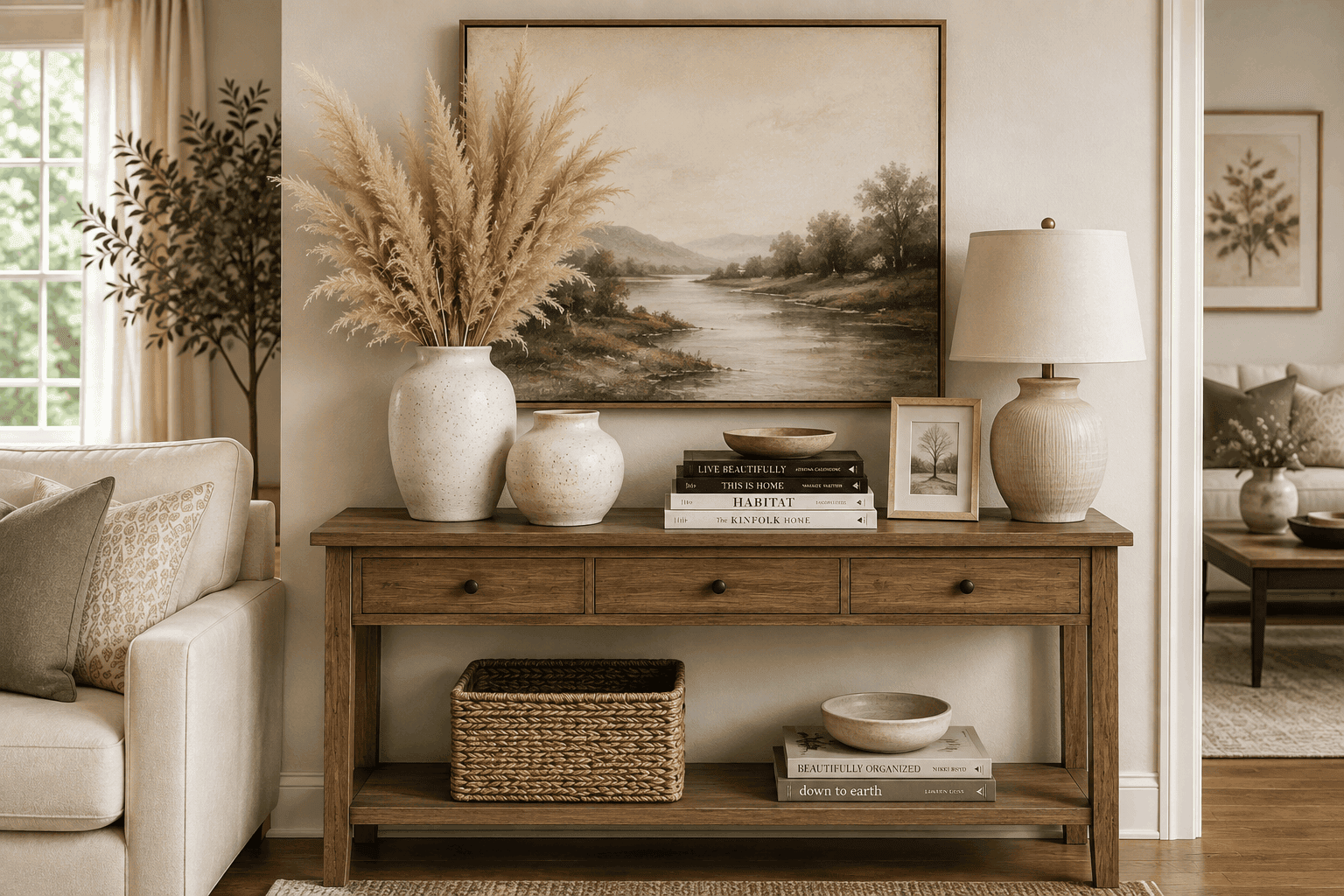
Living Room Vase Decor Ideas
.cb-root{
–ink:#2B2E33;
–ink-soft:#5B5F66;
–paper:#F3F2ED;
–paper-raised:#FFFFFF;
–line:#DEDCD3;
–sage:#6B7F76;
–sage-dark:#4F5F58;
–sage-bg:#EAEEEC;
–clay:#A85D45;
–clay-bg:#F3E7E2;
–water:#3E6E8E;
–water-bg:#E6EEF2;
}
.cb-root *{ box-sizing:border-box; }
.cb-root{ margin:0; background:var(–paper); color:var(–ink); font-family:’Inter’,-apple-system,sans-serif; font-size:16.5px; line-height:1.72; }
.cb-wrap{ max-width:820px; margin:0 auto; padding:0 22px 50px; }
.cb-root h1,.cb-root h2,.cb-root h3{ font-family:’Fraunces’,Georgia,serif; color:var(–ink); margin:0; }
.cb-root a{ color:var(–sage-dark); }
.cb-root p{ margin:0 0 15px; }.cb-header-band{ background:var(–ink); color:var(–paper); padding:44px 0 30px; }
.cb-header-band .cb-eyebrow{ font-family:’JetBrains Mono’,monospace; font-size:11.5px; letter-spacing:0.18em; text-transform:uppercase; color:#B7C4BE; margin-bottom:14px; }
.cb-header-band h1{ font-size:clamp(25px,4.6vw,40px); font-weight:600; line-height:1.22; color:#fff; margin-bottom:14px; max-width:680px; }
.cb-header-band p.cb-lede{ color:#C7C9C6; font-size:16.5px; max-width:640px; margin-bottom:0; }
.cb-grout-strip{ height:8px; display:flex; }
.cb-grout-strip span{ flex:1; border-right:2px solid var(–paper); }
.cb-grout-strip span:last-child{ border-right:none; }.cb-root h2{ font-size:25px; font-weight:600; margin:48px 0 14px; padding-bottom:10px; border-bottom:2px solid var(–ink); }
.cb-root h3{ font-size:19px; font-weight:600; margin:24px 0 8px; }.cb-quick-answer{ background:var(–water-bg); border-left:4px solid var(–water); border-radius:4px; padding:16px 18px; margin:24px 0; }
.cb-quick-answer p{ margin:0; font-size:15.5px; color:#294456; }
.cb-quick-answer p+p{ margin-top:10px; }
.cb-quick-answer p strong{ color:var(–ink); }.cb-tagrow{ display:flex; gap:8px; flex-wrap:wrap; margin:16px 0 8px; }
.cb-tag{ font-family:’JetBrains Mono’,monospace; font-size:11px; letter-spacing:0.06em; text-transform:uppercase; border:1px solid var(–ink); color:var(–ink); padding:4px 9px; border-radius:3px; }/* ———- scale bars ———- */
.cb-scale-box{ margin:22px 0 8px; padding:22px 20px 18px; background:var(–paper-raised); border:1px solid var(–line); border-radius:8px; }
.cb-scale-row{ display:flex; align-items:center; gap:14px; margin-bottom:14px; }
.cb-scale-row:last-child{ margin-bottom:0; }
.cb-scale-label{ width:190px; flex-shrink:0; font-size:14px; font-weight:600; }
.cb-scale-track{ flex:1; height:14px; background:var(–sage-bg); border-radius:7px; overflow:hidden; }
.cb-scale-fill{ height:100%; background:var(–water); border-radius:7px; }
.cb-scale-fill.clay{ background:var(–clay); }
.cb-scale-val{ width:190px; flex-shrink:0; font-family:’JetBrains Mono’,monospace; font-size:12px; color:var(–ink-soft); text-align:right; }
.cb-scale-note{ font-family:’JetBrains Mono’,monospace; font-size:11.5px; color:var(–ink-soft); margin-top:14px; }/* ———- image blocks ———- */
.cb-img-block{ margin:22px 0; border-radius:8px; overflow:hidden; border:1px solid var(–line); }
.cb-img-block img{ width:100%; height:320px; object-fit:cover; display:block; }
.cb-img-caption{ font-family:’JetBrains Mono’,monospace; font-size:11.5px; color:var(–ink-soft); padding:9px 12px; background:var(–paper-raised); border-top:1px solid var(–line); }.cb-img-suggest{ margin:22px 0; border:1px dashed var(–water); border-radius:8px; padding:16px 18px; background:var(–water-bg); }
.cb-img-suggest-label{ font-family:’JetBrains Mono’,monospace; font-size:11px; letter-spacing:0.08em; text-transform:uppercase; color:var(–water); font-weight:600; margin-bottom:6px; }
.cb-img-suggest p{ margin:0; font-size:14px; color:#294456; }/* ———- entry blocks ———- */
.cb-block{ margin-top:36px; padding-top:22px; border-top:1px dashed var(–line); }
.cb-block:first-of-type{ margin-top:20px; padding-top:0; border-top:none; }
.cb-block-head{ display:flex; align-items:baseline; gap:12px; margin-bottom:4px; }
.cb-block-num{ font-family:’JetBrains Mono’,monospace; font-size:13px; color:var(–clay); border:1px solid var(–clay); border-radius:3px; padding:2px 7px; flex-shrink:0; }
.cb-block h3{ margin:0; }
.cb-block-tag{ display:inline-block; font-family:’JetBrains Mono’,monospace; font-size:10.5px; text-transform:uppercase; letter-spacing:0.05em; background:var(–sage-bg); color:var(–sage-dark); padding:3px 8px; border-radius:3px; margin:6px 0 10px; }
.cb-block-tag.clay{ background:var(–clay-bg); color:var(–clay); }
.cb-block-specs{ font-family:’JetBrains Mono’,monospace; font-size:12px; color:var(–ink-soft); background:var(–paper-raised); border-left:3px solid var(–sage); padding:8px 12px; margin:10px 0 12px; }
.cb-block-specs span{ display:block; margin-bottom:2px; }
.cb-block-specs span:last-child{ margin-bottom:0; }.cb-group-label{ font-family:’JetBrains Mono’,monospace; font-size:12px; letter-spacing:0.1em; text-transform:uppercase; color:var(–water); background:var(–water-bg); display:inline-block; padding:6px 12px; border-radius:4px; margin:34px 0 4px; }
.cb-table-wrap{ overflow-x:auto; border:1px solid var(–line); border-radius:6px; margin:16px 0; }
.cb-table{ width:100%; border-collapse:collapse; font-size:14px; min-width:600px; }
.cb-table th{ background:var(–ink); color:#fff; text-align:left; padding:10px 12px; font-family:’JetBrains Mono’,monospace; font-size:10px; letter-spacing:0.04em; text-transform:uppercase; }
.cb-table td{ padding:9px 12px; border-bottom:1px solid var(–line); }
.cb-table tr:nth-child(even) td{ background:#FAFAF7; }
.cb-table td:first-child{ font-weight:600; }.cb-tip-list{ display:flex; flex-direction:column; gap:10px; margin:18px 0; }
.cb-tip-list .item{ display:flex; gap:12px; align-items:flex-start; }
.cb-tip-list .dot{ width:8px; height:8px; border-radius:50%; background:var(–sage-dark); margin-top:8px; flex-shrink:0; }
.cb-tip-list .txt strong{ display:block; font-size:15px; margin-bottom:2px; }
.cb-tip-list .txt p{ margin:0; font-size:14.5px; color:var(–ink-soft); }.cb-mistake-list{ display:flex; flex-direction:column; gap:12px; margin:18px 0; }
.cb-mistake-list .item{ display:flex; gap:14px; background:var(–paper-raised); border:1px solid var(–line); border-radius:6px; padding:14px 16px; }
.cb-mistake-list .num{ font-family:’Fraunces’,serif; font-weight:600; font-size:22px; color:var(–clay); flex-shrink:0; line-height:1.3; }
.cb-mistake-list .txt strong{ display:block; font-size:15.5px; margin-bottom:3px; }
.cb-mistake-list .txt p{ margin:0; font-size:14.5px; color:var(–ink-soft); }.cb-faq-item{ border-top:1px solid var(–line); padding:18px 0; }
.cb-faq-item:last-child{ border-bottom:1px solid var(–line); }
.cb-faq-item .q{ font-family:’Fraunces’,serif; font-weight:600; font-size:17px; margin-bottom:6px; }
.cb-faq-item .a{ font-size:15px; margin:0; color:var(–ink-soft); }@media (max-width:600px){ .cb-scale-label{ width:110px; } .cb-scale-val{ width:100px; } .cb-img-block img{ height:220px; } }
Living Room Decor Guide · Updated 2026
Living Room Vase Decor Ideas
Most “vase decor” roundups are a photo gallery with a caption underneath each one. Here’s the actual sizing math, the placement-specific ideas, and the mistakes that quietly make an otherwise good vase look wrong.

A vase is one of the few pieces of living room decor you can move, refill, and restyle in under a minute, and yet most people buy exactly one and never touch it again. Scroll through most “living room vase ideas” articles and the advice reads the same way for a coffee table, a console, and a bare floor corner, even though each surface actually calls for a different size, a different grouping, and often a different material entirely.
This guide is organized by where the vase actually goes, not just by style photos. It covers coffee tables, console tables, shelves, mantels, and floors individually, plus the size chart and the mistake list that most roundups skip over completely.
Quick answer: Match the vase to the surface, not the other way around. Coffee table vases stay under 14 inches so they don’t block sightlines across the table; console and mantel vases can run 14 to 22 inches; a floor vase works best at roughly a third to half the height of whatever furniture it sits beside, usually 24 to 40 inches in an average living room. Group vases in odd numbers at different heights, and repeat a color that’s already in the room instead of buying one to match it exactly. The single biggest mistake isn’t the vase itself, it’s forgetting that at least one of them should be left empty.
Why Proportion Is the Rule Everyone Skips
A vase is small enough that it’s easy to treat as an afterthought, something picked up on a store run and set down wherever there’s a gap. But scale is exactly why some living rooms look styled and others look like they have random objects sitting on every flat surface. The same vase that anchors an empty corner disappears on a console table, and the pair that looks right flanking a mirror on a mantel looks stiff and overly matched on a bookshelf.
Different surfaces also call for different math. A coffee table vase has to stay low enough that it doesn’t block a conversation across the table. A floor vase has the opposite problem: too short, and it reads as an accident rather than a choice. The ideas in this guide are organized by surface for that reason, since the right vase for a shelf is rarely the right vase for an empty corner of the floor.
Match the surface, not the trend
Odd numbers over matched pairs
Empty is a valid choiceVase Size by Placement
A rough height range for each spot covered in this guide. These are starting points, not fixed rules, a larger, open-plan room can usually handle the top of each range, and a smaller room or lower ceiling looks better nearer the bottom.
Bud vase (shelf gaps)4-8 inShelf or bookcase6-14 inCoffee table8-14 inMantel10-20 inConsole table14-22 inFloor vase24-40 inBar length shows relative height, not any other measure. A floor vase is roughly five times the height of a small bud vase, which is exactly why the two need completely different fillers.

Vase Materials Compared
Material sets the tone of a room more than most people expect, and it also decides which fillers actually work in it.
Material Best for Best filler Upkeep Glass Modern, contemporary, minimalist Fresh flowers Needs regular water changes; shows the stems Ceramic / stoneware Almost any style Anything Lowest upkeep, most versatile material Terracotta Farmhouse, boho, coastal Dried grasses, branches Not watertight; best kept dry Metal Industrial, glam, minimalist Dried or faux stems Can water-spot inside; pair with dry filler Wood / rattan Boho, coastal, Scandinavian Dried stems only Not watertight at all Living Room Vase Decor Ideas by Placement
Ten ideas, grouped by the surface they’re built for, each with the size or filler detail that makes it actually work.
Coffee Table01A Single Low, Wide Vase
Coffee table default
A low, wide vase with a loose bunch of one flower type holds up as a lone centerpiece as long as the rest of the table stays clear. It’s the simplest option on this list and still the one that works in almost any living room.
BEST FOR: A coffee table used as the main seating-area surfaceHEIGHT: Stay under 14 inches so it doesn’t block sightlinesTIP: Place it toward one side or corner, not dead center02A Trio of Bud Vases
Adds color without bulk
A trio of narrow bud vases, each with a single stem, spreads color across the table without adding bulk, and it works especially well on a long, rectangular coffee table where one vase alone can look lost.
BEST FOR: Long, rectangular coffee tablesFILLER: One stem per vase, mixed slightly in heightTIP: Group them off to one side rather than spacing them evenlyConsole & Mantel03A Tall-and-Short Pairing on a Console
Breaks up console symmetry
A tall, slim vase on one end of a console table, balanced by a shorter cluster on the other end, reads as more current than two identical vases bookending the table.
BEST FOR: Consoles set under a mirror or piece of artHEIGHT: 14-22 in on one end, a low cluster on the otherTIP: Keep the tall vase below the bottom edge of whatever hangs above it04Matched Mantel Pairs
The one spot symmetry wins
Two identical vases, one on each end of the mantel, with a clock, mirror, or art in the middle, is a classic look that hasn’t gone out of style. A mantel is usually the most symmetrical spot in the room already, so a matched pair fits it better than it fits anywhere else.
BEST FOR: Symmetrical mantels flanking a clock or mirrorHEIGHT: 10-20 in each, matchedTIP: This is the one spot where a matched pair beats an odd groupingFloor05A Statement Floor Vase in an Empty Corner
Fixes bare corners
An empty corner is the fastest problem a floor vase solves. Fill it with stems that reach a little above the rim, pampas grass, dried branches, or tall faux greenery, rather than stopping the arrangement flush with the opening.
BEST FOR: A bare corner with no furniture nearbyHEIGHT: 24-40 in, about a third to half the wall heightTIP: Let stems rise a few inches above the rim rather than stopping flush06A Floor Vase Beside a Sofa Arm
Closes an awkward gap
The gap between a sofa arm and the wall is one of the most common dead zones in a living room, and a floor vase fills it without adding another piece of furniture to work around.
BEST FOR: Closing the gap between a sofa and the wallHEIGHT: Roughly a third to half the height of the sofa armTIP: Leave enough floor space around it that it isn’t underfootShelf & Bookcase07A Vase Used as a Bookend
Does double duty
A vase set at the end of a row of books gives it a job beyond decoration, and it keeps the shelf from looking too deliberately styled the way a full lineup of decorative objects can.
BEST FOR: Open shelving with loose, unsupported booksHEIGHT: 6-12 in, heavier ceramic or stoneTIP: Pick a solid, weighted vase, not a lightweight one that will tip08One Empty Vase Per Shelf
Costs nothing to try
An empty vase, left deliberately bare on a shelf that otherwise holds books or framed photos, gives the whole bookcase a place for the eye to rest instead of landing on every shelf at once.
BEST FOR: Shelves that already feel busy with books and framesFILLER: None, on purposeTIP: An unusual shape or glaze does the job a filler would otherwise doFillers & Styling09Dried Pampas Grass Instead of Fresh Flowers
No water, no upkeep
Pampas grass fills a large vase quickly and has enough texture to look intentional even with just a handful of stems, and unlike fresh flowers, it holds up for months without any attention at all.
BEST FOR: Floor and console vasesUPKEEP: No water; lasts for monthsTIP: One large, fanned-out bunch fills a vase cheaper than several small ones10Rotate the Filler, Not the Vase
One vase, four seasons
Swapping what’s inside a vase, rather than buying a new one every season, is the easiest way to keep a living room feeling current without redecorating on a schedule.
BEST FOR: Keeping one or two vases relevant all yearUPKEEP: Swapping stems costs far less than buying new vasesTIP: Keep one neutral vase in permanent rotation and change only what’s inside it
Seasonal Vase Fillers at a Glance
Swapping the filler, not the vase, is the easiest way to keep a living room feeling current through the year.
Season Filler Vase pairing Spring Tulips, daffodils, cherry blossom branches Clear glass, light ceramic Summer Hydrangeas, sunflowers, loose garden bunch Brighter or more colorful vase Fall Pampas grass, dried wheat, turning branches Terracotta, amber glass Winter Pine, evergreen, bare white branches Metallic vase Holidays Small ornaments, pinecones Clear glass, everyday vase Vase Decorating Mistakes to Avoid
01Buying one vase and asking it to do everythingA single vase moved between the coffee table, a shelf, and the mantel usually ends up wrong in all three spots, since each surface calls for a different height and shape.
02Centering it exactlyDead-center placement on a coffee table or console can look stiff. Off to one side, or grouped with one or two other objects, almost always looks more natural.
03Matching the vase to the walls or sofaA vase in the exact same color as the room around it tends to disappear rather than stand out. Echo a color from elsewhere in the room instead of matching the biggest surface in it.
04Ignoring scaleA tiny bud vase alone on a large console looks lost, and an oversized floor vase in a small nook overwhelms the space around it.
05Using the same height across a whole groupingThree vases of identical height read as a matched set rather than a curated display. Vary the height, even slightly, across any grouping of two or more.
06Letting fresh flowers go too long without waterA wilting arrangement undercuts an otherwise well-styled vase faster than almost anything else on this list. A dried or faux filler holds up better if refreshing water isn’t realistic.
07Filling every single vaseA room where every vase is stuffed with flowers or greenery starts to feel busy. Leaving at least one vase empty gives the eye somewhere to rest.
08Mixing finishes with nothing in commonCombining glass, metal, and ceramic in one grouping can look intentional or look random, and the difference usually comes down to repeating at least one color or material across the pieces.
The Rules That Actually Work
Scale the vase to what’s around it.Aim for a vase somewhere between a third and two-thirds the height of whatever it sits next to, a sofa arm, a stack of books, the wall space above it.
Group in odd numbers.Three vases at different heights read as considered. Two identical vases read as matched furniture, symmetry has its place on a mantel, but not everywhere.
Repeat a color instead of matching one.Pick a shade that already shows up elsewhere in the room, a pillow, a rug, a piece of art, so the vase feels connected rather than dropped in.
Mix at least one texture.Pairing a matte vase with a glossy one, or smooth glass with rough terracotta, gives the eye something to catch on instead of a flat, uniform display.
Leave something empty.A vase with an interesting shape or finish can stand on its own as a small sculpture, and an empty one gives a grouping room to breathe.

Vase Colors for Every Living Room Palette
Color Best for Note White Any room, safest first purchase Reads as sculptural, pairs with any filler or style Black Rooms with light, neutral palettes Acts as an anchor point, like a piece of dark-framed art Neutral / earth tones Multi-vase groupings Lets the grouping or filler be the focal point, not the vase Bold single color One accent piece, not several Repeat a shade already present somewhere else in the room For a modern living room specifically, matte white, matte black, and warm neutral stoneware are the three safest choices, since all three age well and don’t tie the room to a color scheme you might want to change in a year or two.
Frequently Asked Questions
How do you decorate a vase in the living room?
Start by picking one placement, coffee table, console, shelf, or floor, and match the vase height to that surface using the size chart above. From there, either fill it with flowers, dried stems, or branches, or leave it empty if the room already has enough going on.
What should I put inside a decorative vase?
Fresh flowers, dried stems like pampas grass or eucalyptus, faux branches, or nothing at all. An empty vase with an interesting shape or finish works as its own piece of decor.
Where should a vase be placed in the living room?
The most common spots are the coffee table, a console or sofa table, open shelves, a mantel, and the floor beside furniture or in an empty corner. Pick a spot where the vase fills an actual visual gap, not one that blocks a walking path or a window.
What type of vase is best for a living room?
It depends on the room’s existing materials more than any fixed rule. Glass and metal suit modern or minimalist rooms; ceramic and stoneware work in almost any style; terracotta and woven vases fit farmhouse, boho, and coastal rooms. A matte ceramic vase in a neutral color is the safest first purchase.
How many vases should you decorate with?
Odd numbers, one, three, or five, tend to look more natural than even numbers, since even groupings can look overly matched. A single large vase works well as a standalone statement piece; groups of three at varied heights suit shelves, consoles, or mantels.
How do you style a large floor vase?
Choose a vase roughly a third to half the height of whatever it sits beside, then fill it with stems that reach a little above the rim rather than stopping flush. Place it somewhere genuinely empty, a bare corner or beside a sofa arm, and leave enough floor space around it that it doesn’t become a walking hazard.
What flowers look best in decorative vases?
Tulips, hydrangeas, peonies, and ranunculus hold their shape well in fresh arrangements. For something lower-maintenance, dried or faux pampas grass and eucalyptus last for months and still look intentional.
Can you decorate with empty vases?
Yes. A vase with a strong shape, an unusual glaze, ribbed texture, or asymmetrical silhouette, works as sculpture on its own and often looks more deliberate than one packed with filler, especially in minimalist or modern rooms.
What color vase goes with a modern living room?
Matte white, matte black, and warm neutral stoneware are the safest choices, since all three read as sculptural rather than decorative. A single vase in a saturated color also works as an accent, as long as it repeats a shade already present in the room.
How do you decorate a coffee table with a vase?
Keep the vase under about 14 inches so it doesn’t block sightlines across the table, and place it off-center rather than in the exact middle. Pairing it with one or two other objects, a tray, a candle, a stack of books, usually looks more intentional than the vase sitting alone.
Final Thoughts
The living rooms that look effortlessly styled usually aren’t working with more vases, just better-matched ones. A single vase sized correctly for its surface does more than three mismatched ones spread across the room. Start with one spot, a coffee table, a console, or that one empty corner, match it against the chart above, and let the rest of the room follow from there.
-
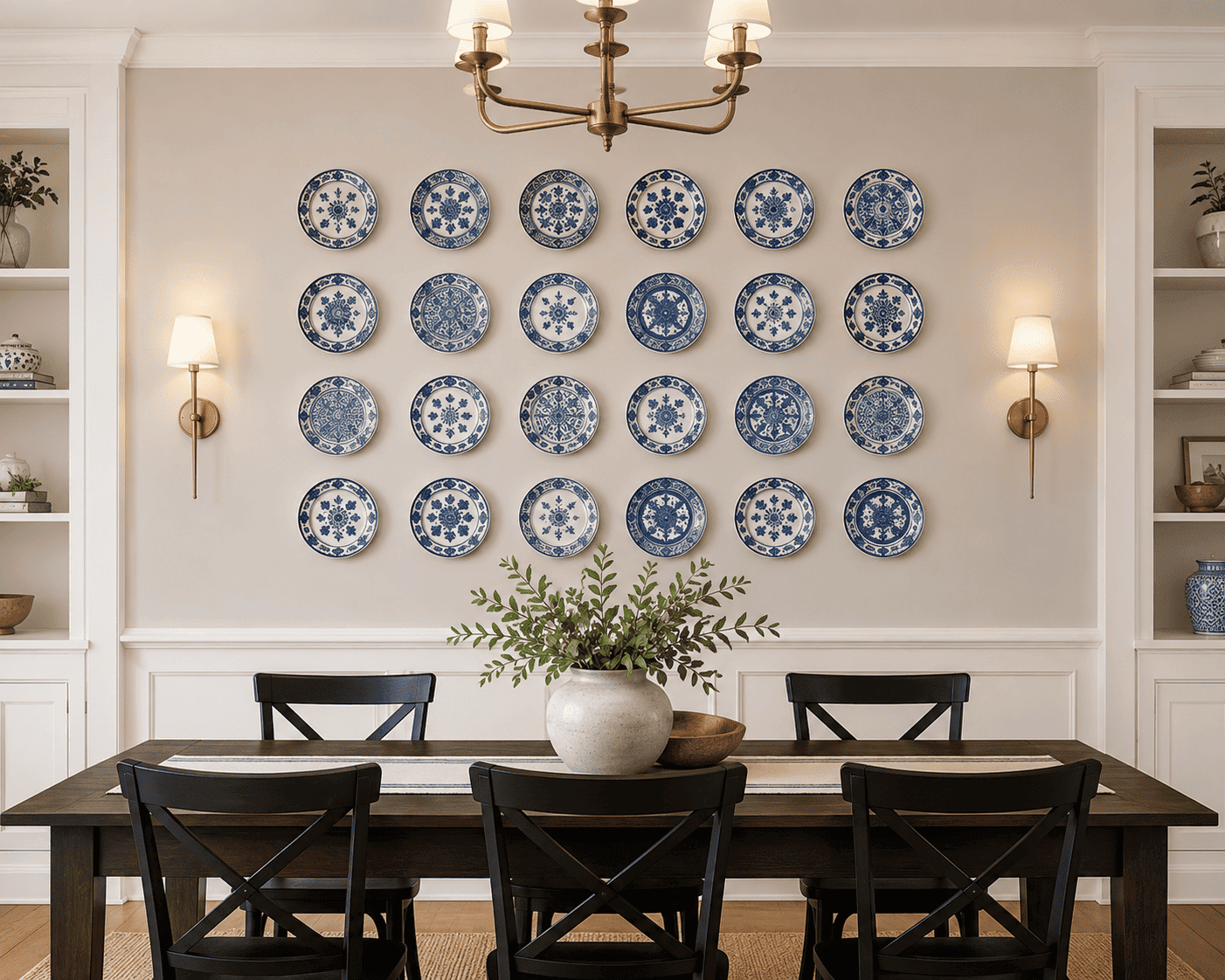
20 Best Plate Wall Ideas for Every Room (2026)
.pw-root{
–ink:#2B2E33;
–ink-soft:#5B5F66;
–paper:#F3F2ED;
–paper-raised:#FFFFFF;
–line:#DEDCD3;
–sage:#6B7F76;
–sage-dark:#4F5F58;
–sage-bg:#EAEEEC;
–clay:#A85D45;
–clay-bg:#F3E7E2;
–water:#3E6E8E;
–water-bg:#E6EEF2;
}
.pw-root *{ box-sizing:border-box; }
.pw-root{ margin:0; background:var(–paper); color:var(–ink); font-family:’Inter’,-apple-system,sans-serif; font-size:16.5px; line-height:1.72; }
.pw-wrap{ max-width:820px; margin:0 auto; padding:0 22px 50px; }
.pw-root h1,.pw-root h2,.pw-root h3{ font-family:’Fraunces’,Georgia,serif; color:var(–ink); margin:0; }
.pw-root a{ color:var(–sage-dark); }
.pw-root p{ margin:0 0 15px; }.pw-header-band{ background:var(–ink); color:var(–paper); padding:44px 0 30px; }
.pw-header-band .pw-eyebrow{ font-family:’JetBrains Mono’,monospace; font-size:11.5px; letter-spacing:0.18em; text-transform:uppercase; color:#B7C4BE; margin-bottom:14px; }
.pw-header-band h1{ font-size:clamp(25px,4.6vw,40px); font-weight:600; line-height:1.22; color:#fff; margin-bottom:14px; max-width:680px; }
.pw-header-band p.pw-lede{ color:#C7C9C6; font-size:16.5px; max-width:640px; margin-bottom:0; }
.pw-grout-strip{ height:8px; display:flex; }
.pw-grout-strip span{ flex:1; border-right:2px solid var(–paper); }
.pw-grout-strip span:last-child{ border-right:none; }.pw-root h2{ font-size:25px; font-weight:600; margin:48px 0 14px; padding-bottom:10px; border-bottom:2px solid var(–ink); }
.pw-root h3{ font-size:19px; font-weight:600; margin:24px 0 8px; }.pw-quick-answer{ background:var(–water-bg); border-left:4px solid var(–water); border-radius:4px; padding:16px 18px; margin:24px 0; }
.pw-quick-answer p{ margin:0; font-size:15.5px; color:#294456; }
.pw-quick-answer p+p{ margin-top:10px; }
.pw-quick-answer p strong{ color:var(–ink); }.pw-tagrow{ display:flex; gap:8px; flex-wrap:wrap; margin:16px 0 8px; }
.pw-tag{ font-family:’JetBrains Mono’,monospace; font-size:11px; letter-spacing:0.06em; text-transform:uppercase; border:1px solid var(–ink); color:var(–ink); padding:4px 9px; border-radius:3px; }.pw-hero-img{ margin:22px 0; border-radius:8px; overflow:hidden; border:1px solid var(–line); }
.pw-hero-img img{ width:100%; height:340px; object-fit:cover; display:block; }
.pw-hero-caption{ font-family:’JetBrains Mono’,monospace; font-size:11.5px; color:var(–ink-soft); padding:9px 12px; background:var(–paper-raised); border-top:1px solid var(–line); }/* ———- idea image / placeholder ———- */
.pw-idea-img{ width:100%; height:200px; border-radius:6px; overflow:hidden; margin-bottom:10px; border:1px solid var(–line); }
.pw-idea-img img{ width:100%; height:100%; object-fit:cover; display:block; }
.pw-idea-placeholder{ width:100%; height:120px; border-radius:6px; margin-bottom:10px; border:1px dashed var(–water); background:var(–water-bg); display:flex; align-items:center; justify-content:center; padding:12px; text-align:center; }
.pw-idea-placeholder span{ font-family:’JetBrains Mono’,monospace; font-size:11.5px; color:#294456; }/* ———- scale bars ———- */
.pw-scale-box{ margin:22px 0 8px; padding:22px 20px 18px; background:var(–paper-raised); border:1px solid var(–line); border-radius:8px; }
.pw-scale-row{ display:flex; align-items:center; gap:14px; margin-bottom:14px; }
.pw-scale-row:last-child{ margin-bottom:0; }
.pw-scale-label{ width:150px; flex-shrink:0; font-size:14px; font-weight:600; }
.pw-scale-track{ flex:1; height:14px; background:var(–sage-bg); border-radius:7px; overflow:hidden; }
.pw-scale-fill{ height:100%; background:var(–water); border-radius:7px; }
.pw-scale-val{ width:150px; flex-shrink:0; font-family:’JetBrains Mono’,monospace; font-size:12px; color:var(–ink-soft); text-align:right; }
.pw-scale-note{ font-family:’JetBrains Mono’,monospace; font-size:11.5px; color:var(–ink-soft); margin-top:14px; }/* ———- idea blocks ———- */
.pw-idea-block{ margin-top:34px; padding-top:20px; border-top:1px dashed var(–line); }
.pw-idea-block:first-of-type{ margin-top:20px; padding-top:0; border-top:none; }
.pw-idea-head{ display:flex; align-items:baseline; gap:12px; margin-bottom:4px; }
.pw-idea-num{ font-family:’JetBrains Mono’,monospace; font-size:13px; color:var(–clay); border:1px solid var(–clay); border-radius:3px; padding:2px 7px; flex-shrink:0; }
.pw-idea-block h3{ margin:0; }
.pw-idea-tag{ display:inline-block; font-family:’JetBrains Mono’,monospace; font-size:10.5px; text-transform:uppercase; letter-spacing:0.05em; background:var(–sage-bg); color:var(–sage-dark); padding:3px 8px; border-radius:3px; margin:6px 0 10px; }
.pw-idea-tag.pw-advanced{ background:var(–clay-bg); color:var(–clay); }
.pw-idea-specs{ font-family:’JetBrains Mono’,monospace; font-size:12px; color:var(–ink-soft); background:var(–paper-raised); border-left:3px solid var(–sage); padding:8px 12px; margin:10px 0 12px; }
.pw-idea-specs span{ display:block; margin-bottom:2px; }
.pw-idea-specs span:last-child{ margin-bottom:0; }.pw-group-label{ font-family:’JetBrains Mono’,monospace; font-size:12px; letter-spacing:0.1em; text-transform:uppercase; color:var(–water); background:var(–water-bg); display:inline-block; padding:6px 12px; border-radius:4px; margin:34px 0 4px; }
.pw-table-wrap{ overflow-x:auto; border:1px solid var(–line); border-radius:6px; margin:16px 0; }
.pw-table{ width:100%; border-collapse:collapse; font-size:14px; min-width:600px; }
.pw-table th{ background:var(–ink); color:#fff; text-align:left; padding:10px 12px; font-family:’JetBrains Mono’,monospace; font-size:10px; letter-spacing:0.04em; text-transform:uppercase; }
.pw-table td{ padding:9px 12px; border-bottom:1px solid var(–line); }
.pw-table tr:nth-child(even) td{ background:#FAFAF7; }
.pw-table td:first-child{ font-weight:600; }.pw-tip-list{ display:flex; flex-direction:column; gap:10px; margin:18px 0; }
.pw-tip-list .item{ display:flex; gap:12px; align-items:flex-start; }
.pw-tip-list .dot{ width:8px; height:8px; border-radius:50%; background:var(–sage-dark); margin-top:8px; flex-shrink:0; }
.pw-tip-list .txt strong{ display:block; font-size:15px; margin-bottom:2px; }
.pw-tip-list .txt p{ margin:0; font-size:14.5px; color:var(–ink-soft); }.pw-mistake-list{ display:flex; flex-direction:column; gap:12px; margin:18px 0; }
.pw-mistake-list .item{ display:flex; gap:14px; background:var(–paper-raised); border:1px solid var(–line); border-radius:6px; padding:14px 16px; }
.pw-mistake-list .num{ font-family:’Fraunces’,serif; font-weight:600; font-size:22px; color:var(–clay); flex-shrink:0; line-height:1.3; }
.pw-mistake-list .txt strong{ display:block; font-size:15.5px; margin-bottom:3px; }
.pw-mistake-list .txt p{ margin:0; font-size:14.5px; color:var(–ink-soft); }.pw-faq-item{ border-top:1px solid var(–line); padding:18px 0; }
.pw-faq-item:last-child{ border-bottom:1px solid var(–line); }
.pw-faq-item .q{ font-family:’Fraunces’,serif; font-weight:600; font-size:17px; margin-bottom:6px; }
.pw-faq-item .a{ font-size:15px; margin:0; color:var(–ink-soft); }@media (max-width:600px){ .pw-scale-label{ width:100px; } .pw-scale-val{ width:100px; } .pw-hero-img img{ height:220px; } }
Home Decor Guide · Updated 2026
20 Best Plate Wall Ideas for Every Room
A plate wall is one of the cheapest ways to fill a blank wall with real texture and color. Here’s how to actually plan one, plus the hanger weight ratings most guides skip entirely.
A dense, collected plate wall in Shenzhen, China. The same principle, plates as wall art, spans everywhere from ancient tableware to a modern dining room.Most plate wall guides are really just photo roundups: a grid here, a circle there, a caption telling you it “adds texture.” What they skip is the part that actually determines whether your wall looks intentional or like something fell off a shelf: how much a plate hanger can actually hold, how far apart to space plates so the arrangement reads as one piece instead of scattered dots, and which layouts genuinely suit a narrow hallway versus a wide dining room wall.
This guide covers 20 distinct plate wall styles sorted by layout, color story, and room, plus the arrangement math, hanger weight ratings, and the honest mistakes that make a plate wall look cluttered instead of curated.
20 distinct layouts and styles
Real hanger weight ratings
Room-by-room guidanceQuick answer: Space plates 2 to 3 inches apart for a cohesive look, and lay everything out on the floor (or trace paper templates and tape them to the wall) before you hang a single one. Small plates under 6 inches work fine on adhesive discs; anything over 10 inches or heavier than about 5 pounds needs a wire spring hanger or a wall anchor into a stud, not adhesive alone.
What Is a Plate Wall?
A plate wall is a wall display built from decorative or dinnerware-style plates mounted flat against the wall using hangers, rather than plates used for actual dining. It functions the same way a gallery wall of framed art does, filling vertical space with a curated collection, except the “art” is ceramic, porcelain, or occasionally metal or wood, and it carries texture and dimension a flat framed print can’t.
Why Plate Walls Are Trending in Home Decor
Plate walls sit at the intersection of two decorating trends that have both had staying power: the grandmillennial and cottagecore-adjacent revival of inherited and vintage china, and a broader shift toward decor that looks collected over time rather than bought as a matching set in one trip. A plate wall also solves a genuinely practical problem: heirloom china and thrifted platters that spend their lives in a cabinet get to actually be seen, and a large wall gets filled without the cost of buying a comparable amount of framed art.
20 Best Plate Wall Ideas for Every Room
Sorted into four groups: classic layouts, color and pattern stories, scale and focal-point approaches, and room-specific setups.
Group 1 · Classic Layouts01Classic Symmetrical Grid
Beginner-friendly

Rows and columns of matching or same-sized plates, spaced identically in every direction. It’s the easiest layout to get right on a first attempt because the grid itself does the visual work, and it reads as intentional even with mismatched patterns as long as the sizing and spacing stay consistent.
BEST FOR: Dining rooms, large blank wallsDIFFICULTY: EasyPLATE COUNT: 6-1202Circular (Sunburst) Arrangement
Needs planning

One large plate anchors the center, with smaller plates radiating outward to form a circle or sunburst shape. Mark the center point and use a piece of string as a makeshift compass to pencil a light guide circle before you start, since eyeballing a large circle almost always drifts off-round by the time you reach the far side.
BEST FOR: Wide, empty walls with room to breatheDIFFICULTY: ModeratePLATE COUNT: 9-1503Asymmetrical Organic Cluster
Beginner-friendly

A loose, uneven grouping that leans heavier to one side rather than centering evenly. This is the layout to reach for on a wall interrupted by a window, doorway, or light switch, since it doesn’t depend on a clean, uninterrupted rectangle the way a grid or circle does.
BEST FOR: Awkward walls with obstaclesDIFFICULTY: EasyPLATE COUNT: 5-1004Vertical Column for a Narrow Wall
Beginner-friendly

A single stacked line of plates running top to bottom, sized slightly larger at the bottom and smaller toward the top. It’s the single best layout for the narrow strip of wall between a window and a cabinet, a space too tight for almost any other arrangement on this list.
BEST FOR: Narrow strips between furniture or windowsDIFFICULTY: EasyPLATE COUNT: 3-505Horizontal Row Above Furniture
Beginner-friendly

A single straight line of plates centered over a buffet, console, or headboard. Align every plate along its vertical center line, not its top or bottom edge, since plates of different diameters will look crooked if you align them by the edge instead.
BEST FOR: Above a console, buffet, or headboardDIFFICULTY: EasyPLATE COUNT: 3-6Group 2 · Color and Pattern Stories06Blue and White Transferware Wall
Timeless

Classic blue-and-white china, whether genuine transferware, Delft-style, or modern reproductions, in a loose grouping of mixed sizes. It’s close to foolproof because the color story does the unifying work even when the individual patterns, florals, landscapes, willow patterns, don’t match at all.
BEST FOR: Traditional, farmhouse, or coastal dining roomsDIFFICULTY: EasyPLATE COUNT: 6-1407Monochromatic White-on-White Wall
Modern

All-white plates and platters that lean on shape and texture instead of color: scalloped edges next to smooth rims, round plates next to ovals. This works particularly well against a colored or beadboard wall, where the white ceramics read as sculptural rather than blending into a white wall behind them.
BEST FOR: Modern, farmhouse, or Scandinavian roomsDIFFICULTY: EasyPLATE COUNT: 6-1208Color Gradient (Ombré) Wall
Needs planning

Plates arranged to shift gradually from a dark shade to a light one (or the reverse) across the wall, most often in a single color family like blue or green. Photograph your plates in a single row on the floor before buying more, since a gradient that looks smooth in a store often reveals awkward jumps once it’s next to its neighbors on the actual wall.
BEST FOR: Long horizontal walls, above a sideboardDIFFICULTY: AdvancedPLATE COUNT: 8-1409Mismatched Vintage Collector’s Wall
Grows over time

No color rule, no size rule, just whatever genuinely interesting pieces you’ve found at thrift stores, estate sales, or inherited over the years. Leave real breathing room around the current edges of the group rather than filling the wall completely, so the collection has somewhere to grow as you find more.
BEST FOR: Anyone building a collection over months or yearsDIFFICULTY: EasyPLATE COUNT: Open-endedGroup 3 · Scale and Focal Points10Oversized Statement Platter
Weight matters

One large decorative platter, hung alone or with only one or two small plates nearby, doing the work of an entire gallery wall by itself. This is the layout where hanger weight actually matters most on this list, see the hanging section further down before you buy the hardware.
BEST FOR: Small entryways, above a café tableDIFFICULTY: Easy to arrange, but check hanger weight ratingPLATE COUNT: 1-311Plates Framing a Mirror
Beginner-friendly

Plates arranged in a ring, arc, or symmetrical pair around a central mirror. Hang the mirror first, on a stud if it’s heavy, then work outward from the top and bottom so the plates stay balanced on both sides as you add them.
BEST FOR: Hallways, entryways, bedroomsDIFFICULTY: ModeratePLATE COUNT: 6-10 plus one mirror12Plates Mixed With Framed Art
Gallery-style

Round plates tucked into the gaps between rectangular frames on an otherwise standard gallery wall. The round shapes soften all the hard right angles of a typical frame grouping, and a shared color palette between the art and the plates is what keeps the mix from feeling random.
BEST FOR: Living rooms, existing gallery wallsDIFFICULTY: ModeratePLATE COUNT: 4-8 plus frames13Plates Mixed With Woven Baskets
Boho

Glazed ceramic plates alternated with flat woven baskets, pairing the shine of ceramic against matte, textured fiber. Baskets are lighter than plates, so they can go up with small finishing nails rather than the heavier-duty hangers the ceramics need.
BEST FOR: Breakfast nooks, sunrooms, boho spacesDIFFICULTY: EasyPLATE COUNT: 4-8 plates plus baskets14Layered Plate Rack Display
No hangers needed

Plates set into a wall-mounted wooden plate rack or shelf rather than hung individually, allowing you to layer smaller items like teacups or jugs in front. It’s the easiest style on this list to update seasonally, since nothing is actually mounted to the wall except the rack itself.
BEST FOR: Cottage or farmhouse kitchensDIFFICULTY: EasyPLATE COUNT: 4-10, swappable15Floor-to-Ceiling Statement Wall
Big commitment

A dense arrangement covering an entire vertical section of wall from baseboard to ceiling, mixing shapes and sizes to fill in every gap. Reserve your most durable or least expensive plates for the bottom rows, since that’s the area most likely to get bumped by furniture or foot traffic.
BEST FOR: Narrow nooks, statement cornersDIFFICULTY: AdvancedPLATE COUNT: 20+Group 4 · Room-Specific Setups16Staircase Plate Wall
Needs planning

Plates following the diagonal rake of a staircase, largest at the bottom and smallest toward the top, so the arrangement climbs with you. Lay the group out on the floor at an angle first to work out the spacing, and use hangers rated for extra security here since a staircase wall takes more vibration from foot traffic than a still wall does.
BEST FOR: Stairwells and split-level homesDIFFICULTY: AdvancedPLATE COUNT: 8-1617Dining Room Buffet Wall
Beginner-friendly

A grid, row, or cluster centered directly above a buffet or sideboard, sized to roughly match the furniture’s width. Coordinating the plate colors with a table runner or the room’s existing palette is what makes this feel architectural rather than added on as an afterthought.
BEST FOR: Dining roomsDIFFICULTY: EasyPLATE COUNT: 6-1218Kitchen Breakfast Nook Display
Casual

A small, tightly-spaced grouping mounted just above a banquette or bench, low enough to feel cozy rather than formal. Fruit motifs, stripes, and simple hand-painted patterns tend to suit this spot better than delicate fine china, since it’s a lived-in corner rather than a display case.
BEST FOR: Breakfast nooks, kitchen benchesDIFFICULTY: EasyPLATE COUNT: 3-619Entryway Console Display
Beginner-friendly

A small, punchy grouping of 3 to 5 bold plates above a console table, meant to set the tone the moment someone walks in. Center the group about 6 to 8 inches above the tabletop so it reads as connected to the furniture rather than floating awkwardly high on the wall.
BEST FOR: Entryways, small hallwaysDIFFICULTY: EasyPLATE COUNT: 3-520Seasonal Swappable Plate Wall
Low commitment

A fixed grid of hangers, left permanently mounted, with the plates themselves swapped out for the seasons or holidays. This is the one idea on this list built specifically to solve the “I’ll get bored of this” problem: once the hangers are up, changing the whole look takes minutes instead of a fresh round of measuring and hanging.
BEST FOR: Anyone who likes to redecorate seasonallyDIFFICULTY: Easy after initial setupPLATE COUNT: 6-10, rotatingHow to Arrange Decorative Plates Beautifully
Three rules cover most of what separates a plate wall that looks curated from one that looks cluttered:
Plan on the floor first.Lay the full arrangement out on the floor, or trace each plate onto paper and tape the cutouts to the wall, before a single nail goes in. This is the single most repeated piece of advice across every real plate-wall project for a reason: it catches spacing problems while they cost nothing to fix.
Keep spacing to 2 to 3 inches.That range reads as a unified collection rather than either a cramped cluster or a scattered handful of unrelated plates. Wider spacing, 8 inches or more, is its own deliberate look for a minimal, airy arrangement, but it needs to be consistent across the whole wall to look intentional.
Center the group at eye level.For most layouts, the vertical center of the arrangement should land around 57 to 60 inches from the floor, the standard eye-level height used for gallery walls generally. Above furniture, center on the furniture instead and let eye level be a secondary check.
DIY Plate Wall Ideas on a Budget
A plate wall is one of the least expensive ways to fill a large wall, especially compared to an equivalent amount of framed art. Thrift stores, flea markets, and estate sales are the cheapest sources for individual pieces, often under $5 each, and restaurant supply stores sell bulk sets of plain white plates at a fraction of retail decor prices if you want a matching grid without the hunting. For new pieces, Hobby Lobby, HomeGoods, and Target carry inexpensive seasonal and solid-color plates, IKEA is a reliable source for affordable modern shapes, and Anthropologie, Etsy, and Pottery Barn or West Elm are better starting points if you want artisan or higher-end pieces as the anchor of the wall. Crate & Barrel and Williams Sonoma are worth checking for simple, well-made white plates that work especially well in a monochromatic or grid layout, and Wayfair is a reasonable source for hanger hardware in bulk if you’re outfitting a large wall at once.
Modern vs. Vintage Plate Wall Styles
Factor Modern Vintage Plate sourcing New, matching sets Thrifted, estate sales, inherited Color approach Monochrome or tight palette Mixed patterns, often blue and white Layout Grid, column, or row Circle, cluster, or organic collection Cost Predictable, buy once Cheaper per piece, grows over time Best for Minimalist, Scandinavian, contemporary rooms Farmhouse, cottagecore, traditional rooms How to Hang Decorative Plates Safely
This is the part most plate wall guides skip, and it’s the difference between a display that stays up and one that ends up in pieces on the floor.
Plate size / weight Recommended hanger Typical rating Under 4″ Small adhesive disc Up to 1 lb 4″-8″ Medium adhesive disc 1-3 lbs 10″-12″ Large adhesive disc Up to 5 lbs Large plates / platters XL adhesive disc, or two discs joined by wire Up to 7 lbs per disc 7″-11″ standard dinner plates Wire spring hanger 2-30 lbs depending on gauge and quality Heavy platters, stoneware Wire hanger into a wall anchor or stud Rate for at least double the plate’s actual weight A few things worth knowing before you buy hardware: adhesive disc hangers give the cleanest, most invisible look and work best on smooth, glazed surfaces, but they’re difficult to remove cleanly once mounted, so they suit plates you don’t plan to take down often. Wire spring hangers are more secure for anything on the heavier end and are simple to reposition, but the metal claws show slightly at the plate’s edges unless you match the wire finish to the plate color. Whatever hanger you choose, weigh a stack of the actual plates you’re hanging rather than guessing, manufacturer weight ratings are typically conservative, but exceeding them is still the most common reason a plate wall fails.
Common Plate Wall Decorating Mistakes
01Guessing the layout directly on the wallSkipping the floor-layout or paper-template step is the single biggest reason people end up with extra nail holes and a lopsided final arrangement.
02Underrating the hangerA hanger rated for 2 lbs holding a 4 lb platter is a matter of when, not if, it fails. Always weigh the plate and round up on the hanger rating.
03Inconsistent spacingMixing 2-inch gaps in one section with 6-inch gaps in another is the fastest way to make an otherwise good collection look unplanned.
04Ignoring plate depthPlates with different rim depths sit at different distances from the wall, which is subtle in person but reads as misaligned in photos. Check depth, not just diameter, when matching pieces.
05No unifying thread in a mixed collectionWildly different colors, patterns, and shapes with nothing tying them together reads as random rather than curated. Pick one consistent element, color, era, or shape, to anchor a mixed group.
Tips for Maintaining Decorative Wall Plates
Dust regularly with a dry microfiber cloth.Plates mounted on a wall collect dust faster than plates in a cabinet, since they’re fully exposed on both display and back.
Clean the back before mounting adhesive hangers.A quick wipe with rubbing alcohol removes oils and residue that weaken the adhesive bond over time.
Check hanger tension yearly.Spring-loaded wire hangers lose tension gradually with age. A quick annual check catches a loosening hanger before a plate falls.
Keep valuable or antique pieces out of high-traffic paths.A hallway with heavy foot traffic vibrates more than people expect, which matters more for fragile antique glazes than for sturdy modern stoneware.
Plate Wall vs. Gallery Wall
A plate wall is really a specific type of gallery wall, built entirely or mostly from plates instead of framed art. The practical differences come down to cost and texture: plates are generally cheaper per piece than framed prints, especially thrifted, and they add three-dimensional depth and shadow that a flat framed piece can’t. Framed art offers more control over exact color and subject matter, since you’re choosing the image itself rather than working with whatever pattern a plate happens to have. Most rooms don’t need to choose one over the other. The mixed approach, plates tucked between frames, borrows the strengths of both.
Frequently Asked Questions
How do you hang decorative plates on a wall?
Small, light plates go up cleanly on adhesive disc hangers sized to the plate’s diameter. Standard 7 to 11 inch plates typically use a wire spring hanger with rubber-tipped prongs that grip the rim. Anything large or heavy should go into a wall anchor or stud rather than relying on adhesive alone.
What is the best layout for a plate wall?
There isn’t one universal best layout, it depends on the wall. A symmetrical grid is the easiest for a first attempt and works well on large, uninterrupted walls. An asymmetrical cluster is more forgiving on a wall with windows, doors, or other obstacles in the way.
Can you hang plates without nails?
Yes, for lighter plates. Adhesive disc hangers and Command-style strips both work without nails, though they carry lower weight limits than wire hangers on nails or wall anchors, so they suit smaller and lighter plates better than large platters.
How many plates should be on a plate wall?
Anywhere from 3 to 20 or more, depending on wall size and layout. A small entryway grouping works well with 3 to 5 plates, while a floor-to-ceiling statement wall can use 20 or more. Match the count to the wall’s actual size rather than a fixed number.
Which rooms are best for a plate wall?
Dining rooms and kitchens are the traditional choice since the plates feel thematically at home there, but entryways, hallways, staircases, and even bedrooms all work well, especially for softer, botanical, or pastel plate styles.
Are decorative plate walls still in style?
Yes. Plate walls have had sustained popularity as part of the broader grandmillennial and collected-vintage decor trend, and modern minimalist versions, monochrome grids and sculptural shapes, keep the concept relevant in contemporary rooms too.
How do you arrange plates of different sizes?
Anchor the arrangement with the largest plate first, usually centered, then work outward with progressively smaller pieces. Align plates by their vertical or horizontal center point rather than their edges, since edge-aligning plates of different diameters looks crooked.
What type of plates work best for wall decor?
Ceramic and porcelain plates are the most common choices and hold up well to standard hangers. Handmade pottery tends to run thicker, so measure rim depth before choosing hardware. Melamine and other plastic decorative plates are lighter and easier to hang but read as less substantial up close.
Can vintage plates be used for wall decorations?
Yes, and they’re one of the most popular choices for this exact purpose. Check the weight and condition of older china before choosing hardware, since antique glazes and gold rims can be more delicate than modern stoneware.
How do you clean decorative wall plates?
Dust regularly with a dry microfiber cloth. For a deeper clean, remove the plate if possible and wash with mild soap and water, then dry completely before remounting, especially if it’s going back onto an adhesive hanger.
Final Thoughts
Start with a layout that matches your actual wall, not the one that looked best in a photo. A narrow strip between a window and a cabinet wants a vertical column, not a circle; a wide dining room wall can handle a full grid or an organic cluster that a hallway can’t. Plan it on the floor before you touch the wall, match the hanger to the real weight of the plate, and the rest, color story, pattern mixing, vintage versus modern, comes down to taste rather than risk.
-
20 Best Plate Wall Ideas for Every Room (2026)
.pw-root{
–ink:#2B2E33;
–ink-soft:#5B5F66;
–paper:#F3F2ED;
–paper-raised:#FFFFFF;
–line:#DEDCD3;
–sage:#6B7F76;
–sage-dark:#4F5F58;
–sage-bg:#EAEEEC;
–clay:#A85D45;
–clay-bg:#F3E7E2;
–water:#3E6E8E;
–water-bg:#E6EEF2;
}
.pw-root *{ box-sizing:border-box; }
.pw-root{ margin:0; background:var(–paper); color:var(–ink); font-family:’Inter’,-apple-system,sans-serif; font-size:16.5px; line-height:1.72; }
.pw-wrap{ max-width:820px; margin:0 auto; padding:0 22px 50px; }
.pw-root h1,.pw-root h2,.pw-root h3{ font-family:’Fraunces’,Georgia,serif; color:var(–ink); margin:0; }
.pw-root a{ color:var(–sage-dark); }
.pw-root p{ margin:0 0 15px; }.pw-header-band{ background:var(–ink); color:var(–paper); padding:44px 0 30px; }
.pw-header-band .pw-eyebrow{ font-family:’JetBrains Mono’,monospace; font-size:11.5px; letter-spacing:0.18em; text-transform:uppercase; color:#B7C4BE; margin-bottom:14px; }
.pw-header-band h1{ font-size:clamp(25px,4.6vw,40px); font-weight:600; line-height:1.22; color:#fff; margin-bottom:14px; max-width:680px; }
.pw-header-band p.pw-lede{ color:#C7C9C6; font-size:16.5px; max-width:640px; margin-bottom:0; }
.pw-grout-strip{ height:8px; display:flex; }
.pw-grout-strip span{ flex:1; border-right:2px solid var(–paper); }
.pw-grout-strip span:last-child{ border-right:none; }.pw-root h2{ font-size:25px; font-weight:600; margin:48px 0 14px; padding-bottom:10px; border-bottom:2px solid var(–ink); }
.pw-root h3{ font-size:19px; font-weight:600; margin:24px 0 8px; }.pw-quick-answer{ background:var(–water-bg); border-left:4px solid var(–water); border-radius:4px; padding:16px 18px; margin:24px 0; }
.pw-quick-answer p{ margin:0; font-size:15.5px; color:#294456; }
.pw-quick-answer p+p{ margin-top:10px; }
.pw-quick-answer p strong{ color:var(–ink); }.pw-tagrow{ display:flex; gap:8px; flex-wrap:wrap; margin:16px 0 8px; }
.pw-tag{ font-family:’JetBrains Mono’,monospace; font-size:11px; letter-spacing:0.06em; text-transform:uppercase; border:1px solid var(–ink); color:var(–ink); padding:4px 9px; border-radius:3px; }.pw-hero-img{ margin:22px 0; border-radius:8px; overflow:hidden; border:1px solid var(–line); }
.pw-hero-img img{ width:100%; height:340px; object-fit:cover; display:block; }
.pw-hero-caption{ font-family:’JetBrains Mono’,monospace; font-size:11.5px; color:var(–ink-soft); padding:9px 12px; background:var(–paper-raised); border-top:1px solid var(–line); }/* ———- idea image / placeholder ———- */
.pw-idea-img{ width:100%; height:200px; border-radius:6px; overflow:hidden; margin-bottom:10px; border:1px solid var(–line); }
.pw-idea-img img{ width:100%; height:100%; object-fit:cover; display:block; }
.pw-idea-placeholder{ width:100%; height:120px; border-radius:6px; margin-bottom:10px; border:1px dashed var(–water); background:var(–water-bg); display:flex; align-items:center; justify-content:center; padding:12px; text-align:center; }
.pw-idea-placeholder span{ font-family:’JetBrains Mono’,monospace; font-size:11.5px; color:#294456; }/* ———- scale bars ———- */
.pw-scale-box{ margin:22px 0 8px; padding:22px 20px 18px; background:var(–paper-raised); border:1px solid var(–line); border-radius:8px; }
.pw-scale-row{ display:flex; align-items:center; gap:14px; margin-bottom:14px; }
.pw-scale-row:last-child{ margin-bottom:0; }
.pw-scale-label{ width:150px; flex-shrink:0; font-size:14px; font-weight:600; }
.pw-scale-track{ flex:1; height:14px; background:var(–sage-bg); border-radius:7px; overflow:hidden; }
.pw-scale-fill{ height:100%; background:var(–water); border-radius:7px; }
.pw-scale-val{ width:150px; flex-shrink:0; font-family:’JetBrains Mono’,monospace; font-size:12px; color:var(–ink-soft); text-align:right; }
.pw-scale-note{ font-family:’JetBrains Mono’,monospace; font-size:11.5px; color:var(–ink-soft); margin-top:14px; }/* ———- idea blocks ———- */
.pw-idea-block{ margin-top:34px; padding-top:20px; border-top:1px dashed var(–line); }
.pw-idea-block:first-of-type{ margin-top:20px; padding-top:0; border-top:none; }
.pw-idea-head{ display:flex; align-items:baseline; gap:12px; margin-bottom:4px; }
.pw-idea-num{ font-family:’JetBrains Mono’,monospace; font-size:13px; color:var(–clay); border:1px solid var(–clay); border-radius:3px; padding:2px 7px; flex-shrink:0; }
.pw-idea-block h3{ margin:0; }
.pw-idea-tag{ display:inline-block; font-family:’JetBrains Mono’,monospace; font-size:10.5px; text-transform:uppercase; letter-spacing:0.05em; background:var(–sage-bg); color:var(–sage-dark); padding:3px 8px; border-radius:3px; margin:6px 0 10px; }
.pw-idea-tag.pw-advanced{ background:var(–clay-bg); color:var(–clay); }
.pw-idea-specs{ font-family:’JetBrains Mono’,monospace; font-size:12px; color:var(–ink-soft); background:var(–paper-raised); border-left:3px solid var(–sage); padding:8px 12px; margin:10px 0 12px; }
.pw-idea-specs span{ display:block; margin-bottom:2px; }
.pw-idea-specs span:last-child{ margin-bottom:0; }.pw-group-label{ font-family:’JetBrains Mono’,monospace; font-size:12px; letter-spacing:0.1em; text-transform:uppercase; color:var(–water); background:var(–water-bg); display:inline-block; padding:6px 12px; border-radius:4px; margin:34px 0 4px; }
.pw-table-wrap{ overflow-x:auto; border:1px solid var(–line); border-radius:6px; margin:16px 0; }
.pw-table{ width:100%; border-collapse:collapse; font-size:14px; min-width:600px; }
.pw-table th{ background:var(–ink); color:#fff; text-align:left; padding:10px 12px; font-family:’JetBrains Mono’,monospace; font-size:10px; letter-spacing:0.04em; text-transform:uppercase; }
.pw-table td{ padding:9px 12px; border-bottom:1px solid var(–line); }
.pw-table tr:nth-child(even) td{ background:#FAFAF7; }
.pw-table td:first-child{ font-weight:600; }.pw-tip-list{ display:flex; flex-direction:column; gap:10px; margin:18px 0; }
.pw-tip-list .item{ display:flex; gap:12px; align-items:flex-start; }
.pw-tip-list .dot{ width:8px; height:8px; border-radius:50%; background:var(–sage-dark); margin-top:8px; flex-shrink:0; }
.pw-tip-list .txt strong{ display:block; font-size:15px; margin-bottom:2px; }
.pw-tip-list .txt p{ margin:0; font-size:14.5px; color:var(–ink-soft); }.pw-mistake-list{ display:flex; flex-direction:column; gap:12px; margin:18px 0; }
.pw-mistake-list .item{ display:flex; gap:14px; background:var(–paper-raised); border:1px solid var(–line); border-radius:6px; padding:14px 16px; }
.pw-mistake-list .num{ font-family:’Fraunces’,serif; font-weight:600; font-size:22px; color:var(–clay); flex-shrink:0; line-height:1.3; }
.pw-mistake-list .txt strong{ display:block; font-size:15.5px; margin-bottom:3px; }
.pw-mistake-list .txt p{ margin:0; font-size:14.5px; color:var(–ink-soft); }.pw-faq-item{ border-top:1px solid var(–line); padding:18px 0; }
.pw-faq-item:last-child{ border-bottom:1px solid var(–line); }
.pw-faq-item .q{ font-family:’Fraunces’,serif; font-weight:600; font-size:17px; margin-bottom:6px; }
.pw-faq-item .a{ font-size:15px; margin:0; color:var(–ink-soft); }@media (max-width:600px){ .pw-scale-label{ width:100px; } .pw-scale-val{ width:100px; } .pw-hero-img img{ height:220px; } }
Home Decor Guide · Updated 2026
20 Best Plate Wall Ideas for Every Room
A plate wall is one of the cheapest ways to fill a blank wall with real texture and color. Here’s how to actually plan one, plus the hanger weight ratings most guides skip entirely.
A dense, collected plate wall in Shenzhen, China. The same principle, plates as wall art, spans everywhere from ancient tableware to a modern dining room.Most plate wall guides are really just photo roundups: a grid here, a circle there, a caption telling you it “adds texture.” What they skip is the part that actually determines whether your wall looks intentional or like something fell off a shelf: how much a plate hanger can actually hold, how far apart to space plates so the arrangement reads as one piece instead of scattered dots, and which layouts genuinely suit a narrow hallway versus a wide dining room wall.
This guide covers 20 distinct plate wall styles sorted by layout, color story, and room, plus the arrangement math, hanger weight ratings, and the honest mistakes that make a plate wall look cluttered instead of curated.
20 distinct layouts and styles
Real hanger weight ratings
Room-by-room guidanceQuick answer: Space plates 2 to 3 inches apart for a cohesive look, and lay everything out on the floor (or trace paper templates and tape them to the wall) before you hang a single one. Small plates under 6 inches work fine on adhesive discs; anything over 10 inches or heavier than about 5 pounds needs a wire spring hanger or a wall anchor into a stud, not adhesive alone.
What Is a Plate Wall?
A plate wall is a wall display built from decorative or dinnerware-style plates mounted flat against the wall using hangers, rather than plates used for actual dining. It functions the same way a gallery wall of framed art does, filling vertical space with a curated collection, except the “art” is ceramic, porcelain, or occasionally metal or wood, and it carries texture and dimension a flat framed print can’t.
Why Plate Walls Are Trending in Home Decor
Plate walls sit at the intersection of two decorating trends that have both had staying power: the grandmillennial and cottagecore-adjacent revival of inherited and vintage china, and a broader shift toward decor that looks collected over time rather than bought as a matching set in one trip. A plate wall also solves a genuinely practical problem: heirloom china and thrifted platters that spend their lives in a cabinet get to actually be seen, and a large wall gets filled without the cost of buying a comparable amount of framed art.
20 Best Plate Wall Ideas for Every Room
Sorted into four groups: classic layouts, color and pattern stories, scale and focal-point approaches, and room-specific setups.
Group 1 · Classic Layouts01Classic Symmetrical Grid
Beginner-friendly
Rows and columns of matching or same-sized plates, spaced identically in every direction. It’s the easiest layout to get right on a first attempt because the grid itself does the visual work, and it reads as intentional even with mismatched patterns as long as the sizing and spacing stay consistent.
BEST FOR: Dining rooms, large blank wallsDIFFICULTY: EasyPLATE COUNT: 6-1202Circular (Sunburst) Arrangement
Needs planning
One large plate anchors the center, with smaller plates radiating outward to form a circle or sunburst shape. Mark the center point and use a piece of string as a makeshift compass to pencil a light guide circle before you start, since eyeballing a large circle almost always drifts off-round by the time you reach the far side.
BEST FOR: Wide, empty walls with room to breatheDIFFICULTY: ModeratePLATE COUNT: 9-1503Asymmetrical Organic Cluster
Beginner-friendly
A loose, uneven grouping that leans heavier to one side rather than centering evenly. This is the layout to reach for on a wall interrupted by a window, doorway, or light switch, since it doesn’t depend on a clean, uninterrupted rectangle the way a grid or circle does.
BEST FOR: Awkward walls with obstaclesDIFFICULTY: EasyPLATE COUNT: 5-1004Vertical Column for a Narrow Wall
Beginner-friendly
A single stacked line of plates running top to bottom, sized slightly larger at the bottom and smaller toward the top. It’s the single best layout for the narrow strip of wall between a window and a cabinet, a space too tight for almost any other arrangement on this list.
BEST FOR: Narrow strips between furniture or windowsDIFFICULTY: EasyPLATE COUNT: 3-505Horizontal Row Above Furniture
Beginner-friendly
A single straight line of plates centered over a buffet, console, or headboard. Align every plate along its vertical center line, not its top or bottom edge, since plates of different diameters will look crooked if you align them by the edge instead.
BEST FOR: Above a console, buffet, or headboardDIFFICULTY: EasyPLATE COUNT: 3-6Group 2 · Color and Pattern Stories06Blue and White Transferware Wall
Timeless
Classic blue-and-white china, whether genuine transferware, Delft-style, or modern reproductions, in a loose grouping of mixed sizes. It’s close to foolproof because the color story does the unifying work even when the individual patterns, florals, landscapes, willow patterns, don’t match at all.
BEST FOR: Traditional, farmhouse, or coastal dining roomsDIFFICULTY: EasyPLATE COUNT: 6-1407Monochromatic White-on-White Wall
Modern
All-white plates and platters that lean on shape and texture instead of color: scalloped edges next to smooth rims, round plates next to ovals. This works particularly well against a colored or beadboard wall, where the white ceramics read as sculptural rather than blending into a white wall behind them.
BEST FOR: Modern, farmhouse, or Scandinavian roomsDIFFICULTY: EasyPLATE COUNT: 6-1208Color Gradient (Ombré) Wall
Needs planning
Plates arranged to shift gradually from a dark shade to a light one (or the reverse) across the wall, most often in a single color family like blue or green. Photograph your plates in a single row on the floor before buying more, since a gradient that looks smooth in a store often reveals awkward jumps once it’s next to its neighbors on the actual wall.
BEST FOR: Long horizontal walls, above a sideboardDIFFICULTY: AdvancedPLATE COUNT: 8-1409Mismatched Vintage Collector’s Wall
Grows over time
No color rule, no size rule, just whatever genuinely interesting pieces you’ve found at thrift stores, estate sales, or inherited over the years. Leave real breathing room around the current edges of the group rather than filling the wall completely, so the collection has somewhere to grow as you find more.
BEST FOR: Anyone building a collection over months or yearsDIFFICULTY: EasyPLATE COUNT: Open-endedGroup 3 · Scale and Focal Points10Oversized Statement Platter
Weight matters
One large decorative platter, hung alone or with only one or two small plates nearby, doing the work of an entire gallery wall by itself. This is the layout where hanger weight actually matters most on this list, see the hanging section further down before you buy the hardware.
BEST FOR: Small entryways, above a café tableDIFFICULTY: Easy to arrange, but check hanger weight ratingPLATE COUNT: 1-311Plates Framing a Mirror
Beginner-friendly
Plates arranged in a ring, arc, or symmetrical pair around a central mirror. Hang the mirror first, on a stud if it’s heavy, then work outward from the top and bottom so the plates stay balanced on both sides as you add them.
BEST FOR: Hallways, entryways, bedroomsDIFFICULTY: ModeratePLATE COUNT: 6-10 plus one mirror12Plates Mixed With Framed Art
Gallery-style
Round plates tucked into the gaps between rectangular frames on an otherwise standard gallery wall. The round shapes soften all the hard right angles of a typical frame grouping, and a shared color palette between the art and the plates is what keeps the mix from feeling random.
BEST FOR: Living rooms, existing gallery wallsDIFFICULTY: ModeratePLATE COUNT: 4-8 plus frames13Plates Mixed With Woven Baskets
Boho
Glazed ceramic plates alternated with flat woven baskets, pairing the shine of ceramic against matte, textured fiber. Baskets are lighter than plates, so they can go up with small finishing nails rather than the heavier-duty hangers the ceramics need.
BEST FOR: Breakfast nooks, sunrooms, boho spacesDIFFICULTY: EasyPLATE COUNT: 4-8 plates plus baskets14Layered Plate Rack Display
No hangers needed
Plates set into a wall-mounted wooden plate rack or shelf rather than hung individually, allowing you to layer smaller items like teacups or jugs in front. It’s the easiest style on this list to update seasonally, since nothing is actually mounted to the wall except the rack itself.
BEST FOR: Cottage or farmhouse kitchensDIFFICULTY: EasyPLATE COUNT: 4-10, swappable15Floor-to-Ceiling Statement Wall
Big commitment
A dense arrangement covering an entire vertical section of wall from baseboard to ceiling, mixing shapes and sizes to fill in every gap. Reserve your most durable or least expensive plates for the bottom rows, since that’s the area most likely to get bumped by furniture or foot traffic.
BEST FOR: Narrow nooks, statement cornersDIFFICULTY: AdvancedPLATE COUNT: 20+Group 4 · Room-Specific Setups16Staircase Plate Wall
Needs planning
Plates following the diagonal rake of a staircase, largest at the bottom and smallest toward the top, so the arrangement climbs with you. Lay the group out on the floor at an angle first to work out the spacing, and use hangers rated for extra security here since a staircase wall takes more vibration from foot traffic than a still wall does.
BEST FOR: Stairwells and split-level homesDIFFICULTY: AdvancedPLATE COUNT: 8-1617Dining Room Buffet Wall
Beginner-friendly
A grid, row, or cluster centered directly above a buffet or sideboard, sized to roughly match the furniture’s width. Coordinating the plate colors with a table runner or the room’s existing palette is what makes this feel architectural rather than added on as an afterthought.
BEST FOR: Dining roomsDIFFICULTY: EasyPLATE COUNT: 6-1218Kitchen Breakfast Nook Display
Casual
A small, tightly-spaced grouping mounted just above a banquette or bench, low enough to feel cozy rather than formal. Fruit motifs, stripes, and simple hand-painted patterns tend to suit this spot better than delicate fine china, since it’s a lived-in corner rather than a display case.
BEST FOR: Breakfast nooks, kitchen benchesDIFFICULTY: EasyPLATE COUNT: 3-619Entryway Console Display
Beginner-friendly
A small, punchy grouping of 3 to 5 bold plates above a console table, meant to set the tone the moment someone walks in. Center the group about 6 to 8 inches above the tabletop so it reads as connected to the furniture rather than floating awkwardly high on the wall.
BEST FOR: Entryways, small hallwaysDIFFICULTY: EasyPLATE COUNT: 3-520Seasonal Swappable Plate Wall
Low commitment
A fixed grid of hangers, left permanently mounted, with the plates themselves swapped out for the seasons or holidays. This is the one idea on this list built specifically to solve the “I’ll get bored of this” problem: once the hangers are up, changing the whole look takes minutes instead of a fresh round of measuring and hanging.
BEST FOR: Anyone who likes to redecorate seasonallyDIFFICULTY: Easy after initial setupPLATE COUNT: 6-10, rotatingHow to Arrange Decorative Plates Beautifully
Three rules cover most of what separates a plate wall that looks curated from one that looks cluttered:
Plan on the floor first.Lay the full arrangement out on the floor, or trace each plate onto paper and tape the cutouts to the wall, before a single nail goes in. This is the single most repeated piece of advice across every real plate-wall project for a reason: it catches spacing problems while they cost nothing to fix.
Keep spacing to 2 to 3 inches.That range reads as a unified collection rather than either a cramped cluster or a scattered handful of unrelated plates. Wider spacing, 8 inches or more, is its own deliberate look for a minimal, airy arrangement, but it needs to be consistent across the whole wall to look intentional.
Center the group at eye level.For most layouts, the vertical center of the arrangement should land around 57 to 60 inches from the floor, the standard eye-level height used for gallery walls generally. Above furniture, center on the furniture instead and let eye level be a secondary check.
DIY Plate Wall Ideas on a Budget
A plate wall is one of the least expensive ways to fill a large wall, especially compared to an equivalent amount of framed art. Thrift stores, flea markets, and estate sales are the cheapest sources for individual pieces, often under $5 each, and restaurant supply stores sell bulk sets of plain white plates at a fraction of retail decor prices if you want a matching grid without the hunting. For new pieces, Hobby Lobby, HomeGoods, and Target carry inexpensive seasonal and solid-color plates, IKEA is a reliable source for affordable modern shapes, and Anthropologie, Etsy, and Pottery Barn or West Elm are better starting points if you want artisan or higher-end pieces as the anchor of the wall. Crate & Barrel and Williams Sonoma are worth checking for simple, well-made white plates that work especially well in a monochromatic or grid layout, and Wayfair is a reasonable source for hanger hardware in bulk if you’re outfitting a large wall at once.
Modern vs. Vintage Plate Wall Styles
Factor Modern Vintage Plate sourcing New, matching sets Thrifted, estate sales, inherited Color approach Monochrome or tight palette Mixed patterns, often blue and white Layout Grid, column, or row Circle, cluster, or organic collection Cost Predictable, buy once Cheaper per piece, grows over time Best for Minimalist, Scandinavian, contemporary rooms Farmhouse, cottagecore, traditional rooms How to Hang Decorative Plates Safely
This is the part most plate wall guides skip, and it’s the difference between a display that stays up and one that ends up in pieces on the floor.
Plate size / weight Recommended hanger Typical rating Under 4″ Small adhesive disc Up to 1 lb 4″-8″ Medium adhesive disc 1-3 lbs 10″-12″ Large adhesive disc Up to 5 lbs Large plates / platters XL adhesive disc, or two discs joined by wire Up to 7 lbs per disc 7″-11″ standard dinner plates Wire spring hanger 2-30 lbs depending on gauge and quality Heavy platters, stoneware Wire hanger into a wall anchor or stud Rate for at least double the plate’s actual weight A few things worth knowing before you buy hardware: adhesive disc hangers give the cleanest, most invisible look and work best on smooth, glazed surfaces, but they’re difficult to remove cleanly once mounted, so they suit plates you don’t plan to take down often. Wire spring hangers are more secure for anything on the heavier end and are simple to reposition, but the metal claws show slightly at the plate’s edges unless you match the wire finish to the plate color. Whatever hanger you choose, weigh a stack of the actual plates you’re hanging rather than guessing, manufacturer weight ratings are typically conservative, but exceeding them is still the most common reason a plate wall fails.
Common Plate Wall Decorating Mistakes
01Guessing the layout directly on the wallSkipping the floor-layout or paper-template step is the single biggest reason people end up with extra nail holes and a lopsided final arrangement.
02Underrating the hangerA hanger rated for 2 lbs holding a 4 lb platter is a matter of when, not if, it fails. Always weigh the plate and round up on the hanger rating.
03Inconsistent spacingMixing 2-inch gaps in one section with 6-inch gaps in another is the fastest way to make an otherwise good collection look unplanned.
04Ignoring plate depthPlates with different rim depths sit at different distances from the wall, which is subtle in person but reads as misaligned in photos. Check depth, not just diameter, when matching pieces.
05No unifying thread in a mixed collectionWildly different colors, patterns, and shapes with nothing tying them together reads as random rather than curated. Pick one consistent element, color, era, or shape, to anchor a mixed group.
Tips for Maintaining Decorative Wall Plates
Dust regularly with a dry microfiber cloth.Plates mounted on a wall collect dust faster than plates in a cabinet, since they’re fully exposed on both display and back.
Clean the back before mounting adhesive hangers.A quick wipe with rubbing alcohol removes oils and residue that weaken the adhesive bond over time.
Check hanger tension yearly.Spring-loaded wire hangers lose tension gradually with age. A quick annual check catches a loosening hanger before a plate falls.
Keep valuable or antique pieces out of high-traffic paths.A hallway with heavy foot traffic vibrates more than people expect, which matters more for fragile antique glazes than for sturdy modern stoneware.
Plate Wall vs. Gallery Wall
A plate wall is really a specific type of gallery wall, built entirely or mostly from plates instead of framed art. The practical differences come down to cost and texture: plates are generally cheaper per piece than framed prints, especially thrifted, and they add three-dimensional depth and shadow that a flat framed piece can’t. Framed art offers more control over exact color and subject matter, since you’re choosing the image itself rather than working with whatever pattern a plate happens to have. Most rooms don’t need to choose one over the other. The mixed approach, plates tucked between frames, borrows the strengths of both.
Frequently Asked Questions
How do you hang decorative plates on a wall?
Small, light plates go up cleanly on adhesive disc hangers sized to the plate’s diameter. Standard 7 to 11 inch plates typically use a wire spring hanger with rubber-tipped prongs that grip the rim. Anything large or heavy should go into a wall anchor or stud rather than relying on adhesive alone.
What is the best layout for a plate wall?
There isn’t one universal best layout, it depends on the wall. A symmetrical grid is the easiest for a first attempt and works well on large, uninterrupted walls. An asymmetrical cluster is more forgiving on a wall with windows, doors, or other obstacles in the way.
Can you hang plates without nails?
Yes, for lighter plates. Adhesive disc hangers and Command-style strips both work without nails, though they carry lower weight limits than wire hangers on nails or wall anchors, so they suit smaller and lighter plates better than large platters.
How many plates should be on a plate wall?
Anywhere from 3 to 20 or more, depending on wall size and layout. A small entryway grouping works well with 3 to 5 plates, while a floor-to-ceiling statement wall can use 20 or more. Match the count to the wall’s actual size rather than a fixed number.
Which rooms are best for a plate wall?
Dining rooms and kitchens are the traditional choice since the plates feel thematically at home there, but entryways, hallways, staircases, and even bedrooms all work well, especially for softer, botanical, or pastel plate styles.
Are decorative plate walls still in style?
Yes. Plate walls have had sustained popularity as part of the broader grandmillennial and collected-vintage decor trend, and modern minimalist versions, monochrome grids and sculptural shapes, keep the concept relevant in contemporary rooms too.
How do you arrange plates of different sizes?
Anchor the arrangement with the largest plate first, usually centered, then work outward with progressively smaller pieces. Align plates by their vertical or horizontal center point rather than their edges, since edge-aligning plates of different diameters looks crooked.
What type of plates work best for wall decor?
Ceramic and porcelain plates are the most common choices and hold up well to standard hangers. Handmade pottery tends to run thicker, so measure rim depth before choosing hardware. Melamine and other plastic decorative plates are lighter and easier to hang but read as less substantial up close.
Can vintage plates be used for wall decorations?
Yes, and they’re one of the most popular choices for this exact purpose. Check the weight and condition of older china before choosing hardware, since antique glazes and gold rims can be more delicate than modern stoneware.
How do you clean decorative wall plates?
Dust regularly with a dry microfiber cloth. For a deeper clean, remove the plate if possible and wash with mild soap and water, then dry completely before remounting, especially if it’s going back onto an adhesive hanger.
Final Thoughts
Start with a layout that matches your actual wall, not the one that looked best in a photo. A narrow strip between a window and a cabinet wants a vertical column, not a circle; a wide dining room wall can handle a full grid or an organic cluster that a hallway can’t. Plan it on the floor before you touch the wall, match the hanger to the real weight of the plate, and the rest, color story, pattern mixing, vintage versus modern, comes down to taste rather than risk.
-
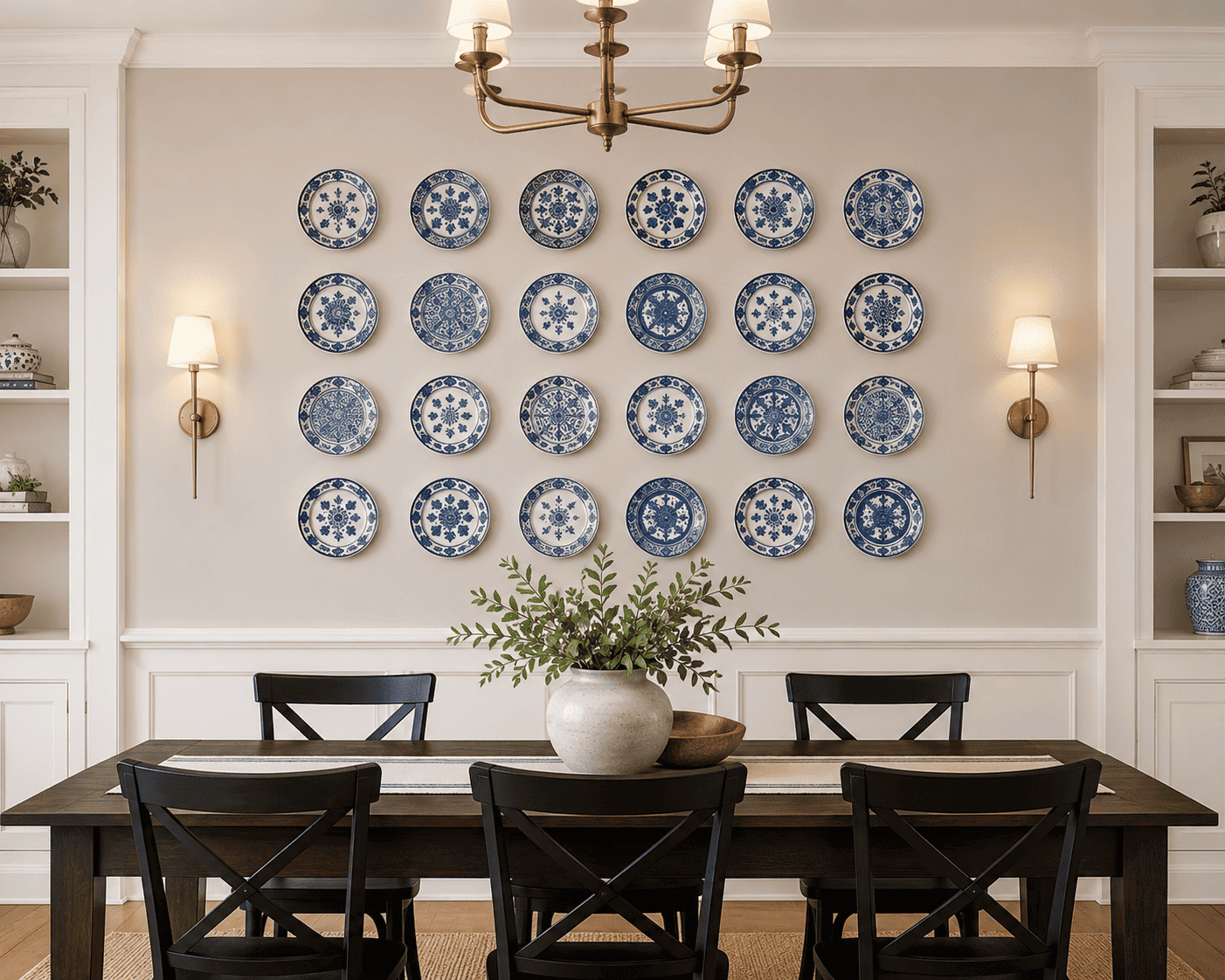
20 Best Plate Wall Ideas for Every Room (2026)
.pw-root{
–ink:#2B2E33;
–ink-soft:#5B5F66;
–paper:#F3F2ED;
–paper-raised:#FFFFFF;
–line:#DEDCD3;
–sage:#6B7F76;
–sage-dark:#4F5F58;
–sage-bg:#EAEEEC;
–clay:#A85D45;
–clay-bg:#F3E7E2;
–water:#3E6E8E;
–water-bg:#E6EEF2;
}
.pw-root *{ box-sizing:border-box; }
.pw-root{ margin:0; background:var(–paper); color:var(–ink); font-family:’Inter’,-apple-system,sans-serif; font-size:16.5px; line-height:1.72; }
.pw-wrap{ max-width:820px; margin:0 auto; padding:0 22px 50px; }
.pw-root h1,.pw-root h2,.pw-root h3{ font-family:’Fraunces’,Georgia,serif; color:var(–ink); margin:0; }
.pw-root a{ color:var(–sage-dark); }
.pw-root p{ margin:0 0 15px; }.pw-header-band{ background:var(–ink); color:var(–paper); padding:44px 0 30px; }
.pw-header-band .pw-eyebrow{ font-family:’JetBrains Mono’,monospace; font-size:11.5px; letter-spacing:0.18em; text-transform:uppercase; color:#B7C4BE; margin-bottom:14px; }
.pw-header-band h1{ font-size:clamp(25px,4.6vw,40px); font-weight:600; line-height:1.22; color:#fff; margin-bottom:14px; max-width:680px; }
.pw-header-band p.pw-lede{ color:#C7C9C6; font-size:16.5px; max-width:640px; margin-bottom:0; }
.pw-grout-strip{ height:8px; display:flex; }
.pw-grout-strip span{ flex:1; border-right:2px solid var(–paper); }
.pw-grout-strip span:last-child{ border-right:none; }.pw-root h2{ font-size:25px; font-weight:600; margin:48px 0 14px; padding-bottom:10px; border-bottom:2px solid var(–ink); }
.pw-root h3{ font-size:19px; font-weight:600; margin:24px 0 8px; }.pw-quick-answer{ background:var(–water-bg); border-left:4px solid var(–water); border-radius:4px; padding:16px 18px; margin:24px 0; }
.pw-quick-answer p{ margin:0; font-size:15.5px; color:#294456; }
.pw-quick-answer p+p{ margin-top:10px; }
.pw-quick-answer p strong{ color:var(–ink); }.pw-tagrow{ display:flex; gap:8px; flex-wrap:wrap; margin:16px 0 8px; }
.pw-tag{ font-family:’JetBrains Mono’,monospace; font-size:11px; letter-spacing:0.06em; text-transform:uppercase; border:1px solid var(–ink); color:var(–ink); padding:4px 9px; border-radius:3px; }.pw-hero-img{ margin:22px 0; border-radius:8px; overflow:hidden; border:1px solid var(–line); }
.pw-hero-img img{ width:100%; height:340px; object-fit:cover; display:block; }
.pw-hero-caption{ font-family:’JetBrains Mono’,monospace; font-size:11.5px; color:var(–ink-soft); padding:9px 12px; background:var(–paper-raised); border-top:1px solid var(–line); }/* ———- idea image / placeholder ———- */
.pw-idea-img{ width:100%; height:200px; border-radius:6px; overflow:hidden; margin-bottom:10px; border:1px solid var(–line); }
.pw-idea-img img{ width:100%; height:100%; object-fit:cover; display:block; }
.pw-idea-placeholder{ width:100%; height:120px; border-radius:6px; margin-bottom:10px; border:1px dashed var(–water); background:var(–water-bg); display:flex; align-items:center; justify-content:center; padding:12px; text-align:center; }
.pw-idea-placeholder span{ font-family:’JetBrains Mono’,monospace; font-size:11.5px; color:#294456; }/* ———- scale bars ———- */
.pw-scale-box{ margin:22px 0 8px; padding:22px 20px 18px; background:var(–paper-raised); border:1px solid var(–line); border-radius:8px; }
.pw-scale-row{ display:flex; align-items:center; gap:14px; margin-bottom:14px; }
.pw-scale-row:last-child{ margin-bottom:0; }
.pw-scale-label{ width:150px; flex-shrink:0; font-size:14px; font-weight:600; }
.pw-scale-track{ flex:1; height:14px; background:var(–sage-bg); border-radius:7px; overflow:hidden; }
.pw-scale-fill{ height:100%; background:var(–water); border-radius:7px; }
.pw-scale-val{ width:150px; flex-shrink:0; font-family:’JetBrains Mono’,monospace; font-size:12px; color:var(–ink-soft); text-align:right; }
.pw-scale-note{ font-family:’JetBrains Mono’,monospace; font-size:11.5px; color:var(–ink-soft); margin-top:14px; }/* ———- idea blocks ———- */
.pw-idea-block{ margin-top:34px; padding-top:20px; border-top:1px dashed var(–line); }
.pw-idea-block:first-of-type{ margin-top:20px; padding-top:0; border-top:none; }
.pw-idea-head{ display:flex; align-items:baseline; gap:12px; margin-bottom:4px; }
.pw-idea-num{ font-family:’JetBrains Mono’,monospace; font-size:13px; color:var(–clay); border:1px solid var(–clay); border-radius:3px; padding:2px 7px; flex-shrink:0; }
.pw-idea-block h3{ margin:0; }
.pw-idea-tag{ display:inline-block; font-family:’JetBrains Mono’,monospace; font-size:10.5px; text-transform:uppercase; letter-spacing:0.05em; background:var(–sage-bg); color:var(–sage-dark); padding:3px 8px; border-radius:3px; margin:6px 0 10px; }
.pw-idea-tag.pw-advanced{ background:var(–clay-bg); color:var(–clay); }
.pw-idea-specs{ font-family:’JetBrains Mono’,monospace; font-size:12px; color:var(–ink-soft); background:var(–paper-raised); border-left:3px solid var(–sage); padding:8px 12px; margin:10px 0 12px; }
.pw-idea-specs span{ display:block; margin-bottom:2px; }
.pw-idea-specs span:last-child{ margin-bottom:0; }.pw-group-label{ font-family:’JetBrains Mono’,monospace; font-size:12px; letter-spacing:0.1em; text-transform:uppercase; color:var(–water); background:var(–water-bg); display:inline-block; padding:6px 12px; border-radius:4px; margin:34px 0 4px; }
.pw-table-wrap{ overflow-x:auto; border:1px solid var(–line); border-radius:6px; margin:16px 0; }
.pw-table{ width:100%; border-collapse:collapse; font-size:14px; min-width:600px; }
.pw-table th{ background:var(–ink); color:#fff; text-align:left; padding:10px 12px; font-family:’JetBrains Mono’,monospace; font-size:10px; letter-spacing:0.04em; text-transform:uppercase; }
.pw-table td{ padding:9px 12px; border-bottom:1px solid var(–line); }
.pw-table tr:nth-child(even) td{ background:#FAFAF7; }
.pw-table td:first-child{ font-weight:600; }.pw-tip-list{ display:flex; flex-direction:column; gap:10px; margin:18px 0; }
.pw-tip-list .item{ display:flex; gap:12px; align-items:flex-start; }
.pw-tip-list .dot{ width:8px; height:8px; border-radius:50%; background:var(–sage-dark); margin-top:8px; flex-shrink:0; }
.pw-tip-list .txt strong{ display:block; font-size:15px; margin-bottom:2px; }
.pw-tip-list .txt p{ margin:0; font-size:14.5px; color:var(–ink-soft); }.pw-mistake-list{ display:flex; flex-direction:column; gap:12px; margin:18px 0; }
.pw-mistake-list .item{ display:flex; gap:14px; background:var(–paper-raised); border:1px solid var(–line); border-radius:6px; padding:14px 16px; }
.pw-mistake-list .num{ font-family:’Fraunces’,serif; font-weight:600; font-size:22px; color:var(–clay); flex-shrink:0; line-height:1.3; }
.pw-mistake-list .txt strong{ display:block; font-size:15.5px; margin-bottom:3px; }
.pw-mistake-list .txt p{ margin:0; font-size:14.5px; color:var(–ink-soft); }.pw-faq-item{ border-top:1px solid var(–line); padding:18px 0; }
.pw-faq-item:last-child{ border-bottom:1px solid var(–line); }
.pw-faq-item .q{ font-family:’Fraunces’,serif; font-weight:600; font-size:17px; margin-bottom:6px; }
.pw-faq-item .a{ font-size:15px; margin:0; color:var(–ink-soft); }@media (max-width:600px){ .pw-scale-label{ width:100px; } .pw-scale-val{ width:100px; } .pw-hero-img img{ height:220px; } }
Home Decor Guide · Updated 2026
20 Best Plate Wall Ideas for Every Room
A plate wall is one of the cheapest ways to fill a blank wall with real texture and color. Here’s how to actually plan one, plus the hanger weight ratings most guides skip entirely.
A dense, collected plate wall in Shenzhen, China. The same principle, plates as wall art, spans everywhere from ancient tableware to a modern dining room.Most plate wall guides are really just photo roundups: a grid here, a circle there, a caption telling you it “adds texture.” What they skip is the part that actually determines whether your wall looks intentional or like something fell off a shelf: how much a plate hanger can actually hold, how far apart to space plates so the arrangement reads as one piece instead of scattered dots, and which layouts genuinely suit a narrow hallway versus a wide dining room wall.
This guide covers 20 distinct plate wall styles sorted by layout, color story, and room, plus the arrangement math, hanger weight ratings, and the honest mistakes that make a plate wall look cluttered instead of curated.
20 distinct layouts and styles
Real hanger weight ratings
Room-by-room guidanceQuick answer: Space plates 2 to 3 inches apart for a cohesive look, and lay everything out on the floor (or trace paper templates and tape them to the wall) before you hang a single one. Small plates under 6 inches work fine on adhesive discs; anything over 10 inches or heavier than about 5 pounds needs a wire spring hanger or a wall anchor into a stud, not adhesive alone.
What Is a Plate Wall?
A plate wall is a wall display built from decorative or dinnerware-style plates mounted flat against the wall using hangers, rather than plates used for actual dining. It functions the same way a gallery wall of framed art does, filling vertical space with a curated collection, except the “art” is ceramic, porcelain, or occasionally metal or wood, and it carries texture and dimension a flat framed print can’t.
Why Plate Walls Are Trending in Home Decor
Plate walls sit at the intersection of two decorating trends that have both had staying power: the grandmillennial and cottagecore-adjacent revival of inherited and vintage china, and a broader shift toward decor that looks collected over time rather than bought as a matching set in one trip. A plate wall also solves a genuinely practical problem: heirloom china and thrifted platters that spend their lives in a cabinet get to actually be seen, and a large wall gets filled without the cost of buying a comparable amount of framed art.
20 Best Plate Wall Ideas for Every Room
Sorted into four groups: classic layouts, color and pattern stories, scale and focal-point approaches, and room-specific setups.
Group 1 · Classic Layouts01Classic Symmetrical Grid
Beginner-friendly
Rows and columns of matching or same-sized plates, spaced identically in every direction. It’s the easiest layout to get right on a first attempt because the grid itself does the visual work, and it reads as intentional even with mismatched patterns as long as the sizing and spacing stay consistent.
BEST FOR: Dining rooms, large blank wallsDIFFICULTY: EasyPLATE COUNT: 6-1202Circular (Sunburst) Arrangement
Needs planning
One large plate anchors the center, with smaller plates radiating outward to form a circle or sunburst shape. Mark the center point and use a piece of string as a makeshift compass to pencil a light guide circle before you start, since eyeballing a large circle almost always drifts off-round by the time you reach the far side.
BEST FOR: Wide, empty walls with room to breatheDIFFICULTY: ModeratePLATE COUNT: 9-1503Asymmetrical Organic Cluster
Beginner-friendly
A loose, uneven grouping that leans heavier to one side rather than centering evenly. This is the layout to reach for on a wall interrupted by a window, doorway, or light switch, since it doesn’t depend on a clean, uninterrupted rectangle the way a grid or circle does.
BEST FOR: Awkward walls with obstaclesDIFFICULTY: EasyPLATE COUNT: 5-1004Vertical Column for a Narrow Wall
Beginner-friendly
A single stacked line of plates running top to bottom, sized slightly larger at the bottom and smaller toward the top. It’s the single best layout for the narrow strip of wall between a window and a cabinet, a space too tight for almost any other arrangement on this list.
BEST FOR: Narrow strips between furniture or windowsDIFFICULTY: EasyPLATE COUNT: 3-505Horizontal Row Above Furniture
Beginner-friendly
A single straight line of plates centered over a buffet, console, or headboard. Align every plate along its vertical center line, not its top or bottom edge, since plates of different diameters will look crooked if you align them by the edge instead.
BEST FOR: Above a console, buffet, or headboardDIFFICULTY: EasyPLATE COUNT: 3-6Group 2 · Color and Pattern Stories06Blue and White Transferware Wall
Timeless
Classic blue-and-white china, whether genuine transferware, Delft-style, or modern reproductions, in a loose grouping of mixed sizes. It’s close to foolproof because the color story does the unifying work even when the individual patterns, florals, landscapes, willow patterns, don’t match at all.
BEST FOR: Traditional, farmhouse, or coastal dining roomsDIFFICULTY: EasyPLATE COUNT: 6-1407Monochromatic White-on-White Wall
Modern
All-white plates and platters that lean on shape and texture instead of color: scalloped edges next to smooth rims, round plates next to ovals. This works particularly well against a colored or beadboard wall, where the white ceramics read as sculptural rather than blending into a white wall behind them.
BEST FOR: Modern, farmhouse, or Scandinavian roomsDIFFICULTY: EasyPLATE COUNT: 6-1208Color Gradient (Ombré) Wall
Needs planning
Plates arranged to shift gradually from a dark shade to a light one (or the reverse) across the wall, most often in a single color family like blue or green. Photograph your plates in a single row on the floor before buying more, since a gradient that looks smooth in a store often reveals awkward jumps once it’s next to its neighbors on the actual wall.
BEST FOR: Long horizontal walls, above a sideboardDIFFICULTY: AdvancedPLATE COUNT: 8-1409Mismatched Vintage Collector’s Wall
Grows over time
No color rule, no size rule, just whatever genuinely interesting pieces you’ve found at thrift stores, estate sales, or inherited over the years. Leave real breathing room around the current edges of the group rather than filling the wall completely, so the collection has somewhere to grow as you find more.
BEST FOR: Anyone building a collection over months or yearsDIFFICULTY: EasyPLATE COUNT: Open-endedGroup 3 · Scale and Focal Points10Oversized Statement Platter
Weight matters
One large decorative platter, hung alone or with only one or two small plates nearby, doing the work of an entire gallery wall by itself. This is the layout where hanger weight actually matters most on this list, see the hanging section further down before you buy the hardware.
BEST FOR: Small entryways, above a café tableDIFFICULTY: Easy to arrange, but check hanger weight ratingPLATE COUNT: 1-311Plates Framing a Mirror
Beginner-friendly
Plates arranged in a ring, arc, or symmetrical pair around a central mirror. Hang the mirror first, on a stud if it’s heavy, then work outward from the top and bottom so the plates stay balanced on both sides as you add them.
BEST FOR: Hallways, entryways, bedroomsDIFFICULTY: ModeratePLATE COUNT: 6-10 plus one mirror12Plates Mixed With Framed Art
Gallery-style
Round plates tucked into the gaps between rectangular frames on an otherwise standard gallery wall. The round shapes soften all the hard right angles of a typical frame grouping, and a shared color palette between the art and the plates is what keeps the mix from feeling random.
BEST FOR: Living rooms, existing gallery wallsDIFFICULTY: ModeratePLATE COUNT: 4-8 plus frames13Plates Mixed With Woven Baskets
Boho
Glazed ceramic plates alternated with flat woven baskets, pairing the shine of ceramic against matte, textured fiber. Baskets are lighter than plates, so they can go up with small finishing nails rather than the heavier-duty hangers the ceramics need.
BEST FOR: Breakfast nooks, sunrooms, boho spacesDIFFICULTY: EasyPLATE COUNT: 4-8 plates plus baskets14Layered Plate Rack Display
No hangers needed
Plates set into a wall-mounted wooden plate rack or shelf rather than hung individually, allowing you to layer smaller items like teacups or jugs in front. It’s the easiest style on this list to update seasonally, since nothing is actually mounted to the wall except the rack itself.
BEST FOR: Cottage or farmhouse kitchensDIFFICULTY: EasyPLATE COUNT: 4-10, swappable15Floor-to-Ceiling Statement Wall
Big commitment
A dense arrangement covering an entire vertical section of wall from baseboard to ceiling, mixing shapes and sizes to fill in every gap. Reserve your most durable or least expensive plates for the bottom rows, since that’s the area most likely to get bumped by furniture or foot traffic.
BEST FOR: Narrow nooks, statement cornersDIFFICULTY: AdvancedPLATE COUNT: 20+Group 4 · Room-Specific Setups16Staircase Plate Wall
Needs planning
Plates following the diagonal rake of a staircase, largest at the bottom and smallest toward the top, so the arrangement climbs with you. Lay the group out on the floor at an angle first to work out the spacing, and use hangers rated for extra security here since a staircase wall takes more vibration from foot traffic than a still wall does.
BEST FOR: Stairwells and split-level homesDIFFICULTY: AdvancedPLATE COUNT: 8-1617Dining Room Buffet Wall
Beginner-friendly
A grid, row, or cluster centered directly above a buffet or sideboard, sized to roughly match the furniture’s width. Coordinating the plate colors with a table runner or the room’s existing palette is what makes this feel architectural rather than added on as an afterthought.
BEST FOR: Dining roomsDIFFICULTY: EasyPLATE COUNT: 6-1218Kitchen Breakfast Nook Display
Casual
A small, tightly-spaced grouping mounted just above a banquette or bench, low enough to feel cozy rather than formal. Fruit motifs, stripes, and simple hand-painted patterns tend to suit this spot better than delicate fine china, since it’s a lived-in corner rather than a display case.
BEST FOR: Breakfast nooks, kitchen benchesDIFFICULTY: EasyPLATE COUNT: 3-619Entryway Console Display
Beginner-friendly
A small, punchy grouping of 3 to 5 bold plates above a console table, meant to set the tone the moment someone walks in. Center the group about 6 to 8 inches above the tabletop so it reads as connected to the furniture rather than floating awkwardly high on the wall.
BEST FOR: Entryways, small hallwaysDIFFICULTY: EasyPLATE COUNT: 3-520Seasonal Swappable Plate Wall
Low commitment
A fixed grid of hangers, left permanently mounted, with the plates themselves swapped out for the seasons or holidays. This is the one idea on this list built specifically to solve the “I’ll get bored of this” problem: once the hangers are up, changing the whole look takes minutes instead of a fresh round of measuring and hanging.
BEST FOR: Anyone who likes to redecorate seasonallyDIFFICULTY: Easy after initial setupPLATE COUNT: 6-10, rotatingHow to Arrange Decorative Plates Beautifully
Three rules cover most of what separates a plate wall that looks curated from one that looks cluttered:
Plan on the floor first.Lay the full arrangement out on the floor, or trace each plate onto paper and tape the cutouts to the wall, before a single nail goes in. This is the single most repeated piece of advice across every real plate-wall project for a reason: it catches spacing problems while they cost nothing to fix.
Keep spacing to 2 to 3 inches.That range reads as a unified collection rather than either a cramped cluster or a scattered handful of unrelated plates. Wider spacing, 8 inches or more, is its own deliberate look for a minimal, airy arrangement, but it needs to be consistent across the whole wall to look intentional.
Center the group at eye level.For most layouts, the vertical center of the arrangement should land around 57 to 60 inches from the floor, the standard eye-level height used for gallery walls generally. Above furniture, center on the furniture instead and let eye level be a secondary check.
DIY Plate Wall Ideas on a Budget
A plate wall is one of the least expensive ways to fill a large wall, especially compared to an equivalent amount of framed art. Thrift stores, flea markets, and estate sales are the cheapest sources for individual pieces, often under $5 each, and restaurant supply stores sell bulk sets of plain white plates at a fraction of retail decor prices if you want a matching grid without the hunting. For new pieces, Hobby Lobby, HomeGoods, and Target carry inexpensive seasonal and solid-color plates, IKEA is a reliable source for affordable modern shapes, and Anthropologie, Etsy, and Pottery Barn or West Elm are better starting points if you want artisan or higher-end pieces as the anchor of the wall. Crate & Barrel and Williams Sonoma are worth checking for simple, well-made white plates that work especially well in a monochromatic or grid layout, and Wayfair is a reasonable source for hanger hardware in bulk if you’re outfitting a large wall at once.
Modern vs. Vintage Plate Wall Styles
Factor Modern Vintage Plate sourcing New, matching sets Thrifted, estate sales, inherited Color approach Monochrome or tight palette Mixed patterns, often blue and white Layout Grid, column, or row Circle, cluster, or organic collection Cost Predictable, buy once Cheaper per piece, grows over time Best for Minimalist, Scandinavian, contemporary rooms Farmhouse, cottagecore, traditional rooms How to Hang Decorative Plates Safely
This is the part most plate wall guides skip, and it’s the difference between a display that stays up and one that ends up in pieces on the floor.
Plate size / weight Recommended hanger Typical rating Under 4″ Small adhesive disc Up to 1 lb 4″-8″ Medium adhesive disc 1-3 lbs 10″-12″ Large adhesive disc Up to 5 lbs Large plates / platters XL adhesive disc, or two discs joined by wire Up to 7 lbs per disc 7″-11″ standard dinner plates Wire spring hanger 2-30 lbs depending on gauge and quality Heavy platters, stoneware Wire hanger into a wall anchor or stud Rate for at least double the plate’s actual weight A few things worth knowing before you buy hardware: adhesive disc hangers give the cleanest, most invisible look and work best on smooth, glazed surfaces, but they’re difficult to remove cleanly once mounted, so they suit plates you don’t plan to take down often. Wire spring hangers are more secure for anything on the heavier end and are simple to reposition, but the metal claws show slightly at the plate’s edges unless you match the wire finish to the plate color. Whatever hanger you choose, weigh a stack of the actual plates you’re hanging rather than guessing, manufacturer weight ratings are typically conservative, but exceeding them is still the most common reason a plate wall fails.
Common Plate Wall Decorating Mistakes
01Guessing the layout directly on the wallSkipping the floor-layout or paper-template step is the single biggest reason people end up with extra nail holes and a lopsided final arrangement.
02Underrating the hangerA hanger rated for 2 lbs holding a 4 lb platter is a matter of when, not if, it fails. Always weigh the plate and round up on the hanger rating.
03Inconsistent spacingMixing 2-inch gaps in one section with 6-inch gaps in another is the fastest way to make an otherwise good collection look unplanned.
04Ignoring plate depthPlates with different rim depths sit at different distances from the wall, which is subtle in person but reads as misaligned in photos. Check depth, not just diameter, when matching pieces.
05No unifying thread in a mixed collectionWildly different colors, patterns, and shapes with nothing tying them together reads as random rather than curated. Pick one consistent element, color, era, or shape, to anchor a mixed group.
Tips for Maintaining Decorative Wall Plates
Dust regularly with a dry microfiber cloth.Plates mounted on a wall collect dust faster than plates in a cabinet, since they’re fully exposed on both display and back.
Clean the back before mounting adhesive hangers.A quick wipe with rubbing alcohol removes oils and residue that weaken the adhesive bond over time.
Check hanger tension yearly.Spring-loaded wire hangers lose tension gradually with age. A quick annual check catches a loosening hanger before a plate falls.
Keep valuable or antique pieces out of high-traffic paths.A hallway with heavy foot traffic vibrates more than people expect, which matters more for fragile antique glazes than for sturdy modern stoneware.
Plate Wall vs. Gallery Wall
A plate wall is really a specific type of gallery wall, built entirely or mostly from plates instead of framed art. The practical differences come down to cost and texture: plates are generally cheaper per piece than framed prints, especially thrifted, and they add three-dimensional depth and shadow that a flat framed piece can’t. Framed art offers more control over exact color and subject matter, since you’re choosing the image itself rather than working with whatever pattern a plate happens to have. Most rooms don’t need to choose one over the other. The mixed approach, plates tucked between frames, borrows the strengths of both.
Frequently Asked Questions
How do you hang decorative plates on a wall?
Small, light plates go up cleanly on adhesive disc hangers sized to the plate’s diameter. Standard 7 to 11 inch plates typically use a wire spring hanger with rubber-tipped prongs that grip the rim. Anything large or heavy should go into a wall anchor or stud rather than relying on adhesive alone.
What is the best layout for a plate wall?
There isn’t one universal best layout, it depends on the wall. A symmetrical grid is the easiest for a first attempt and works well on large, uninterrupted walls. An asymmetrical cluster is more forgiving on a wall with windows, doors, or other obstacles in the way.
Can you hang plates without nails?
Yes, for lighter plates. Adhesive disc hangers and Command-style strips both work without nails, though they carry lower weight limits than wire hangers on nails or wall anchors, so they suit smaller and lighter plates better than large platters.
How many plates should be on a plate wall?
Anywhere from 3 to 20 or more, depending on wall size and layout. A small entryway grouping works well with 3 to 5 plates, while a floor-to-ceiling statement wall can use 20 or more. Match the count to the wall’s actual size rather than a fixed number.
Which rooms are best for a plate wall?
Dining rooms and kitchens are the traditional choice since the plates feel thematically at home there, but entryways, hallways, staircases, and even bedrooms all work well, especially for softer, botanical, or pastel plate styles.
Are decorative plate walls still in style?
Yes. Plate walls have had sustained popularity as part of the broader grandmillennial and collected-vintage decor trend, and modern minimalist versions, monochrome grids and sculptural shapes, keep the concept relevant in contemporary rooms too.
How do you arrange plates of different sizes?
Anchor the arrangement with the largest plate first, usually centered, then work outward with progressively smaller pieces. Align plates by their vertical or horizontal center point rather than their edges, since edge-aligning plates of different diameters looks crooked.
What type of plates work best for wall decor?
Ceramic and porcelain plates are the most common choices and hold up well to standard hangers. Handmade pottery tends to run thicker, so measure rim depth before choosing hardware. Melamine and other plastic decorative plates are lighter and easier to hang but read as less substantial up close.
Can vintage plates be used for wall decorations?
Yes, and they’re one of the most popular choices for this exact purpose. Check the weight and condition of older china before choosing hardware, since antique glazes and gold rims can be more delicate than modern stoneware.
How do you clean decorative wall plates?
Dust regularly with a dry microfiber cloth. For a deeper clean, remove the plate if possible and wash with mild soap and water, then dry completely before remounting, especially if it’s going back onto an adhesive hanger.
Final Thoughts
Start with a layout that matches your actual wall, not the one that looked best in a photo. A narrow strip between a window and a cabinet wants a vertical column, not a circle; a wide dining room wall can handle a full grid or an organic cluster that a hallway can’t. Plan it on the floor before you touch the wall, match the hanger to the real weight of the plate, and the rest, color story, pattern mixing, vintage versus modern, comes down to taste rather than risk.
-
20 Best Plate Wall Ideas for Every Room (2026)
.pw-root{
–ink:#2B2E33;
–ink-soft:#5B5F66;
–paper:#F3F2ED;
–paper-raised:#FFFFFF;
–line:#DEDCD3;
–sage:#6B7F76;
–sage-dark:#4F5F58;
–sage-bg:#EAEEEC;
–clay:#A85D45;
–clay-bg:#F3E7E2;
–water:#3E6E8E;
–water-bg:#E6EEF2;
}
.pw-root *{ box-sizing:border-box; }
.pw-root{ margin:0; background:var(–paper); color:var(–ink); font-family:’Inter’,-apple-system,sans-serif; font-size:16.5px; line-height:1.72; }
.pw-wrap{ max-width:820px; margin:0 auto; padding:0 22px 50px; }
.pw-root h1,.pw-root h2,.pw-root h3{ font-family:’Fraunces’,Georgia,serif; color:var(–ink); margin:0; }
.pw-root a{ color:var(–sage-dark); }
.pw-root p{ margin:0 0 15px; }.pw-header-band{ background:var(–ink); color:var(–paper); padding:44px 0 30px; }
.pw-header-band .pw-eyebrow{ font-family:’JetBrains Mono’,monospace; font-size:11.5px; letter-spacing:0.18em; text-transform:uppercase; color:#B7C4BE; margin-bottom:14px; }
.pw-header-band h1{ font-size:clamp(25px,4.6vw,40px); font-weight:600; line-height:1.22; color:#fff; margin-bottom:14px; max-width:680px; }
.pw-header-band p.pw-lede{ color:#C7C9C6; font-size:16.5px; max-width:640px; margin-bottom:0; }
.pw-grout-strip{ height:8px; display:flex; }
.pw-grout-strip span{ flex:1; border-right:2px solid var(–paper); }
.pw-grout-strip span:last-child{ border-right:none; }.pw-root h2{ font-size:25px; font-weight:600; margin:48px 0 14px; padding-bottom:10px; border-bottom:2px solid var(–ink); }
.pw-root h3{ font-size:19px; font-weight:600; margin:24px 0 8px; }.pw-quick-answer{ background:var(–water-bg); border-left:4px solid var(–water); border-radius:4px; padding:16px 18px; margin:24px 0; }
.pw-quick-answer p{ margin:0; font-size:15.5px; color:#294456; }
.pw-quick-answer p+p{ margin-top:10px; }
.pw-quick-answer p strong{ color:var(–ink); }.pw-tagrow{ display:flex; gap:8px; flex-wrap:wrap; margin:16px 0 8px; }
.pw-tag{ font-family:’JetBrains Mono’,monospace; font-size:11px; letter-spacing:0.06em; text-transform:uppercase; border:1px solid var(–ink); color:var(–ink); padding:4px 9px; border-radius:3px; }.pw-hero-img{ margin:22px 0; border-radius:8px; overflow:hidden; border:1px solid var(–line); }
.pw-hero-img img{ width:100%; height:340px; object-fit:cover; display:block; }
.pw-hero-caption{ font-family:’JetBrains Mono’,monospace; font-size:11.5px; color:var(–ink-soft); padding:9px 12px; background:var(–paper-raised); border-top:1px solid var(–line); }/* ———- idea image / placeholder ———- */
.pw-idea-img{ width:100%; height:200px; border-radius:6px; overflow:hidden; margin-bottom:10px; border:1px solid var(–line); }
.pw-idea-img img{ width:100%; height:100%; object-fit:cover; display:block; }
.pw-idea-placeholder{ width:100%; height:120px; border-radius:6px; margin-bottom:10px; border:1px dashed var(–water); background:var(–water-bg); display:flex; align-items:center; justify-content:center; padding:12px; text-align:center; }
.pw-idea-placeholder span{ font-family:’JetBrains Mono’,monospace; font-size:11.5px; color:#294456; }/* ———- scale bars ———- */
.pw-scale-box{ margin:22px 0 8px; padding:22px 20px 18px; background:var(–paper-raised); border:1px solid var(–line); border-radius:8px; }
.pw-scale-row{ display:flex; align-items:center; gap:14px; margin-bottom:14px; }
.pw-scale-row:last-child{ margin-bottom:0; }
.pw-scale-label{ width:150px; flex-shrink:0; font-size:14px; font-weight:600; }
.pw-scale-track{ flex:1; height:14px; background:var(–sage-bg); border-radius:7px; overflow:hidden; }
.pw-scale-fill{ height:100%; background:var(–water); border-radius:7px; }
.pw-scale-val{ width:150px; flex-shrink:0; font-family:’JetBrains Mono’,monospace; font-size:12px; color:var(–ink-soft); text-align:right; }
.pw-scale-note{ font-family:’JetBrains Mono’,monospace; font-size:11.5px; color:var(–ink-soft); margin-top:14px; }/* ———- idea blocks ———- */
.pw-idea-block{ margin-top:34px; padding-top:20px; border-top:1px dashed var(–line); }
.pw-idea-block:first-of-type{ margin-top:20px; padding-top:0; border-top:none; }
.pw-idea-head{ display:flex; align-items:baseline; gap:12px; margin-bottom:4px; }
.pw-idea-num{ font-family:’JetBrains Mono’,monospace; font-size:13px; color:var(–clay); border:1px solid var(–clay); border-radius:3px; padding:2px 7px; flex-shrink:0; }
.pw-idea-block h3{ margin:0; }
.pw-idea-tag{ display:inline-block; font-family:’JetBrains Mono’,monospace; font-size:10.5px; text-transform:uppercase; letter-spacing:0.05em; background:var(–sage-bg); color:var(–sage-dark); padding:3px 8px; border-radius:3px; margin:6px 0 10px; }
.pw-idea-tag.pw-advanced{ background:var(–clay-bg); color:var(–clay); }
.pw-idea-specs{ font-family:’JetBrains Mono’,monospace; font-size:12px; color:var(–ink-soft); background:var(–paper-raised); border-left:3px solid var(–sage); padding:8px 12px; margin:10px 0 12px; }
.pw-idea-specs span{ display:block; margin-bottom:2px; }
.pw-idea-specs span:last-child{ margin-bottom:0; }.pw-group-label{ font-family:’JetBrains Mono’,monospace; font-size:12px; letter-spacing:0.1em; text-transform:uppercase; color:var(–water); background:var(–water-bg); display:inline-block; padding:6px 12px; border-radius:4px; margin:34px 0 4px; }
.pw-table-wrap{ overflow-x:auto; border:1px solid var(–line); border-radius:6px; margin:16px 0; }
.pw-table{ width:100%; border-collapse:collapse; font-size:14px; min-width:600px; }
.pw-table th{ background:var(–ink); color:#fff; text-align:left; padding:10px 12px; font-family:’JetBrains Mono’,monospace; font-size:10px; letter-spacing:0.04em; text-transform:uppercase; }
.pw-table td{ padding:9px 12px; border-bottom:1px solid var(–line); }
.pw-table tr:nth-child(even) td{ background:#FAFAF7; }
.pw-table td:first-child{ font-weight:600; }.pw-tip-list{ display:flex; flex-direction:column; gap:10px; margin:18px 0; }
.pw-tip-list .item{ display:flex; gap:12px; align-items:flex-start; }
.pw-tip-list .dot{ width:8px; height:8px; border-radius:50%; background:var(–sage-dark); margin-top:8px; flex-shrink:0; }
.pw-tip-list .txt strong{ display:block; font-size:15px; margin-bottom:2px; }
.pw-tip-list .txt p{ margin:0; font-size:14.5px; color:var(–ink-soft); }.pw-mistake-list{ display:flex; flex-direction:column; gap:12px; margin:18px 0; }
.pw-mistake-list .item{ display:flex; gap:14px; background:var(–paper-raised); border:1px solid var(–line); border-radius:6px; padding:14px 16px; }
.pw-mistake-list .num{ font-family:’Fraunces’,serif; font-weight:600; font-size:22px; color:var(–clay); flex-shrink:0; line-height:1.3; }
.pw-mistake-list .txt strong{ display:block; font-size:15.5px; margin-bottom:3px; }
.pw-mistake-list .txt p{ margin:0; font-size:14.5px; color:var(–ink-soft); }.pw-faq-item{ border-top:1px solid var(–line); padding:18px 0; }
.pw-faq-item:last-child{ border-bottom:1px solid var(–line); }
.pw-faq-item .q{ font-family:’Fraunces’,serif; font-weight:600; font-size:17px; margin-bottom:6px; }
.pw-faq-item .a{ font-size:15px; margin:0; color:var(–ink-soft); }@media (max-width:600px){ .pw-scale-label{ width:100px; } .pw-scale-val{ width:100px; } .pw-hero-img img{ height:220px; } }
Home Decor Guide · Updated 2026
20 Best Plate Wall Ideas for Every Room
A plate wall is one of the cheapest ways to fill a blank wall with real texture and color. Here’s how to actually plan one, plus the hanger weight ratings most guides skip entirely.
A dense, collected plate wall in Shenzhen, China. The same principle, plates as wall art, spans everywhere from ancient tableware to a modern dining room.Most plate wall guides are really just photo roundups: a grid here, a circle there, a caption telling you it “adds texture.” What they skip is the part that actually determines whether your wall looks intentional or like something fell off a shelf: how much a plate hanger can actually hold, how far apart to space plates so the arrangement reads as one piece instead of scattered dots, and which layouts genuinely suit a narrow hallway versus a wide dining room wall.
This guide covers 20 distinct plate wall styles sorted by layout, color story, and room, plus the arrangement math, hanger weight ratings, and the honest mistakes that make a plate wall look cluttered instead of curated.
20 distinct layouts and styles
Real hanger weight ratings
Room-by-room guidanceQuick answer: Space plates 2 to 3 inches apart for a cohesive look, and lay everything out on the floor (or trace paper templates and tape them to the wall) before you hang a single one. Small plates under 6 inches work fine on adhesive discs; anything over 10 inches or heavier than about 5 pounds needs a wire spring hanger or a wall anchor into a stud, not adhesive alone.
What Is a Plate Wall?
A plate wall is a wall display built from decorative or dinnerware-style plates mounted flat against the wall using hangers, rather than plates used for actual dining. It functions the same way a gallery wall of framed art does, filling vertical space with a curated collection, except the “art” is ceramic, porcelain, or occasionally metal or wood, and it carries texture and dimension a flat framed print can’t.
Why Plate Walls Are Trending in Home Decor
Plate walls sit at the intersection of two decorating trends that have both had staying power: the grandmillennial and cottagecore-adjacent revival of inherited and vintage china, and a broader shift toward decor that looks collected over time rather than bought as a matching set in one trip. A plate wall also solves a genuinely practical problem: heirloom china and thrifted platters that spend their lives in a cabinet get to actually be seen, and a large wall gets filled without the cost of buying a comparable amount of framed art.
20 Best Plate Wall Ideas for Every Room
Sorted into four groups: classic layouts, color and pattern stories, scale and focal-point approaches, and room-specific setups.
Group 1 · Classic Layouts01Classic Symmetrical Grid
Beginner-friendly
Rows and columns of matching or same-sized plates, spaced identically in every direction. It’s the easiest layout to get right on a first attempt because the grid itself does the visual work, and it reads as intentional even with mismatched patterns as long as the sizing and spacing stay consistent.
BEST FOR: Dining rooms, large blank wallsDIFFICULTY: EasyPLATE COUNT: 6-1202Circular (Sunburst) Arrangement
Needs planning
One large plate anchors the center, with smaller plates radiating outward to form a circle or sunburst shape. Mark the center point and use a piece of string as a makeshift compass to pencil a light guide circle before you start, since eyeballing a large circle almost always drifts off-round by the time you reach the far side.
BEST FOR: Wide, empty walls with room to breatheDIFFICULTY: ModeratePLATE COUNT: 9-1503Asymmetrical Organic Cluster
Beginner-friendly
A loose, uneven grouping that leans heavier to one side rather than centering evenly. This is the layout to reach for on a wall interrupted by a window, doorway, or light switch, since it doesn’t depend on a clean, uninterrupted rectangle the way a grid or circle does.
BEST FOR: Awkward walls with obstaclesDIFFICULTY: EasyPLATE COUNT: 5-1004Vertical Column for a Narrow Wall
Beginner-friendly
A single stacked line of plates running top to bottom, sized slightly larger at the bottom and smaller toward the top. It’s the single best layout for the narrow strip of wall between a window and a cabinet, a space too tight for almost any other arrangement on this list.
BEST FOR: Narrow strips between furniture or windowsDIFFICULTY: EasyPLATE COUNT: 3-505Horizontal Row Above Furniture
Beginner-friendly
A single straight line of plates centered over a buffet, console, or headboard. Align every plate along its vertical center line, not its top or bottom edge, since plates of different diameters will look crooked if you align them by the edge instead.
BEST FOR: Above a console, buffet, or headboardDIFFICULTY: EasyPLATE COUNT: 3-6Group 2 · Color and Pattern Stories06Blue and White Transferware Wall
Timeless
Classic blue-and-white china, whether genuine transferware, Delft-style, or modern reproductions, in a loose grouping of mixed sizes. It’s close to foolproof because the color story does the unifying work even when the individual patterns, florals, landscapes, willow patterns, don’t match at all.
BEST FOR: Traditional, farmhouse, or coastal dining roomsDIFFICULTY: EasyPLATE COUNT: 6-1407Monochromatic White-on-White Wall
Modern
All-white plates and platters that lean on shape and texture instead of color: scalloped edges next to smooth rims, round plates next to ovals. This works particularly well against a colored or beadboard wall, where the white ceramics read as sculptural rather than blending into a white wall behind them.
BEST FOR: Modern, farmhouse, or Scandinavian roomsDIFFICULTY: EasyPLATE COUNT: 6-1208Color Gradient (Ombré) Wall
Needs planning
Plates arranged to shift gradually from a dark shade to a light one (or the reverse) across the wall, most often in a single color family like blue or green. Photograph your plates in a single row on the floor before buying more, since a gradient that looks smooth in a store often reveals awkward jumps once it’s next to its neighbors on the actual wall.
BEST FOR: Long horizontal walls, above a sideboardDIFFICULTY: AdvancedPLATE COUNT: 8-1409Mismatched Vintage Collector’s Wall
Grows over time
No color rule, no size rule, just whatever genuinely interesting pieces you’ve found at thrift stores, estate sales, or inherited over the years. Leave real breathing room around the current edges of the group rather than filling the wall completely, so the collection has somewhere to grow as you find more.
BEST FOR: Anyone building a collection over months or yearsDIFFICULTY: EasyPLATE COUNT: Open-endedGroup 3 · Scale and Focal Points10Oversized Statement Platter
Weight matters
One large decorative platter, hung alone or with only one or two small plates nearby, doing the work of an entire gallery wall by itself. This is the layout where hanger weight actually matters most on this list, see the hanging section further down before you buy the hardware.
BEST FOR: Small entryways, above a café tableDIFFICULTY: Easy to arrange, but check hanger weight ratingPLATE COUNT: 1-311Plates Framing a Mirror
Beginner-friendly
Plates arranged in a ring, arc, or symmetrical pair around a central mirror. Hang the mirror first, on a stud if it’s heavy, then work outward from the top and bottom so the plates stay balanced on both sides as you add them.
BEST FOR: Hallways, entryways, bedroomsDIFFICULTY: ModeratePLATE COUNT: 6-10 plus one mirror12Plates Mixed With Framed Art
Gallery-style
Round plates tucked into the gaps between rectangular frames on an otherwise standard gallery wall. The round shapes soften all the hard right angles of a typical frame grouping, and a shared color palette between the art and the plates is what keeps the mix from feeling random.
BEST FOR: Living rooms, existing gallery wallsDIFFICULTY: ModeratePLATE COUNT: 4-8 plus frames13Plates Mixed With Woven Baskets
Boho
Glazed ceramic plates alternated with flat woven baskets, pairing the shine of ceramic against matte, textured fiber. Baskets are lighter than plates, so they can go up with small finishing nails rather than the heavier-duty hangers the ceramics need.
BEST FOR: Breakfast nooks, sunrooms, boho spacesDIFFICULTY: EasyPLATE COUNT: 4-8 plates plus baskets14Layered Plate Rack Display
No hangers needed
Plates set into a wall-mounted wooden plate rack or shelf rather than hung individually, allowing you to layer smaller items like teacups or jugs in front. It’s the easiest style on this list to update seasonally, since nothing is actually mounted to the wall except the rack itself.
BEST FOR: Cottage or farmhouse kitchensDIFFICULTY: EasyPLATE COUNT: 4-10, swappable15Floor-to-Ceiling Statement Wall
Big commitment
A dense arrangement covering an entire vertical section of wall from baseboard to ceiling, mixing shapes and sizes to fill in every gap. Reserve your most durable or least expensive plates for the bottom rows, since that’s the area most likely to get bumped by furniture or foot traffic.
BEST FOR: Narrow nooks, statement cornersDIFFICULTY: AdvancedPLATE COUNT: 20+Group 4 · Room-Specific Setups16Staircase Plate Wall
Needs planning
Plates following the diagonal rake of a staircase, largest at the bottom and smallest toward the top, so the arrangement climbs with you. Lay the group out on the floor at an angle first to work out the spacing, and use hangers rated for extra security here since a staircase wall takes more vibration from foot traffic than a still wall does.
BEST FOR: Stairwells and split-level homesDIFFICULTY: AdvancedPLATE COUNT: 8-1617Dining Room Buffet Wall
Beginner-friendly
A grid, row, or cluster centered directly above a buffet or sideboard, sized to roughly match the furniture’s width. Coordinating the plate colors with a table runner or the room’s existing palette is what makes this feel architectural rather than added on as an afterthought.
BEST FOR: Dining roomsDIFFICULTY: EasyPLATE COUNT: 6-1218Kitchen Breakfast Nook Display
Casual
A small, tightly-spaced grouping mounted just above a banquette or bench, low enough to feel cozy rather than formal. Fruit motifs, stripes, and simple hand-painted patterns tend to suit this spot better than delicate fine china, since it’s a lived-in corner rather than a display case.
BEST FOR: Breakfast nooks, kitchen benchesDIFFICULTY: EasyPLATE COUNT: 3-619Entryway Console Display
Beginner-friendly
A small, punchy grouping of 3 to 5 bold plates above a console table, meant to set the tone the moment someone walks in. Center the group about 6 to 8 inches above the tabletop so it reads as connected to the furniture rather than floating awkwardly high on the wall.
BEST FOR: Entryways, small hallwaysDIFFICULTY: EasyPLATE COUNT: 3-520Seasonal Swappable Plate Wall
Low commitment
A fixed grid of hangers, left permanently mounted, with the plates themselves swapped out for the seasons or holidays. This is the one idea on this list built specifically to solve the “I’ll get bored of this” problem: once the hangers are up, changing the whole look takes minutes instead of a fresh round of measuring and hanging.
BEST FOR: Anyone who likes to redecorate seasonallyDIFFICULTY: Easy after initial setupPLATE COUNT: 6-10, rotatingHow to Arrange Decorative Plates Beautifully
Three rules cover most of what separates a plate wall that looks curated from one that looks cluttered:
Plan on the floor first.Lay the full arrangement out on the floor, or trace each plate onto paper and tape the cutouts to the wall, before a single nail goes in. This is the single most repeated piece of advice across every real plate-wall project for a reason: it catches spacing problems while they cost nothing to fix.
Keep spacing to 2 to 3 inches.That range reads as a unified collection rather than either a cramped cluster or a scattered handful of unrelated plates. Wider spacing, 8 inches or more, is its own deliberate look for a minimal, airy arrangement, but it needs to be consistent across the whole wall to look intentional.
Center the group at eye level.For most layouts, the vertical center of the arrangement should land around 57 to 60 inches from the floor, the standard eye-level height used for gallery walls generally. Above furniture, center on the furniture instead and let eye level be a secondary check.
DIY Plate Wall Ideas on a Budget
A plate wall is one of the least expensive ways to fill a large wall, especially compared to an equivalent amount of framed art. Thrift stores, flea markets, and estate sales are the cheapest sources for individual pieces, often under $5 each, and restaurant supply stores sell bulk sets of plain white plates at a fraction of retail decor prices if you want a matching grid without the hunting. For new pieces, Hobby Lobby, HomeGoods, and Target carry inexpensive seasonal and solid-color plates, IKEA is a reliable source for affordable modern shapes, and Anthropologie, Etsy, and Pottery Barn or West Elm are better starting points if you want artisan or higher-end pieces as the anchor of the wall. Crate & Barrel and Williams Sonoma are worth checking for simple, well-made white plates that work especially well in a monochromatic or grid layout, and Wayfair is a reasonable source for hanger hardware in bulk if you’re outfitting a large wall at once.
Modern vs. Vintage Plate Wall Styles
Factor Modern Vintage Plate sourcing New, matching sets Thrifted, estate sales, inherited Color approach Monochrome or tight palette Mixed patterns, often blue and white Layout Grid, column, or row Circle, cluster, or organic collection Cost Predictable, buy once Cheaper per piece, grows over time Best for Minimalist, Scandinavian, contemporary rooms Farmhouse, cottagecore, traditional rooms How to Hang Decorative Plates Safely
This is the part most plate wall guides skip, and it’s the difference between a display that stays up and one that ends up in pieces on the floor.
Plate size / weight Recommended hanger Typical rating Under 4″ Small adhesive disc Up to 1 lb 4″-8″ Medium adhesive disc 1-3 lbs 10″-12″ Large adhesive disc Up to 5 lbs Large plates / platters XL adhesive disc, or two discs joined by wire Up to 7 lbs per disc 7″-11″ standard dinner plates Wire spring hanger 2-30 lbs depending on gauge and quality Heavy platters, stoneware Wire hanger into a wall anchor or stud Rate for at least double the plate’s actual weight A few things worth knowing before you buy hardware: adhesive disc hangers give the cleanest, most invisible look and work best on smooth, glazed surfaces, but they’re difficult to remove cleanly once mounted, so they suit plates you don’t plan to take down often. Wire spring hangers are more secure for anything on the heavier end and are simple to reposition, but the metal claws show slightly at the plate’s edges unless you match the wire finish to the plate color. Whatever hanger you choose, weigh a stack of the actual plates you’re hanging rather than guessing, manufacturer weight ratings are typically conservative, but exceeding them is still the most common reason a plate wall fails.
Common Plate Wall Decorating Mistakes
01Guessing the layout directly on the wallSkipping the floor-layout or paper-template step is the single biggest reason people end up with extra nail holes and a lopsided final arrangement.
02Underrating the hangerA hanger rated for 2 lbs holding a 4 lb platter is a matter of when, not if, it fails. Always weigh the plate and round up on the hanger rating.
03Inconsistent spacingMixing 2-inch gaps in one section with 6-inch gaps in another is the fastest way to make an otherwise good collection look unplanned.
04Ignoring plate depthPlates with different rim depths sit at different distances from the wall, which is subtle in person but reads as misaligned in photos. Check depth, not just diameter, when matching pieces.
05No unifying thread in a mixed collectionWildly different colors, patterns, and shapes with nothing tying them together reads as random rather than curated. Pick one consistent element, color, era, or shape, to anchor a mixed group.
Tips for Maintaining Decorative Wall Plates
Dust regularly with a dry microfiber cloth.Plates mounted on a wall collect dust faster than plates in a cabinet, since they’re fully exposed on both display and back.
Clean the back before mounting adhesive hangers.A quick wipe with rubbing alcohol removes oils and residue that weaken the adhesive bond over time.
Check hanger tension yearly.Spring-loaded wire hangers lose tension gradually with age. A quick annual check catches a loosening hanger before a plate falls.
Keep valuable or antique pieces out of high-traffic paths.A hallway with heavy foot traffic vibrates more than people expect, which matters more for fragile antique glazes than for sturdy modern stoneware.
Plate Wall vs. Gallery Wall
A plate wall is really a specific type of gallery wall, built entirely or mostly from plates instead of framed art. The practical differences come down to cost and texture: plates are generally cheaper per piece than framed prints, especially thrifted, and they add three-dimensional depth and shadow that a flat framed piece can’t. Framed art offers more control over exact color and subject matter, since you’re choosing the image itself rather than working with whatever pattern a plate happens to have. Most rooms don’t need to choose one over the other. The mixed approach, plates tucked between frames, borrows the strengths of both.
Frequently Asked Questions
How do you hang decorative plates on a wall?
Small, light plates go up cleanly on adhesive disc hangers sized to the plate’s diameter. Standard 7 to 11 inch plates typically use a wire spring hanger with rubber-tipped prongs that grip the rim. Anything large or heavy should go into a wall anchor or stud rather than relying on adhesive alone.
What is the best layout for a plate wall?
There isn’t one universal best layout, it depends on the wall. A symmetrical grid is the easiest for a first attempt and works well on large, uninterrupted walls. An asymmetrical cluster is more forgiving on a wall with windows, doors, or other obstacles in the way.
Can you hang plates without nails?
Yes, for lighter plates. Adhesive disc hangers and Command-style strips both work without nails, though they carry lower weight limits than wire hangers on nails or wall anchors, so they suit smaller and lighter plates better than large platters.
How many plates should be on a plate wall?
Anywhere from 3 to 20 or more, depending on wall size and layout. A small entryway grouping works well with 3 to 5 plates, while a floor-to-ceiling statement wall can use 20 or more. Match the count to the wall’s actual size rather than a fixed number.
Which rooms are best for a plate wall?
Dining rooms and kitchens are the traditional choice since the plates feel thematically at home there, but entryways, hallways, staircases, and even bedrooms all work well, especially for softer, botanical, or pastel plate styles.
Are decorative plate walls still in style?
Yes. Plate walls have had sustained popularity as part of the broader grandmillennial and collected-vintage decor trend, and modern minimalist versions, monochrome grids and sculptural shapes, keep the concept relevant in contemporary rooms too.
How do you arrange plates of different sizes?
Anchor the arrangement with the largest plate first, usually centered, then work outward with progressively smaller pieces. Align plates by their vertical or horizontal center point rather than their edges, since edge-aligning plates of different diameters looks crooked.
What type of plates work best for wall decor?
Ceramic and porcelain plates are the most common choices and hold up well to standard hangers. Handmade pottery tends to run thicker, so measure rim depth before choosing hardware. Melamine and other plastic decorative plates are lighter and easier to hang but read as less substantial up close.
Can vintage plates be used for wall decorations?
Yes, and they’re one of the most popular choices for this exact purpose. Check the weight and condition of older china before choosing hardware, since antique glazes and gold rims can be more delicate than modern stoneware.
How do you clean decorative wall plates?
Dust regularly with a dry microfiber cloth. For a deeper clean, remove the plate if possible and wash with mild soap and water, then dry completely before remounting, especially if it’s going back onto an adhesive hanger.
Final Thoughts
Start with a layout that matches your actual wall, not the one that looked best in a photo. A narrow strip between a window and a cabinet wants a vertical column, not a circle; a wide dining room wall can handle a full grid or an organic cluster that a hallway can’t. Plan it on the floor before you touch the wall, match the hanger to the real weight of the plate, and the rest, color story, pattern mixing, vintage versus modern, comes down to taste rather than risk.


