.cb-root{
–ink:#2B2E33;
–ink-soft:#5B5F66;
–paper:#F3F2ED;
–paper-raised:#FFFFFF;
–line:#DEDCD3;
–sage:#6B7F76;
–sage-dark:#4F5F58;
–sage-bg:#EAEEEC;
–clay:#A85D45;
–clay-bg:#F3E7E2;
–water:#3E6E8E;
–water-bg:#E6EEF2;
}
.cb-root *{ box-sizing:border-box; }
.cb-root{ margin:0; background:var(–paper); color:var(–ink); font-family:’Inter’,-apple-system,sans-serif; font-size:16.5px; line-height:1.72; }
.cb-wrap{ max-width:820px; margin:0 auto; padding:0 22px 50px; }
.cb-root h1,.cb-root h2,.cb-root h3{ font-family:’Fraunces’,Georgia,serif; color:var(–ink); margin:0; }
.cb-root a{ color:var(–sage-dark); }
.cb-root p{ margin:0 0 15px; }
.cb-header-band{ background:var(–ink); color:var(–paper); padding:44px 0 30px; }
.cb-header-band .cb-eyebrow{ font-family:’JetBrains Mono’,monospace; font-size:11.5px; letter-spacing:0.18em; text-transform:uppercase; color:#B7C4BE; margin-bottom:14px; }
.cb-header-band h1{ font-size:clamp(25px,4.6vw,40px); font-weight:600; line-height:1.22; color:#fff; margin-bottom:14px; max-width:680px; }
.cb-header-band p.cb-lede{ color:#C7C9C6; font-size:16.5px; max-width:640px; margin-bottom:0; }
.cb-grout-strip{ height:8px; display:flex; }
.cb-grout-strip span{ flex:1; border-right:2px solid var(–paper); }
.cb-grout-strip span:last-child{ border-right:none; }
.cb-root h2{ font-size:25px; font-weight:600; margin:48px 0 14px; padding-bottom:10px; border-bottom:2px solid var(–ink); }
.cb-root h3{ font-size:19px; font-weight:600; margin:24px 0 8px; }
.cb-quick-answer{ background:var(–water-bg); border-left:4px solid var(–water); border-radius:4px; padding:16px 18px; margin:24px 0; }
.cb-quick-answer p{ margin:0; font-size:15.5px; color:#294456; }
.cb-quick-answer p+p{ margin-top:10px; }
.cb-quick-answer p strong{ color:var(–ink); }
.cb-quick-answer.warn{ background:var(–clay-bg); border-left-color:var(–clay); }
.cb-quick-answer.warn p{ color:#6E3A2A; }
.cb-quick-answer.warn p strong{ color:var(–ink); }
.cb-tagrow{ display:flex; gap:8px; flex-wrap:wrap; margin:16px 0 8px; }
.cb-tag{ font-family:’JetBrains Mono’,monospace; font-size:11px; letter-spacing:0.06em; text-transform:uppercase; border:1px solid var(–ink); color:var(–ink); padding:4px 9px; border-radius:3px; }
/* ———- scale bars ———- */
.cb-scale-box{ margin:22px 0 8px; padding:22px 20px 18px; background:var(–paper-raised); border:1px solid var(–line); border-radius:8px; }
.cb-scale-row{ display:flex; align-items:center; gap:14px; margin-bottom:14px; }
.cb-scale-row:last-child{ margin-bottom:0; }
.cb-scale-label{ width:190px; flex-shrink:0; font-size:14px; font-weight:600; }
.cb-scale-track{ flex:1; height:14px; background:var(–sage-bg); border-radius:7px; overflow:hidden; }
.cb-scale-fill{ height:100%; background:var(–water); border-radius:7px; }
.cb-scale-fill.clay{ background:var(–clay); }
.cb-scale-val{ width:190px; flex-shrink:0; font-family:’JetBrains Mono’,monospace; font-size:12px; color:var(–ink-soft); text-align:right; }
.cb-scale-note{ font-family:’JetBrains Mono’,monospace; font-size:11.5px; color:var(–ink-soft); margin-top:14px; }
/* ———- image blocks ———- */
.cb-img-block{ margin:22px 0; border-radius:8px; overflow:hidden; border:1px solid var(–line); }
.cb-img-block img{ width:100%; height:320px; object-fit:cover; display:block; }
.cb-img-caption{ font-family:’JetBrains Mono’,monospace; font-size:11.5px; color:var(–ink-soft); padding:9px 12px; background:var(–paper-raised); border-top:1px solid var(–line); }
/* ———- entry blocks ———- */
.cb-block{ margin-top:36px; padding-top:22px; border-top:1px dashed var(–line); }
.cb-block:first-of-type{ margin-top:20px; padding-top:0; border-top:none; }
.cb-block-head{ display:flex; align-items:baseline; gap:12px; margin-bottom:4px; }
.cb-block-num{ font-family:’JetBrains Mono’,monospace; font-size:13px; color:var(–clay); border:1px solid var(–clay); border-radius:3px; padding:2px 7px; flex-shrink:0; }
.cb-block h3{ margin:0; }
.cb-block-tag{ display:inline-block; font-family:’JetBrains Mono’,monospace; font-size:10.5px; text-transform:uppercase; letter-spacing:0.05em; background:var(–sage-bg); color:var(–sage-dark); padding:3px 8px; border-radius:3px; margin:6px 0 10px; }
.cb-block-tag.clay{ background:var(–clay-bg); color:var(–clay); }
.cb-block-specs{ font-family:’JetBrains Mono’,monospace; font-size:12px; color:var(–ink-soft); background:var(–paper-raised); border-left:3px solid var(–sage); padding:8px 12px; margin:10px 0 12px; }
.cb-block-specs span{ display:block; margin-bottom:2px; }
.cb-block-specs span:last-child{ margin-bottom:0; }
.cb-group-label{ font-family:’JetBrains Mono’,monospace; font-size:12px; letter-spacing:0.1em; text-transform:uppercase; color:var(–water); background:var(–water-bg); display:inline-block; padding:6px 12px; border-radius:4px; margin:34px 0 4px; }
/* ———- shop pick ———- */
.cb-shop-pick{ margin:12px 0 4px; padding:10px 14px; background:var(–sage-bg); border-radius:6px; display:flex; justify-content:space-between; align-items:center; gap:10px; flex-wrap:wrap; }
.cb-shop-pick .cb-sp-text{ font-size:13.5px; }
.cb-shop-pick .cb-sp-name{ font-weight:600; color:var(–sage-dark); }
.cb-shop-pick .cb-sp-price{ font-family:’JetBrains Mono’,monospace; font-size:12px; color:var(–ink-soft); margin-left:6px; }
.cb-shop-pick a{ font-family:’JetBrains Mono’,monospace; font-size:11px; letter-spacing:0.04em; text-transform:uppercase; background:var(–sage-dark); color:#fff !important; padding:5px 11px; border-radius:4px; text-decoration:none; white-space:nowrap; }
.cb-table-wrap{ overflow-x:auto; border:1px solid var(–line); border-radius:6px; margin:16px 0; }
.cb-table{ width:100%; border-collapse:collapse; font-size:14px; min-width:600px; }
.cb-table th{ background:var(–ink); color:#fff; text-align:left; padding:10px 12px; font-family:’JetBrains Mono’,monospace; font-size:10px; letter-spacing:0.04em; text-transform:uppercase; }
.cb-table td{ padding:9px 12px; border-bottom:1px solid var(–line); }
.cb-table tr:nth-child(even) td{ background:#FAFAF7; }
.cb-table td:first-child{ font-weight:600; }
.cb-tip-list{ display:flex; flex-direction:column; gap:10px; margin:18px 0; }
.cb-tip-list .item{ display:flex; gap:12px; align-items:flex-start; }
.cb-tip-list .dot{ width:8px; height:8px; border-radius:50%; background:var(–sage-dark); margin-top:8px; flex-shrink:0; }
.cb-tip-list .txt strong{ display:block; font-size:15px; margin-bottom:2px; }
.cb-tip-list .txt p{ margin:0; font-size:14.5px; color:var(–ink-soft); }
.cb-mistake-list{ display:flex; flex-direction:column; gap:12px; margin:18px 0; }
.cb-mistake-list .item{ display:flex; gap:14px; background:var(–paper-raised); border:1px solid var(–line); border-radius:6px; padding:14px 16px; }
.cb-mistake-list .num{ font-family:’Fraunces’,serif; font-weight:600; font-size:22px; color:var(–clay); flex-shrink:0; line-height:1.3; }
.cb-mistake-list .txt strong{ display:block; font-size:15.5px; margin-bottom:3px; }
.cb-mistake-list .txt p{ margin:0; font-size:14.5px; color:var(–ink-soft); }
.cb-faq-item{ border-top:1px solid var(–line); padding:18px 0; }
.cb-faq-item:last-child{ border-bottom:1px solid var(–line); }
.cb-faq-item .q{ font-family:’Fraunces’,serif; font-weight:600; font-size:17px; margin-bottom:6px; }
.cb-faq-item .a{ font-size:15px; margin:0; color:var(–ink-soft); }
@media (max-width:600px){ .cb-scale-label{ width:110px; } .cb-scale-val{ width:100px; } .cb-img-block img{ height:220px; } .cb-shop-pick{ flex-direction:column; align-items:flex-start; } }
Budget Porch Decor Guide · Updated 2026
20 Fall Front Porch Decor Ideas on a Budget
Most fall porch roundups are forty photos and zero numbers. Here’s what pumpkins, mums, wreaths, and lights actually cost this year, what’s worth buying once, and where the real fire risks are hiding.
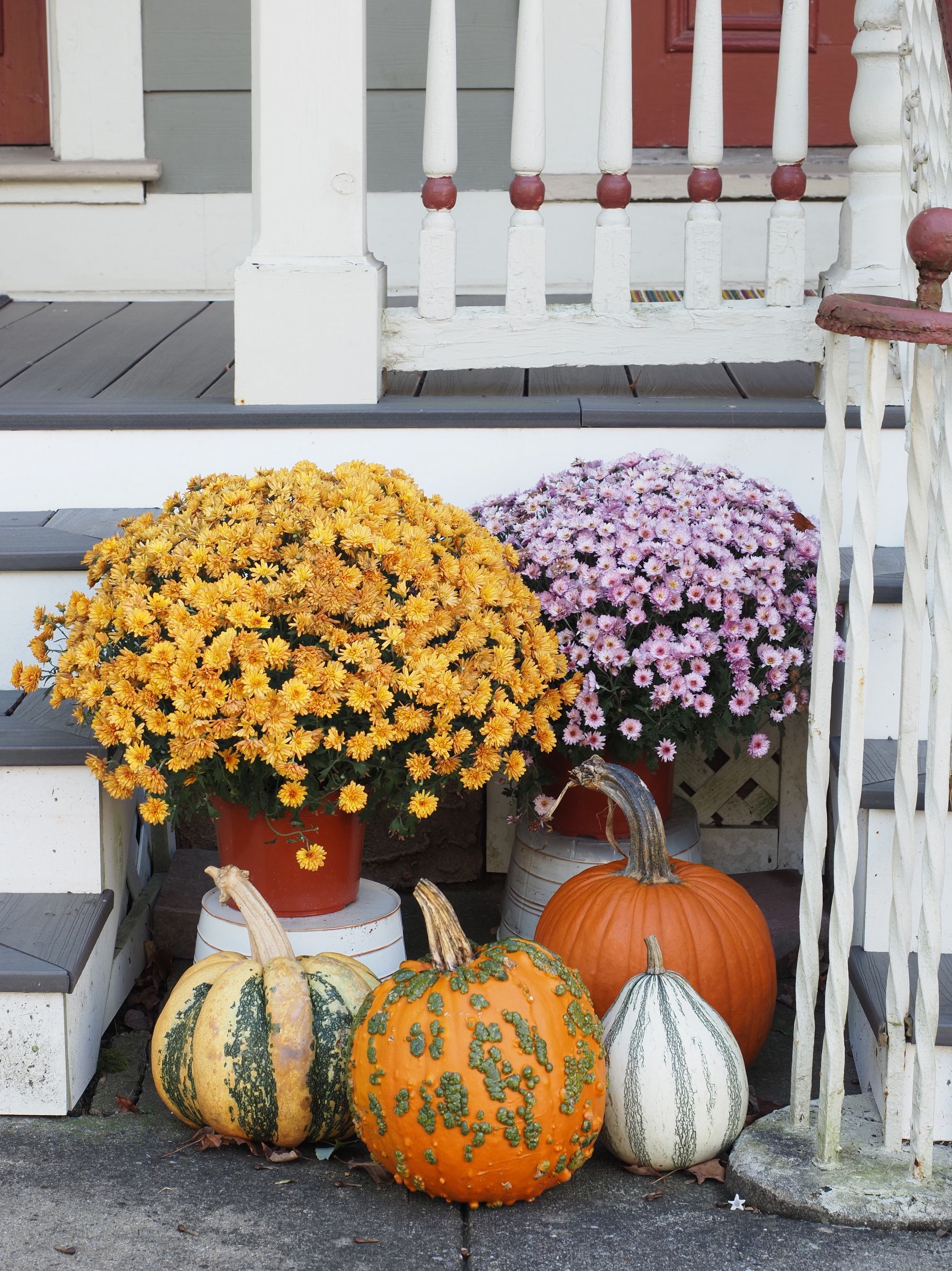
The front porch is the one part of fall decorating everyone actually sees: neighbors on a walk, trick-or-treaters, the delivery driver, anyone pulling into the driveway. That’s probably why so much of the advice about it is just a photo grid with captions like “add a wreath” and “layer in some pumpkins.” Nobody tells you what the wreath costs, how long the pumpkins actually hold up outside, or that lit candles in jack-o-lanterns are a documented fire risk and not just a mood-lighting choice.
This guide covers what a real fall porch refresh costs in 2026, which materials are worth buying once versus rebuying every year, and 20 specific ideas with real prices attached, plus a few actual product picks instead of another stock photo of a pumpkin.
Quick answer: A DIY fall refresh for a small porch, one wreath, a couple of mums, a handful of pumpkins, a doormat, and a strand of lights, runs about $125 to $235 in materials. Add pillow covers, a wood sign, and a couple of faux pumpkins that carry over every year, and a fuller display lands around $165 to $325. Hiring a “pumpkin concierge” service to source and install it for you starts around $259 to $300 for a modest package and can climb past $1,000, even to $1,275, for a large, pumpkin-heavy entryway. The National Retail Federation’s 2025 Halloween survey found that 78 percent of shoppers planned to buy decorations, spending a combined $4.2 billion nationally, so a $150 porch is already leaner than what most households budget for the season.
Why the Budget Is Worth Planning First
A porch is a small, high-visibility space, which cuts both ways. It doesn’t take much to make it look finished, but it also doesn’t take much clutter to make it look chaotic. The advice that works for a whole yard, buy in bulk, layer everything, add one of each seasonal item, tends to overwhelm a porch that’s ten feet wide.
It also helps to know that decorating porches for money is now an actual industry. Fox Business and Axios have both covered the rise of “pumpkin concierge” services, businesses that source, deliver, and arrange a full pumpkin display for a fee that starts around $259 to $300 and regularly runs past $1,000 for a large installation. That’s useful context for a DIY budget: even a $200 porch is already doing more, for less, than a lot of households are paying someone else to do.
Real vs. faux changes the math
Fire safety isn’t optional
What a Small Porch Fall Refresh Actually Costs
These are current retail ranges for the core pieces of a small porch display, not the cheapest possible option or the nicest possible one.
Core total for a small porch: roughly $125-$235. Skip any one row (most porches don’t need all seven) and the total drops accordingly.
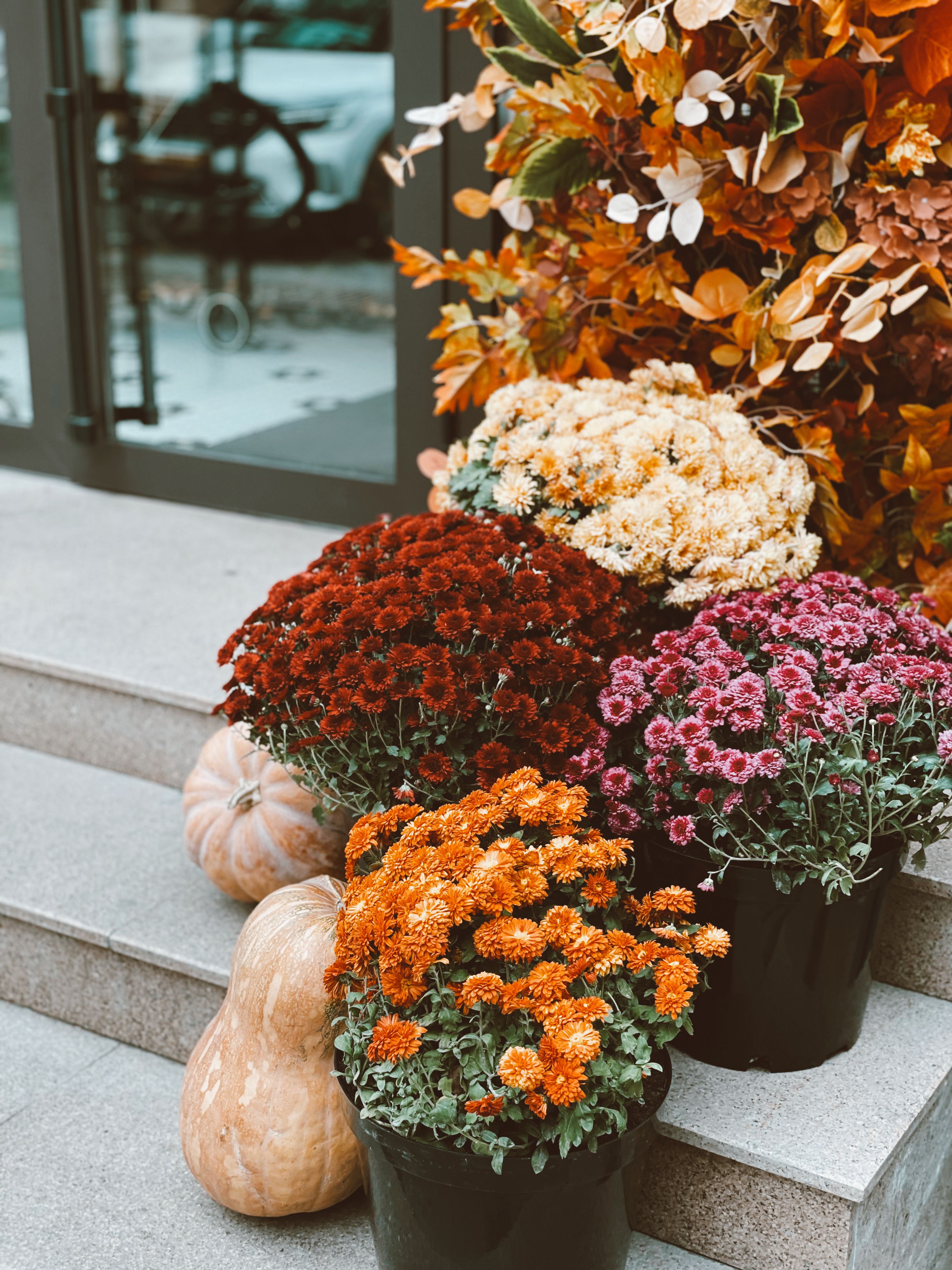
Real vs. Faux: What’s Worth Buying Once
This is the comparison almost nobody runs, and it’s where most of the long-term savings actually live. Some fall porch materials are genuinely single-season; others pay for themselves after year two.
Bar length shows how often you’re replacing it, not cost per item. A real pumpkin at a patch is $0.50-$0.75 a pound (about $4-$6 for an 8-pounder); the same pumpkin at a grocery or big-box store, priced closer to $1-$1.50 a pound, can run $14-$20 for a 10-14 pound jack-o-lantern.
None of this means skip real pumpkins. A porch with zero real pumpkins usually looks a little stiff. The practical split most budget-conscious displays land on: a couple of real ones out front for carving and smell, faux ones doing the bulk of the color and height, since those get reused every October instead of rebought.
DIY vs. Hiring a Porch Decorator
Yes, this is a real choice now. “Pumpkin concierge” businesses have opened in Minneapolis, Denver, Washington D.C., Nashville, Charlotte, and several other cities over the past two seasons, according to reporting from Axios and Fox Business. They source the pumpkins, hay, and gourds, design the arrangement, install it, and in some cases haul it away afterward for a fee.
| Factor | DIY | Porch decorator |
|---|---|---|
| Small porch cost | $125-$235 in materials | $259-$300 for a modest package |
| Large, full-entryway cost | $300-$500 in materials | $750-$1,275+ |
| Time from you | An afternoon of sourcing and setup | None; delivered and arranged |
| Sourcing | You pick pumpkins, hunt for deals | Included in the package |
| Off-season removal | Your own trash or compost | Sometimes included, often for an extra fee |
| Best fit | Anyone with a free Saturday and a budget in mind | Busy households who want it done and don’t mind paying for the labor |
For a single small porch, DIY wins on cost by a wide margin, and none of the steps here require special skill. Hiring it out mostly buys back time, not a better result.
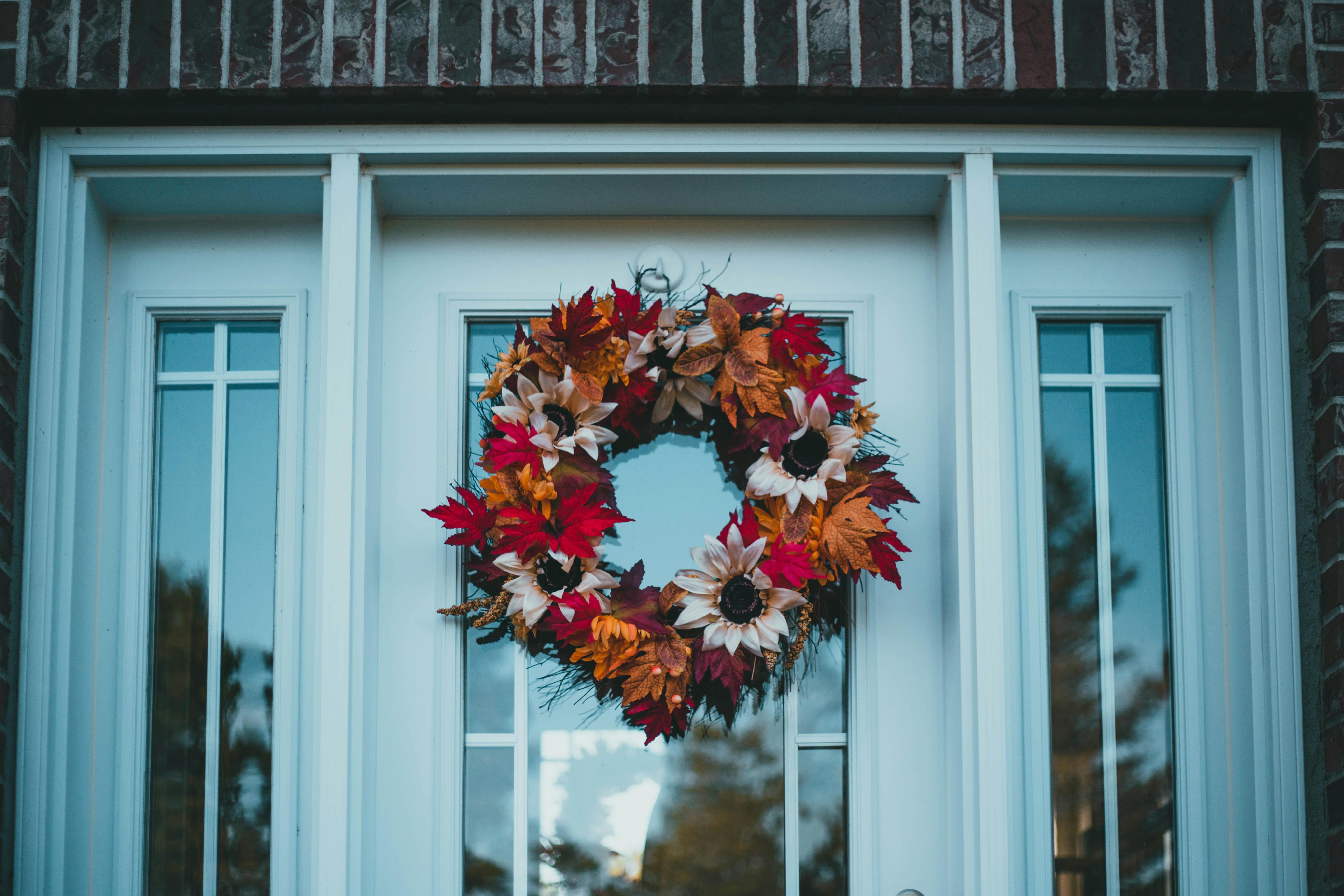
20 Budget Fall Front Porch Decor Ideas
Grouped by what they actually change on the porch, with a real cost attached to each and a product pick where one made sense.
Buy Pumpkins by the Pound, Not by the Pumpkin
Cuts the single biggest line item
A local patch or farm stand almost always prices pumpkins by weight, typically $0.50 to $0.75 a pound, while grocery and big-box stores price by the pumpkin at a rate that works out closer to $1 to $1.50 a pound. On a 10 to 14 pound carving pumpkin, that’s the difference between about $6 and about $18 for the exact same size.
Mix Real Pumpkins with a Few Reusable Faux Ones
Splits the cost across years
Foam and plastic pumpkins hold their color and shape for five to ten years with basic off-season storage, so the upfront cost of $8 to $25 each amortizes down fast. Put them toward the back or on a step riser where texture matters more than authenticity, and save the real ones for the front where people actually touch and smell them.
Paint or Gild Plain Pumpkins
Elevates a $5 pumpkin for a few dollars more
A can of matte spray paint or a small pot of gold leaf adhesive turns a plain orange pumpkin into something that looks intentional, without the higher price tag of specialty white or heirloom varieties at the patch. Metallic and black-and-white palettes photograph especially well against brick or a painted door.
Cluster Mini Pumpkins and Gourds on the Steps
Cheapest per-piece item on this list
Mini pumpkins and gourds typically run $1 to $3 each, or less when bought by the half dozen, and a cluster of eight or ten adds color and texture without needing a single large (and pricier) pumpkin at all.
Buy Mums in the Grower Pot, Skip the Decorative One
Same flower, lower price
A mum in its plain plastic grower pot costs $6 to $10 for a small 6 to 8 inch plant, versus $18 to $20 or more once it’s already potted into a decorative ceramic or whiskey-barrel-style container at a garden center. Buy the plant on its own and drop it into a planter you already have.
Flank the Door with Planters You Already Own
Reuses what’s already on the porch
Summer’s planters don’t need replacing, just refilling. Pull the spent annuals, add a mum or two and a few stems of ornamental grass, and the same urns that held petunias in July do the job for fall at a fraction of buying new containers.
Mix Ornamental Cabbage or Kale In with the Mums
Adds texture without adding much cost
Ornamental cabbage and kale cost about the same as a mum plant and hold up to frost far better, so they keep a planter looking full well past the point mums have dropped their blooms, straight through Thanksgiving in most climates.
Bundle Cornstalks at the Door Frame
Height and texture, low material cost
A bundle of two or three cornstalks tied to a porch post or door frame runs $4.50 to $10 at most garden centers. Farm stands that sell direct sometimes do noticeably better: one farm in Missouri bundles about 25 stalks for roughly what a big-box store charges for a dozen.
Anchor the Display with a Straw or Hay Bale
A tiered base for pumpkins and mums
A full straw bale runs $11 to $14 at a garden center chain, though farm stands selling direct often charge closer to $6 to $8. Setting pumpkins and potted mums on top of one instead of flat on the porch floor adds height and makes a small pumpkin collection look considerably fuller.
One Good Wreath Instead of Several Small Pieces
Reusable for years
A solid artificial fall wreath, pip berries, faux foliage, a simple bow, runs $25 to $50 and, stored indoors between seasons, lasts for years. That makes it a better long-term value than three or four smaller seasonal accents bought fresh every year for a similar combined price.
Run a Leaf Garland Along the Railing
Covers a lot of visual ground cheaply
A single maple leaf garland, six to nine feet long, wraps a railing or door frame for $15 to $20 and reads as a much bigger gesture than its price suggests, since it covers a long visible line rather than a single point like a wreath does.
DIY a Dried-Leaf or Grapevine Wreath
Close to free
A plain grapevine wreath base costs $5 to $10, and pressed leaves, dried hydrangea, or wheat stems gathered from a yard fill it in for nothing. It won’t last as many seasons as an artificial one, but for a single year’s display it’s the cheapest wreath option on this list by a wide margin.
Flameless Lanterns Along the Steps
Warmth without the fire risk
A wood or metal candle lantern runs $25 to $40, and paired with battery-operated flameless candles instead of real ones, it gives the same warm glow at the door without an open flame sitting unattended on a step where trick-or-treaters, wind, or a dry cornstalk display can reach it.
Warm-White String Lights on the Roofline or Railing
Extends the porch’s use into evening
A 25 foot strand of Edison-style outdoor string lights runs $20 to $35 and does more to make a porch feel finished after sunset than almost anything else on this list, since it lights the whole space rather than one accent piece.
Swap Pillow Covers, Not the Whole Pillow
A fraction of the cost of new pillows
A set of two fall-print pillow covers runs $13 to $20 and slides over the same pillow inserts already on a porch bench or chair. Buying entirely new outdoor pillows for the same look easily runs three to four times as much.
Layer a Plaid or Buffalo-Check Throw
Instant coziness for one item
Draped over a bench arm or rocking chair, a single outdoor-rated throw blanket adds warmth and color for around $20 to $35 and photographs as “cozy” more reliably than almost any other single purchase on this list.
A Seasonal Doormat, Layered Over a Plain One
Sets the tone before anyone reaches the door
A checked or plaid doormat runs $20 to $30 and, layered on top of a plain coir mat already at the door, adds a designed look without replacing anything. It’s also one of the few items on this list that gets literal daily foot traffic, so it’s worth choosing something durable over the cheapest option.
A Leaning Wood or Metal Welcome Sign
Ties a simple display together
A small hanging or leaning sign, a pumpkin cutout, a harvest phrase, a set of house numbers, costs as little as $9 to $25 and does a similar job to a fresh coat of paint on the door: it makes a modest display look finished rather than assembled piece by piece.
One Painted Accent: the Door or the House Numbers
Biggest visual return per dollar
None of this is technically fall decor, but a freshly painted front door or a repainted set of house numbers pulls a simple pumpkin-and-mum display together more than another purchase would. A quart of exterior paint covers most doors for less than the cost of one wreath.
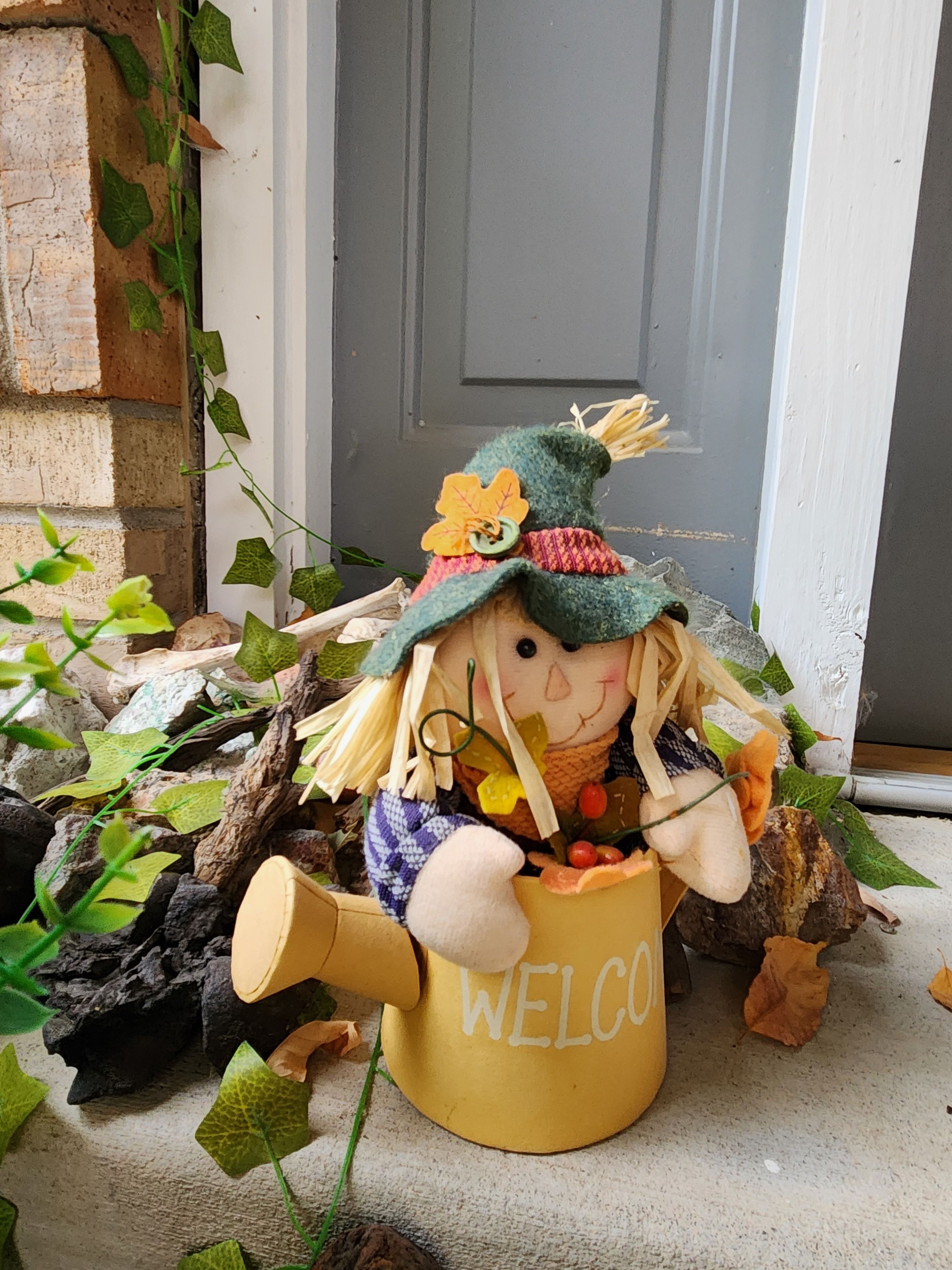
A DIY Scarecrow from Clothes Already in the Closet
Often free
An old flannel shirt, a pair of jeans, and straw stuffing (leftover from a hay bale works fine) make a scarecrow for close to nothing. It’s the single most photogenic item on this list relative to its cost, and it packs flat for storage once the season ends.
Fire Safety Worth Building Into the Budget
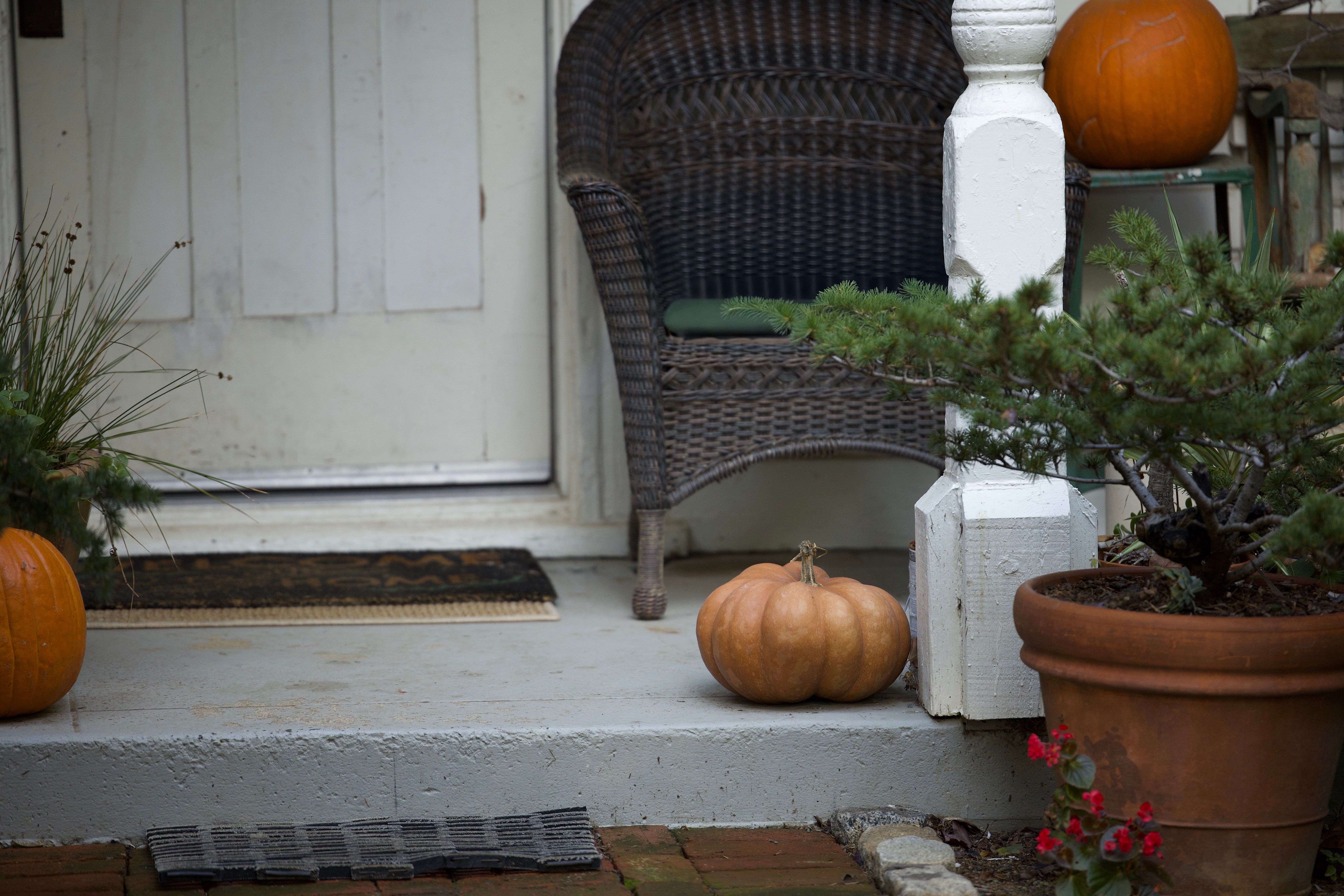
The numbers most fall decor guides skip: the National Fire Protection Association’s most recent data shows decorations were the first item ignited in an estimated 860 home structure fires a year, causing an average of one death, 41 injuries, and $13.4 million in property damage annually. Nearly half of those fires started because a decoration was too close to a heat source, and 38 percent were started by candles specifically. The NFPA also flags dried flowers, cornstalks, and crepe paper by name as materials that catch fire easily.
None of that means skipping candles or cornstalks entirely. It means a few cheap swaps: flameless candles instead of real ones inside jack-o-lanterns and lanterns, cornstalk and hay bale displays kept a few feet from the door light or any wired fixture, and exits (the actual walkway to the door) left clear of decorations rather than narrowed by a wide pumpkin display. All three cost nothing extra and remove most of the risk this data points to.
Common Budget Mistakes to Avoid
This is the single fire-risk swap worth making. Flameless candles cost a little more upfront and remove the leading cause of decoration fires according to NFPA data.
Mixing in mini pumpkins and gourds at $1-$3 each fills the same visual space as several $6-$8 pumpkins for a fraction of the cost.
Beyond the fire-safety issue, a bale or bundle set right against the door blocks the exit path and gets in the way of anyone actually using it.
New outdoor pillows can run three to four times the cost of covers alone for the same seasonal look.
Buying whatever’s discounted that week without a rough idea of the porch’s layout usually means mismatched colors, uneven heights, and leftover items that never get used.
Where the Real Savings Are
The per-pound price at a farm stand runs roughly half of what grocery and big-box stores charge for the same size.
A reusable artificial wreath in natural tones works from September through Thanksgiving and saves buying a new one every year.
Pillow covers and a single throw update the whole seating area for a fraction of new cushions.
Refilling existing planters with mums costs only the plants, not a new pot.
Foam pumpkins and artificial garland cost more upfront but stop being a yearly expense entirely.
Which Approach Offers Better Value?
For a single small porch, DIY wins on cost by a wide margin, and none of the twenty ideas above require special skills or tools beyond a staple gun or zip ties. The materials add up to $125-$325 depending on how full a display you’re after, well under even the least expensive professional package.
A porch decorator starts to make more sense for a genuinely large entryway (a wide wraparound porch, a commercial storefront, or a household that simply doesn’t have a free afternoon) where the $750-$1,275+ packages include design, sourcing, and end-of-season removal as part of the price. For most homes, that’s paying for convenience, not a better-looking porch.
Frequently Asked Questions
How much does it cost to decorate a small front porch for fall?
A DIY refresh with a wreath, mums, pumpkins, a doormat, and lights typically runs $125 to $235 in materials. A fuller display with pillow covers, a sign, and reusable faux pumpkins lands around $165 to $325.
What is the cheapest way to decorate a porch for fall?
Buy pumpkins by the pound at a patch instead of by the piece at a store, refill planters already on the porch instead of buying new ones, and swap pillow covers rather than whole pillows. A DIY grapevine wreath filled with dried leaves from the yard can bring the wreath cost close to zero.
Are real or fake pumpkins cheaper in the long run?
Real pumpkins are cheaper for a single season but need rebuying every year at $4-$20 each. Faux pumpkins cost more upfront, $8-$25 each, but last five to ten years, so they’re cheaper over multiple seasons. A mix of both is common: real ones for carving and smell, faux ones for the bulk of the display.
Is it safe to use candles in porch decorations?
NFPA data shows decorations were the first item ignited in an average of 860 home structure fires a year, with candles responsible for 38 percent of them. Battery-operated flameless candles give the same look without that risk and cost only slightly more than real ones.
How much do professional pumpkin decorators charge?
Reported pricing runs from about $259-$300 for a modest small-porch package up to $750-$1,275 or more for a large, pumpkin-heavy entryway, based on reporting from Axios and Fox Business on the growing “pumpkin concierge” industry.
When should I put up fall porch decor?
Most households start in early-to-mid September, ahead of Halloween shopping. Neutral pieces like a natural-tone wreath, mums, and pumpkins work straight through Thanksgiving without needing to be swapped out.
Can I reuse fall porch decorations for both Halloween and Thanksgiving?
Yes, if the palette stays neutral. Natural wreaths, mums, cornstalks, and unpainted pumpkins carry through both holidays. Anything explicitly Halloween-themed (spiderwebs, skeletons) typically needs swapping out after October 31.
What’s the biggest fall porch decorating mistake?
Buying a full-size pumpkin for every spot on the porch instead of mixing in cheaper mini pumpkins and gourds, and using real candles in jack-o-lanterns or lanterns near the door instead of flameless ones.
Do I need real mums, or can artificial ones work?
Real mums are inexpensive, $6-$10 for a small pot, and bloom for four to six weeks, which covers most of the fall season. Artificial mums cost more upfront but skip the watering and wilting issues, making them a reasonable choice for a porch that doesn’t get regular attention.
How many pumpkins does a small front porch actually need?
Most small-porch displays covered by professional decorators use somewhere between six and twelve pumpkins across mixed sizes. For a DIY budget version, two or three medium pumpkins plus a half dozen minis usually reads as full without overcrowding a narrow step or landing.
Final Thoughts
The honest budget math on a fall porch favors a few well-chosen pieces over a pile of small ones. A wreath bought once, mums in containers already on hand, pumpkins priced by the pound instead of the piece, and flameless candles instead of real ones covers most of what actually makes a porch look finished, for well under what a professional package costs and without the fire risk that real candles and dried cornstalks carry. Sketch the layout before shopping, buy the reusable pieces once, and let next year’s pumpkins be the only thing on the list that needs replacing.
Leave a Reply