.cb-root{
–ink:#2B2E33;
–ink-soft:#5B5F66;
–paper:#F3F2ED;
–paper-raised:#FFFFFF;
–line:#DEDCD3;
–sage:#6B7F76;
–sage-dark:#4F5F58;
–sage-bg:#EAEEEC;
–clay:#A85D45;
–clay-bg:#F3E7E2;
–water:#3E6E8E;
–water-bg:#E6EEF2;
}
.cb-root *{ box-sizing:border-box; }
.cb-root{ margin:0; background:var(–paper); color:var(–ink); font-family:’Inter’,-apple-system,sans-serif; font-size:16.5px; line-height:1.72; }
.cb-wrap{ max-width:820px; margin:0 auto; padding:0 22px 50px; }
.cb-root h1,.cb-root h2,.cb-root h3{ font-family:’Fraunces’,Georgia,serif; color:var(–ink); margin:0; }
.cb-root a{ color:var(–sage-dark); }
.cb-root p{ margin:0 0 15px; }
.cb-header-band{ background:var(–ink); color:var(–paper); padding:44px 0 30px; }
.cb-header-band .cb-eyebrow{ font-family:’JetBrains Mono’,monospace; font-size:11.5px; letter-spacing:0.18em; text-transform:uppercase; color:#B7C4BE; margin-bottom:14px; }
.cb-header-band h1{ font-size:clamp(25px,4.6vw,40px); font-weight:600; line-height:1.22; color:#fff; margin-bottom:14px; max-width:680px; }
.cb-header-band p.cb-lede{ color:#C7C9C6; font-size:16.5px; max-width:640px; margin-bottom:0; }
.cb-grout-strip{ height:8px; display:flex; }
.cb-grout-strip span{ flex:1; border-right:2px solid var(–paper); }
.cb-grout-strip span:last-child{ border-right:none; }
.cb-root h2{ font-size:25px; font-weight:600; margin:48px 0 14px; padding-bottom:10px; border-bottom:2px solid var(–ink); }
.cb-root h3{ font-size:19px; font-weight:600; margin:24px 0 8px; }
.cb-quick-answer{ background:var(–water-bg); border-left:4px solid var(–water); border-radius:4px; padding:16px 18px; margin:24px 0; }
.cb-quick-answer p{ margin:0; font-size:15.5px; color:#294456; }
.cb-quick-answer p+p{ margin-top:10px; }
.cb-quick-answer p strong{ color:var(–ink); }
.cb-tagrow{ display:flex; gap:8px; flex-wrap:wrap; margin:16px 0 8px; }
.cb-tag{ font-family:’JetBrains Mono’,monospace; font-size:11px; letter-spacing:0.06em; text-transform:uppercase; border:1px solid var(–ink); color:var(–ink); padding:4px 9px; border-radius:3px; }
/* ———- scale bars (signature element) ———- */
.cb-scale-box{ margin:22px 0 8px; padding:22px 20px 18px; background:var(–paper-raised); border:1px solid var(–line); border-radius:8px; }
.cb-scale-row{ display:flex; align-items:center; gap:14px; margin-bottom:14px; }
.cb-scale-row:last-child{ margin-bottom:0; }
.cb-scale-label{ width:190px; flex-shrink:0; font-size:14px; font-weight:600; }
.cb-scale-track{ flex:1; height:14px; background:var(–sage-bg); border-radius:7px; overflow:hidden; }
.cb-scale-fill{ height:100%; background:var(–water); border-radius:7px; }
.cb-scale-fill.clay{ background:var(–clay); }
.cb-scale-val{ width:190px; flex-shrink:0; font-family:’JetBrains Mono’,monospace; font-size:12px; color:var(–ink-soft); text-align:right; }
.cb-scale-note{ font-family:’JetBrains Mono’,monospace; font-size:11.5px; color:var(–ink-soft); margin-top:14px; }
/* ———- image blocks ———- */
.cb-img-block{ margin:22px 0; border-radius:8px; overflow:hidden; border:1px solid var(–line); }
.cb-img-block img{ width:100%; height:320px; object-fit:cover; display:block; }
.cb-img-caption{ font-family:’JetBrains Mono’,monospace; font-size:11.5px; color:var(–ink-soft); padding:9px 12px; background:var(–paper-raised); border-top:1px solid var(–line); }
.cb-img-suggest{ margin:22px 0; border:1px dashed var(–water); border-radius:8px; padding:16px 18px; background:var(–water-bg); }
.cb-img-suggest-label{ font-family:’JetBrains Mono’,monospace; font-size:11px; letter-spacing:0.08em; text-transform:uppercase; color:var(–water); font-weight:600; margin-bottom:6px; }
.cb-img-suggest p{ margin:0; font-size:14px; color:#294456; }
/* ———- entry blocks (reused for garden ideas) ———- */
.cb-block{ margin-top:36px; padding-top:22px; border-top:1px dashed var(–line); }
.cb-block:first-of-type{ margin-top:20px; padding-top:0; border-top:none; }
.cb-block-head{ display:flex; align-items:baseline; gap:12px; margin-bottom:4px; }
.cb-block-num{ font-family:’JetBrains Mono’,monospace; font-size:13px; color:var(–clay); border:1px solid var(–clay); border-radius:3px; padding:2px 7px; flex-shrink:0; }
.cb-block h3{ margin:0; }
.cb-block-tag{ display:inline-block; font-family:’JetBrains Mono’,monospace; font-size:10.5px; text-transform:uppercase; letter-spacing:0.05em; background:var(–sage-bg); color:var(–sage-dark); padding:3px 8px; border-radius:3px; margin:6px 0 10px; }
.cb-block-tag.clay{ background:var(–clay-bg); color:var(–clay); }
.cb-block-specs{ font-family:’JetBrains Mono’,monospace; font-size:12px; color:var(–ink-soft); background:var(–paper-raised); border-left:3px solid var(–sage); padding:8px 12px; margin:10px 0 12px; }
.cb-block-specs span{ display:block; margin-bottom:2px; }
.cb-block-specs span:last-child{ margin-bottom:0; }
.cb-group-label{ font-family:’JetBrains Mono’,monospace; font-size:12px; letter-spacing:0.1em; text-transform:uppercase; color:var(–water); background:var(–water-bg); display:inline-block; padding:6px 12px; border-radius:4px; margin:34px 0 4px; }
.cb-table-wrap{ overflow-x:auto; border:1px solid var(–line); border-radius:6px; margin:16px 0; }
.cb-table{ width:100%; border-collapse:collapse; font-size:14px; min-width:600px; }
.cb-table th{ background:var(–ink); color:#fff; text-align:left; padding:10px 12px; font-family:’JetBrains Mono’,monospace; font-size:10px; letter-spacing:0.04em; text-transform:uppercase; }
.cb-table td{ padding:9px 12px; border-bottom:1px solid var(–line); }
.cb-table tr:nth-child(even) td{ background:#FAFAF7; }
.cb-table td:first-child{ font-weight:600; }
.cb-tip-list{ display:flex; flex-direction:column; gap:10px; margin:18px 0; }
.cb-tip-list .item{ display:flex; gap:12px; align-items:flex-start; }
.cb-tip-list .dot{ width:8px; height:8px; border-radius:50%; background:var(–sage-dark); margin-top:8px; flex-shrink:0; }
.cb-tip-list .txt strong{ display:block; font-size:15px; margin-bottom:2px; }
.cb-tip-list .txt p{ margin:0; font-size:14.5px; color:var(–ink-soft); }
.cb-mistake-list{ display:flex; flex-direction:column; gap:12px; margin:18px 0; }
.cb-mistake-list .item{ display:flex; gap:14px; background:var(–paper-raised); border:1px solid var(–line); border-radius:6px; padding:14px 16px; }
.cb-mistake-list .num{ font-family:’Fraunces’,serif; font-weight:600; font-size:22px; color:var(–clay); flex-shrink:0; line-height:1.3; }
.cb-mistake-list .txt strong{ display:block; font-size:15.5px; margin-bottom:3px; }
.cb-mistake-list .txt p{ margin:0; font-size:14.5px; color:var(–ink-soft); }
.cb-faq-item{ border-top:1px solid var(–line); padding:18px 0; }
.cb-faq-item:last-child{ border-bottom:1px solid var(–line); }
.cb-faq-item .q{ font-family:’Fraunces’,serif; font-weight:600; font-size:17px; margin-bottom:6px; }
.cb-faq-item .a{ font-size:15px; margin:0; color:var(–ink-soft); }
@media (max-width:600px){ .cb-scale-label{ width:110px; } .cb-scale-val{ width:100px; } .cb-img-block img{ height:220px; } }
Budget Garden Guide · Updated 2026
Small Front Garden Ideas on a Budget
Most “budget front garden” lists are just backyard advice shrunk down and a stock photo. Here’s what a small front garden actually costs to redo, which cheap fixes stay cheap, and which ones don’t.
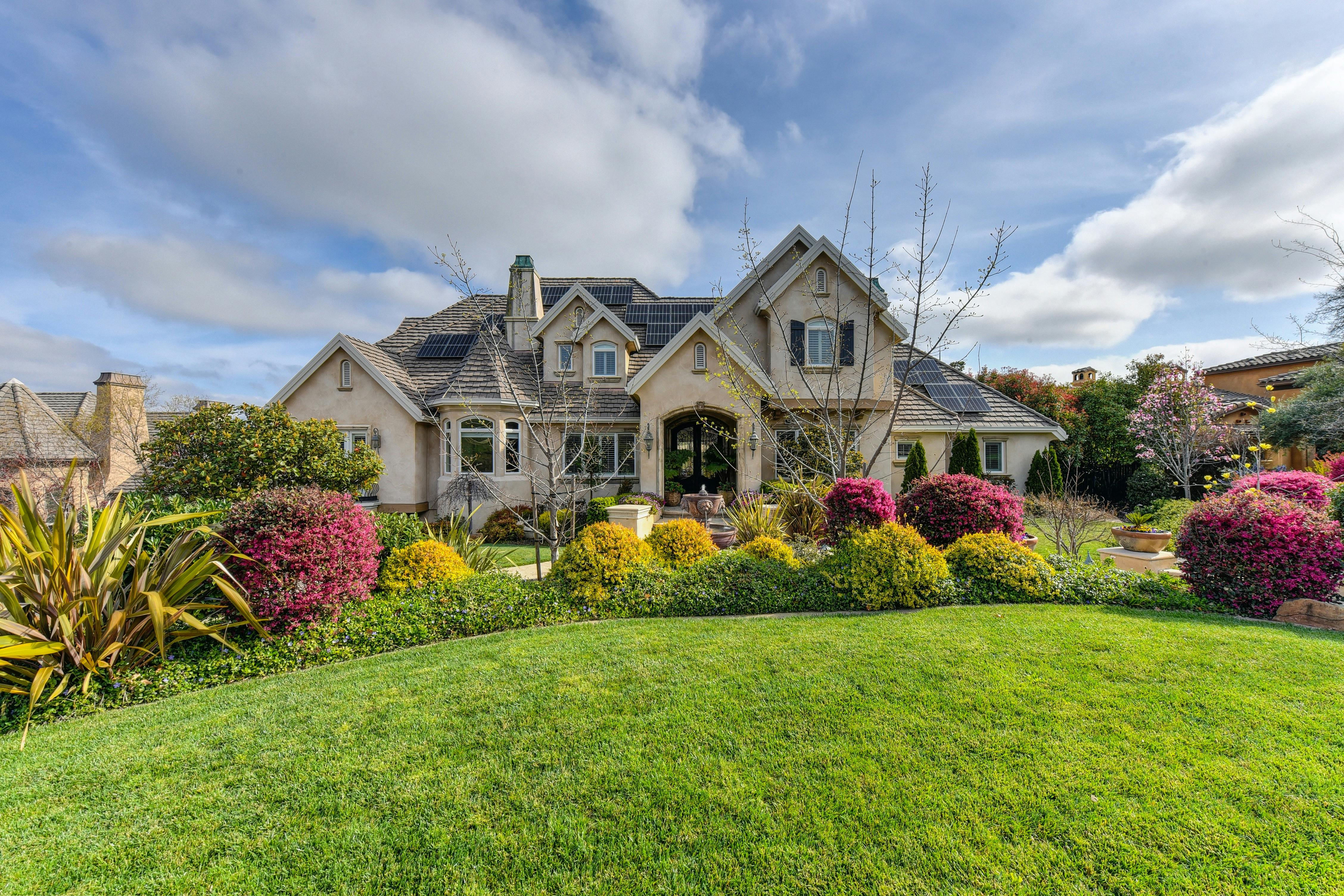
A small front garden is the one piece of landscaping almost everyone sees, at the mailbox, from the sidewalk, pulling into the driveway, whether or not anyone ever sets foot in the back yard. That visibility is exactly why so much advice about it falls flat: articles written for a quarter-acre backyard get copied over with “front yard” swapped into the title, and the tips (buy soil in bulk, plant a mass of mature shrubs, install a full irrigation line) stop making sense the moment the space in question is a 10-by-15-foot bed by the front door.
This guide is sized for that smaller space. It covers what a real small front garden refresh costs in materials, which plants and materials are genuinely cheap versus just cheap on day one, and ten specific ideas with real price ranges attached, not just “add some color” and a stock photo of a driveway.
Quick answer: A DIY refresh of a small front garden, new mulch, a handful of perennials, basic edging, typically costs $380 to $915 in materials. Hiring a landscaper for a project of similar scale averages around $1,835, usually landing between $789 and $3,524, according to 2026 landscaping cost data. The real savings don’t come from skipping steps. They come from buying small perennials instead of mature ones, dividing and swapping plants instead of buying more, and choosing materials, gravel, mulch, edging, in bulk rather than by the bag. A $200 front garden that was actually planned will look better a year from now than a $2,000 one that wasn’t.
Why It’s Worth Planning the Budget First
Well-kept landscaping has been linked to a resale advantage of roughly 5 to 12 percent in some real estate research, though for most homeowners the more immediate payoff is simpler: a front garden that looks intentional, even a small one, changes how the whole house reads from the street.
Small spaces also change the math on typical advice. A “buy in bulk” tip that makes sense for a large backyard bed can mean paying for several cubic yards of topsoil you’ll never use on a bed that’s ten feet long. The ideas in this guide are sized for the kind of space most front gardens actually are: a strip along the walkway, a bed under the windows, the patch between the driveway and the door.
Perennials beat annuals
Patience is the real discount
What a Small Front Garden Budget Actually Looks Like
The honest version of a “budget” front garden refresh uses real perennials and enough mulch to actually suppress weeds, not the cheapest flat of annuals on the rack, since annuals need repurchasing every single year.
Typical materials total for a modest small front garden refresh: roughly $380-$915, before counting your own time. Bulk buying gravel and mulch over 2 cubic yards instead of by the bag can cut those two lines by 30-40%.
Professional Landscaping Costs for a Small Front Garden
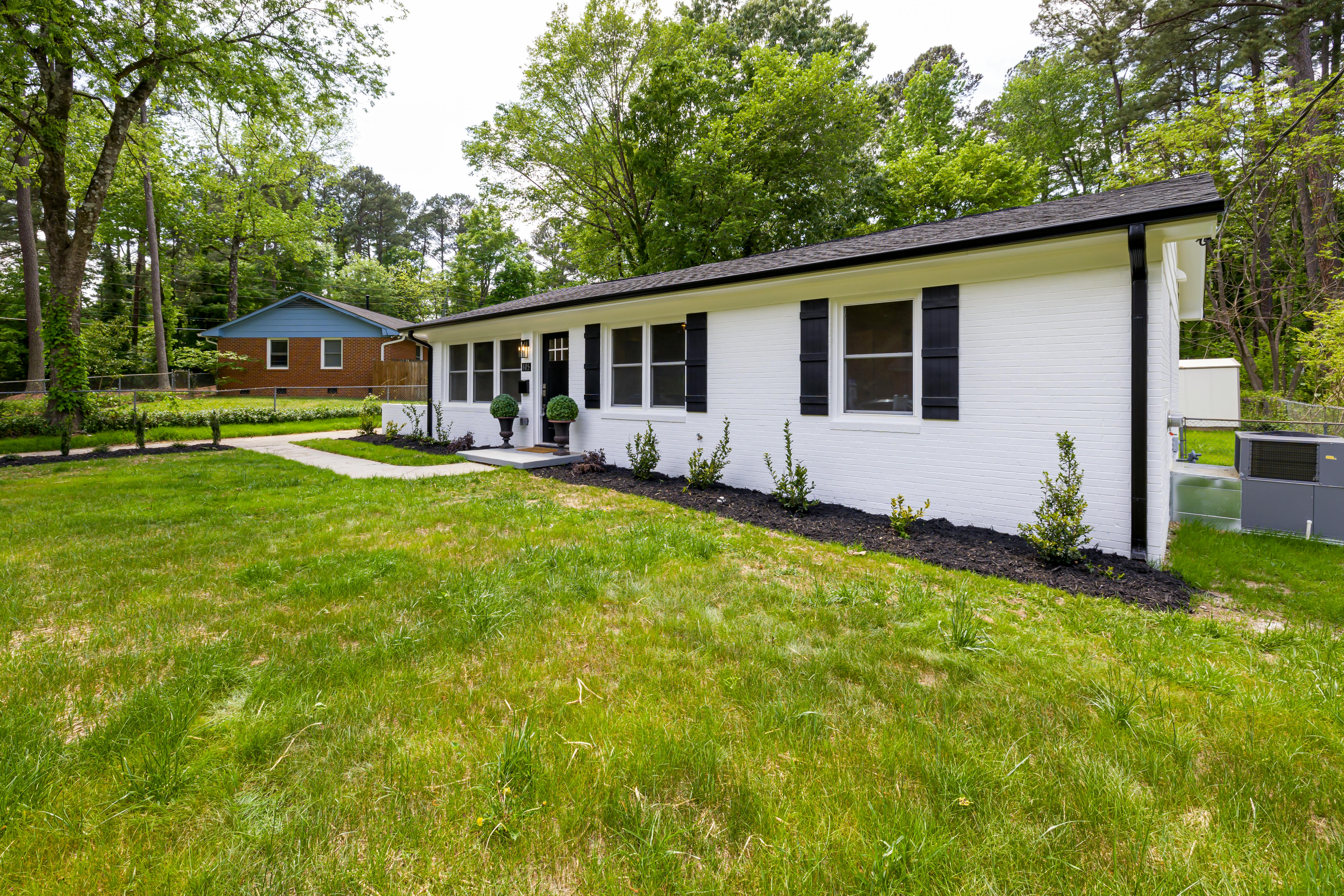
A small-scale professional project, foundation planting, a fresh bed, an entrance refresh rather than a full yard tear-out, averages around $1,835 and typically runs $789 to $3,524. A full front yard redesign with new beds, a path, or a lawn alternative costs more and scales with square footage, usually landing between $1,500 and $5,000, with hardscaping like a new walkway or retaining wall pushing the total higher.
| Project scope | Typical cost range | Notes |
|---|---|---|
| Small refresh (entrance bed, foundation planting) | $789-$3,524 | Average around $1,835 |
| Full front yard redesign | $1,500-$5,000+ | Scales with size; hardscaping adds significantly more |
| Plants only, professionally installed | $500-$3,000 | Depends on shrub and pot size, not just plant count |
Labor is most of that bill. A landscaper typically charges $25 to $85 to plant a single shrub and $10 to $30 per pot for flowers, including the plant itself, which is why the same design can cost twice as much with a crew as it would bought and planted yourself over a weekend.
DIY vs. Professional: The Real Comparison
| Factor | DIY | Professional |
|---|---|---|
| Small refresh cost | $380-$915 in materials | $789-$3,524, averaging about $1,835 |
| Time commitment | A few weekends, roughly 10-20 hours | 1-3 days for a small crew |
| Plant & soil expertise | Self-taught, some trial and error | Included, matched to sun and soil conditions |
| Guarantee | None | Many contractors include a plant establishment guarantee |
| Risk of costly mistakes | Higher without experience | Lower, but you’re paying for that risk reduction |
| Best fit | Small, simple beds; hands-on homeowners | Complex layouts, drainage or grading work, limited time |
For a single bed or an entrance planting, DIY wins on cost almost every time, and mistakes are cheap to fix when you’re only out the price of one perennial. Where a professional starts to earn their fee is anything involving grading, drainage, or structural hardscaping, work that’s expensive to redo if it’s done wrong. A practical middle ground most budget guides skip entirely: hire out the parts that are hard to undo (regrading, a retaining wall, tree removal) and do the planting yourself.
How Long Until a Budget Garden Looks Full
The size of plant you buy changes both the price and the wait, and this is where most of the real savings in a small front garden actually live.
Bar length shows time to fill in, not cost. A 3-gallon plant costs 2-3x a 1-gallon plant of the same variety for roughly a year’s head start.
10 Budget Front Garden Ideas
Grouped by what they actually change in the garden, with a real cost range attached to each.
Gravel or Pea Gravel Beds
Replaces hard-to-mow lawn strips
A gravel bed swaps a patch of struggling lawn for a surface that never needs mowing, watering, or fertilizing again. It’s one of the few “budget” fixes that actually gets cheaper to maintain every year you keep it, unlike grass, which keeps costing money and time for as long as it exists.
Low-Growing Groundcover Instead of Turf
Cuts mowing entirely
Creeping thyme, low sedum, and clover fill in where a small patch of lawn used to be, without a mower ever needing to touch it. Seed and plugs both cost far less upfront than sod, and the payoff compounds since there’s no ongoing mowing or watering bill either.
Perennials Instead of Annuals
Comes back without repurchasing
Catmint, daylilies, sedum, black-eyed Susan, and lavender all show up widely as 1-gallon perennials in the $10-$18 range, and unlike annuals, none of them need replacing next spring. Most also divide easily after two or three years, so one purchased plant eventually becomes three or four for free.
Grow From Seed, Division, or Cuttings
The closest thing to free plants
A seed packet costs a fraction of a single potted plant and can fill several square feet of bed by midsummer. Just as often, the cheapest plants come from other gardeners: most people dividing daylilies or hostas in fall are glad to hand over the extras instead of composting them.
A Simple Gravel or Stepping-Stone Path
Cheaper than poured concrete
Stepping stones set into gravel infill cover the same stretch of ground as a poured path for a fraction of the material and labor cost, and the layout is forgiving enough to redo yourself if the first attempt looks off.
Reclaimed or Repurposed Edging
Often free
Old bricks, broken pavers, or trimmed branches define a bed border just as well as anything bought new, and the material is frequently free from a demolition pile, a neighbor’s leftovers, or your own yard.
Repurposed Containers
Free to a few dollars
Old buckets, tins, and crates make perfectly good planters once they’ve got drainage holes, and they add color at the entrance without digging into a bed at all. The container itself is often free; the real cost is a bag of potting soil and whatever you plant in it.
Vertical Planters and Hanging Baskets
Covers ground-space limits
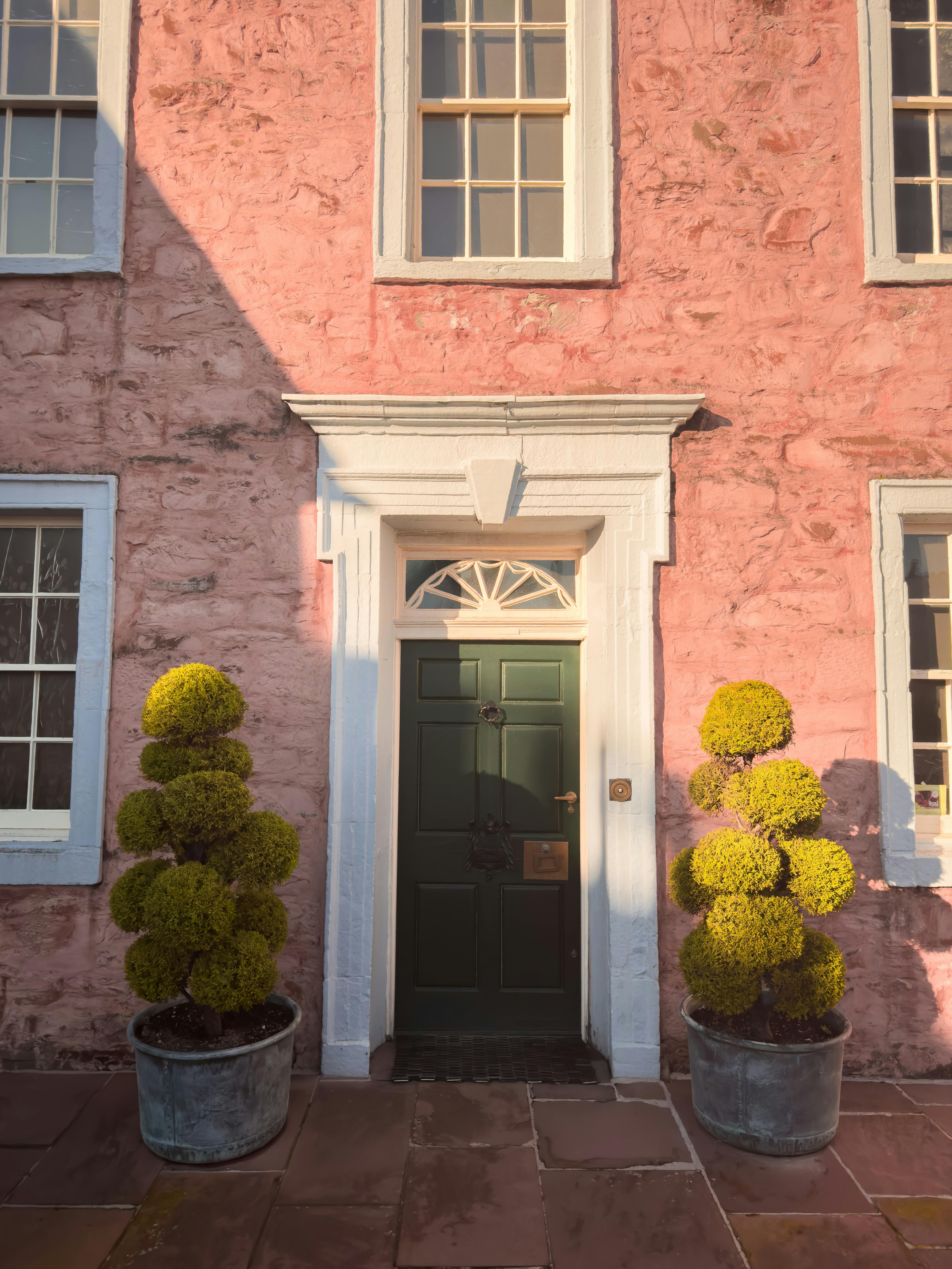
Wall-mounted planters and hanging baskets add visual coverage without needing any ground space at all, which matters most on a paved or very small front garden where there’s little bed to work with in the first place.
Solar Path Lighting
No wiring needed
Solar stake lights need no electrician and no trench for wiring, just a few hours of direct sun a day to recharge. They make a bed or path visible after dark for close to the smallest spend on this whole list.
A Fresh Coat of Paint on the Door, Gate, or Mailbox
Biggest visual return per dollar
None of this is technically gardening, but a freshly painted door or mailbox ties a modest planting scheme together more than another round of plants would. It’s also the fastest way to make a budget front garden look deliberate rather than assembled piece by piece.
Common Budget Mistakes to Avoid
Annuals look cheap per plant, but replacing an entire bed every spring adds up to more than perennials over two or three years, and the bed never actually fills in the way perennials do.
Planting straight into compacted or root-choked soil is the fastest way to lose new plants in the first season, which means paying for the same bed twice.
Pots need refilling every year, and artificial turf carries a real installation cost and a mid-life replacement bill. Neither one is actually the budget option once you look past the first season.
A bed planted tightly because it “looks empty” on day one is often overcrowded within two years, forcing you to dig up and thin plants you already paid for.
Buying whatever’s discounted that week, without a rough sketch of the space, usually means mismatched heights and colors and leftover plants that never get used.
Where the Real Savings Are
The size difference disappears within a year, but the price difference doesn’t.
Most established perennials can be split every 3-4 years, turning one plant into several without spending anything.
Once a project needs more than about 2 cubic yards, bulk pricing beats bagged material by 30-50%.
Late summer and fall nursery sales often discount perennials and shrubs 30-50% off spring pricing, and most establish just as well planted in fall.
Ornamental grasses and self-seeding annuals like black-eyed Susan or cosmos fill a drift for a fraction of buying that many potted plants.
Best Low-Cost Plants for Small Front Gardens
| Plant | Approx. cost (1-gal) | Why it’s budget-friendly |
|---|---|---|
| Catmint | $10-$15 | Spreads to fill bare soil fast; tolerates drought once established |
| Daylily | $10-$15 | Divides easily; one plant becomes several within a couple of years |
| Sedum (stonecrop) | $8-$12 | Thrives in poor soil; needs almost no water once rooted in |
| Black-eyed Susan | $8-$12 | Self-seeds, so a small starting group multiplies on its own |
| Lavender | $10-$18 | Long-lived and evergreen-ish; doesn’t need yearly replacing like annuals |
| Hosta (for shade) | $10-$20 | Divides into multiple plants every few years |
Maintenance Tips to Protect Your Investment
This keeps the bed full without buying more plants, and gives you free divisions to fill any bare patches.
A thin annual refresh layer costs a fraction of a full first-time application and keeps weed suppression working.
This keeps plants dense and encourages a second flush on many perennials, instead of a leggy, sparse look by midsummer.
This trains roots to grow down instead of sideways, which establishes plants faster and cuts watering needs, and losses, in later years.
Which Approach Offers Better Value?
For a single bed, an entrance planting, or anything under about 200 square feet, DIY nearly always wins on value. Mistakes are cheap to fix when the most you’re out is the price of one perennial, and most of the real savings in this guide, buying small, dividing, sourcing secondhand, only work if you’re doing the planting yourself.
Professional installation starts to make sense for anything involving grading, drainage, retaining walls, or a full hardscape redesign, work that’s expensive and disruptive to correct if it’s done wrong. A practical middle ground that most budget guides skip entirely: hire out only the parts that are genuinely hard to undo, and handle the planting, edging, and finishing touches yourself.
Frequently Asked Questions
How much does it cost to landscape a small front garden on a budget?
A DIY refresh with new mulch, perennials, and basic edging for a small bed typically runs $380 to $915 in materials. Hiring a landscaper for a project of similar scale averages around $1,835, usually landing between $789 and $3,524.
What is the cheapest way to landscape a front yard?
Groundcover or gravel instead of turf, perennials instead of annuals, and reclaimed materials for edging and containers. Sourcing plant divisions from neighbors or a local plant swap can bring material costs close to zero.
What are the best low-cost plants for a small front garden?
Catmint, daylilies, sedum, black-eyed Susan, and lavender are widely available as 1-gallon perennials for $8 to $18 each, and most multiply on their own within a couple of seasons once established.
Is gravel cheaper than a lawn for a small front garden?
For a small area, yes, once ongoing costs are counted. Gravel has a higher one-time material cost than grass seed but needs no mowing, watering, or fertilizer afterward, while a small lawn keeps costing money and time every season it’s maintained.
Can I redo a small front garden in a weekend?
A simple refresh, clearing beds, adding mulch, planting a handful of perennials, fits into a single weekend for most small front gardens. A full redesign with a new path, edging, or a lawn alternative usually needs two or three weekends spread out.
Should I hire a landscaper for a small front garden?
For a straightforward bed refresh, DIY usually saves the most money. Hiring a professional makes more sense for work involving grading, drainage, or a full hardscape redesign, which is harder and more expensive to correct once it’s wrong.
What are the most common budget landscaping mistakes?
Buying annuals for a bed meant to look permanent, skipping soil preparation, and choosing the cheapest fix (artificial turf, disposable pots) without accounting for its ongoing or eventual replacement cost.
How can I make a front garden look expensive without spending much?
Repetition and clean edges do more than plant variety. A few repeated plants in a neatly edged bed, plus one polished detail like a freshly painted door or a matched pair of containers, tends to read as more designed than a bed with a dozen different single plants and no clear border.
What’s the best time of year to buy plants cheaply?
Late summer through fall clearance sales are typically when nurseries discount perennials and shrubs, often 30 to 50 percent off spring prices, and most perennials establish just as well planted in fall as in spring.
Do raised beds save money in a small front garden?
Not usually, for a pure budget refresh. Raised beds add lumber or block costs and need to be filled with purchased soil, so they typically cost more upfront than planting directly into existing ground unless the native soil is genuinely unworkable.
Final Thoughts
The honest budget math on a small front garden favors patience over shortcuts. A bed planted with small perennials and topped with mulch looks sparse the first season, fills in by the second, and looks full by the third, for a fraction of what a bed of mature, ready-to-impress plants would cost on day one. The choices that look cheapest on the shelf, disposable pots, artificial turf, a flat of annuals, aren’t always the ones that cost the least by year three. Sketch the bed on paper first, buy small, and let the garden do the rest of the work for free.
Leave a Reply