Category: kitchen

  • What Size Tile for Kitchen Backsplash? A Complete Sizing Guide


    :root{
    –ink:#2B2E33;
    –ink-soft:#5B5F66;
    –paper:#F3F2ED;
    –paper-raised:#FFFFFF;
    –line:#DEDCD3;
    –sage:#6B7F76;
    –sage-dark:#4F5F58;
    –sage-bg:#EAEEEC;
    –clay:#A85D45;
    –clay-bg:#F3E7E2;
    }
    *{ box-sizing:border-box; }
    body{ margin:0; background:var(–paper); color:var(–ink); font-family:’Inter’,-apple-system,sans-serif; font-size:16.5px; line-height:1.72; }
    .wrap{ max-width:820px; margin:0 auto; padding:0 22px 50px; }
    h1,h2,h3{ font-family:’Fraunces’,Georgia,serif; color:var(–ink); margin:0; }
    .mono{ font-family:’JetBrains Mono’,monospace; }
    a{ color:var(–sage-dark); }
    p{ margin:0 0 15px; }

    /* ———- header / grout-line motif ———- */
    .header-band{ background:var(–ink); color:var(–paper); padding:44px 0 30px; }
    .header-band .eyebrow{ font-family:’JetBrains Mono’,monospace; font-size:11.5px; letter-spacing:0.18em; text-transform:uppercase; color:#B7C4BE; margin-bottom:14px; }
    .header-band h1{ font-size:clamp(28px,5vw,42px); font-weight:600; line-height:1.18; color:#fff; margin-bottom:14px; max-width:680px; }
    .header-band p.lede{ color:#C7C9C6; font-size:16.5px; max-width:620px; margin-bottom:0; }
    .grout-strip{ height:8px; display:flex; }
    .grout-strip span{ flex:1; border-right:2px solid var(–paper); }
    .grout-strip span:last-child{ border-right:none; }

    h2{ font-size:26px; font-weight:600; margin:48px 0 14px; padding-bottom:10px; border-bottom:2px solid var(–ink); }
    h3{ font-size:19px; font-weight:600; margin:24px 0 8px; }

    /* ———- to-scale tile comparison (signature element) ———- */
    .scale-compare{ display:flex; align-items:flex-end; gap:18px; flex-wrap:wrap; margin:22px 0 8px; padding:24px 20px 18px; background:var(–paper-raised); border:1px solid var(–line); border-radius:8px; }
    .scale-item{ display:flex; flex-direction:column; align-items:center; gap:8px; }
    .scale-swatch{ background:var(–sage-bg); border:1.5px solid var(–sage-dark); border-radius:3px; background-image:
    linear-gradient(var(–line) 1px, transparent 1px),
    linear-gradient(90deg, var(–line) 1px, transparent 1px);
    }
    .scale-item .lbl{ font-family:’JetBrains Mono’,monospace; font-size:11.5px; text-align:center; color:var(–ink-soft); }
    .scale-item .lbl strong{ display:block; color:var(–ink); font-size:12.5px; }
    .scale-note{ font-family:’JetBrains Mono’,monospace; font-size:11.5px; color:var(–ink-soft); margin-top:14px; }

    /* ———- comparison tables ———- */
    .table-wrap{ overflow-x:auto; border:1px solid var(–line); border-radius:6px; margin:16px 0; }
    table.compare{ width:100%; border-collapse:collapse; font-size:14.5px; min-width:600px; }
    table.compare th{ background:var(–ink); color:#fff; text-align:left; padding:10px 13px; font-family:’JetBrains Mono’,monospace; font-size:10.5px; letter-spacing:0.05em; text-transform:uppercase; }
    table.compare td{ padding:10px 13px; border-bottom:1px solid var(–line); }
    table.compare tr:nth-child(even) td{ background:#FAFAF7; }
    table.compare td:first-child{ font-weight:600; }

    /* ———- callout box ———- */
    .callout{ background:var(–sage-bg); border-left:4px solid var(–sage-dark); border-radius:4px; padding:14px 18px; margin:18px 0; }
    .callout p{ margin:0; font-size:15px; color:var(–sage-dark); }
    .callout p strong{ color:var(–ink); }

    /* ———- mistake list ———- */
    .mistake-list{ display:flex; flex-direction:column; gap:12px; margin:18px 0; }
    .mistake-list .item{ display:flex; gap:14px; background:var(–paper-raised); border:1px solid var(–line); border-radius:6px; padding:14px 16px; }
    .mistake-list .num{ font-family:’Fraunces’,serif; font-weight:600; font-size:22px; color:var(–clay); flex-shrink:0; line-height:1.3; }
    .mistake-list .txt strong{ display:block; font-size:15.5px; margin-bottom:3px; }
    .mistake-list .txt p{ margin:0; font-size:14.5px; color:var(–ink-soft); }

    /* ———- FAQ ———- */
    .faq-item{ border-top:1px solid var(–line); padding:18px 0; }
    .faq-item:last-child{ border-bottom:1px solid var(–line); }
    .faq-item .q{ font-family:’Fraunces’,serif; font-weight:600; font-size:17px; margin-bottom:6px; }
    .faq-item .a{ font-size:15px; margin:0; color:var(–ink-soft); }

    @media (max-width:600px){
    .scale-compare{ gap:12px; padding:18px 14px; }
    }

    Kitchen Design Guide · Updated 2026

    What Size Tile for Kitchen Backsplash? A Complete Sizing Guide

    Tile size changes how a backsplash looks, how much it costs to install, and how much grout you’ll be scrubbing five years from now. Here’s how to actually choose, with real dimensions and current 2026 trends.
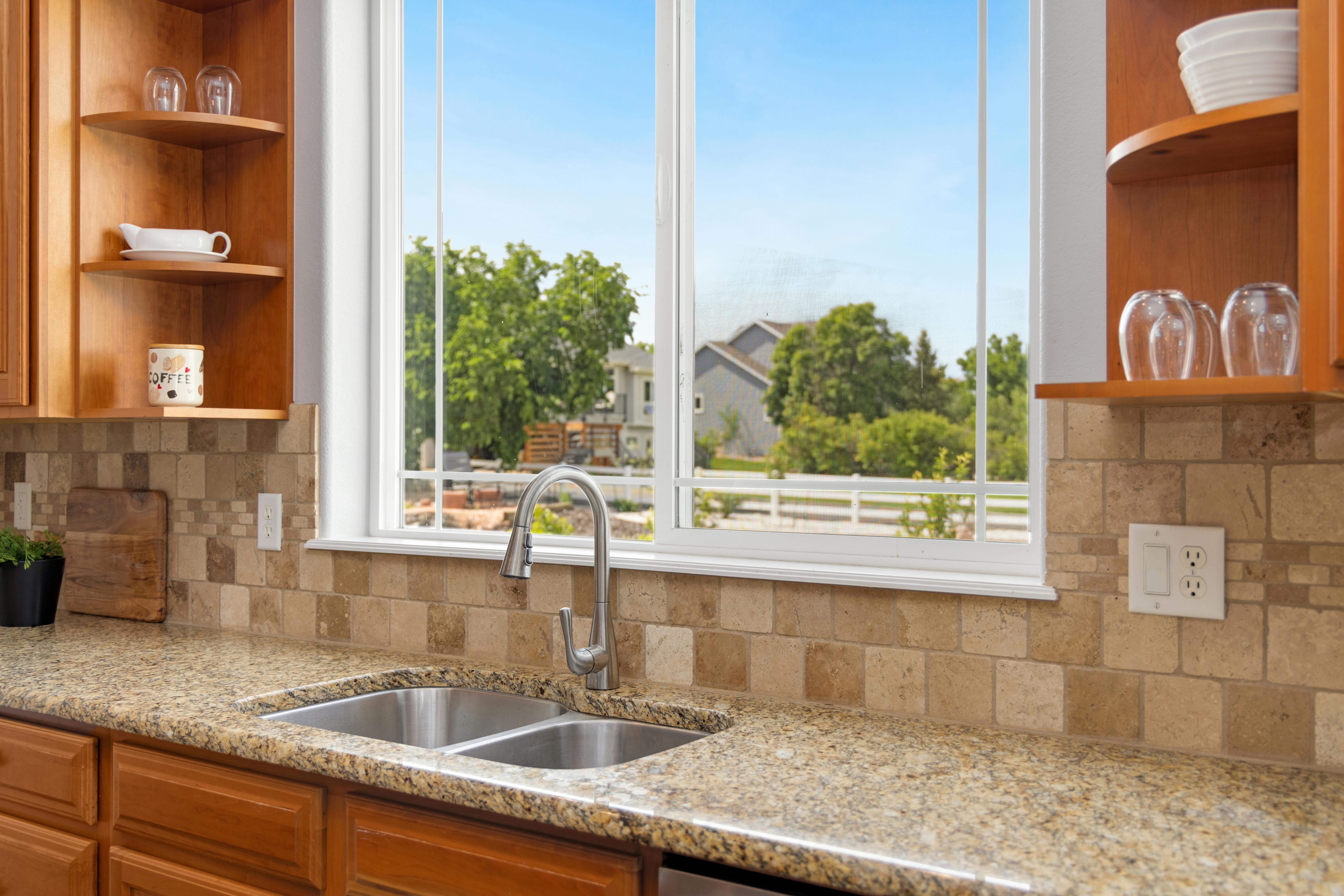
    Best kitchen backsplash tile sizes including subway, mosaic, and large-format tiles
    Popular kitchen backsplash tile sizes for modern and traditional kitchens.

    Walk into a tile showroom without a plan and you’ll leave more confused than when you walked in. Sizes range from one-inch mosaic chips to porcelain slabs the size of a door, and the listing rarely explains what actually changes between them beyond the price tag.

    The short answer: there’s no single correct size, but there is a right size for your specific kitchen, based on its dimensions, how much grout you’re willing to clean, and whether you’re going for a classic look or a more modern one. This guide breaks down standard backsplash tile size, the tradeoffs between small and large format, and what’s actually trending in 2026, so you can walk back into that showroom with an answer instead of a guess.

    What Is the Standard Kitchen Backsplash Tile Size?

    There’s no single industry-mandated standard backsplash tile size, but 3×6 inches is the closest thing to a default. It’s the classic subway tile dimension, and it’s stayed popular for a simple reason: a 2:1 ratio reads as proportional on almost any wall, it’s cheap to produce, and the grout lines fall in a pattern most people find visually calm rather than busy.

    Before 3×6 subway became the default, 4×4 tile held that spot for decades, and you’ll still see it in older homes and budget renovations. Today, “standard” really means whichever size falls in the middle of the range, roughly 3×6 to 6×6, since anything smaller reads as a mosaic and anything larger moves into large-format territory.

    Best Tile Sizes for Kitchen Backsplashes

    The right backsplash tile size depends on the effect you’re after more than any fixed rule. These four sizes cover most kitchens well:

    2×2Mosaic
    4×4Classic
    3×6Subway
    4×8Modern Subway
    12×24Large Format

    Swatches shown at roughly the same relative scale, sized down to fit the page. Grid lines represent a 1-inch reference.

    3×6 subway: the safest, most versatile choice, works in traditional and modern kitchens alike.
    4×4: a retro-leaning option, especially in a checkerboard or color-blocked layout.
    2-inch hexagon: adds texture without the full commitment of an all-mosaic wall.
    12×24 large format: the modern, low-maintenance choice, with far fewer grout lines to clean.

    Small vs. Large Backsplash Tiles

    The tradeoffs between small and large backsplash tiles come down to three things: how much grout you’ll maintain, how much material gets wasted in cuts, and how the finished wall reads visually.

    Factor Small Tile (Under 4 in) Large Tile (12 in+)
    Grout lines More lines, more upkeep Fewer lines, easier to clean
    Visual effect Adds texture and detail Reads open and modern
    Cutting waste Lower, tiles are cheap to trim Higher, mistakes cost more
    Installation time Slower, more pieces to set Faster per square foot
    Best for Small accent areas, patterns Full walls, small kitchens

    Rule of thumb: if you hate cleaning grout, size up. If you want a backsplash with real texture and pattern, size down and accept the extra maintenance.

    Choosing the Right Backsplash Tile Size

    A few practical factors matter more than personal taste alone:

    Kitchen size. Larger tiles tend to make a small kitchen feel more open, since fewer grout lines mean less visual clutter. In a bigger kitchen, smaller tiles can add welcome texture without feeling busy.

    Existing finishes. A heavily veined stone countertop competes with a small, busy tile pattern. A plain quartz or laminate counter has more room for a detailed backsplash.

    Natural light. Kitchens with limited daylight benefit from lighter, larger tile, which reflects more light across the wall. Darker or smaller tile can work well in a kitchen that already gets plenty of sun.

    Maintenance tolerance. Be honest about how often you’ll actually seal and scrub grout. This alone pushes a lot of buyers toward large format tile.

    Installation method. Large tiles need a flatter wall and more precise cuts, which usually means hiring a professional. Small tiles and mosaics are more forgiving for a first DIY attempt.

    Most Popular Kitchen Backsplash Tile Sizes

    Based on current design coverage heading into 2026, five sizes account for most kitchen backsplash installs:

    Rank Size / Style Why It’s Popular
    1 3×6 subway Still the most common pick in American kitchens
    2 Hexagon (2-4 in) Retro shape with a modern resurgence
    3 12×24 large format Minimal grout, favored in modern kitchens
    4 Zellige (small, irregular) Handmade look, trending for texture and character
    5 Full slab / large porcelain panel Near-zero grout, used for full-height walls

    Subway Tile vs. Large Format Tile

    Is 3×6 subway tile still in style? Yes. Design coverage heading into 2026 consistently names it the most common kitchen backsplash choice in the US, though the classic horizontal brick layout is increasingly swapped for vertical stacking or herringbone to feel more current.

    Are large tiles better for kitchen backsplashes? Better depends on the goal. Large format tile (12×24 and up) wins on cleaning ease and a seamless, modern look, and it’s the size most associated with the full-height, minimal-grout backsplashes trending this year. Subway tile wins on cost, DIY-friendliness, and timelessness, since it’s been a safe choice for decades and shows no sign of dating a kitchen the way some trend-driven finishes eventually do.

    Backsplash Tile Size for Small Kitchens

    What size backsplash tile makes a kitchen look bigger? Large format tile, generally 12×12 or larger. Fewer grout lines mean less visual interruption, so the eye reads the wall as one continuous surface instead of a grid, which makes the room feel more open. A vertical tile layout, even at a mid-size like 4×8, adds the same effect by drawing the eye upward.

    Small kitchens can still use smaller tile successfully, but it works best as an accent rather than covering every wall, for example, a small mosaic strip behind the range with large format tile everywhere else.

    Kitchen Backsplash Trends for 2026

    A few clear patterns are showing up across kitchen design coverage this year:

    Full-height backsplashes. Tile running from the countertop straight to the ceiling or upper cabinets, instead of stopping at a standard height, continues to gain ground, especially paired with large format tile to minimize grout lines across the full wall.

    Warmer, darker tones. The all-white and gray kitchen backsplash is giving way to warmer neutrals, deep greens, and spice tones, a shift away from the flatter, cooler palettes that dominated the past several years.

    Zellige and handmade texture. Irregular, hand-glazed tiles with visible variation in color and surface are having a real moment, adding texture that a perfectly uniform tile can’t replicate.

    Geometric and picket layouts. Elongated picket shapes and herringbone patterns are replacing flat, uniform grids, especially behind the range, where the pattern doubles as a focal point.

    Mixed materials. Combining two tile types, glass and stone, or a patterned tile with a plain field tile, is showing up more often instead of a single tile covering the whole wall.

    Common Mistakes When Choosing Backsplash Tiles

    01
    Ignoring grout color and width

    A dark grout on a small white tile creates a completely different look than the same tile with white grout. Sample the grout, not just the tile.

    02
    Mismatching tile scale to room size

    An oversized tile in a tiny galley kitchen, or a busy mosaic across a huge open-plan wall, both fight the room instead of working with it.

    03
    Forgetting outlets and switches

    Tile size affects how cleanly outlets and switches sit within the pattern. Map outlet locations against your chosen tile size before ordering.

    04
    Skipping a sample in your own kitchen

    Tile reads differently under a showroom’s lighting than it will under your kitchen’s fixtures. Bring a sample home before committing.

    05
    Treating the whole wall as one height

    The wall behind a range typically needs more coverage, up to the range hood, than the rest of the backsplash, even in a partial-height design.

    06
    Chasing a trend over a timeless choice

    Bold, of-the-moment tile can date a kitchen faster than a neutral size and color that simply pairs well with whatever comes next.

    Frequently Asked Questions About Kitchen Backsplash Tile Sizes

    What is the standard backsplash tile size?

    There’s no single official standard, but 3×6 inch subway tile is the closest thing to a default choice in American kitchens, with 4×4 as an older alternative still common in existing homes.

    Is 3×6 subway tile still in style?

    Yes. It remains the most common kitchen backsplash size going into 2026, though many kitchens now install it in a vertical stack or herringbone layout instead of the traditional horizontal brick pattern.

    Are large tiles better for kitchen backsplashes?

    They’re better for easier cleaning and a modern, seamless look, since fewer grout lines mean less maintenance. Subway and smaller tile remain better for budget, DIY installation, and a more classic appearance.

    What size backsplash tile makes a kitchen look bigger?

    Large format tile, generally 12×12 inches or larger, minimizes grout lines and reads as one continuous surface, which makes a small kitchen feel more open.

    How high should a kitchen backsplash be?

    The standard height is 18 inches, covering the gap between the countertop and the bottom of the upper cabinets. Behind a range, it’s common to extend the backsplash to 24 to 36 inches or up to the range hood. Full-height backsplashes, running to the ceiling, are increasingly common in 2026 kitchens.

    Can you use large format tile for backsplash?

    Yes, and it’s one of the most popular current choices. It requires a flatter wall and more precise cuts than smaller tile, so professional installation is recommended.

    Which backsplash tile is easiest to clean?

    Large format tile, since fewer grout lines mean less surface area for grease and grime to collect. Glossy finishes also wipe clean more easily than matte or heavily textured tile.

    What is the most popular kitchen backsplash tile?

    3×6 subway tile remains the most widely chosen size and shape, though hexagon, zellige, and large format tile are all gaining ground heading into 2026.

    Should backsplash tiles go behind the range?

    Yes, and that area typically needs more coverage than the rest of the kitchen, extending up to the range hood or 24 to 36 inches, to handle heat, grease, and splatter.

    What tile shape is best for kitchen backsplash?

    Rectangular subway tile remains the most versatile shape for most kitchens. Hexagon and picket shapes add more visual interest but suit a more deliberate, design-forward kitchen better than an all-purpose choice.

  • What Size Tile for Kitchen Backsplash? A Complete Sizing Guide


    :root{
    –ink:#2B2E33;
    –ink-soft:#5B5F66;
    –paper:#F3F2ED;
    –paper-raised:#FFFFFF;
    –line:#DEDCD3;
    –sage:#6B7F76;
    –sage-dark:#4F5F58;
    –sage-bg:#EAEEEC;
    –clay:#A85D45;
    –clay-bg:#F3E7E2;
    }
    *{ box-sizing:border-box; }
    body{ margin:0; background:var(–paper); color:var(–ink); font-family:’Inter’,-apple-system,sans-serif; font-size:16.5px; line-height:1.72; }
    .wrap{ max-width:820px; margin:0 auto; padding:0 22px 50px; }
    h1,h2,h3{ font-family:’Fraunces’,Georgia,serif; color:var(–ink); margin:0; }
    .mono{ font-family:’JetBrains Mono’,monospace; }
    a{ color:var(–sage-dark); }
    p{ margin:0 0 15px; }

    /* ———- header / grout-line motif ———- */
    .header-band{ background:var(–ink); color:var(–paper); padding:44px 0 30px; }
    .header-band .eyebrow{ font-family:’JetBrains Mono’,monospace; font-size:11.5px; letter-spacing:0.18em; text-transform:uppercase; color:#B7C4BE; margin-bottom:14px; }
    .header-band h1{ font-size:clamp(28px,5vw,42px); font-weight:600; line-height:1.18; color:#fff; margin-bottom:14px; max-width:680px; }
    .header-band p.lede{ color:#C7C9C6; font-size:16.5px; max-width:620px; margin-bottom:0; }
    .grout-strip{ height:8px; display:flex; }
    .grout-strip span{ flex:1; border-right:2px solid var(–paper); }
    .grout-strip span:last-child{ border-right:none; }

    h2{ font-size:26px; font-weight:600; margin:48px 0 14px; padding-bottom:10px; border-bottom:2px solid var(–ink); }
    h3{ font-size:19px; font-weight:600; margin:24px 0 8px; }

    /* ———- to-scale tile comparison (signature element) ———- */
    .scale-compare{ display:flex; align-items:flex-end; gap:18px; flex-wrap:wrap; margin:22px 0 8px; padding:24px 20px 18px; background:var(–paper-raised); border:1px solid var(–line); border-radius:8px; }
    .scale-item{ display:flex; flex-direction:column; align-items:center; gap:8px; }
    .scale-swatch{ background:var(–sage-bg); border:1.5px solid var(–sage-dark); border-radius:3px; background-image:
    linear-gradient(var(–line) 1px, transparent 1px),
    linear-gradient(90deg, var(–line) 1px, transparent 1px);
    }
    .scale-item .lbl{ font-family:’JetBrains Mono’,monospace; font-size:11.5px; text-align:center; color:var(–ink-soft); }
    .scale-item .lbl strong{ display:block; color:var(–ink); font-size:12.5px; }
    .scale-note{ font-family:’JetBrains Mono’,monospace; font-size:11.5px; color:var(–ink-soft); margin-top:14px; }

    /* ———- comparison tables ———- */
    .table-wrap{ overflow-x:auto; border:1px solid var(–line); border-radius:6px; margin:16px 0; }
    table.compare{ width:100%; border-collapse:collapse; font-size:14.5px; min-width:600px; }
    table.compare th{ background:var(–ink); color:#fff; text-align:left; padding:10px 13px; font-family:’JetBrains Mono’,monospace; font-size:10.5px; letter-spacing:0.05em; text-transform:uppercase; }
    table.compare td{ padding:10px 13px; border-bottom:1px solid var(–line); }
    table.compare tr:nth-child(even) td{ background:#FAFAF7; }
    table.compare td:first-child{ font-weight:600; }

    /* ———- callout box ———- */
    .callout{ background:var(–sage-bg); border-left:4px solid var(–sage-dark); border-radius:4px; padding:14px 18px; margin:18px 0; }
    .callout p{ margin:0; font-size:15px; color:var(–sage-dark); }
    .callout p strong{ color:var(–ink); }

    /* ———- mistake list ———- */
    .mistake-list{ display:flex; flex-direction:column; gap:12px; margin:18px 0; }
    .mistake-list .item{ display:flex; gap:14px; background:var(–paper-raised); border:1px solid var(–line); border-radius:6px; padding:14px 16px; }
    .mistake-list .num{ font-family:’Fraunces’,serif; font-weight:600; font-size:22px; color:var(–clay); flex-shrink:0; line-height:1.3; }
    .mistake-list .txt strong{ display:block; font-size:15.5px; margin-bottom:3px; }
    .mistake-list .txt p{ margin:0; font-size:14.5px; color:var(–ink-soft); }

    /* ———- FAQ ———- */
    .faq-item{ border-top:1px solid var(–line); padding:18px 0; }
    .faq-item:last-child{ border-bottom:1px solid var(–line); }
    .faq-item .q{ font-family:’Fraunces’,serif; font-weight:600; font-size:17px; margin-bottom:6px; }
    .faq-item .a{ font-size:15px; margin:0; color:var(–ink-soft); }

    @media (max-width:600px){
    .scale-compare{ gap:12px; padding:18px 14px; }
    }

    Kitchen Design Guide · Updated 2026

    What Size Tile for Kitchen Backsplash? A Complete Sizing Guide

    Tile size changes how a backsplash looks, how much it costs to install, and how much grout you’ll be scrubbing five years from now. Here’s how to actually choose, with real dimensions and current 2026 trends.

    Best kitchen backsplash tile sizes including subway, mosaic, and large-format tiles
    Popular kitchen backsplash tile sizes for modern and traditional kitchens.

    Walk into a tile showroom without a plan and you’ll leave more confused than when you walked in. Sizes range from one-inch mosaic chips to porcelain slabs the size of a door, and the listing rarely explains what actually changes between them beyond the price tag.

    The short answer: there’s no single correct size, but there is a right size for your specific kitchen, based on its dimensions, how much grout you’re willing to clean, and whether you’re going for a classic look or a more modern one. This guide breaks down standard backsplash tile size, the tradeoffs between small and large format, and what’s actually trending in 2026, so you can walk back into that showroom with an answer instead of a guess.

    What Is the Standard Kitchen Backsplash Tile Size?

    There’s no single industry-mandated standard backsplash tile size, but 3×6 inches is the closest thing to a default. It’s the classic subway tile dimension, and it’s stayed popular for a simple reason: a 2:1 ratio reads as proportional on almost any wall, it’s cheap to produce, and the grout lines fall in a pattern most people find visually calm rather than busy.

    Before 3×6 subway became the default, 4×4 tile held that spot for decades, and you’ll still see it in older homes and budget renovations. Today, “standard” really means whichever size falls in the middle of the range, roughly 3×6 to 6×6, since anything smaller reads as a mosaic and anything larger moves into large-format territory.

    Best Tile Sizes for Kitchen Backsplashes

    The right backsplash tile size depends on the effect you’re after more than any fixed rule. These four sizes cover most kitchens well:

    2×2Mosaic
    4×4Classic
    3×6Subway
    4×8Modern Subway
    12×24Large Format

    Swatches shown at roughly the same relative scale, sized down to fit the page. Grid lines represent a 1-inch reference.

    3×6 subway: the safest, most versatile choice, works in traditional and modern kitchens alike.
    4×4: a retro-leaning option, especially in a checkerboard or color-blocked layout.
    2-inch hexagon: adds texture without the full commitment of an all-mosaic wall.
    12×24 large format: the modern, low-maintenance choice, with far fewer grout lines to clean.

    Small vs. Large Backsplash Tiles

    The tradeoffs between small and large backsplash tiles come down to three things: how much grout you’ll maintain, how much material gets wasted in cuts, and how the finished wall reads visually.

    Factor Small Tile (Under 4 in) Large Tile (12 in+)
    Grout lines More lines, more upkeep Fewer lines, easier to clean
    Visual effect Adds texture and detail Reads open and modern
    Cutting waste Lower, tiles are cheap to trim Higher, mistakes cost more
    Installation time Slower, more pieces to set Faster per square foot
    Best for Small accent areas, patterns Full walls, small kitchens

    Rule of thumb: if you hate cleaning grout, size up. If you want a backsplash with real texture and pattern, size down and accept the extra maintenance.

    Choosing the Right Backsplash Tile Size

    A few practical factors matter more than personal taste alone:

    Kitchen size. Larger tiles tend to make a small kitchen feel more open, since fewer grout lines mean less visual clutter. In a bigger kitchen, smaller tiles can add welcome texture without feeling busy.

    Existing finishes. A heavily veined stone countertop competes with a small, busy tile pattern. A plain quartz or laminate counter has more room for a detailed backsplash.

    Natural light. Kitchens with limited daylight benefit from lighter, larger tile, which reflects more light across the wall. Darker or smaller tile can work well in a kitchen that already gets plenty of sun.

    Maintenance tolerance. Be honest about how often you’ll actually seal and scrub grout. This alone pushes a lot of buyers toward large format tile.

    Installation method. Large tiles need a flatter wall and more precise cuts, which usually means hiring a professional. Small tiles and mosaics are more forgiving for a first DIY attempt.

    Most Popular Kitchen Backsplash Tile Sizes

    Based on current design coverage heading into 2026, five sizes account for most kitchen backsplash installs:

    Rank Size / Style Why It’s Popular
    1 3×6 subway Still the most common pick in American kitchens
    2 Hexagon (2-4 in) Retro shape with a modern resurgence
    3 12×24 large format Minimal grout, favored in modern kitchens
    4 Zellige (small, irregular) Handmade look, trending for texture and character
    5 Full slab / large porcelain panel Near-zero grout, used for full-height walls

    Subway Tile vs. Large Format Tile

    Is 3×6 subway tile still in style? Yes. Design coverage heading into 2026 consistently names it the most common kitchen backsplash choice in the US, though the classic horizontal brick layout is increasingly swapped for vertical stacking or herringbone to feel more current.

    Are large tiles better for kitchen backsplashes? Better depends on the goal. Large format tile (12×24 and up) wins on cleaning ease and a seamless, modern look, and it’s the size most associated with the full-height, minimal-grout backsplashes trending this year. Subway tile wins on cost, DIY-friendliness, and timelessness, since it’s been a safe choice for decades and shows no sign of dating a kitchen the way some trend-driven finishes eventually do.

    Backsplash Tile Size for Small Kitchens

    What size backsplash tile makes a kitchen look bigger? Large format tile, generally 12×12 or larger. Fewer grout lines mean less visual interruption, so the eye reads the wall as one continuous surface instead of a grid, which makes the room feel more open. A vertical tile layout, even at a mid-size like 4×8, adds the same effect by drawing the eye upward.

    Small kitchens can still use smaller tile successfully, but it works best as an accent rather than covering every wall, for example, a small mosaic strip behind the range with large format tile everywhere else.

    Kitchen Backsplash Trends for 2026

    A few clear patterns are showing up across kitchen design coverage this year:

    Full-height backsplashes. Tile running from the countertop straight to the ceiling or upper cabinets, instead of stopping at a standard height, continues to gain ground, especially paired with large format tile to minimize grout lines across the full wall.

    Warmer, darker tones. The all-white and gray kitchen backsplash is giving way to warmer neutrals, deep greens, and spice tones, a shift away from the flatter, cooler palettes that dominated the past several years.

    Zellige and handmade texture. Irregular, hand-glazed tiles with visible variation in color and surface are having a real moment, adding texture that a perfectly uniform tile can’t replicate.

    Geometric and picket layouts. Elongated picket shapes and herringbone patterns are replacing flat, uniform grids, especially behind the range, where the pattern doubles as a focal point.

    Mixed materials. Combining two tile types, glass and stone, or a patterned tile with a plain field tile, is showing up more often instead of a single tile covering the whole wall.

    Common Mistakes When Choosing Backsplash Tiles

    01
    Ignoring grout color and width

    A dark grout on a small white tile creates a completely different look than the same tile with white grout. Sample the grout, not just the tile.

    02
    Mismatching tile scale to room size

    An oversized tile in a tiny galley kitchen, or a busy mosaic across a huge open-plan wall, both fight the room instead of working with it.

    03
    Forgetting outlets and switches

    Tile size affects how cleanly outlets and switches sit within the pattern. Map outlet locations against your chosen tile size before ordering.

    04
    Skipping a sample in your own kitchen

    Tile reads differently under a showroom’s lighting than it will under your kitchen’s fixtures. Bring a sample home before committing.

    05
    Treating the whole wall as one height

    The wall behind a range typically needs more coverage, up to the range hood, than the rest of the backsplash, even in a partial-height design.

    06
    Chasing a trend over a timeless choice

    Bold, of-the-moment tile can date a kitchen faster than a neutral size and color that simply pairs well with whatever comes next.

    Frequently Asked Questions About Kitchen Backsplash Tile Sizes

    What is the standard backsplash tile size?

    There’s no single official standard, but 3×6 inch subway tile is the closest thing to a default choice in American kitchens, with 4×4 as an older alternative still common in existing homes.

    Is 3×6 subway tile still in style?

    Yes. It remains the most common kitchen backsplash size going into 2026, though many kitchens now install it in a vertical stack or herringbone layout instead of the traditional horizontal brick pattern.

    Are large tiles better for kitchen backsplashes?

    They’re better for easier cleaning and a modern, seamless look, since fewer grout lines mean less maintenance. Subway and smaller tile remain better for budget, DIY installation, and a more classic appearance.

    What size backsplash tile makes a kitchen look bigger?

    Large format tile, generally 12×12 inches or larger, minimizes grout lines and reads as one continuous surface, which makes a small kitchen feel more open.

    How high should a kitchen backsplash be?

    The standard height is 18 inches, covering the gap between the countertop and the bottom of the upper cabinets. Behind a range, it’s common to extend the backsplash to 24 to 36 inches or up to the range hood. Full-height backsplashes, running to the ceiling, are increasingly common in 2026 kitchens.

    Can you use large format tile for backsplash?

    Yes, and it’s one of the most popular current choices. It requires a flatter wall and more precise cuts than smaller tile, so professional installation is recommended.

    Which backsplash tile is easiest to clean?

    Large format tile, since fewer grout lines mean less surface area for grease and grime to collect. Glossy finishes also wipe clean more easily than matte or heavily textured tile.

    What is the most popular kitchen backsplash tile?

    3×6 subway tile remains the most widely chosen size and shape, though hexagon, zellige, and large format tile are all gaining ground heading into 2026.

    Should backsplash tiles go behind the range?

    Yes, and that area typically needs more coverage than the rest of the kitchen, extending up to the range hood or 24 to 36 inches, to handle heat, grease, and splatter.

    What tile shape is best for kitchen backsplash?

    Rectangular subway tile remains the most versatile shape for most kitchens. Hexagon and picket shapes add more visual interest but suit a more deliberate, design-forward kitchen better than an all-purpose choice.

  • What Size Tile for Kitchen Backsplash? A Complete Sizing Guide


    :root{
    –ink:#2B2E33;
    –ink-soft:#5B5F66;
    –paper:#F3F2ED;
    –paper-raised:#FFFFFF;
    –line:#DEDCD3;
    –sage:#6B7F76;
    –sage-dark:#4F5F58;
    –sage-bg:#EAEEEC;
    –clay:#A85D45;
    –clay-bg:#F3E7E2;
    }
    *{ box-sizing:border-box; }
    body{ margin:0; background:var(–paper); color:var(–ink); font-family:’Inter’,-apple-system,sans-serif; font-size:16.5px; line-height:1.72; }
    .wrap{ max-width:820px; margin:0 auto; padding:0 22px 50px; }
    h1,h2,h3{ font-family:’Fraunces’,Georgia,serif; color:var(–ink); margin:0; }
    .mono{ font-family:’JetBrains Mono’,monospace; }
    a{ color:var(–sage-dark); }
    p{ margin:0 0 15px; }

    /* ———- header / grout-line motif ———- */
    .header-band{ background:var(–ink); color:var(–paper); padding:44px 0 30px; }
    .header-band .eyebrow{ font-family:’JetBrains Mono’,monospace; font-size:11.5px; letter-spacing:0.18em; text-transform:uppercase; color:#B7C4BE; margin-bottom:14px; }
    .header-band h1{ font-size:clamp(28px,5vw,42px); font-weight:600; line-height:1.18; color:#fff; margin-bottom:14px; max-width:680px; }
    .header-band p.lede{ color:#C7C9C6; font-size:16.5px; max-width:620px; margin-bottom:0; }
    .grout-strip{ height:8px; display:flex; }
    .grout-strip span{ flex:1; border-right:2px solid var(–paper); }
    .grout-strip span:last-child{ border-right:none; }

    h2{ font-size:26px; font-weight:600; margin:48px 0 14px; padding-bottom:10px; border-bottom:2px solid var(–ink); }
    h3{ font-size:19px; font-weight:600; margin:24px 0 8px; }

    /* ———- to-scale tile comparison (signature element) ———- */
    .scale-compare{ display:flex; align-items:flex-end; gap:18px; flex-wrap:wrap; margin:22px 0 8px; padding:24px 20px 18px; background:var(–paper-raised); border:1px solid var(–line); border-radius:8px; }
    .scale-item{ display:flex; flex-direction:column; align-items:center; gap:8px; }
    .scale-swatch{ background:var(–sage-bg); border:1.5px solid var(–sage-dark); border-radius:3px; background-image:
    linear-gradient(var(–line) 1px, transparent 1px),
    linear-gradient(90deg, var(–line) 1px, transparent 1px);
    }
    .scale-item .lbl{ font-family:’JetBrains Mono’,monospace; font-size:11.5px; text-align:center; color:var(–ink-soft); }
    .scale-item .lbl strong{ display:block; color:var(–ink); font-size:12.5px; }
    .scale-note{ font-family:’JetBrains Mono’,monospace; font-size:11.5px; color:var(–ink-soft); margin-top:14px; }

    /* ———- comparison tables ———- */
    .table-wrap{ overflow-x:auto; border:1px solid var(–line); border-radius:6px; margin:16px 0; }
    table.compare{ width:100%; border-collapse:collapse; font-size:14.5px; min-width:600px; }
    table.compare th{ background:var(–ink); color:#fff; text-align:left; padding:10px 13px; font-family:’JetBrains Mono’,monospace; font-size:10.5px; letter-spacing:0.05em; text-transform:uppercase; }
    table.compare td{ padding:10px 13px; border-bottom:1px solid var(–line); }
    table.compare tr:nth-child(even) td{ background:#FAFAF7; }
    table.compare td:first-child{ font-weight:600; }

    /* ———- callout box ———- */
    .callout{ background:var(–sage-bg); border-left:4px solid var(–sage-dark); border-radius:4px; padding:14px 18px; margin:18px 0; }
    .callout p{ margin:0; font-size:15px; color:var(–sage-dark); }
    .callout p strong{ color:var(–ink); }

    /* ———- mistake list ———- */
    .mistake-list{ display:flex; flex-direction:column; gap:12px; margin:18px 0; }
    .mistake-list .item{ display:flex; gap:14px; background:var(–paper-raised); border:1px solid var(–line); border-radius:6px; padding:14px 16px; }
    .mistake-list .num{ font-family:’Fraunces’,serif; font-weight:600; font-size:22px; color:var(–clay); flex-shrink:0; line-height:1.3; }
    .mistake-list .txt strong{ display:block; font-size:15.5px; margin-bottom:3px; }
    .mistake-list .txt p{ margin:0; font-size:14.5px; color:var(–ink-soft); }

    /* ———- FAQ ———- */
    .faq-item{ border-top:1px solid var(–line); padding:18px 0; }
    .faq-item:last-child{ border-bottom:1px solid var(–line); }
    .faq-item .q{ font-family:’Fraunces’,serif; font-weight:600; font-size:17px; margin-bottom:6px; }
    .faq-item .a{ font-size:15px; margin:0; color:var(–ink-soft); }

    @media (max-width:600px){
    .scale-compare{ gap:12px; padding:18px 14px; }
    }

    Kitchen Design Guide · Updated 2026

    What Size Tile for Kitchen Backsplash? A Complete Sizing Guide

    Tile size changes how a backsplash looks, how much it costs to install, and how much grout you’ll be scrubbing five years from now. Here’s how to actually choose, with real dimensions and current 2026 trends.

    Best kitchen backsplash tile sizes including subway, mosaic, and large-format tiles
    Popular kitchen backsplash tile sizes for modern and traditional kitchens.

    Walk into a tile showroom without a plan and you’ll leave more confused than when you walked in. Sizes range from one-inch mosaic chips to porcelain slabs the size of a door, and the listing rarely explains what actually changes between them beyond the price tag.

    The short answer: there’s no single correct size, but there is a right size for your specific kitchen, based on its dimensions, how much grout you’re willing to clean, and whether you’re going for a classic look or a more modern one. This guide breaks down standard backsplash tile size, the tradeoffs between small and large format, and what’s actually trending in 2026, so you can walk back into that showroom with an answer instead of a guess.

    What Is the Standard Kitchen Backsplash Tile Size?

    There’s no single industry-mandated standard backsplash tile size, but 3×6 inches is the closest thing to a default. It’s the classic subway tile dimension, and it’s stayed popular for a simple reason: a 2:1 ratio reads as proportional on almost any wall, it’s cheap to produce, and the grout lines fall in a pattern most people find visually calm rather than busy.

    Before 3×6 subway became the default, 4×4 tile held that spot for decades, and you’ll still see it in older homes and budget renovations. Today, “standard” really means whichever size falls in the middle of the range, roughly 3×6 to 6×6, since anything smaller reads as a mosaic and anything larger moves into large-format territory.

    Best Tile Sizes for Kitchen Backsplashes

    The right backsplash tile size depends on the effect you’re after more than any fixed rule. These four sizes cover most kitchens well:

    2×2Mosaic
    4×4Classic
    3×6Subway
    4×8Modern Subway
    12×24Large Format

    Swatches shown at roughly the same relative scale, sized down to fit the page. Grid lines represent a 1-inch reference.

    3×6 subway: the safest, most versatile choice, works in traditional and modern kitchens alike.
    4×4: a retro-leaning option, especially in a checkerboard or color-blocked layout.
    2-inch hexagon: adds texture without the full commitment of an all-mosaic wall.
    12×24 large format: the modern, low-maintenance choice, with far fewer grout lines to clean.

    Small vs. Large Backsplash Tiles

    The tradeoffs between small and large backsplash tiles come down to three things: how much grout you’ll maintain, how much material gets wasted in cuts, and how the finished wall reads visually.

    Factor Small Tile (Under 4 in) Large Tile (12 in+)
    Grout lines More lines, more upkeep Fewer lines, easier to clean
    Visual effect Adds texture and detail Reads open and modern
    Cutting waste Lower, tiles are cheap to trim Higher, mistakes cost more
    Installation time Slower, more pieces to set Faster per square foot
    Best for Small accent areas, patterns Full walls, small kitchens

    Rule of thumb: if you hate cleaning grout, size up. If you want a backsplash with real texture and pattern, size down and accept the extra maintenance.

    Choosing the Right Backsplash Tile Size

    A few practical factors matter more than personal taste alone:

    Kitchen size. Larger tiles tend to make a small kitchen feel more open, since fewer grout lines mean less visual clutter. In a bigger kitchen, smaller tiles can add welcome texture without feeling busy.

    Existing finishes. A heavily veined stone countertop competes with a small, busy tile pattern. A plain quartz or laminate counter has more room for a detailed backsplash.

    Natural light. Kitchens with limited daylight benefit from lighter, larger tile, which reflects more light across the wall. Darker or smaller tile can work well in a kitchen that already gets plenty of sun.

    Maintenance tolerance. Be honest about how often you’ll actually seal and scrub grout. This alone pushes a lot of buyers toward large format tile.

    Installation method. Large tiles need a flatter wall and more precise cuts, which usually means hiring a professional. Small tiles and mosaics are more forgiving for a first DIY attempt.

    Most Popular Kitchen Backsplash Tile Sizes

    Based on current design coverage heading into 2026, five sizes account for most kitchen backsplash installs:

    Rank Size / Style Why It’s Popular
    1 3×6 subway Still the most common pick in American kitchens
    2 Hexagon (2-4 in) Retro shape with a modern resurgence
    3 12×24 large format Minimal grout, favored in modern kitchens
    4 Zellige (small, irregular) Handmade look, trending for texture and character
    5 Full slab / large porcelain panel Near-zero grout, used for full-height walls

    Subway Tile vs. Large Format Tile

    Is 3×6 subway tile still in style? Yes. Design coverage heading into 2026 consistently names it the most common kitchen backsplash choice in the US, though the classic horizontal brick layout is increasingly swapped for vertical stacking or herringbone to feel more current.

    Are large tiles better for kitchen backsplashes? Better depends on the goal. Large format tile (12×24 and up) wins on cleaning ease and a seamless, modern look, and it’s the size most associated with the full-height, minimal-grout backsplashes trending this year. Subway tile wins on cost, DIY-friendliness, and timelessness, since it’s been a safe choice for decades and shows no sign of dating a kitchen the way some trend-driven finishes eventually do.

    Backsplash Tile Size for Small Kitchens

    What size backsplash tile makes a kitchen look bigger? Large format tile, generally 12×12 or larger. Fewer grout lines mean less visual interruption, so the eye reads the wall as one continuous surface instead of a grid, which makes the room feel more open. A vertical tile layout, even at a mid-size like 4×8, adds the same effect by drawing the eye upward.

    Small kitchens can still use smaller tile successfully, but it works best as an accent rather than covering every wall, for example, a small mosaic strip behind the range with large format tile everywhere else.

    Kitchen Backsplash Trends for 2026

    A few clear patterns are showing up across kitchen design coverage this year:

    Full-height backsplashes. Tile running from the countertop straight to the ceiling or upper cabinets, instead of stopping at a standard height, continues to gain ground, especially paired with large format tile to minimize grout lines across the full wall.

    Warmer, darker tones. The all-white and gray kitchen backsplash is giving way to warmer neutrals, deep greens, and spice tones, a shift away from the flatter, cooler palettes that dominated the past several years.

    Zellige and handmade texture. Irregular, hand-glazed tiles with visible variation in color and surface are having a real moment, adding texture that a perfectly uniform tile can’t replicate.

    Geometric and picket layouts. Elongated picket shapes and herringbone patterns are replacing flat, uniform grids, especially behind the range, where the pattern doubles as a focal point.

    Mixed materials. Combining two tile types, glass and stone, or a patterned tile with a plain field tile, is showing up more often instead of a single tile covering the whole wall.

    Common Mistakes When Choosing Backsplash Tiles

    01
    Ignoring grout color and width

    A dark grout on a small white tile creates a completely different look than the same tile with white grout. Sample the grout, not just the tile.

    02
    Mismatching tile scale to room size

    An oversized tile in a tiny galley kitchen, or a busy mosaic across a huge open-plan wall, both fight the room instead of working with it.

    03
    Forgetting outlets and switches

    Tile size affects how cleanly outlets and switches sit within the pattern. Map outlet locations against your chosen tile size before ordering.

    04
    Skipping a sample in your own kitchen

    Tile reads differently under a showroom’s lighting than it will under your kitchen’s fixtures. Bring a sample home before committing.

    05
    Treating the whole wall as one height

    The wall behind a range typically needs more coverage, up to the range hood, than the rest of the backsplash, even in a partial-height design.

    06
    Chasing a trend over a timeless choice

    Bold, of-the-moment tile can date a kitchen faster than a neutral size and color that simply pairs well with whatever comes next.

    Frequently Asked Questions About Kitchen Backsplash Tile Sizes

    What is the standard backsplash tile size?

    There’s no single official standard, but 3×6 inch subway tile is the closest thing to a default choice in American kitchens, with 4×4 as an older alternative still common in existing homes.

    Is 3×6 subway tile still in style?

    Yes. It remains the most common kitchen backsplash size going into 2026, though many kitchens now install it in a vertical stack or herringbone layout instead of the traditional horizontal brick pattern.

    Are large tiles better for kitchen backsplashes?

    They’re better for easier cleaning and a modern, seamless look, since fewer grout lines mean less maintenance. Subway and smaller tile remain better for budget, DIY installation, and a more classic appearance.

    What size backsplash tile makes a kitchen look bigger?

    Large format tile, generally 12×12 inches or larger, minimizes grout lines and reads as one continuous surface, which makes a small kitchen feel more open.

    How high should a kitchen backsplash be?

    The standard height is 18 inches, covering the gap between the countertop and the bottom of the upper cabinets. Behind a range, it’s common to extend the backsplash to 24 to 36 inches or up to the range hood. Full-height backsplashes, running to the ceiling, are increasingly common in 2026 kitchens.

    Can you use large format tile for backsplash?

    Yes, and it’s one of the most popular current choices. It requires a flatter wall and more precise cuts than smaller tile, so professional installation is recommended.

    Which backsplash tile is easiest to clean?

    Large format tile, since fewer grout lines mean less surface area for grease and grime to collect. Glossy finishes also wipe clean more easily than matte or heavily textured tile.

    What is the most popular kitchen backsplash tile?

    3×6 subway tile remains the most widely chosen size and shape, though hexagon, zellige, and large format tile are all gaining ground heading into 2026.

    Should backsplash tiles go behind the range?

    Yes, and that area typically needs more coverage than the rest of the kitchen, extending up to the range hood or 24 to 36 inches, to handle heat, grease, and splatter.

    What tile shape is best for kitchen backsplash?

    Rectangular subway tile remains the most versatile shape for most kitchens. Hexagon and picket shapes add more visual interest but suit a more deliberate, design-forward kitchen better than an all-purpose choice.

  • What Size Tile for Kitchen Backsplash? A Complete Sizing Guide


    :root{
    –ink:#2B2E33;
    –ink-soft:#5B5F66;
    –paper:#F3F2ED;
    –paper-raised:#FFFFFF;
    –line:#DEDCD3;
    –sage:#6B7F76;
    –sage-dark:#4F5F58;
    –sage-bg:#EAEEEC;
    –clay:#A85D45;
    –clay-bg:#F3E7E2;
    }
    *{ box-sizing:border-box; }
    body{ margin:0; background:var(–paper); color:var(–ink); font-family:’Inter’,-apple-system,sans-serif; font-size:16.5px; line-height:1.72; }
    .wrap{ max-width:820px; margin:0 auto; padding:0 22px 50px; }
    h1,h2,h3{ font-family:’Fraunces’,Georgia,serif; color:var(–ink); margin:0; }
    .mono{ font-family:’JetBrains Mono’,monospace; }
    a{ color:var(–sage-dark); }
    p{ margin:0 0 15px; }

    /* ———- header / grout-line motif ———- */
    .header-band{ background:var(–ink); color:var(–paper); padding:44px 0 30px; }
    .header-band .eyebrow{ font-family:’JetBrains Mono’,monospace; font-size:11.5px; letter-spacing:0.18em; text-transform:uppercase; color:#B7C4BE; margin-bottom:14px; }
    .header-band h1{ font-size:clamp(28px,5vw,42px); font-weight:600; line-height:1.18; color:#fff; margin-bottom:14px; max-width:680px; }
    .header-band p.lede{ color:#C7C9C6; font-size:16.5px; max-width:620px; margin-bottom:0; }
    .grout-strip{ height:8px; display:flex; }
    .grout-strip span{ flex:1; border-right:2px solid var(–paper); }
    .grout-strip span:last-child{ border-right:none; }

    h2{ font-size:26px; font-weight:600; margin:48px 0 14px; padding-bottom:10px; border-bottom:2px solid var(–ink); }
    h3{ font-size:19px; font-weight:600; margin:24px 0 8px; }

    /* ———- to-scale tile comparison (signature element) ———- */
    .scale-compare{ display:flex; align-items:flex-end; gap:18px; flex-wrap:wrap; margin:22px 0 8px; padding:24px 20px 18px; background:var(–paper-raised); border:1px solid var(–line); border-radius:8px; }
    .scale-item{ display:flex; flex-direction:column; align-items:center; gap:8px; }
    .scale-swatch{ background:var(–sage-bg); border:1.5px solid var(–sage-dark); border-radius:3px; background-image:
    linear-gradient(var(–line) 1px, transparent 1px),
    linear-gradient(90deg, var(–line) 1px, transparent 1px);
    }
    .scale-item .lbl{ font-family:’JetBrains Mono’,monospace; font-size:11.5px; text-align:center; color:var(–ink-soft); }
    .scale-item .lbl strong{ display:block; color:var(–ink); font-size:12.5px; }
    .scale-note{ font-family:’JetBrains Mono’,monospace; font-size:11.5px; color:var(–ink-soft); margin-top:14px; }

    /* ———- comparison tables ———- */
    .table-wrap{ overflow-x:auto; border:1px solid var(–line); border-radius:6px; margin:16px 0; }
    table.compare{ width:100%; border-collapse:collapse; font-size:14.5px; min-width:600px; }
    table.compare th{ background:var(–ink); color:#fff; text-align:left; padding:10px 13px; font-family:’JetBrains Mono’,monospace; font-size:10.5px; letter-spacing:0.05em; text-transform:uppercase; }
    table.compare td{ padding:10px 13px; border-bottom:1px solid var(–line); }
    table.compare tr:nth-child(even) td{ background:#FAFAF7; }
    table.compare td:first-child{ font-weight:600; }

    /* ———- callout box ———- */
    .callout{ background:var(–sage-bg); border-left:4px solid var(–sage-dark); border-radius:4px; padding:14px 18px; margin:18px 0; }
    .callout p{ margin:0; font-size:15px; color:var(–sage-dark); }
    .callout p strong{ color:var(–ink); }

    /* ———- mistake list ———- */
    .mistake-list{ display:flex; flex-direction:column; gap:12px; margin:18px 0; }
    .mistake-list .item{ display:flex; gap:14px; background:var(–paper-raised); border:1px solid var(–line); border-radius:6px; padding:14px 16px; }
    .mistake-list .num{ font-family:’Fraunces’,serif; font-weight:600; font-size:22px; color:var(–clay); flex-shrink:0; line-height:1.3; }
    .mistake-list .txt strong{ display:block; font-size:15.5px; margin-bottom:3px; }
    .mistake-list .txt p{ margin:0; font-size:14.5px; color:var(–ink-soft); }

    /* ———- FAQ ———- */
    .faq-item{ border-top:1px solid var(–line); padding:18px 0; }
    .faq-item:last-child{ border-bottom:1px solid var(–line); }
    .faq-item .q{ font-family:’Fraunces’,serif; font-weight:600; font-size:17px; margin-bottom:6px; }
    .faq-item .a{ font-size:15px; margin:0; color:var(–ink-soft); }

    @media (max-width:600px){
    .scale-compare{ gap:12px; padding:18px 14px; }
    }

    Kitchen Design Guide · Updated 2026

    What Size Tile for Kitchen Backsplash? A Complete Sizing Guide

    Tile size changes how a backsplash looks, how much it costs to install, and how much grout you’ll be scrubbing five years from now. Here’s how to actually choose, with real dimensions and current 2026 trends.

    Best kitchen backsplash tile sizes including subway, mosaic, and large-format tiles
    Popular kitchen backsplash tile sizes for modern and traditional kitchens.

    Walk into a tile showroom without a plan and you’ll leave more confused than when you walked in. Sizes range from one-inch mosaic chips to porcelain slabs the size of a door, and the listing rarely explains what actually changes between them beyond the price tag.

    The short answer: there’s no single correct size, but there is a right size for your specific kitchen, based on its dimensions, how much grout you’re willing to clean, and whether you’re going for a classic look or a more modern one. This guide breaks down standard backsplash tile size, the tradeoffs between small and large format, and what’s actually trending in 2026, so you can walk back into that showroom with an answer instead of a guess.

    What Is the Standard Kitchen Backsplash Tile Size?

    There’s no single industry-mandated standard backsplash tile size, but 3×6 inches is the closest thing to a default. It’s the classic subway tile dimension, and it’s stayed popular for a simple reason: a 2:1 ratio reads as proportional on almost any wall, it’s cheap to produce, and the grout lines fall in a pattern most people find visually calm rather than busy.

    Before 3×6 subway became the default, 4×4 tile held that spot for decades, and you’ll still see it in older homes and budget renovations. Today, “standard” really means whichever size falls in the middle of the range, roughly 3×6 to 6×6, since anything smaller reads as a mosaic and anything larger moves into large-format territory.

    Best Tile Sizes for Kitchen Backsplashes

    The right backsplash tile size depends on the effect you’re after more than any fixed rule. These four sizes cover most kitchens well:

    2×2Mosaic
    4×4Classic
    3×6Subway
    4×8Modern Subway
    12×24Large Format

    Swatches shown at roughly the same relative scale, sized down to fit the page. Grid lines represent a 1-inch reference.

    3×6 subway: the safest, most versatile choice, works in traditional and modern kitchens alike.
    4×4: a retro-leaning option, especially in a checkerboard or color-blocked layout.
    2-inch hexagon: adds texture without the full commitment of an all-mosaic wall.
    12×24 large format: the modern, low-maintenance choice, with far fewer grout lines to clean.

    Small vs. Large Backsplash Tiles

    The tradeoffs between small and large backsplash tiles come down to three things: how much grout you’ll maintain, how much material gets wasted in cuts, and how the finished wall reads visually.

    Factor Small Tile (Under 4 in) Large Tile (12 in+)
    Grout lines More lines, more upkeep Fewer lines, easier to clean
    Visual effect Adds texture and detail Reads open and modern
    Cutting waste Lower, tiles are cheap to trim Higher, mistakes cost more
    Installation time Slower, more pieces to set Faster per square foot
    Best for Small accent areas, patterns Full walls, small kitchens

    Rule of thumb: if you hate cleaning grout, size up. If you want a backsplash with real texture and pattern, size down and accept the extra maintenance.

    Choosing the Right Backsplash Tile Size

    A few practical factors matter more than personal taste alone:

    Kitchen size. Larger tiles tend to make a small kitchen feel more open, since fewer grout lines mean less visual clutter. In a bigger kitchen, smaller tiles can add welcome texture without feeling busy.

    Existing finishes. A heavily veined stone countertop competes with a small, busy tile pattern. A plain quartz or laminate counter has more room for a detailed backsplash.

    Natural light. Kitchens with limited daylight benefit from lighter, larger tile, which reflects more light across the wall. Darker or smaller tile can work well in a kitchen that already gets plenty of sun.

    Maintenance tolerance. Be honest about how often you’ll actually seal and scrub grout. This alone pushes a lot of buyers toward large format tile.

    Installation method. Large tiles need a flatter wall and more precise cuts, which usually means hiring a professional. Small tiles and mosaics are more forgiving for a first DIY attempt.

    Most Popular Kitchen Backsplash Tile Sizes

    Based on current design coverage heading into 2026, five sizes account for most kitchen backsplash installs:

    Rank Size / Style Why It’s Popular
    1 3×6 subway Still the most common pick in American kitchens
    2 Hexagon (2-4 in) Retro shape with a modern resurgence
    3 12×24 large format Minimal grout, favored in modern kitchens
    4 Zellige (small, irregular) Handmade look, trending for texture and character
    5 Full slab / large porcelain panel Near-zero grout, used for full-height walls

    Subway Tile vs. Large Format Tile

    Is 3×6 subway tile still in style? Yes. Design coverage heading into 2026 consistently names it the most common kitchen backsplash choice in the US, though the classic horizontal brick layout is increasingly swapped for vertical stacking or herringbone to feel more current.

    Are large tiles better for kitchen backsplashes? Better depends on the goal. Large format tile (12×24 and up) wins on cleaning ease and a seamless, modern look, and it’s the size most associated with the full-height, minimal-grout backsplashes trending this year. Subway tile wins on cost, DIY-friendliness, and timelessness, since it’s been a safe choice for decades and shows no sign of dating a kitchen the way some trend-driven finishes eventually do.

    Backsplash Tile Size for Small Kitchens

    What size backsplash tile makes a kitchen look bigger? Large format tile, generally 12×12 or larger. Fewer grout lines mean less visual interruption, so the eye reads the wall as one continuous surface instead of a grid, which makes the room feel more open. A vertical tile layout, even at a mid-size like 4×8, adds the same effect by drawing the eye upward.

    Small kitchens can still use smaller tile successfully, but it works best as an accent rather than covering every wall, for example, a small mosaic strip behind the range with large format tile everywhere else.

    Kitchen Backsplash Trends for 2026

    A few clear patterns are showing up across kitchen design coverage this year:

    Full-height backsplashes. Tile running from the countertop straight to the ceiling or upper cabinets, instead of stopping at a standard height, continues to gain ground, especially paired with large format tile to minimize grout lines across the full wall.

    Warmer, darker tones. The all-white and gray kitchen backsplash is giving way to warmer neutrals, deep greens, and spice tones, a shift away from the flatter, cooler palettes that dominated the past several years.

    Zellige and handmade texture. Irregular, hand-glazed tiles with visible variation in color and surface are having a real moment, adding texture that a perfectly uniform tile can’t replicate.

    Geometric and picket layouts. Elongated picket shapes and herringbone patterns are replacing flat, uniform grids, especially behind the range, where the pattern doubles as a focal point.

    Mixed materials. Combining two tile types, glass and stone, or a patterned tile with a plain field tile, is showing up more often instead of a single tile covering the whole wall.

    Common Mistakes When Choosing Backsplash Tiles

    01
    Ignoring grout color and width

    A dark grout on a small white tile creates a completely different look than the same tile with white grout. Sample the grout, not just the tile.

    02
    Mismatching tile scale to room size

    An oversized tile in a tiny galley kitchen, or a busy mosaic across a huge open-plan wall, both fight the room instead of working with it.

    03
    Forgetting outlets and switches

    Tile size affects how cleanly outlets and switches sit within the pattern. Map outlet locations against your chosen tile size before ordering.

    04
    Skipping a sample in your own kitchen

    Tile reads differently under a showroom’s lighting than it will under your kitchen’s fixtures. Bring a sample home before committing.

    05
    Treating the whole wall as one height

    The wall behind a range typically needs more coverage, up to the range hood, than the rest of the backsplash, even in a partial-height design.

    06
    Chasing a trend over a timeless choice

    Bold, of-the-moment tile can date a kitchen faster than a neutral size and color that simply pairs well with whatever comes next.

    Frequently Asked Questions About Kitchen Backsplash Tile Sizes

    What is the standard backsplash tile size?

    There’s no single official standard, but 3×6 inch subway tile is the closest thing to a default choice in American kitchens, with 4×4 as an older alternative still common in existing homes.

    Is 3×6 subway tile still in style?

    Yes. It remains the most common kitchen backsplash size going into 2026, though many kitchens now install it in a vertical stack or herringbone layout instead of the traditional horizontal brick pattern.

    Are large tiles better for kitchen backsplashes?

    They’re better for easier cleaning and a modern, seamless look, since fewer grout lines mean less maintenance. Subway and smaller tile remain better for budget, DIY installation, and a more classic appearance.

    What size backsplash tile makes a kitchen look bigger?

    Large format tile, generally 12×12 inches or larger, minimizes grout lines and reads as one continuous surface, which makes a small kitchen feel more open.

    How high should a kitchen backsplash be?

    The standard height is 18 inches, covering the gap between the countertop and the bottom of the upper cabinets. Behind a range, it’s common to extend the backsplash to 24 to 36 inches or up to the range hood. Full-height backsplashes, running to the ceiling, are increasingly common in 2026 kitchens.

    Can you use large format tile for backsplash?

    Yes, and it’s one of the most popular current choices. It requires a flatter wall and more precise cuts than smaller tile, so professional installation is recommended.

    Which backsplash tile is easiest to clean?

    Large format tile, since fewer grout lines mean less surface area for grease and grime to collect. Glossy finishes also wipe clean more easily than matte or heavily textured tile.

    What is the most popular kitchen backsplash tile?

    3×6 subway tile remains the most widely chosen size and shape, though hexagon, zellige, and large format tile are all gaining ground heading into 2026.

    Should backsplash tiles go behind the range?

    Yes, and that area typically needs more coverage than the rest of the kitchen, extending up to the range hood or 24 to 36 inches, to handle heat, grease, and splatter.

    What tile shape is best for kitchen backsplash?

    Rectangular subway tile remains the most versatile shape for most kitchens. Hexagon and picket shapes add more visual interest but suit a more deliberate, design-forward kitchen better than an all-purpose choice.

  • What Size Tile for Kitchen Backsplash? A Complete Sizing Guide


    :root{
    –ink:#2B2E33;
    –ink-soft:#5B5F66;
    –paper:#F3F2ED;
    –paper-raised:#FFFFFF;
    –line:#DEDCD3;
    –sage:#6B7F76;
    –sage-dark:#4F5F58;
    –sage-bg:#EAEEEC;
    –clay:#A85D45;
    –clay-bg:#F3E7E2;
    }
    *{ box-sizing:border-box; }
    body{ margin:0; background:var(–paper); color:var(–ink); font-family:’Inter’,-apple-system,sans-serif; font-size:16.5px; line-height:1.72; }
    .wrap{ max-width:820px; margin:0 auto; padding:0 22px 50px; }
    h1,h2,h3{ font-family:’Fraunces’,Georgia,serif; color:var(–ink); margin:0; }
    .mono{ font-family:’JetBrains Mono’,monospace; }
    a{ color:var(–sage-dark); }
    p{ margin:0 0 15px; }

    /* ———- header / grout-line motif ———- */
    .header-band{ background:var(–ink); color:var(–paper); padding:44px 0 30px; }
    .header-band .eyebrow{ font-family:’JetBrains Mono’,monospace; font-size:11.5px; letter-spacing:0.18em; text-transform:uppercase; color:#B7C4BE; margin-bottom:14px; }
    .header-band h1{ font-size:clamp(28px,5vw,42px); font-weight:600; line-height:1.18; color:#fff; margin-bottom:14px; max-width:680px; }
    .header-band p.lede{ color:#C7C9C6; font-size:16.5px; max-width:620px; margin-bottom:0; }
    .grout-strip{ height:8px; display:flex; }
    .grout-strip span{ flex:1; border-right:2px solid var(–paper); }
    .grout-strip span:last-child{ border-right:none; }

    h2{ font-size:26px; font-weight:600; margin:48px 0 14px; padding-bottom:10px; border-bottom:2px solid var(–ink); }
    h3{ font-size:19px; font-weight:600; margin:24px 0 8px; }

    /* ———- to-scale tile comparison (signature element) ———- */
    .scale-compare{ display:flex; align-items:flex-end; gap:18px; flex-wrap:wrap; margin:22px 0 8px; padding:24px 20px 18px; background:var(–paper-raised); border:1px solid var(–line); border-radius:8px; }
    .scale-item{ display:flex; flex-direction:column; align-items:center; gap:8px; }
    .scale-swatch{ background:var(–sage-bg); border:1.5px solid var(–sage-dark); border-radius:3px; background-image:
    linear-gradient(var(–line) 1px, transparent 1px),
    linear-gradient(90deg, var(–line) 1px, transparent 1px);
    }
    .scale-item .lbl{ font-family:’JetBrains Mono’,monospace; font-size:11.5px; text-align:center; color:var(–ink-soft); }
    .scale-item .lbl strong{ display:block; color:var(–ink); font-size:12.5px; }
    .scale-note{ font-family:’JetBrains Mono’,monospace; font-size:11.5px; color:var(–ink-soft); margin-top:14px; }

    /* ———- comparison tables ———- */
    .table-wrap{ overflow-x:auto; border:1px solid var(–line); border-radius:6px; margin:16px 0; }
    table.compare{ width:100%; border-collapse:collapse; font-size:14.5px; min-width:600px; }
    table.compare th{ background:var(–ink); color:#fff; text-align:left; padding:10px 13px; font-family:’JetBrains Mono’,monospace; font-size:10.5px; letter-spacing:0.05em; text-transform:uppercase; }
    table.compare td{ padding:10px 13px; border-bottom:1px solid var(–line); }
    table.compare tr:nth-child(even) td{ background:#FAFAF7; }
    table.compare td:first-child{ font-weight:600; }

    /* ———- callout box ———- */
    .callout{ background:var(–sage-bg); border-left:4px solid var(–sage-dark); border-radius:4px; padding:14px 18px; margin:18px 0; }
    .callout p{ margin:0; font-size:15px; color:var(–sage-dark); }
    .callout p strong{ color:var(–ink); }

    /* ———- mistake list ———- */
    .mistake-list{ display:flex; flex-direction:column; gap:12px; margin:18px 0; }
    .mistake-list .item{ display:flex; gap:14px; background:var(–paper-raised); border:1px solid var(–line); border-radius:6px; padding:14px 16px; }
    .mistake-list .num{ font-family:’Fraunces’,serif; font-weight:600; font-size:22px; color:var(–clay); flex-shrink:0; line-height:1.3; }
    .mistake-list .txt strong{ display:block; font-size:15.5px; margin-bottom:3px; }
    .mistake-list .txt p{ margin:0; font-size:14.5px; color:var(–ink-soft); }

    /* ———- FAQ ———- */
    .faq-item{ border-top:1px solid var(–line); padding:18px 0; }
    .faq-item:last-child{ border-bottom:1px solid var(–line); }
    .faq-item .q{ font-family:’Fraunces’,serif; font-weight:600; font-size:17px; margin-bottom:6px; }
    .faq-item .a{ font-size:15px; margin:0; color:var(–ink-soft); }

    @media (max-width:600px){
    .scale-compare{ gap:12px; padding:18px 14px; }
    }

    Kitchen Design Guide · Updated 2026

    What Size Tile for Kitchen Backsplash? A Complete Sizing Guide

    Tile size changes how a backsplash looks, how much it costs to install, and how much grout you’ll be scrubbing five years from now. Here’s how to actually choose, with real dimensions and current 2026 trends.

    Best kitchen backsplash tile sizes including subway, mosaic, and large-format tiles
    Popular kitchen backsplash tile sizes for modern and traditional kitchens.

    Walk into a tile showroom without a plan and you’ll leave more confused than when you walked in. Sizes range from one-inch mosaic chips to porcelain slabs the size of a door, and the listing rarely explains what actually changes between them beyond the price tag.

    The short answer: there’s no single correct size, but there is a right size for your specific kitchen, based on its dimensions, how much grout you’re willing to clean, and whether you’re going for a classic look or a more modern one. This guide breaks down standard backsplash tile size, the tradeoffs between small and large format, and what’s actually trending in 2026, so you can walk back into that showroom with an answer instead of a guess.

    What Is the Standard Kitchen Backsplash Tile Size?

    There’s no single industry-mandated standard backsplash tile size, but 3×6 inches is the closest thing to a default. It’s the classic subway tile dimension, and it’s stayed popular for a simple reason: a 2:1 ratio reads as proportional on almost any wall, it’s cheap to produce, and the grout lines fall in a pattern most people find visually calm rather than busy.

    Before 3×6 subway became the default, 4×4 tile held that spot for decades, and you’ll still see it in older homes and budget renovations. Today, “standard” really means whichever size falls in the middle of the range, roughly 3×6 to 6×6, since anything smaller reads as a mosaic and anything larger moves into large-format territory.

    Best Tile Sizes for Kitchen Backsplashes

    The right backsplash tile size depends on the effect you’re after more than any fixed rule. These four sizes cover most kitchens well:

    2×2Mosaic
    4×4Classic
    3×6Subway
    4×8Modern Subway
    12×24Large Format

    Swatches shown at roughly the same relative scale, sized down to fit the page. Grid lines represent a 1-inch reference.

    3×6 subway: the safest, most versatile choice, works in traditional and modern kitchens alike.
    4×4: a retro-leaning option, especially in a checkerboard or color-blocked layout.
    2-inch hexagon: adds texture without the full commitment of an all-mosaic wall.
    12×24 large format: the modern, low-maintenance choice, with far fewer grout lines to clean.

    Small vs. Large Backsplash Tiles

    The tradeoffs between small and large backsplash tiles come down to three things: how much grout you’ll maintain, how much material gets wasted in cuts, and how the finished wall reads visually.

    Factor Small Tile (Under 4 in) Large Tile (12 in+)
    Grout lines More lines, more upkeep Fewer lines, easier to clean
    Visual effect Adds texture and detail Reads open and modern
    Cutting waste Lower, tiles are cheap to trim Higher, mistakes cost more
    Installation time Slower, more pieces to set Faster per square foot
    Best for Small accent areas, patterns Full walls, small kitchens

    Rule of thumb: if you hate cleaning grout, size up. If you want a backsplash with real texture and pattern, size down and accept the extra maintenance.

    Choosing the Right Backsplash Tile Size

    A few practical factors matter more than personal taste alone:

    Kitchen size. Larger tiles tend to make a small kitchen feel more open, since fewer grout lines mean less visual clutter. In a bigger kitchen, smaller tiles can add welcome texture without feeling busy.

    Existing finishes. A heavily veined stone countertop competes with a small, busy tile pattern. A plain quartz or laminate counter has more room for a detailed backsplash.

    Natural light. Kitchens with limited daylight benefit from lighter, larger tile, which reflects more light across the wall. Darker or smaller tile can work well in a kitchen that already gets plenty of sun.

    Maintenance tolerance. Be honest about how often you’ll actually seal and scrub grout. This alone pushes a lot of buyers toward large format tile.

    Installation method. Large tiles need a flatter wall and more precise cuts, which usually means hiring a professional. Small tiles and mosaics are more forgiving for a first DIY attempt.

    Most Popular Kitchen Backsplash Tile Sizes

    Based on current design coverage heading into 2026, five sizes account for most kitchen backsplash installs:

    Rank Size / Style Why It’s Popular
    1 3×6 subway Still the most common pick in American kitchens
    2 Hexagon (2-4 in) Retro shape with a modern resurgence
    3 12×24 large format Minimal grout, favored in modern kitchens
    4 Zellige (small, irregular) Handmade look, trending for texture and character
    5 Full slab / large porcelain panel Near-zero grout, used for full-height walls

    Subway Tile vs. Large Format Tile

    Is 3×6 subway tile still in style? Yes. Design coverage heading into 2026 consistently names it the most common kitchen backsplash choice in the US, though the classic horizontal brick layout is increasingly swapped for vertical stacking or herringbone to feel more current.

    Are large tiles better for kitchen backsplashes? Better depends on the goal. Large format tile (12×24 and up) wins on cleaning ease and a seamless, modern look, and it’s the size most associated with the full-height, minimal-grout backsplashes trending this year. Subway tile wins on cost, DIY-friendliness, and timelessness, since it’s been a safe choice for decades and shows no sign of dating a kitchen the way some trend-driven finishes eventually do.

    Backsplash Tile Size for Small Kitchens

    What size backsplash tile makes a kitchen look bigger? Large format tile, generally 12×12 or larger. Fewer grout lines mean less visual interruption, so the eye reads the wall as one continuous surface instead of a grid, which makes the room feel more open. A vertical tile layout, even at a mid-size like 4×8, adds the same effect by drawing the eye upward.

    Small kitchens can still use smaller tile successfully, but it works best as an accent rather than covering every wall, for example, a small mosaic strip behind the range with large format tile everywhere else.

    Kitchen Backsplash Trends for 2026

    A few clear patterns are showing up across kitchen design coverage this year:

    Full-height backsplashes. Tile running from the countertop straight to the ceiling or upper cabinets, instead of stopping at a standard height, continues to gain ground, especially paired with large format tile to minimize grout lines across the full wall.

    Warmer, darker tones. The all-white and gray kitchen backsplash is giving way to warmer neutrals, deep greens, and spice tones, a shift away from the flatter, cooler palettes that dominated the past several years.

    Zellige and handmade texture. Irregular, hand-glazed tiles with visible variation in color and surface are having a real moment, adding texture that a perfectly uniform tile can’t replicate.

    Geometric and picket layouts. Elongated picket shapes and herringbone patterns are replacing flat, uniform grids, especially behind the range, where the pattern doubles as a focal point.

    Mixed materials. Combining two tile types, glass and stone, or a patterned tile with a plain field tile, is showing up more often instead of a single tile covering the whole wall.

    Common Mistakes When Choosing Backsplash Tiles

    01
    Ignoring grout color and width

    A dark grout on a small white tile creates a completely different look than the same tile with white grout. Sample the grout, not just the tile.

    02
    Mismatching tile scale to room size

    An oversized tile in a tiny galley kitchen, or a busy mosaic across a huge open-plan wall, both fight the room instead of working with it.

    03
    Forgetting outlets and switches

    Tile size affects how cleanly outlets and switches sit within the pattern. Map outlet locations against your chosen tile size before ordering.

    04
    Skipping a sample in your own kitchen

    Tile reads differently under a showroom’s lighting than it will under your kitchen’s fixtures. Bring a sample home before committing.

    05
    Treating the whole wall as one height

    The wall behind a range typically needs more coverage, up to the range hood, than the rest of the backsplash, even in a partial-height design.

    06
    Chasing a trend over a timeless choice

    Bold, of-the-moment tile can date a kitchen faster than a neutral size and color that simply pairs well with whatever comes next.

    Frequently Asked Questions About Kitchen Backsplash Tile Sizes

    What is the standard backsplash tile size?

    There’s no single official standard, but 3×6 inch subway tile is the closest thing to a default choice in American kitchens, with 4×4 as an older alternative still common in existing homes.

    Is 3×6 subway tile still in style?

    Yes. It remains the most common kitchen backsplash size going into 2026, though many kitchens now install it in a vertical stack or herringbone layout instead of the traditional horizontal brick pattern.

    Are large tiles better for kitchen backsplashes?

    They’re better for easier cleaning and a modern, seamless look, since fewer grout lines mean less maintenance. Subway and smaller tile remain better for budget, DIY installation, and a more classic appearance.

    What size backsplash tile makes a kitchen look bigger?

    Large format tile, generally 12×12 inches or larger, minimizes grout lines and reads as one continuous surface, which makes a small kitchen feel more open.

    How high should a kitchen backsplash be?

    The standard height is 18 inches, covering the gap between the countertop and the bottom of the upper cabinets. Behind a range, it’s common to extend the backsplash to 24 to 36 inches or up to the range hood. Full-height backsplashes, running to the ceiling, are increasingly common in 2026 kitchens.

    Can you use large format tile for backsplash?

    Yes, and it’s one of the most popular current choices. It requires a flatter wall and more precise cuts than smaller tile, so professional installation is recommended.

    Which backsplash tile is easiest to clean?

    Large format tile, since fewer grout lines mean less surface area for grease and grime to collect. Glossy finishes also wipe clean more easily than matte or heavily textured tile.

    What is the most popular kitchen backsplash tile?

    3×6 subway tile remains the most widely chosen size and shape, though hexagon, zellige, and large format tile are all gaining ground heading into 2026.

    Should backsplash tiles go behind the range?

    Yes, and that area typically needs more coverage than the rest of the kitchen, extending up to the range hood or 24 to 36 inches, to handle heat, grease, and splatter.

    What tile shape is best for kitchen backsplash?

    Rectangular subway tile remains the most versatile shape for most kitchens. Hexagon and picket shapes add more visual interest but suit a more deliberate, design-forward kitchen better than an all-purpose choice.

  • What Size Tile for Kitchen Backsplash? A Complete Sizing Guide


    :root{
    –ink:#2B2E33;
    –ink-soft:#5B5F66;
    –paper:#F3F2ED;
    –paper-raised:#FFFFFF;
    –line:#DEDCD3;
    –sage:#6B7F76;
    –sage-dark:#4F5F58;
    –sage-bg:#EAEEEC;
    –clay:#A85D45;
    –clay-bg:#F3E7E2;
    }
    *{ box-sizing:border-box; }
    body{ margin:0; background:var(–paper); color:var(–ink); font-family:’Inter’,-apple-system,sans-serif; font-size:16.5px; line-height:1.72; }
    .wrap{ max-width:820px; margin:0 auto; padding:0 22px 50px; }
    h1,h2,h3{ font-family:’Fraunces’,Georgia,serif; color:var(–ink); margin:0; }
    .mono{ font-family:’JetBrains Mono’,monospace; }
    a{ color:var(–sage-dark); }
    p{ margin:0 0 15px; }

    /* ———- header / grout-line motif ———- */
    .header-band{ background:var(–ink); color:var(–paper); padding:44px 0 30px; }
    .header-band .eyebrow{ font-family:’JetBrains Mono’,monospace; font-size:11.5px; letter-spacing:0.18em; text-transform:uppercase; color:#B7C4BE; margin-bottom:14px; }
    .header-band h1{ font-size:clamp(28px,5vw,42px); font-weight:600; line-height:1.18; color:#fff; margin-bottom:14px; max-width:680px; }
    .header-band p.lede{ color:#C7C9C6; font-size:16.5px; max-width:620px; margin-bottom:0; }
    .grout-strip{ height:8px; display:flex; }
    .grout-strip span{ flex:1; border-right:2px solid var(–paper); }
    .grout-strip span:last-child{ border-right:none; }

    h2{ font-size:26px; font-weight:600; margin:48px 0 14px; padding-bottom:10px; border-bottom:2px solid var(–ink); }
    h3{ font-size:19px; font-weight:600; margin:24px 0 8px; }

    /* ———- to-scale tile comparison (signature element) ———- */
    .scale-compare{ display:flex; align-items:flex-end; gap:18px; flex-wrap:wrap; margin:22px 0 8px; padding:24px 20px 18px; background:var(–paper-raised); border:1px solid var(–line); border-radius:8px; }
    .scale-item{ display:flex; flex-direction:column; align-items:center; gap:8px; }
    .scale-swatch{ background:var(–sage-bg); border:1.5px solid var(–sage-dark); border-radius:3px; background-image:
    linear-gradient(var(–line) 1px, transparent 1px),
    linear-gradient(90deg, var(–line) 1px, transparent 1px);
    }
    .scale-item .lbl{ font-family:’JetBrains Mono’,monospace; font-size:11.5px; text-align:center; color:var(–ink-soft); }
    .scale-item .lbl strong{ display:block; color:var(–ink); font-size:12.5px; }
    .scale-note{ font-family:’JetBrains Mono’,monospace; font-size:11.5px; color:var(–ink-soft); margin-top:14px; }

    /* ———- comparison tables ———- */
    .table-wrap{ overflow-x:auto; border:1px solid var(–line); border-radius:6px; margin:16px 0; }
    table.compare{ width:100%; border-collapse:collapse; font-size:14.5px; min-width:600px; }
    table.compare th{ background:var(–ink); color:#fff; text-align:left; padding:10px 13px; font-family:’JetBrains Mono’,monospace; font-size:10.5px; letter-spacing:0.05em; text-transform:uppercase; }
    table.compare td{ padding:10px 13px; border-bottom:1px solid var(–line); }
    table.compare tr:nth-child(even) td{ background:#FAFAF7; }
    table.compare td:first-child{ font-weight:600; }

    /* ———- callout box ———- */
    .callout{ background:var(–sage-bg); border-left:4px solid var(–sage-dark); border-radius:4px; padding:14px 18px; margin:18px 0; }
    .callout p{ margin:0; font-size:15px; color:var(–sage-dark); }
    .callout p strong{ color:var(–ink); }

    /* ———- mistake list ———- */
    .mistake-list{ display:flex; flex-direction:column; gap:12px; margin:18px 0; }
    .mistake-list .item{ display:flex; gap:14px; background:var(–paper-raised); border:1px solid var(–line); border-radius:6px; padding:14px 16px; }
    .mistake-list .num{ font-family:’Fraunces’,serif; font-weight:600; font-size:22px; color:var(–clay); flex-shrink:0; line-height:1.3; }
    .mistake-list .txt strong{ display:block; font-size:15.5px; margin-bottom:3px; }
    .mistake-list .txt p{ margin:0; font-size:14.5px; color:var(–ink-soft); }

    /* ———- FAQ ———- */
    .faq-item{ border-top:1px solid var(–line); padding:18px 0; }
    .faq-item:last-child{ border-bottom:1px solid var(–line); }
    .faq-item .q{ font-family:’Fraunces’,serif; font-weight:600; font-size:17px; margin-bottom:6px; }
    .faq-item .a{ font-size:15px; margin:0; color:var(–ink-soft); }

    @media (max-width:600px){
    .scale-compare{ gap:12px; padding:18px 14px; }
    }

    Kitchen Design Guide · Updated 2026

    What Size Tile for Kitchen Backsplash? A Complete Sizing Guide

    Tile size changes how a backsplash looks, how much it costs to install, and how much grout you’ll be scrubbing five years from now. Here’s how to actually choose, with real dimensions and current 2026 trends.

    Best kitchen backsplash tile sizes including subway, mosaic, and large-format tiles
    Popular kitchen backsplash tile sizes for modern and traditional kitchens.

    Walk into a tile showroom without a plan and you’ll leave more confused than when you walked in. Sizes range from one-inch mosaic chips to porcelain slabs the size of a door, and the listing rarely explains what actually changes between them beyond the price tag.

    The short answer: there’s no single correct size, but there is a right size for your specific kitchen, based on its dimensions, how much grout you’re willing to clean, and whether you’re going for a classic look or a more modern one. This guide breaks down standard backsplash tile size, the tradeoffs between small and large format, and what’s actually trending in 2026, so you can walk back into that showroom with an answer instead of a guess.

    What Is the Standard Kitchen Backsplash Tile Size?

    There’s no single industry-mandated standard backsplash tile size, but 3×6 inches is the closest thing to a default. It’s the classic subway tile dimension, and it’s stayed popular for a simple reason: a 2:1 ratio reads as proportional on almost any wall, it’s cheap to produce, and the grout lines fall in a pattern most people find visually calm rather than busy.

    Before 3×6 subway became the default, 4×4 tile held that spot for decades, and you’ll still see it in older homes and budget renovations. Today, “standard” really means whichever size falls in the middle of the range, roughly 3×6 to 6×6, since anything smaller reads as a mosaic and anything larger moves into large-format territory.

    Best Tile Sizes for Kitchen Backsplashes

    The right backsplash tile size depends on the effect you’re after more than any fixed rule. These four sizes cover most kitchens well:

    2×2Mosaic
    4×4Classic
    3×6Subway
    4×8Modern Subway
    12×24Large Format

    Swatches shown at roughly the same relative scale, sized down to fit the page. Grid lines represent a 1-inch reference.

    3×6 subway: the safest, most versatile choice, works in traditional and modern kitchens alike.
    4×4: a retro-leaning option, especially in a checkerboard or color-blocked layout.
    2-inch hexagon: adds texture without the full commitment of an all-mosaic wall.
    12×24 large format: the modern, low-maintenance choice, with far fewer grout lines to clean.

    Small vs. Large Backsplash Tiles

    The tradeoffs between small and large backsplash tiles come down to three things: how much grout you’ll maintain, how much material gets wasted in cuts, and how the finished wall reads visually.

    Factor Small Tile (Under 4 in) Large Tile (12 in+)
    Grout lines More lines, more upkeep Fewer lines, easier to clean
    Visual effect Adds texture and detail Reads open and modern
    Cutting waste Lower, tiles are cheap to trim Higher, mistakes cost more
    Installation time Slower, more pieces to set Faster per square foot
    Best for Small accent areas, patterns Full walls, small kitchens

    Rule of thumb: if you hate cleaning grout, size up. If you want a backsplash with real texture and pattern, size down and accept the extra maintenance.

    Choosing the Right Backsplash Tile Size

    A few practical factors matter more than personal taste alone:

    Kitchen size. Larger tiles tend to make a small kitchen feel more open, since fewer grout lines mean less visual clutter. In a bigger kitchen, smaller tiles can add welcome texture without feeling busy.

    Existing finishes. A heavily veined stone countertop competes with a small, busy tile pattern. A plain quartz or laminate counter has more room for a detailed backsplash.

    Natural light. Kitchens with limited daylight benefit from lighter, larger tile, which reflects more light across the wall. Darker or smaller tile can work well in a kitchen that already gets plenty of sun.

    Maintenance tolerance. Be honest about how often you’ll actually seal and scrub grout. This alone pushes a lot of buyers toward large format tile.

    Installation method. Large tiles need a flatter wall and more precise cuts, which usually means hiring a professional. Small tiles and mosaics are more forgiving for a first DIY attempt.

    Most Popular Kitchen Backsplash Tile Sizes

    Based on current design coverage heading into 2026, five sizes account for most kitchen backsplash installs:

    Rank Size / Style Why It’s Popular
    1 3×6 subway Still the most common pick in American kitchens
    2 Hexagon (2-4 in) Retro shape with a modern resurgence
    3 12×24 large format Minimal grout, favored in modern kitchens
    4 Zellige (small, irregular) Handmade look, trending for texture and character
    5 Full slab / large porcelain panel Near-zero grout, used for full-height walls

    Subway Tile vs. Large Format Tile

    Is 3×6 subway tile still in style? Yes. Design coverage heading into 2026 consistently names it the most common kitchen backsplash choice in the US, though the classic horizontal brick layout is increasingly swapped for vertical stacking or herringbone to feel more current.

    Are large tiles better for kitchen backsplashes? Better depends on the goal. Large format tile (12×24 and up) wins on cleaning ease and a seamless, modern look, and it’s the size most associated with the full-height, minimal-grout backsplashes trending this year. Subway tile wins on cost, DIY-friendliness, and timelessness, since it’s been a safe choice for decades and shows no sign of dating a kitchen the way some trend-driven finishes eventually do.

    Backsplash Tile Size for Small Kitchens

    What size backsplash tile makes a kitchen look bigger? Large format tile, generally 12×12 or larger. Fewer grout lines mean less visual interruption, so the eye reads the wall as one continuous surface instead of a grid, which makes the room feel more open. A vertical tile layout, even at a mid-size like 4×8, adds the same effect by drawing the eye upward.

    Small kitchens can still use smaller tile successfully, but it works best as an accent rather than covering every wall, for example, a small mosaic strip behind the range with large format tile everywhere else.

    Kitchen Backsplash Trends for 2026

    A few clear patterns are showing up across kitchen design coverage this year:

    Full-height backsplashes. Tile running from the countertop straight to the ceiling or upper cabinets, instead of stopping at a standard height, continues to gain ground, especially paired with large format tile to minimize grout lines across the full wall.

    Warmer, darker tones. The all-white and gray kitchen backsplash is giving way to warmer neutrals, deep greens, and spice tones, a shift away from the flatter, cooler palettes that dominated the past several years.

    Zellige and handmade texture. Irregular, hand-glazed tiles with visible variation in color and surface are having a real moment, adding texture that a perfectly uniform tile can’t replicate.

    Geometric and picket layouts. Elongated picket shapes and herringbone patterns are replacing flat, uniform grids, especially behind the range, where the pattern doubles as a focal point.

    Mixed materials. Combining two tile types, glass and stone, or a patterned tile with a plain field tile, is showing up more often instead of a single tile covering the whole wall.

    Common Mistakes When Choosing Backsplash Tiles

    01
    Ignoring grout color and width

    A dark grout on a small white tile creates a completely different look than the same tile with white grout. Sample the grout, not just the tile.

    02
    Mismatching tile scale to room size

    An oversized tile in a tiny galley kitchen, or a busy mosaic across a huge open-plan wall, both fight the room instead of working with it.

    03
    Forgetting outlets and switches

    Tile size affects how cleanly outlets and switches sit within the pattern. Map outlet locations against your chosen tile size before ordering.

    04
    Skipping a sample in your own kitchen

    Tile reads differently under a showroom’s lighting than it will under your kitchen’s fixtures. Bring a sample home before committing.

    05
    Treating the whole wall as one height

    The wall behind a range typically needs more coverage, up to the range hood, than the rest of the backsplash, even in a partial-height design.

    06
    Chasing a trend over a timeless choice

    Bold, of-the-moment tile can date a kitchen faster than a neutral size and color that simply pairs well with whatever comes next.

    Frequently Asked Questions About Kitchen Backsplash Tile Sizes

    What is the standard backsplash tile size?

    There’s no single official standard, but 3×6 inch subway tile is the closest thing to a default choice in American kitchens, with 4×4 as an older alternative still common in existing homes.

    Is 3×6 subway tile still in style?

    Yes. It remains the most common kitchen backsplash size going into 2026, though many kitchens now install it in a vertical stack or herringbone layout instead of the traditional horizontal brick pattern.

    Are large tiles better for kitchen backsplashes?

    They’re better for easier cleaning and a modern, seamless look, since fewer grout lines mean less maintenance. Subway and smaller tile remain better for budget, DIY installation, and a more classic appearance.

    What size backsplash tile makes a kitchen look bigger?

    Large format tile, generally 12×12 inches or larger, minimizes grout lines and reads as one continuous surface, which makes a small kitchen feel more open.

    How high should a kitchen backsplash be?

    The standard height is 18 inches, covering the gap between the countertop and the bottom of the upper cabinets. Behind a range, it’s common to extend the backsplash to 24 to 36 inches or up to the range hood. Full-height backsplashes, running to the ceiling, are increasingly common in 2026 kitchens.

    Can you use large format tile for backsplash?

    Yes, and it’s one of the most popular current choices. It requires a flatter wall and more precise cuts than smaller tile, so professional installation is recommended.

    Which backsplash tile is easiest to clean?

    Large format tile, since fewer grout lines mean less surface area for grease and grime to collect. Glossy finishes also wipe clean more easily than matte or heavily textured tile.

    What is the most popular kitchen backsplash tile?

    3×6 subway tile remains the most widely chosen size and shape, though hexagon, zellige, and large format tile are all gaining ground heading into 2026.

    Should backsplash tiles go behind the range?

    Yes, and that area typically needs more coverage than the rest of the kitchen, extending up to the range hood or 24 to 36 inches, to handle heat, grease, and splatter.

    What tile shape is best for kitchen backsplash?

    Rectangular subway tile remains the most versatile shape for most kitchens. Hexagon and picket shapes add more visual interest but suit a more deliberate, design-forward kitchen better than an all-purpose choice.

  • What Size Tile for Kitchen Backsplash? A Complete Sizing Guide


    :root{
    –ink:#2B2E33;
    –ink-soft:#5B5F66;
    –paper:#F3F2ED;
    –paper-raised:#FFFFFF;
    –line:#DEDCD3;
    –sage:#6B7F76;
    –sage-dark:#4F5F58;
    –sage-bg:#EAEEEC;
    –clay:#A85D45;
    –clay-bg:#F3E7E2;
    }
    *{ box-sizing:border-box; }
    body{ margin:0; background:var(–paper); color:var(–ink); font-family:’Inter’,-apple-system,sans-serif; font-size:16.5px; line-height:1.72; }
    .wrap{ max-width:820px; margin:0 auto; padding:0 22px 50px; }
    h1,h2,h3{ font-family:’Fraunces’,Georgia,serif; color:var(–ink); margin:0; }
    .mono{ font-family:’JetBrains Mono’,monospace; }
    a{ color:var(–sage-dark); }
    p{ margin:0 0 15px; }

    /* ———- header / grout-line motif ———- */
    .header-band{ background:var(–ink); color:var(–paper); padding:44px 0 30px; }
    .header-band .eyebrow{ font-family:’JetBrains Mono’,monospace; font-size:11.5px; letter-spacing:0.18em; text-transform:uppercase; color:#B7C4BE; margin-bottom:14px; }
    .header-band h1{ font-size:clamp(28px,5vw,42px); font-weight:600; line-height:1.18; color:#fff; margin-bottom:14px; max-width:680px; }
    .header-band p.lede{ color:#C7C9C6; font-size:16.5px; max-width:620px; margin-bottom:0; }
    .grout-strip{ height:8px; display:flex; }
    .grout-strip span{ flex:1; border-right:2px solid var(–paper); }
    .grout-strip span:last-child{ border-right:none; }

    h2{ font-size:26px; font-weight:600; margin:48px 0 14px; padding-bottom:10px; border-bottom:2px solid var(–ink); }
    h3{ font-size:19px; font-weight:600; margin:24px 0 8px; }

    /* ———- to-scale tile comparison (signature element) ———- */
    .scale-compare{ display:flex; align-items:flex-end; gap:18px; flex-wrap:wrap; margin:22px 0 8px; padding:24px 20px 18px; background:var(–paper-raised); border:1px solid var(–line); border-radius:8px; }
    .scale-item{ display:flex; flex-direction:column; align-items:center; gap:8px; }
    .scale-swatch{ background:var(–sage-bg); border:1.5px solid var(–sage-dark); border-radius:3px; background-image:
    linear-gradient(var(–line) 1px, transparent 1px),
    linear-gradient(90deg, var(–line) 1px, transparent 1px);
    }
    .scale-item .lbl{ font-family:’JetBrains Mono’,monospace; font-size:11.5px; text-align:center; color:var(–ink-soft); }
    .scale-item .lbl strong{ display:block; color:var(–ink); font-size:12.5px; }
    .scale-note{ font-family:’JetBrains Mono’,monospace; font-size:11.5px; color:var(–ink-soft); margin-top:14px; }

    /* ———- comparison tables ———- */
    .table-wrap{ overflow-x:auto; border:1px solid var(–line); border-radius:6px; margin:16px 0; }
    table.compare{ width:100%; border-collapse:collapse; font-size:14.5px; min-width:600px; }
    table.compare th{ background:var(–ink); color:#fff; text-align:left; padding:10px 13px; font-family:’JetBrains Mono’,monospace; font-size:10.5px; letter-spacing:0.05em; text-transform:uppercase; }
    table.compare td{ padding:10px 13px; border-bottom:1px solid var(–line); }
    table.compare tr:nth-child(even) td{ background:#FAFAF7; }
    table.compare td:first-child{ font-weight:600; }

    /* ———- callout box ———- */
    .callout{ background:var(–sage-bg); border-left:4px solid var(–sage-dark); border-radius:4px; padding:14px 18px; margin:18px 0; }
    .callout p{ margin:0; font-size:15px; color:var(–sage-dark); }
    .callout p strong{ color:var(–ink); }

    /* ———- mistake list ———- */
    .mistake-list{ display:flex; flex-direction:column; gap:12px; margin:18px 0; }
    .mistake-list .item{ display:flex; gap:14px; background:var(–paper-raised); border:1px solid var(–line); border-radius:6px; padding:14px 16px; }
    .mistake-list .num{ font-family:’Fraunces’,serif; font-weight:600; font-size:22px; color:var(–clay); flex-shrink:0; line-height:1.3; }
    .mistake-list .txt strong{ display:block; font-size:15.5px; margin-bottom:3px; }
    .mistake-list .txt p{ margin:0; font-size:14.5px; color:var(–ink-soft); }

    /* ———- FAQ ———- */
    .faq-item{ border-top:1px solid var(–line); padding:18px 0; }
    .faq-item:last-child{ border-bottom:1px solid var(–line); }
    .faq-item .q{ font-family:’Fraunces’,serif; font-weight:600; font-size:17px; margin-bottom:6px; }
    .faq-item .a{ font-size:15px; margin:0; color:var(–ink-soft); }

    @media (max-width:600px){
    .scale-compare{ gap:12px; padding:18px 14px; }
    }

    Kitchen Design Guide · Updated 2026

    What Size Tile for Kitchen Backsplash? A Complete Sizing Guide

    Tile size changes how a backsplash looks, how much it costs to install, and how much grout you’ll be scrubbing five years from now. Here’s how to actually choose, with real dimensions and current 2026 trends.

    Best kitchen backsplash tile sizes including subway, mosaic, and large-format tiles
    Popular kitchen backsplash tile sizes for modern and traditional kitchens.

    Walk into a tile showroom without a plan and you’ll leave more confused than when you walked in. Sizes range from one-inch mosaic chips to porcelain slabs the size of a door, and the listing rarely explains what actually changes between them beyond the price tag.

    The short answer: there’s no single correct size, but there is a right size for your specific kitchen, based on its dimensions, how much grout you’re willing to clean, and whether you’re going for a classic look or a more modern one. This guide breaks down standard backsplash tile size, the tradeoffs between small and large format, and what’s actually trending in 2026, so you can walk back into that showroom with an answer instead of a guess.

    What Is the Standard Kitchen Backsplash Tile Size?

    There’s no single industry-mandated standard backsplash tile size, but 3×6 inches is the closest thing to a default. It’s the classic subway tile dimension, and it’s stayed popular for a simple reason: a 2:1 ratio reads as proportional on almost any wall, it’s cheap to produce, and the grout lines fall in a pattern most people find visually calm rather than busy.

    Before 3×6 subway became the default, 4×4 tile held that spot for decades, and you’ll still see it in older homes and budget renovations. Today, “standard” really means whichever size falls in the middle of the range, roughly 3×6 to 6×6, since anything smaller reads as a mosaic and anything larger moves into large-format territory.

    Best Tile Sizes for Kitchen Backsplashes

    The right backsplash tile size depends on the effect you’re after more than any fixed rule. These four sizes cover most kitchens well:

    2×2Mosaic
    4×4Classic
    3×6Subway
    4×8Modern Subway
    12×24Large Format

    Swatches shown at roughly the same relative scale, sized down to fit the page. Grid lines represent a 1-inch reference.

    3×6 subway: the safest, most versatile choice, works in traditional and modern kitchens alike.
    4×4: a retro-leaning option, especially in a checkerboard or color-blocked layout.
    2-inch hexagon: adds texture without the full commitment of an all-mosaic wall.
    12×24 large format: the modern, low-maintenance choice, with far fewer grout lines to clean.

    Small vs. Large Backsplash Tiles

    The tradeoffs between small and large backsplash tiles come down to three things: how much grout you’ll maintain, how much material gets wasted in cuts, and how the finished wall reads visually.

    Factor Small Tile (Under 4 in) Large Tile (12 in+)
    Grout lines More lines, more upkeep Fewer lines, easier to clean
    Visual effect Adds texture and detail Reads open and modern
    Cutting waste Lower, tiles are cheap to trim Higher, mistakes cost more
    Installation time Slower, more pieces to set Faster per square foot
    Best for Small accent areas, patterns Full walls, small kitchens

    Rule of thumb: if you hate cleaning grout, size up. If you want a backsplash with real texture and pattern, size down and accept the extra maintenance.

    Choosing the Right Backsplash Tile Size

    A few practical factors matter more than personal taste alone:

    Kitchen size. Larger tiles tend to make a small kitchen feel more open, since fewer grout lines mean less visual clutter. In a bigger kitchen, smaller tiles can add welcome texture without feeling busy.

    Existing finishes. A heavily veined stone countertop competes with a small, busy tile pattern. A plain quartz or laminate counter has more room for a detailed backsplash.

    Natural light. Kitchens with limited daylight benefit from lighter, larger tile, which reflects more light across the wall. Darker or smaller tile can work well in a kitchen that already gets plenty of sun.

    Maintenance tolerance. Be honest about how often you’ll actually seal and scrub grout. This alone pushes a lot of buyers toward large format tile.

    Installation method. Large tiles need a flatter wall and more precise cuts, which usually means hiring a professional. Small tiles and mosaics are more forgiving for a first DIY attempt.

    Most Popular Kitchen Backsplash Tile Sizes

    Based on current design coverage heading into 2026, five sizes account for most kitchen backsplash installs:

    Rank Size / Style Why It’s Popular
    1 3×6 subway Still the most common pick in American kitchens
    2 Hexagon (2-4 in) Retro shape with a modern resurgence
    3 12×24 large format Minimal grout, favored in modern kitchens
    4 Zellige (small, irregular) Handmade look, trending for texture and character
    5 Full slab / large porcelain panel Near-zero grout, used for full-height walls

    Subway Tile vs. Large Format Tile

    Is 3×6 subway tile still in style? Yes. Design coverage heading into 2026 consistently names it the most common kitchen backsplash choice in the US, though the classic horizontal brick layout is increasingly swapped for vertical stacking or herringbone to feel more current.

    Are large tiles better for kitchen backsplashes? Better depends on the goal. Large format tile (12×24 and up) wins on cleaning ease and a seamless, modern look, and it’s the size most associated with the full-height, minimal-grout backsplashes trending this year. Subway tile wins on cost, DIY-friendliness, and timelessness, since it’s been a safe choice for decades and shows no sign of dating a kitchen the way some trend-driven finishes eventually do.

    Backsplash Tile Size for Small Kitchens

    What size backsplash tile makes a kitchen look bigger? Large format tile, generally 12×12 or larger. Fewer grout lines mean less visual interruption, so the eye reads the wall as one continuous surface instead of a grid, which makes the room feel more open. A vertical tile layout, even at a mid-size like 4×8, adds the same effect by drawing the eye upward.

    Small kitchens can still use smaller tile successfully, but it works best as an accent rather than covering every wall, for example, a small mosaic strip behind the range with large format tile everywhere else.

    Kitchen Backsplash Trends for 2026

    A few clear patterns are showing up across kitchen design coverage this year:

    Full-height backsplashes. Tile running from the countertop straight to the ceiling or upper cabinets, instead of stopping at a standard height, continues to gain ground, especially paired with large format tile to minimize grout lines across the full wall.

    Warmer, darker tones. The all-white and gray kitchen backsplash is giving way to warmer neutrals, deep greens, and spice tones, a shift away from the flatter, cooler palettes that dominated the past several years.

    Zellige and handmade texture. Irregular, hand-glazed tiles with visible variation in color and surface are having a real moment, adding texture that a perfectly uniform tile can’t replicate.

    Geometric and picket layouts. Elongated picket shapes and herringbone patterns are replacing flat, uniform grids, especially behind the range, where the pattern doubles as a focal point.

    Mixed materials. Combining two tile types, glass and stone, or a patterned tile with a plain field tile, is showing up more often instead of a single tile covering the whole wall.

    Common Mistakes When Choosing Backsplash Tiles

    01
    Ignoring grout color and width

    A dark grout on a small white tile creates a completely different look than the same tile with white grout. Sample the grout, not just the tile.

    02
    Mismatching tile scale to room size

    An oversized tile in a tiny galley kitchen, or a busy mosaic across a huge open-plan wall, both fight the room instead of working with it.

    03
    Forgetting outlets and switches

    Tile size affects how cleanly outlets and switches sit within the pattern. Map outlet locations against your chosen tile size before ordering.

    04
    Skipping a sample in your own kitchen

    Tile reads differently under a showroom’s lighting than it will under your kitchen’s fixtures. Bring a sample home before committing.

    05
    Treating the whole wall as one height

    The wall behind a range typically needs more coverage, up to the range hood, than the rest of the backsplash, even in a partial-height design.

    06
    Chasing a trend over a timeless choice

    Bold, of-the-moment tile can date a kitchen faster than a neutral size and color that simply pairs well with whatever comes next.

    Frequently Asked Questions About Kitchen Backsplash Tile Sizes

    What is the standard backsplash tile size?

    There’s no single official standard, but 3×6 inch subway tile is the closest thing to a default choice in American kitchens, with 4×4 as an older alternative still common in existing homes.

    Is 3×6 subway tile still in style?

    Yes. It remains the most common kitchen backsplash size going into 2026, though many kitchens now install it in a vertical stack or herringbone layout instead of the traditional horizontal brick pattern.

    Are large tiles better for kitchen backsplashes?

    They’re better for easier cleaning and a modern, seamless look, since fewer grout lines mean less maintenance. Subway and smaller tile remain better for budget, DIY installation, and a more classic appearance.

    What size backsplash tile makes a kitchen look bigger?

    Large format tile, generally 12×12 inches or larger, minimizes grout lines and reads as one continuous surface, which makes a small kitchen feel more open.

    How high should a kitchen backsplash be?

    The standard height is 18 inches, covering the gap between the countertop and the bottom of the upper cabinets. Behind a range, it’s common to extend the backsplash to 24 to 36 inches or up to the range hood. Full-height backsplashes, running to the ceiling, are increasingly common in 2026 kitchens.

    Can you use large format tile for backsplash?

    Yes, and it’s one of the most popular current choices. It requires a flatter wall and more precise cuts than smaller tile, so professional installation is recommended.

    Which backsplash tile is easiest to clean?

    Large format tile, since fewer grout lines mean less surface area for grease and grime to collect. Glossy finishes also wipe clean more easily than matte or heavily textured tile.

    What is the most popular kitchen backsplash tile?

    3×6 subway tile remains the most widely chosen size and shape, though hexagon, zellige, and large format tile are all gaining ground heading into 2026.

    Should backsplash tiles go behind the range?

    Yes, and that area typically needs more coverage than the rest of the kitchen, extending up to the range hood or 24 to 36 inches, to handle heat, grease, and splatter.

    What tile shape is best for kitchen backsplash?

    Rectangular subway tile remains the most versatile shape for most kitchens. Hexagon and picket shapes add more visual interest but suit a more deliberate, design-forward kitchen better than an all-purpose choice.

  • What Size Tile for Kitchen Backsplash? A Complete Sizing Guide


    :root{
    –ink:#2B2E33;
    –ink-soft:#5B5F66;
    –paper:#F3F2ED;
    –paper-raised:#FFFFFF;
    –line:#DEDCD3;
    –sage:#6B7F76;
    –sage-dark:#4F5F58;
    –sage-bg:#EAEEEC;
    –clay:#A85D45;
    –clay-bg:#F3E7E2;
    }
    *{ box-sizing:border-box; }
    body{ margin:0; background:var(–paper); color:var(–ink); font-family:’Inter’,-apple-system,sans-serif; font-size:16.5px; line-height:1.72; }
    .wrap{ max-width:820px; margin:0 auto; padding:0 22px 50px; }
    h1,h2,h3{ font-family:’Fraunces’,Georgia,serif; color:var(–ink); margin:0; }
    .mono{ font-family:’JetBrains Mono’,monospace; }
    a{ color:var(–sage-dark); }
    p{ margin:0 0 15px; }

    /* ———- header / grout-line motif ———- */
    .header-band{ background:var(–ink); color:var(–paper); padding:44px 0 30px; }
    .header-band .eyebrow{ font-family:’JetBrains Mono’,monospace; font-size:11.5px; letter-spacing:0.18em; text-transform:uppercase; color:#B7C4BE; margin-bottom:14px; }
    .header-band h1{ font-size:clamp(28px,5vw,42px); font-weight:600; line-height:1.18; color:#fff; margin-bottom:14px; max-width:680px; }
    .header-band p.lede{ color:#C7C9C6; font-size:16.5px; max-width:620px; margin-bottom:0; }
    .grout-strip{ height:8px; display:flex; }
    .grout-strip span{ flex:1; border-right:2px solid var(–paper); }
    .grout-strip span:last-child{ border-right:none; }

    h2{ font-size:26px; font-weight:600; margin:48px 0 14px; padding-bottom:10px; border-bottom:2px solid var(–ink); }
    h3{ font-size:19px; font-weight:600; margin:24px 0 8px; }

    /* ———- to-scale tile comparison (signature element) ———- */
    .scale-compare{ display:flex; align-items:flex-end; gap:18px; flex-wrap:wrap; margin:22px 0 8px; padding:24px 20px 18px; background:var(–paper-raised); border:1px solid var(–line); border-radius:8px; }
    .scale-item{ display:flex; flex-direction:column; align-items:center; gap:8px; }
    .scale-swatch{ background:var(–sage-bg); border:1.5px solid var(–sage-dark); border-radius:3px; background-image:
    linear-gradient(var(–line) 1px, transparent 1px),
    linear-gradient(90deg, var(–line) 1px, transparent 1px);
    }
    .scale-item .lbl{ font-family:’JetBrains Mono’,monospace; font-size:11.5px; text-align:center; color:var(–ink-soft); }
    .scale-item .lbl strong{ display:block; color:var(–ink); font-size:12.5px; }
    .scale-note{ font-family:’JetBrains Mono’,monospace; font-size:11.5px; color:var(–ink-soft); margin-top:14px; }

    /* ———- comparison tables ———- */
    .table-wrap{ overflow-x:auto; border:1px solid var(–line); border-radius:6px; margin:16px 0; }
    table.compare{ width:100%; border-collapse:collapse; font-size:14.5px; min-width:600px; }
    table.compare th{ background:var(–ink); color:#fff; text-align:left; padding:10px 13px; font-family:’JetBrains Mono’,monospace; font-size:10.5px; letter-spacing:0.05em; text-transform:uppercase; }
    table.compare td{ padding:10px 13px; border-bottom:1px solid var(–line); }
    table.compare tr:nth-child(even) td{ background:#FAFAF7; }
    table.compare td:first-child{ font-weight:600; }

    /* ———- callout box ———- */
    .callout{ background:var(–sage-bg); border-left:4px solid var(–sage-dark); border-radius:4px; padding:14px 18px; margin:18px 0; }
    .callout p{ margin:0; font-size:15px; color:var(–sage-dark); }
    .callout p strong{ color:var(–ink); }

    /* ———- mistake list ———- */
    .mistake-list{ display:flex; flex-direction:column; gap:12px; margin:18px 0; }
    .mistake-list .item{ display:flex; gap:14px; background:var(–paper-raised); border:1px solid var(–line); border-radius:6px; padding:14px 16px; }
    .mistake-list .num{ font-family:’Fraunces’,serif; font-weight:600; font-size:22px; color:var(–clay); flex-shrink:0; line-height:1.3; }
    .mistake-list .txt strong{ display:block; font-size:15.5px; margin-bottom:3px; }
    .mistake-list .txt p{ margin:0; font-size:14.5px; color:var(–ink-soft); }

    /* ———- FAQ ———- */
    .faq-item{ border-top:1px solid var(–line); padding:18px 0; }
    .faq-item:last-child{ border-bottom:1px solid var(–line); }
    .faq-item .q{ font-family:’Fraunces’,serif; font-weight:600; font-size:17px; margin-bottom:6px; }
    .faq-item .a{ font-size:15px; margin:0; color:var(–ink-soft); }

    @media (max-width:600px){
    .scale-compare{ gap:12px; padding:18px 14px; }
    }

    Kitchen Design Guide · Updated 2026

    What Size Tile for Kitchen Backsplash? A Complete Sizing Guide

    Tile size changes how a backsplash looks, how much it costs to install, and how much grout you’ll be scrubbing five years from now. Here’s how to actually choose, with real dimensions and current 2026 trends.

    Best kitchen backsplash tile sizes including subway, mosaic, and large-format tiles
    Popular kitchen backsplash tile sizes for modern and traditional kitchens.

    Walk into a tile showroom without a plan and you’ll leave more confused than when you walked in. Sizes range from one-inch mosaic chips to porcelain slabs the size of a door, and the listing rarely explains what actually changes between them beyond the price tag.

    The short answer: there’s no single correct size, but there is a right size for your specific kitchen, based on its dimensions, how much grout you’re willing to clean, and whether you’re going for a classic look or a more modern one. This guide breaks down standard backsplash tile size, the tradeoffs between small and large format, and what’s actually trending in 2026, so you can walk back into that showroom with an answer instead of a guess.

    What Is the Standard Kitchen Backsplash Tile Size?

    There’s no single industry-mandated standard backsplash tile size, but 3×6 inches is the closest thing to a default. It’s the classic subway tile dimension, and it’s stayed popular for a simple reason: a 2:1 ratio reads as proportional on almost any wall, it’s cheap to produce, and the grout lines fall in a pattern most people find visually calm rather than busy.

    Before 3×6 subway became the default, 4×4 tile held that spot for decades, and you’ll still see it in older homes and budget renovations. Today, “standard” really means whichever size falls in the middle of the range, roughly 3×6 to 6×6, since anything smaller reads as a mosaic and anything larger moves into large-format territory.

    Best Tile Sizes for Kitchen Backsplashes

    The right backsplash tile size depends on the effect you’re after more than any fixed rule. These four sizes cover most kitchens well:

    2×2Mosaic
    4×4Classic
    3×6Subway
    4×8Modern Subway
    12×24Large Format

    Swatches shown at roughly the same relative scale, sized down to fit the page. Grid lines represent a 1-inch reference.

    3×6 subway: the safest, most versatile choice, works in traditional and modern kitchens alike.
    4×4: a retro-leaning option, especially in a checkerboard or color-blocked layout.
    2-inch hexagon: adds texture without the full commitment of an all-mosaic wall.
    12×24 large format: the modern, low-maintenance choice, with far fewer grout lines to clean.

    Small vs. Large Backsplash Tiles

    The tradeoffs between small and large backsplash tiles come down to three things: how much grout you’ll maintain, how much material gets wasted in cuts, and how the finished wall reads visually.

    Factor Small Tile (Under 4 in) Large Tile (12 in+)
    Grout lines More lines, more upkeep Fewer lines, easier to clean
    Visual effect Adds texture and detail Reads open and modern
    Cutting waste Lower, tiles are cheap to trim Higher, mistakes cost more
    Installation time Slower, more pieces to set Faster per square foot
    Best for Small accent areas, patterns Full walls, small kitchens

    Rule of thumb: if you hate cleaning grout, size up. If you want a backsplash with real texture and pattern, size down and accept the extra maintenance.

    Choosing the Right Backsplash Tile Size

    A few practical factors matter more than personal taste alone:

    Kitchen size. Larger tiles tend to make a small kitchen feel more open, since fewer grout lines mean less visual clutter. In a bigger kitchen, smaller tiles can add welcome texture without feeling busy.

    Existing finishes. A heavily veined stone countertop competes with a small, busy tile pattern. A plain quartz or laminate counter has more room for a detailed backsplash.

    Natural light. Kitchens with limited daylight benefit from lighter, larger tile, which reflects more light across the wall. Darker or smaller tile can work well in a kitchen that already gets plenty of sun.

    Maintenance tolerance. Be honest about how often you’ll actually seal and scrub grout. This alone pushes a lot of buyers toward large format tile.

    Installation method. Large tiles need a flatter wall and more precise cuts, which usually means hiring a professional. Small tiles and mosaics are more forgiving for a first DIY attempt.

    Most Popular Kitchen Backsplash Tile Sizes

    Based on current design coverage heading into 2026, five sizes account for most kitchen backsplash installs:

    Rank Size / Style Why It’s Popular
    1 3×6 subway Still the most common pick in American kitchens
    2 Hexagon (2-4 in) Retro shape with a modern resurgence
    3 12×24 large format Minimal grout, favored in modern kitchens
    4 Zellige (small, irregular) Handmade look, trending for texture and character
    5 Full slab / large porcelain panel Near-zero grout, used for full-height walls

    Subway Tile vs. Large Format Tile

    Is 3×6 subway tile still in style? Yes. Design coverage heading into 2026 consistently names it the most common kitchen backsplash choice in the US, though the classic horizontal brick layout is increasingly swapped for vertical stacking or herringbone to feel more current.

    Are large tiles better for kitchen backsplashes? Better depends on the goal. Large format tile (12×24 and up) wins on cleaning ease and a seamless, modern look, and it’s the size most associated with the full-height, minimal-grout backsplashes trending this year. Subway tile wins on cost, DIY-friendliness, and timelessness, since it’s been a safe choice for decades and shows no sign of dating a kitchen the way some trend-driven finishes eventually do.

    Backsplash Tile Size for Small Kitchens

    What size backsplash tile makes a kitchen look bigger? Large format tile, generally 12×12 or larger. Fewer grout lines mean less visual interruption, so the eye reads the wall as one continuous surface instead of a grid, which makes the room feel more open. A vertical tile layout, even at a mid-size like 4×8, adds the same effect by drawing the eye upward.

    Small kitchens can still use smaller tile successfully, but it works best as an accent rather than covering every wall, for example, a small mosaic strip behind the range with large format tile everywhere else.

    Kitchen Backsplash Trends for 2026

    A few clear patterns are showing up across kitchen design coverage this year:

    Full-height backsplashes. Tile running from the countertop straight to the ceiling or upper cabinets, instead of stopping at a standard height, continues to gain ground, especially paired with large format tile to minimize grout lines across the full wall.

    Warmer, darker tones. The all-white and gray kitchen backsplash is giving way to warmer neutrals, deep greens, and spice tones, a shift away from the flatter, cooler palettes that dominated the past several years.

    Zellige and handmade texture. Irregular, hand-glazed tiles with visible variation in color and surface are having a real moment, adding texture that a perfectly uniform tile can’t replicate.

    Geometric and picket layouts. Elongated picket shapes and herringbone patterns are replacing flat, uniform grids, especially behind the range, where the pattern doubles as a focal point.

    Mixed materials. Combining two tile types, glass and stone, or a patterned tile with a plain field tile, is showing up more often instead of a single tile covering the whole wall.

    Common Mistakes When Choosing Backsplash Tiles

    01
    Ignoring grout color and width

    A dark grout on a small white tile creates a completely different look than the same tile with white grout. Sample the grout, not just the tile.

    02
    Mismatching tile scale to room size

    An oversized tile in a tiny galley kitchen, or a busy mosaic across a huge open-plan wall, both fight the room instead of working with it.

    03
    Forgetting outlets and switches

    Tile size affects how cleanly outlets and switches sit within the pattern. Map outlet locations against your chosen tile size before ordering.

    04
    Skipping a sample in your own kitchen

    Tile reads differently under a showroom’s lighting than it will under your kitchen’s fixtures. Bring a sample home before committing.

    05
    Treating the whole wall as one height

    The wall behind a range typically needs more coverage, up to the range hood, than the rest of the backsplash, even in a partial-height design.

    06
    Chasing a trend over a timeless choice

    Bold, of-the-moment tile can date a kitchen faster than a neutral size and color that simply pairs well with whatever comes next.

    Frequently Asked Questions About Kitchen Backsplash Tile Sizes

    What is the standard backsplash tile size?

    There’s no single official standard, but 3×6 inch subway tile is the closest thing to a default choice in American kitchens, with 4×4 as an older alternative still common in existing homes.

    Is 3×6 subway tile still in style?

    Yes. It remains the most common kitchen backsplash size going into 2026, though many kitchens now install it in a vertical stack or herringbone layout instead of the traditional horizontal brick pattern.

    Are large tiles better for kitchen backsplashes?

    They’re better for easier cleaning and a modern, seamless look, since fewer grout lines mean less maintenance. Subway and smaller tile remain better for budget, DIY installation, and a more classic appearance.

    What size backsplash tile makes a kitchen look bigger?

    Large format tile, generally 12×12 inches or larger, minimizes grout lines and reads as one continuous surface, which makes a small kitchen feel more open.

    How high should a kitchen backsplash be?

    The standard height is 18 inches, covering the gap between the countertop and the bottom of the upper cabinets. Behind a range, it’s common to extend the backsplash to 24 to 36 inches or up to the range hood. Full-height backsplashes, running to the ceiling, are increasingly common in 2026 kitchens.

    Can you use large format tile for backsplash?

    Yes, and it’s one of the most popular current choices. It requires a flatter wall and more precise cuts than smaller tile, so professional installation is recommended.

    Which backsplash tile is easiest to clean?

    Large format tile, since fewer grout lines mean less surface area for grease and grime to collect. Glossy finishes also wipe clean more easily than matte or heavily textured tile.

    What is the most popular kitchen backsplash tile?

    3×6 subway tile remains the most widely chosen size and shape, though hexagon, zellige, and large format tile are all gaining ground heading into 2026.

    Should backsplash tiles go behind the range?

    Yes, and that area typically needs more coverage than the rest of the kitchen, extending up to the range hood or 24 to 36 inches, to handle heat, grease, and splatter.

    What tile shape is best for kitchen backsplash?

    Rectangular subway tile remains the most versatile shape for most kitchens. Hexagon and picket shapes add more visual interest but suit a more deliberate, design-forward kitchen better than an all-purpose choice.

  • What Size Tile for Kitchen Backsplash? A Complete Sizing Guide


    :root{
    –ink:#2B2E33;
    –ink-soft:#5B5F66;
    –paper:#F3F2ED;
    –paper-raised:#FFFFFF;
    –line:#DEDCD3;
    –sage:#6B7F76;
    –sage-dark:#4F5F58;
    –sage-bg:#EAEEEC;
    –clay:#A85D45;
    –clay-bg:#F3E7E2;
    }
    *{ box-sizing:border-box; }
    body{ margin:0; background:var(–paper); color:var(–ink); font-family:’Inter’,-apple-system,sans-serif; font-size:16.5px; line-height:1.72; }
    .wrap{ max-width:820px; margin:0 auto; padding:0 22px 50px; }
    h1,h2,h3{ font-family:’Fraunces’,Georgia,serif; color:var(–ink); margin:0; }
    .mono{ font-family:’JetBrains Mono’,monospace; }
    a{ color:var(–sage-dark); }
    p{ margin:0 0 15px; }

    /* ———- header / grout-line motif ———- */
    .header-band{ background:var(–ink); color:var(–paper); padding:44px 0 30px; }
    .header-band .eyebrow{ font-family:’JetBrains Mono’,monospace; font-size:11.5px; letter-spacing:0.18em; text-transform:uppercase; color:#B7C4BE; margin-bottom:14px; }
    .header-band h1{ font-size:clamp(28px,5vw,42px); font-weight:600; line-height:1.18; color:#fff; margin-bottom:14px; max-width:680px; }
    .header-band p.lede{ color:#C7C9C6; font-size:16.5px; max-width:620px; margin-bottom:0; }
    .grout-strip{ height:8px; display:flex; }
    .grout-strip span{ flex:1; border-right:2px solid var(–paper); }
    .grout-strip span:last-child{ border-right:none; }

    h2{ font-size:26px; font-weight:600; margin:48px 0 14px; padding-bottom:10px; border-bottom:2px solid var(–ink); }
    h3{ font-size:19px; font-weight:600; margin:24px 0 8px; }

    /* ———- to-scale tile comparison (signature element) ———- */
    .scale-compare{ display:flex; align-items:flex-end; gap:18px; flex-wrap:wrap; margin:22px 0 8px; padding:24px 20px 18px; background:var(–paper-raised); border:1px solid var(–line); border-radius:8px; }
    .scale-item{ display:flex; flex-direction:column; align-items:center; gap:8px; }
    .scale-swatch{ background:var(–sage-bg); border:1.5px solid var(–sage-dark); border-radius:3px; background-image:
    linear-gradient(var(–line) 1px, transparent 1px),
    linear-gradient(90deg, var(–line) 1px, transparent 1px);
    }
    .scale-item .lbl{ font-family:’JetBrains Mono’,monospace; font-size:11.5px; text-align:center; color:var(–ink-soft); }
    .scale-item .lbl strong{ display:block; color:var(–ink); font-size:12.5px; }
    .scale-note{ font-family:’JetBrains Mono’,monospace; font-size:11.5px; color:var(–ink-soft); margin-top:14px; }

    /* ———- comparison tables ———- */
    .table-wrap{ overflow-x:auto; border:1px solid var(–line); border-radius:6px; margin:16px 0; }
    table.compare{ width:100%; border-collapse:collapse; font-size:14.5px; min-width:600px; }
    table.compare th{ background:var(–ink); color:#fff; text-align:left; padding:10px 13px; font-family:’JetBrains Mono’,monospace; font-size:10.5px; letter-spacing:0.05em; text-transform:uppercase; }
    table.compare td{ padding:10px 13px; border-bottom:1px solid var(–line); }
    table.compare tr:nth-child(even) td{ background:#FAFAF7; }
    table.compare td:first-child{ font-weight:600; }

    /* ———- callout box ———- */
    .callout{ background:var(–sage-bg); border-left:4px solid var(–sage-dark); border-radius:4px; padding:14px 18px; margin:18px 0; }
    .callout p{ margin:0; font-size:15px; color:var(–sage-dark); }
    .callout p strong{ color:var(–ink); }

    /* ———- mistake list ———- */
    .mistake-list{ display:flex; flex-direction:column; gap:12px; margin:18px 0; }
    .mistake-list .item{ display:flex; gap:14px; background:var(–paper-raised); border:1px solid var(–line); border-radius:6px; padding:14px 16px; }
    .mistake-list .num{ font-family:’Fraunces’,serif; font-weight:600; font-size:22px; color:var(–clay); flex-shrink:0; line-height:1.3; }
    .mistake-list .txt strong{ display:block; font-size:15.5px; margin-bottom:3px; }
    .mistake-list .txt p{ margin:0; font-size:14.5px; color:var(–ink-soft); }

    /* ———- FAQ ———- */
    .faq-item{ border-top:1px solid var(–line); padding:18px 0; }
    .faq-item:last-child{ border-bottom:1px solid var(–line); }
    .faq-item .q{ font-family:’Fraunces’,serif; font-weight:600; font-size:17px; margin-bottom:6px; }
    .faq-item .a{ font-size:15px; margin:0; color:var(–ink-soft); }

    @media (max-width:600px){
    .scale-compare{ gap:12px; padding:18px 14px; }
    }

    Kitchen Design Guide · Updated 2026

    What Size Tile for Kitchen Backsplash? A Complete Sizing Guide

    Tile size changes how a backsplash looks, how much it costs to install, and how much grout you’ll be scrubbing five years from now. Here’s how to actually choose, with real dimensions and current 2026 trends.

    Best kitchen backsplash tile sizes including subway, mosaic, and large-format tiles
    Popular kitchen backsplash tile sizes for modern and traditional kitchens.

    Walk into a tile showroom without a plan and you’ll leave more confused than when you walked in. Sizes range from one-inch mosaic chips to porcelain slabs the size of a door, and the listing rarely explains what actually changes between them beyond the price tag.

    The short answer: there’s no single correct size, but there is a right size for your specific kitchen, based on its dimensions, how much grout you’re willing to clean, and whether you’re going for a classic look or a more modern one. This guide breaks down standard backsplash tile size, the tradeoffs between small and large format, and what’s actually trending in 2026, so you can walk back into that showroom with an answer instead of a guess.

    What Is the Standard Kitchen Backsplash Tile Size?

    There’s no single industry-mandated standard backsplash tile size, but 3×6 inches is the closest thing to a default. It’s the classic subway tile dimension, and it’s stayed popular for a simple reason: a 2:1 ratio reads as proportional on almost any wall, it’s cheap to produce, and the grout lines fall in a pattern most people find visually calm rather than busy.

    Before 3×6 subway became the default, 4×4 tile held that spot for decades, and you’ll still see it in older homes and budget renovations. Today, “standard” really means whichever size falls in the middle of the range, roughly 3×6 to 6×6, since anything smaller reads as a mosaic and anything larger moves into large-format territory.

    Best Tile Sizes for Kitchen Backsplashes

    The right backsplash tile size depends on the effect you’re after more than any fixed rule. These four sizes cover most kitchens well:

    2×2Mosaic
    4×4Classic
    3×6Subway
    4×8Modern Subway
    12×24Large Format

    Swatches shown at roughly the same relative scale, sized down to fit the page. Grid lines represent a 1-inch reference.

    3×6 subway: the safest, most versatile choice, works in traditional and modern kitchens alike.
    4×4: a retro-leaning option, especially in a checkerboard or color-blocked layout.
    2-inch hexagon: adds texture without the full commitment of an all-mosaic wall.
    12×24 large format: the modern, low-maintenance choice, with far fewer grout lines to clean.

    Small vs. Large Backsplash Tiles

    The tradeoffs between small and large backsplash tiles come down to three things: how much grout you’ll maintain, how much material gets wasted in cuts, and how the finished wall reads visually.

    Factor Small Tile (Under 4 in) Large Tile (12 in+)
    Grout lines More lines, more upkeep Fewer lines, easier to clean
    Visual effect Adds texture and detail Reads open and modern
    Cutting waste Lower, tiles are cheap to trim Higher, mistakes cost more
    Installation time Slower, more pieces to set Faster per square foot
    Best for Small accent areas, patterns Full walls, small kitchens

    Rule of thumb: if you hate cleaning grout, size up. If you want a backsplash with real texture and pattern, size down and accept the extra maintenance.

    Choosing the Right Backsplash Tile Size

    A few practical factors matter more than personal taste alone:

    Kitchen size. Larger tiles tend to make a small kitchen feel more open, since fewer grout lines mean less visual clutter. In a bigger kitchen, smaller tiles can add welcome texture without feeling busy.

    Existing finishes. A heavily veined stone countertop competes with a small, busy tile pattern. A plain quartz or laminate counter has more room for a detailed backsplash.

    Natural light. Kitchens with limited daylight benefit from lighter, larger tile, which reflects more light across the wall. Darker or smaller tile can work well in a kitchen that already gets plenty of sun.

    Maintenance tolerance. Be honest about how often you’ll actually seal and scrub grout. This alone pushes a lot of buyers toward large format tile.

    Installation method. Large tiles need a flatter wall and more precise cuts, which usually means hiring a professional. Small tiles and mosaics are more forgiving for a first DIY attempt.

    Most Popular Kitchen Backsplash Tile Sizes

    Based on current design coverage heading into 2026, five sizes account for most kitchen backsplash installs:

    Rank Size / Style Why It’s Popular
    1 3×6 subway Still the most common pick in American kitchens
    2 Hexagon (2-4 in) Retro shape with a modern resurgence
    3 12×24 large format Minimal grout, favored in modern kitchens
    4 Zellige (small, irregular) Handmade look, trending for texture and character
    5 Full slab / large porcelain panel Near-zero grout, used for full-height walls

    Subway Tile vs. Large Format Tile

    Is 3×6 subway tile still in style? Yes. Design coverage heading into 2026 consistently names it the most common kitchen backsplash choice in the US, though the classic horizontal brick layout is increasingly swapped for vertical stacking or herringbone to feel more current.

    Are large tiles better for kitchen backsplashes? Better depends on the goal. Large format tile (12×24 and up) wins on cleaning ease and a seamless, modern look, and it’s the size most associated with the full-height, minimal-grout backsplashes trending this year. Subway tile wins on cost, DIY-friendliness, and timelessness, since it’s been a safe choice for decades and shows no sign of dating a kitchen the way some trend-driven finishes eventually do.

    Backsplash Tile Size for Small Kitchens

    What size backsplash tile makes a kitchen look bigger? Large format tile, generally 12×12 or larger. Fewer grout lines mean less visual interruption, so the eye reads the wall as one continuous surface instead of a grid, which makes the room feel more open. A vertical tile layout, even at a mid-size like 4×8, adds the same effect by drawing the eye upward.

    Small kitchens can still use smaller tile successfully, but it works best as an accent rather than covering every wall, for example, a small mosaic strip behind the range with large format tile everywhere else.

    Kitchen Backsplash Trends for 2026

    A few clear patterns are showing up across kitchen design coverage this year:

    Full-height backsplashes. Tile running from the countertop straight to the ceiling or upper cabinets, instead of stopping at a standard height, continues to gain ground, especially paired with large format tile to minimize grout lines across the full wall.

    Warmer, darker tones. The all-white and gray kitchen backsplash is giving way to warmer neutrals, deep greens, and spice tones, a shift away from the flatter, cooler palettes that dominated the past several years.

    Zellige and handmade texture. Irregular, hand-glazed tiles with visible variation in color and surface are having a real moment, adding texture that a perfectly uniform tile can’t replicate.

    Geometric and picket layouts. Elongated picket shapes and herringbone patterns are replacing flat, uniform grids, especially behind the range, where the pattern doubles as a focal point.

    Mixed materials. Combining two tile types, glass and stone, or a patterned tile with a plain field tile, is showing up more often instead of a single tile covering the whole wall.

    Common Mistakes When Choosing Backsplash Tiles

    01
    Ignoring grout color and width

    A dark grout on a small white tile creates a completely different look than the same tile with white grout. Sample the grout, not just the tile.

    02
    Mismatching tile scale to room size

    An oversized tile in a tiny galley kitchen, or a busy mosaic across a huge open-plan wall, both fight the room instead of working with it.

    03
    Forgetting outlets and switches

    Tile size affects how cleanly outlets and switches sit within the pattern. Map outlet locations against your chosen tile size before ordering.

    04
    Skipping a sample in your own kitchen

    Tile reads differently under a showroom’s lighting than it will under your kitchen’s fixtures. Bring a sample home before committing.

    05
    Treating the whole wall as one height

    The wall behind a range typically needs more coverage, up to the range hood, than the rest of the backsplash, even in a partial-height design.

    06
    Chasing a trend over a timeless choice

    Bold, of-the-moment tile can date a kitchen faster than a neutral size and color that simply pairs well with whatever comes next.

    Frequently Asked Questions About Kitchen Backsplash Tile Sizes

    What is the standard backsplash tile size?

    There’s no single official standard, but 3×6 inch subway tile is the closest thing to a default choice in American kitchens, with 4×4 as an older alternative still common in existing homes.

    Is 3×6 subway tile still in style?

    Yes. It remains the most common kitchen backsplash size going into 2026, though many kitchens now install it in a vertical stack or herringbone layout instead of the traditional horizontal brick pattern.

    Are large tiles better for kitchen backsplashes?

    They’re better for easier cleaning and a modern, seamless look, since fewer grout lines mean less maintenance. Subway and smaller tile remain better for budget, DIY installation, and a more classic appearance.

    What size backsplash tile makes a kitchen look bigger?

    Large format tile, generally 12×12 inches or larger, minimizes grout lines and reads as one continuous surface, which makes a small kitchen feel more open.

    How high should a kitchen backsplash be?

    The standard height is 18 inches, covering the gap between the countertop and the bottom of the upper cabinets. Behind a range, it’s common to extend the backsplash to 24 to 36 inches or up to the range hood. Full-height backsplashes, running to the ceiling, are increasingly common in 2026 kitchens.

    Can you use large format tile for backsplash?

    Yes, and it’s one of the most popular current choices. It requires a flatter wall and more precise cuts than smaller tile, so professional installation is recommended.

    Which backsplash tile is easiest to clean?

    Large format tile, since fewer grout lines mean less surface area for grease and grime to collect. Glossy finishes also wipe clean more easily than matte or heavily textured tile.

    What is the most popular kitchen backsplash tile?

    3×6 subway tile remains the most widely chosen size and shape, though hexagon, zellige, and large format tile are all gaining ground heading into 2026.

    Should backsplash tiles go behind the range?

    Yes, and that area typically needs more coverage than the rest of the kitchen, extending up to the range hood or 24 to 36 inches, to handle heat, grease, and splatter.

    What tile shape is best for kitchen backsplash?

    Rectangular subway tile remains the most versatile shape for most kitchens. Hexagon and picket shapes add more visual interest but suit a more deliberate, design-forward kitchen better than an all-purpose choice.

  • What Size Tile for Kitchen Backsplash? A Complete Sizing Guide


    :root{
    –ink:#2B2E33;
    –ink-soft:#5B5F66;
    –paper:#F3F2ED;
    –paper-raised:#FFFFFF;
    –line:#DEDCD3;
    –sage:#6B7F76;
    –sage-dark:#4F5F58;
    –sage-bg:#EAEEEC;
    –clay:#A85D45;
    –clay-bg:#F3E7E2;
    }
    *{ box-sizing:border-box; }
    body{ margin:0; background:var(–paper); color:var(–ink); font-family:’Inter’,-apple-system,sans-serif; font-size:16.5px; line-height:1.72; }
    .wrap{ max-width:820px; margin:0 auto; padding:0 22px 50px; }
    h1,h2,h3{ font-family:’Fraunces’,Georgia,serif; color:var(–ink); margin:0; }
    .mono{ font-family:’JetBrains Mono’,monospace; }
    a{ color:var(–sage-dark); }
    p{ margin:0 0 15px; }

    /* ———- header / grout-line motif ———- */
    .header-band{ background:var(–ink); color:var(–paper); padding:44px 0 30px; }
    .header-band .eyebrow{ font-family:’JetBrains Mono’,monospace; font-size:11.5px; letter-spacing:0.18em; text-transform:uppercase; color:#B7C4BE; margin-bottom:14px; }
    .header-band h1{ font-size:clamp(28px,5vw,42px); font-weight:600; line-height:1.18; color:#fff; margin-bottom:14px; max-width:680px; }
    .header-band p.lede{ color:#C7C9C6; font-size:16.5px; max-width:620px; margin-bottom:0; }
    .grout-strip{ height:8px; display:flex; }
    .grout-strip span{ flex:1; border-right:2px solid var(–paper); }
    .grout-strip span:last-child{ border-right:none; }

    h2{ font-size:26px; font-weight:600; margin:48px 0 14px; padding-bottom:10px; border-bottom:2px solid var(–ink); }
    h3{ font-size:19px; font-weight:600; margin:24px 0 8px; }

    /* ———- to-scale tile comparison (signature element) ———- */
    .scale-compare{ display:flex; align-items:flex-end; gap:18px; flex-wrap:wrap; margin:22px 0 8px; padding:24px 20px 18px; background:var(–paper-raised); border:1px solid var(–line); border-radius:8px; }
    .scale-item{ display:flex; flex-direction:column; align-items:center; gap:8px; }
    .scale-swatch{ background:var(–sage-bg); border:1.5px solid var(–sage-dark); border-radius:3px; background-image:
    linear-gradient(var(–line) 1px, transparent 1px),
    linear-gradient(90deg, var(–line) 1px, transparent 1px);
    }
    .scale-item .lbl{ font-family:’JetBrains Mono’,monospace; font-size:11.5px; text-align:center; color:var(–ink-soft); }
    .scale-item .lbl strong{ display:block; color:var(–ink); font-size:12.5px; }
    .scale-note{ font-family:’JetBrains Mono’,monospace; font-size:11.5px; color:var(–ink-soft); margin-top:14px; }

    /* ———- comparison tables ———- */
    .table-wrap{ overflow-x:auto; border:1px solid var(–line); border-radius:6px; margin:16px 0; }
    table.compare{ width:100%; border-collapse:collapse; font-size:14.5px; min-width:600px; }
    table.compare th{ background:var(–ink); color:#fff; text-align:left; padding:10px 13px; font-family:’JetBrains Mono’,monospace; font-size:10.5px; letter-spacing:0.05em; text-transform:uppercase; }
    table.compare td{ padding:10px 13px; border-bottom:1px solid var(–line); }
    table.compare tr:nth-child(even) td{ background:#FAFAF7; }
    table.compare td:first-child{ font-weight:600; }

    /* ———- callout box ———- */
    .callout{ background:var(–sage-bg); border-left:4px solid var(–sage-dark); border-radius:4px; padding:14px 18px; margin:18px 0; }
    .callout p{ margin:0; font-size:15px; color:var(–sage-dark); }
    .callout p strong{ color:var(–ink); }

    /* ———- mistake list ———- */
    .mistake-list{ display:flex; flex-direction:column; gap:12px; margin:18px 0; }
    .mistake-list .item{ display:flex; gap:14px; background:var(–paper-raised); border:1px solid var(–line); border-radius:6px; padding:14px 16px; }
    .mistake-list .num{ font-family:’Fraunces’,serif; font-weight:600; font-size:22px; color:var(–clay); flex-shrink:0; line-height:1.3; }
    .mistake-list .txt strong{ display:block; font-size:15.5px; margin-bottom:3px; }
    .mistake-list .txt p{ margin:0; font-size:14.5px; color:var(–ink-soft); }

    /* ———- FAQ ———- */
    .faq-item{ border-top:1px solid var(–line); padding:18px 0; }
    .faq-item:last-child{ border-bottom:1px solid var(–line); }
    .faq-item .q{ font-family:’Fraunces’,serif; font-weight:600; font-size:17px; margin-bottom:6px; }
    .faq-item .a{ font-size:15px; margin:0; color:var(–ink-soft); }

    @media (max-width:600px){
    .scale-compare{ gap:12px; padding:18px 14px; }
    }

    Kitchen Design Guide · Updated 2026

    What Size Tile for Kitchen Backsplash? A Complete Sizing Guide

    Tile size changes how a backsplash looks, how much it costs to install, and how much grout you’ll be scrubbing five years from now. Here’s how to actually choose, with real dimensions and current 2026 trends.

    Best kitchen backsplash tile sizes including subway, mosaic, and large-format tiles
    Popular kitchen backsplash tile sizes for modern and traditional kitchens.

    Walk into a tile showroom without a plan and you’ll leave more confused than when you walked in. Sizes range from one-inch mosaic chips to porcelain slabs the size of a door, and the listing rarely explains what actually changes between them beyond the price tag.

    The short answer: there’s no single correct size, but there is a right size for your specific kitchen, based on its dimensions, how much grout you’re willing to clean, and whether you’re going for a classic look or a more modern one. This guide breaks down standard backsplash tile size, the tradeoffs between small and large format, and what’s actually trending in 2026, so you can walk back into that showroom with an answer instead of a guess.

    What Is the Standard Kitchen Backsplash Tile Size?

    There’s no single industry-mandated standard backsplash tile size, but 3×6 inches is the closest thing to a default. It’s the classic subway tile dimension, and it’s stayed popular for a simple reason: a 2:1 ratio reads as proportional on almost any wall, it’s cheap to produce, and the grout lines fall in a pattern most people find visually calm rather than busy.

    Before 3×6 subway became the default, 4×4 tile held that spot for decades, and you’ll still see it in older homes and budget renovations. Today, “standard” really means whichever size falls in the middle of the range, roughly 3×6 to 6×6, since anything smaller reads as a mosaic and anything larger moves into large-format territory.

    Best Tile Sizes for Kitchen Backsplashes

    The right backsplash tile size depends on the effect you’re after more than any fixed rule. These four sizes cover most kitchens well:

    2×2Mosaic
    4×4Classic
    3×6Subway
    4×8Modern Subway
    12×24Large Format

    Swatches shown at roughly the same relative scale, sized down to fit the page. Grid lines represent a 1-inch reference.

    3×6 subway: the safest, most versatile choice, works in traditional and modern kitchens alike.
    4×4: a retro-leaning option, especially in a checkerboard or color-blocked layout.
    2-inch hexagon: adds texture without the full commitment of an all-mosaic wall.
    12×24 large format: the modern, low-maintenance choice, with far fewer grout lines to clean.

    Small vs. Large Backsplash Tiles

    The tradeoffs between small and large backsplash tiles come down to three things: how much grout you’ll maintain, how much material gets wasted in cuts, and how the finished wall reads visually.

    Factor Small Tile (Under 4 in) Large Tile (12 in+)
    Grout lines More lines, more upkeep Fewer lines, easier to clean
    Visual effect Adds texture and detail Reads open and modern
    Cutting waste Lower, tiles are cheap to trim Higher, mistakes cost more
    Installation time Slower, more pieces to set Faster per square foot
    Best for Small accent areas, patterns Full walls, small kitchens

    Rule of thumb: if you hate cleaning grout, size up. If you want a backsplash with real texture and pattern, size down and accept the extra maintenance.

    Choosing the Right Backsplash Tile Size

    A few practical factors matter more than personal taste alone:

    Kitchen size. Larger tiles tend to make a small kitchen feel more open, since fewer grout lines mean less visual clutter. In a bigger kitchen, smaller tiles can add welcome texture without feeling busy.

    Existing finishes. A heavily veined stone countertop competes with a small, busy tile pattern. A plain quartz or laminate counter has more room for a detailed backsplash.

    Natural light. Kitchens with limited daylight benefit from lighter, larger tile, which reflects more light across the wall. Darker or smaller tile can work well in a kitchen that already gets plenty of sun.

    Maintenance tolerance. Be honest about how often you’ll actually seal and scrub grout. This alone pushes a lot of buyers toward large format tile.

    Installation method. Large tiles need a flatter wall and more precise cuts, which usually means hiring a professional. Small tiles and mosaics are more forgiving for a first DIY attempt.

    Most Popular Kitchen Backsplash Tile Sizes

    Based on current design coverage heading into 2026, five sizes account for most kitchen backsplash installs:

    Rank Size / Style Why It’s Popular
    1 3×6 subway Still the most common pick in American kitchens
    2 Hexagon (2-4 in) Retro shape with a modern resurgence
    3 12×24 large format Minimal grout, favored in modern kitchens
    4 Zellige (small, irregular) Handmade look, trending for texture and character
    5 Full slab / large porcelain panel Near-zero grout, used for full-height walls

    Subway Tile vs. Large Format Tile

    Is 3×6 subway tile still in style? Yes. Design coverage heading into 2026 consistently names it the most common kitchen backsplash choice in the US, though the classic horizontal brick layout is increasingly swapped for vertical stacking or herringbone to feel more current.

    Are large tiles better for kitchen backsplashes? Better depends on the goal. Large format tile (12×24 and up) wins on cleaning ease and a seamless, modern look, and it’s the size most associated with the full-height, minimal-grout backsplashes trending this year. Subway tile wins on cost, DIY-friendliness, and timelessness, since it’s been a safe choice for decades and shows no sign of dating a kitchen the way some trend-driven finishes eventually do.

    Backsplash Tile Size for Small Kitchens

    What size backsplash tile makes a kitchen look bigger? Large format tile, generally 12×12 or larger. Fewer grout lines mean less visual interruption, so the eye reads the wall as one continuous surface instead of a grid, which makes the room feel more open. A vertical tile layout, even at a mid-size like 4×8, adds the same effect by drawing the eye upward.

    Small kitchens can still use smaller tile successfully, but it works best as an accent rather than covering every wall, for example, a small mosaic strip behind the range with large format tile everywhere else.

    Kitchen Backsplash Trends for 2026

    A few clear patterns are showing up across kitchen design coverage this year:

    Full-height backsplashes. Tile running from the countertop straight to the ceiling or upper cabinets, instead of stopping at a standard height, continues to gain ground, especially paired with large format tile to minimize grout lines across the full wall.

    Warmer, darker tones. The all-white and gray kitchen backsplash is giving way to warmer neutrals, deep greens, and spice tones, a shift away from the flatter, cooler palettes that dominated the past several years.

    Zellige and handmade texture. Irregular, hand-glazed tiles with visible variation in color and surface are having a real moment, adding texture that a perfectly uniform tile can’t replicate.

    Geometric and picket layouts. Elongated picket shapes and herringbone patterns are replacing flat, uniform grids, especially behind the range, where the pattern doubles as a focal point.

    Mixed materials. Combining two tile types, glass and stone, or a patterned tile with a plain field tile, is showing up more often instead of a single tile covering the whole wall.

    Common Mistakes When Choosing Backsplash Tiles

    01
    Ignoring grout color and width

    A dark grout on a small white tile creates a completely different look than the same tile with white grout. Sample the grout, not just the tile.

    02
    Mismatching tile scale to room size

    An oversized tile in a tiny galley kitchen, or a busy mosaic across a huge open-plan wall, both fight the room instead of working with it.

    03
    Forgetting outlets and switches

    Tile size affects how cleanly outlets and switches sit within the pattern. Map outlet locations against your chosen tile size before ordering.

    04
    Skipping a sample in your own kitchen

    Tile reads differently under a showroom’s lighting than it will under your kitchen’s fixtures. Bring a sample home before committing.

    05
    Treating the whole wall as one height

    The wall behind a range typically needs more coverage, up to the range hood, than the rest of the backsplash, even in a partial-height design.

    06
    Chasing a trend over a timeless choice

    Bold, of-the-moment tile can date a kitchen faster than a neutral size and color that simply pairs well with whatever comes next.

    Frequently Asked Questions About Kitchen Backsplash Tile Sizes

    What is the standard backsplash tile size?

    There’s no single official standard, but 3×6 inch subway tile is the closest thing to a default choice in American kitchens, with 4×4 as an older alternative still common in existing homes.

    Is 3×6 subway tile still in style?

    Yes. It remains the most common kitchen backsplash size going into 2026, though many kitchens now install it in a vertical stack or herringbone layout instead of the traditional horizontal brick pattern.

    Are large tiles better for kitchen backsplashes?

    They’re better for easier cleaning and a modern, seamless look, since fewer grout lines mean less maintenance. Subway and smaller tile remain better for budget, DIY installation, and a more classic appearance.

    What size backsplash tile makes a kitchen look bigger?

    Large format tile, generally 12×12 inches or larger, minimizes grout lines and reads as one continuous surface, which makes a small kitchen feel more open.

    How high should a kitchen backsplash be?

    The standard height is 18 inches, covering the gap between the countertop and the bottom of the upper cabinets. Behind a range, it’s common to extend the backsplash to 24 to 36 inches or up to the range hood. Full-height backsplashes, running to the ceiling, are increasingly common in 2026 kitchens.

    Can you use large format tile for backsplash?

    Yes, and it’s one of the most popular current choices. It requires a flatter wall and more precise cuts than smaller tile, so professional installation is recommended.

    Which backsplash tile is easiest to clean?

    Large format tile, since fewer grout lines mean less surface area for grease and grime to collect. Glossy finishes also wipe clean more easily than matte or heavily textured tile.

    What is the most popular kitchen backsplash tile?

    3×6 subway tile remains the most widely chosen size and shape, though hexagon, zellige, and large format tile are all gaining ground heading into 2026.

    Should backsplash tiles go behind the range?

    Yes, and that area typically needs more coverage than the rest of the kitchen, extending up to the range hood or 24 to 36 inches, to handle heat, grease, and splatter.

    What tile shape is best for kitchen backsplash?

    Rectangular subway tile remains the most versatile shape for most kitchens. Hexagon and picket shapes add more visual interest but suit a more deliberate, design-forward kitchen better than an all-purpose choice.