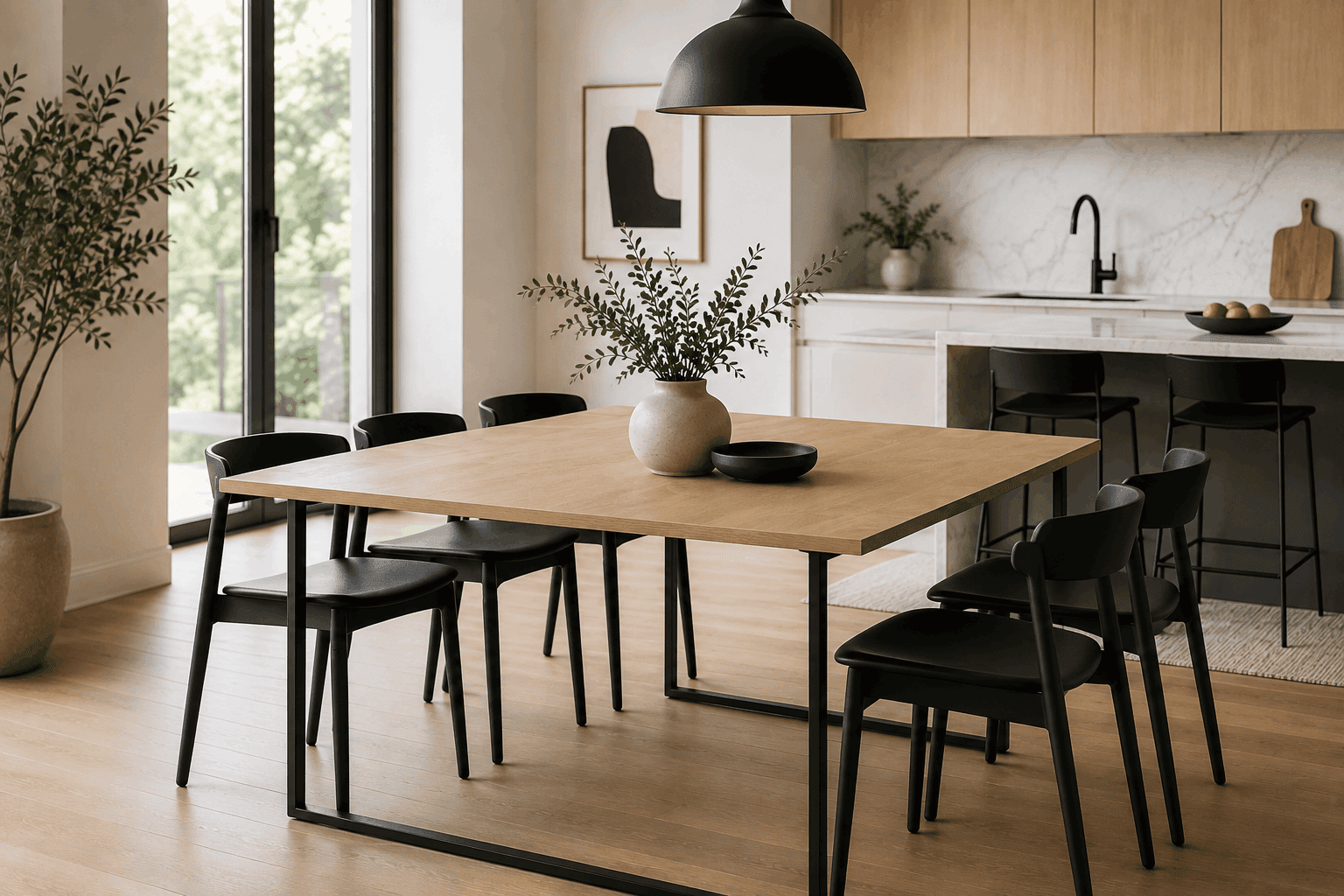
Category: kitchen

  • How to Match a Kitchen Table With Your Decor (Colors, Wood Tones, and Styles)

    How to Match a Kitchen Table With Your Decor (Colors, Wood Tones, and Styles)


    .km-root{
    –ink:#2B2E33;
    –ink-soft:#5B5F66;
    –paper:#F3F2ED;
    –paper-raised:#FFFFFF;
    –line:#DEDCD3;
    –sage:#6B7F76;
    –sage-dark:#4F5F58;
    –sage-bg:#EAEEEC;
    –clay:#A85D45;
    –clay-bg:#F3E7E2;
    –water:#3E6E8E;
    –water-bg:#E6EEF2;
    }
    .km-root *{ box-sizing:border-box; }
    .km-root{ margin:0; background:var(–paper); color:var(–ink); font-family:’Inter’,-apple-system,sans-serif; font-size:16.5px; line-height:1.72; }
    .km-wrap{ max-width:820px; margin:0 auto; padding:0 22px 50px; }
    .km-root h1,.km-root h2,.km-root h3{ font-family:’Fraunces’,Georgia,serif; color:var(–ink); margin:0; }
    .km-root a{ color:var(–sage-dark); }
    .km-root p{ margin:0 0 15px; }

    .km-header-band{ background:var(–ink); color:var(–paper); padding:44px 0 30px; }
    .km-header-band .km-eyebrow{ font-family:’JetBrains Mono’,monospace; font-size:11.5px; letter-spacing:0.18em; text-transform:uppercase; color:#B7C4BE; margin-bottom:14px; }
    .km-header-band h1{ font-size:clamp(24px,4.4vw,38px); font-weight:600; line-height:1.24; color:#fff; margin-bottom:14px; max-width:680px; }
    .km-header-band p.km-lede{ color:#C7C9C6; font-size:16.5px; max-width:640px; margin-bottom:0; }
    .km-grout-strip{ height:8px; display:flex; }
    .km-grout-strip span{ flex:1; border-right:2px solid var(–paper); }
    .km-grout-strip span:last-child{ border-right:none; }

    .km-root h2{ font-size:25px; font-weight:600; margin:48px 0 14px; padding-bottom:10px; border-bottom:2px solid var(–ink); }
    .km-root h3{ font-size:19px; font-weight:600; margin:24px 0 8px; }

    .km-quick-answer{ background:var(–water-bg); border-left:4px solid var(–water); border-radius:4px; padding:16px 18px; margin:24px 0; }
    .km-quick-answer p{ margin:0; font-size:15.5px; color:#294456; }
    .km-quick-answer p+p{ margin-top:10px; }
    .km-quick-answer p strong{ color:var(–ink); }

    .km-tagrow{ display:flex; gap:8px; flex-wrap:wrap; margin:16px 0 8px; }
    .km-tag{ font-family:’JetBrains Mono’,monospace; font-size:11px; letter-spacing:0.06em; text-transform:uppercase; border:1px solid var(–ink); color:var(–ink); padding:4px 9px; border-radius:3px; }

    .km-hero-img{ margin:22px 0; border-radius:8px; overflow:hidden; border:1px solid var(–line); }
    .km-hero-img img{ width:100%; height:340px; object-fit:cover; display:block; }
    .km-hero-caption{ font-family:’JetBrains Mono’,monospace; font-size:11.5px; color:var(–ink-soft); padding:9px 12px; background:var(–paper-raised); border-top:1px solid var(–line); }

    .km-idea-placeholder{ width:100%; height:110px; border-radius:6px; margin-bottom:10px; border:1px dashed var(–water); background:var(–water-bg); display:flex; align-items:center; justify-content:center; padding:12px; text-align:center; }
    .km-idea-placeholder span{ font-family:’JetBrains Mono’,monospace; font-size:11.5px; color:#294456; }

    .km-group-label{ font-family:’JetBrains Mono’,monospace; font-size:12px; letter-spacing:0.1em; text-transform:uppercase; color:var(–water); background:var(–water-bg); display:inline-block; padding:6px 12px; border-radius:4px; margin:34px 0 4px; }

    .km-block{ margin-top:34px; padding-top:20px; border-top:1px dashed var(–line); }
    .km-block:first-of-type{ margin-top:20px; padding-top:0; border-top:none; }
    .km-block-head{ display:flex; align-items:baseline; gap:12px; margin-bottom:4px; }
    .km-block-num{ font-family:’JetBrains Mono’,monospace; font-size:13px; color:var(–clay); border:1px solid var(–clay); border-radius:3px; padding:2px 7px; flex-shrink:0; }
    .km-block h3{ margin:0; }
    .km-block-tag{ display:inline-block; font-family:’JetBrains Mono’,monospace; font-size:10.5px; text-transform:uppercase; letter-spacing:0.05em; background:var(–sage-bg); color:var(–sage-dark); padding:3px 8px; border-radius:3px; margin:6px 0 10px; }
    .km-block-specs{ font-family:’JetBrains Mono’,monospace; font-size:12px; color:var(–ink-soft); background:var(–paper-raised); border-left:3px solid var(–sage); padding:8px 12px; margin:10px 0 12px; }
    .km-block-specs span{ display:block; margin-bottom:2px; }
    .km-block-specs span:last-child{ margin-bottom:0; }

    .km-table-wrap{ overflow-x:auto; border:1px solid var(–line); border-radius:6px; margin:16px 0; }
    .km-table{ width:100%; border-collapse:collapse; font-size:14px; min-width:600px; }
    .km-table th{ background:var(–ink); color:#fff; text-align:left; padding:10px 12px; font-family:’JetBrains Mono’,monospace; font-size:10px; letter-spacing:0.04em; text-transform:uppercase; }
    .km-table td{ padding:9px 12px; border-bottom:1px solid var(–line); }
    .km-table tr:nth-child(even) td{ background:#FAFAF7; }
    .km-table td:first-child{ font-weight:600; }

    .km-tip-list{ display:flex; flex-direction:column; gap:10px; margin:18px 0; }
    .km-tip-list .item{ display:flex; gap:12px; align-items:flex-start; }
    .km-tip-list .dot{ width:8px; height:8px; border-radius:50%; background:var(–sage-dark); margin-top:8px; flex-shrink:0; }
    .km-tip-list .txt strong{ display:block; font-size:15px; margin-bottom:2px; }
    .km-tip-list .txt p{ margin:0; font-size:14.5px; color:var(–ink-soft); }

    .km-mistake-list{ display:flex; flex-direction:column; gap:12px; margin:18px 0; }
    .km-mistake-list .item{ display:flex; gap:14px; background:var(–paper-raised); border:1px solid var(–line); border-radius:6px; padding:14px 16px; }
    .km-mistake-list .num{ font-family:’Fraunces’,serif; font-weight:600; font-size:22px; color:var(–clay); flex-shrink:0; line-height:1.3; }
    .km-mistake-list .txt strong{ display:block; font-size:15.5px; margin-bottom:3px; }
    .km-mistake-list .txt p{ margin:0; font-size:14.5px; color:var(–ink-soft); }

    .km-shop-box{ background:var(–paper-raised); border:1px solid var(–line); border-radius:8px; padding:16px 18px; margin:14px 0; }
    .km-shop-box .label{ font-family:’JetBrains Mono’,monospace; font-size:11px; letter-spacing:0.08em; text-transform:uppercase; color:var(–clay); font-weight:600; margin-bottom:6px; }
    .km-shop-box p{ margin-bottom:8px; font-size:14.5px; }
    .km-shop-box a.shop-link{ display:inline-block; font-family:’JetBrains Mono’,monospace; font-size:13px; background:var(–sage-dark); color:#fff; padding:8px 14px; border-radius:6px; text-decoration:none; margin-right:8px; margin-top:4px; }
    .km-shop-box a.shop-link:hover{ background:var(–ink); }

    .km-faq-item{ border-top:1px solid var(–line); padding:18px 0; }
    .km-faq-item:last-child{ border-bottom:1px solid var(–line); }
    .km-faq-item .q{ font-family:’Fraunces’,serif; font-weight:600; font-size:17px; margin-bottom:6px; }
    .km-faq-item .a{ font-size:15px; margin:0; color:var(–ink-soft); }

    @media (max-width:600px){ .km-hero-img img{ height:220px; } }

    Home Decor Guide · Updated 2026

    How to Match a Kitchen Table With Your Decor

    Not the same question as “how do I decorate my table.” This is about choosing the table itself, color, wood tone, and shape, so it actually belongs in the kitchen you already have.

    White dining table and chairs in a kitchen with wooden floors

    A white table works here because the wood tones in the floor and chair legs carry the warmth the table itself doesn’t.

    Search this exact question and most of what comes back is actually about decorating a table you already own, centerpieces, runners, seasonal styling. That’s a different problem. If you’re standing in a kitchen trying to figure out whether a table needs to match your cabinets, whether the wood tones need to be identical, or whether mismatched chairs will look curated or chaotic, none of that helps you.

    This guide is about the decision that comes before styling: choosing a table color, material, and shape that actually belongs in the kitchen you have, whether your cabinets are white, gray, dark, or somewhere in between.

    Color and wood-tone matching, not styling
    Specific guidance by cabinet color
    Real spacing and sizing numbers

    Quick answer: Your table doesn’t need to match your cabinets exactly, matching the temperature (warm vs. cool undertones) matters more than matching the exact shade. A wood table that’s one shade lighter or darker than your floors reads as intentional; matching them exactly makes furniture disappear into the background. Chairs don’t need to match the table either, matching material or wood tone while varying the shape is what makes a mixed set look curated instead of accidental.

    Should Your Kitchen Table Match Your Cabinets?

    No, and trying to match them exactly usually backfires. When a table’s wood tone or color is identical to the cabinets, the eye stops registering the table as its own piece of furniture, it just reads as more cabinet. What actually creates a cohesive look is coordination, not duplication: sharing an undertone, echoing a hardware finish, or picking up a color that already exists somewhere else in the room.

    The exception is a fully custom or built-in kitchen where the table top is literally fabricated from the same material as the countertop or cabinet doors, a look some kitchen manufacturers offer for a deliberately seamless, architectural effect. For a standard freestanding table, though, coordinated beats identical almost every time.

    How to Choose the Right Kitchen Table Color

    Start with temperature before you start with shade. Every cabinet color, and every wood tone, leans either warm (yellow, orange, or red undertones) or cool (blue, gray, or green undertones). Pairing a warm-toned table with cool-toned cabinets, or vice versa, is the single most common reason a kitchen feels visually “off” even when the individual pieces are each attractive on their own.

    Cabinet color Undertone Table colors that work
    White (warm) Cream, ivory undertones Warm woods: oak, honey pine, natural walnut
    White (cool) Blue-gray, stark white Cool woods: ash, whitewashed oak, gray-washed finishes
    Gray Cool, sometimes greige/warm-leaning Black metal base, ash, walnut, or matching greige-toned wood
    Dark (navy, charcoal, black) Cool to neutral Light oak, natural wood for contrast; black for a monochrome look
    Wood cabinets Varies by species See wood-tone matching below rather than color alone

    How to Mix Wood Tones in Your Kitchen

    You don’t need every wood surface in the kitchen to match, in fact, an exact match usually looks flatter than a deliberate variation. Two rules cover most situations:

    Go one shade lighter or darker than your floors, not the same shade.

    If your floors are a warm honey oak, a table in a slightly deeper chestnut or a slightly lighter natural oak both work, matching the exact same finish makes the table visually disappear into the floor.

    Keep the temperature consistent even when the shade varies.

    Pair cool-toned gray floors with cool-toned ash or whitewashed furniture. Pair warm amber floors with woods that lean gold or reddish. Mixing warm and cool wood tones in the same sightline is what usually reads as a mistake, not the difference in how light or dark they are.

    Limit yourself to two to three wood tones per room.

    Floor, table, and one more (cabinets or an accent piece) is a workable ceiling. A fourth and fifth distinct wood tone in the same sightline is where a room starts to feel unplanned rather than layered.

    How to Match Your Kitchen Table With Your Chairs

    Chairs matching the table exactly is a choice, not a requirement, and an intentionally mixed set is one of the more popular current approaches specifically because it looks collected rather than bought as a single set. The trick is keeping one element consistent while letting others vary:

    Keep the wood tone or material consistent, vary the shape.

    A set of different chair silhouettes, a bench on one side, wishbone chairs on the others, in the same wood finish reads as curated. The same mix in three different wood tones reads as leftover furniture.

    Anchor a mismatched set with a symmetrical pair.

    Matching chairs at the head and foot of the table, even if every side chair is different, gives the eye a structural anchor point that keeps the whole arrangement from feeling random.

    A metal base or metal chair legs can bridge a table and chairs that don’t otherwise match.

    Black metal table legs paired with black metal chair frames tie the set together even when the seat material and tabletop finish are completely different.

    Choosing a Kitchen Table for Different Decor Styles

    Modern
    01

    Modern Kitchen Tables

    Clean lines, minimal ornamentation

    How to Match a Kitchen Table With Your Decor

    Look for a slim profile, a single-material top (solid wood, stone, or a stone-look laminate), and a base that’s either a simple pedestal or thin metal legs. Matte black, white, or a natural light wood like ash or white oak all work. Avoid heavily carved legs or ornate detailing, which reads as traditional no matter what color you choose.

    BEST COLORS: Matte black, white, natural ash or white oakBASE: Pedestal or thin metal legsAVOID: Turned or carved wood legs
    Farmhouse
    02

    Farmhouse Kitchen Tables

    Warm, sturdy, a little imperfect

    farmhouse dining table extendable rustic

    A trestle or turned-leg base in a warm wood tone, ideally with visible grain or a distressed finish, is the classic farmhouse marker. An extendable top is especially fitting here, since farmhouse style leans into a table that’s actually used and gathered around often, not a showpiece.

    BEST COLORS: Warm oak, weathered brown, whitewashed woodBASE: Trestle or turned legsPAIR WITH: Ladder-back or windsor chairs
    Traditional
    03

    Traditional Kitchen Tables

    Classic proportions, richer wood tones

    traditional wood dining table classic kitchen

    Deeper wood tones, cherry, mahogany, or a rich walnut, paired with a table that has some architectural detail in the legs or apron. This style tolerates, and often benefits from, a table and chair set that genuinely matches, since the cohesive formality is part of the look.

    BEST COLORS: Cherry, mahogany, deep walnutBASE: Turned or fluted legsPAIR WITH: Upholstered or matching wood chairs
    Boho
    04

    Boho Kitchen Tables

    Mixed materials, relaxed

    boho eclectic dining table rattan wood

    This is the style most tolerant of mismatched chairs and mixed materials, rattan, woven seats, and a live-edge or naturally imperfect wood top all fit. Consistency here comes less from matching wood tones and more from a shared warm, natural material palette across the whole grouping.

    BEST COLORS: Natural, unfinished, or lightly stained woodBASE: Live-edge, turned wood, or rattan-wrappedPAIR WITH: Mixed rattan, cane, or woven chairs
    Organic Modern
    05

    Organic Modern Kitchen Tables

    Natural material, simplified shape

    organic modern natural wood dining table

    The middle ground between modern and farmhouse: a natural, visibly grained wood top on a simplified, unfussy base, no heavy carving, but not stark minimalism either. Curved edges and rounded tabletops fit this style especially well.

    BEST COLORS: Natural warm wood, light oak, walnutBASE: Simple pedestal or rounded legsSHAPE: Round or organically shaped tops work especially well

    Kitchen Table Ideas for White, Gray, and Dark Cabinets

    White Cabinets

    White cabinets give you the most flexibility of any base color. A warm wood table (oak, walnut, honey pine) adds contrast and keeps an all-white kitchen from feeling clinical. A black metal base or black-topped table echoes matte black hardware if that’s already in the room. The one combination to watch is stark white cabinets paired with a stark white table, which can flatten the whole room into a single plane with no depth.

    Gray Cabinets

    Gray reads as cool in most kitchens, so a table with cool wood undertones (ash, gray-washed oak) or a black metal base coordinates cleanly. A warm honey-toned table isn’t off-limits, but it needs another warm element in the room, brass hardware, warm lighting, a warm-toned floor, or it can feel like it’s fighting the cabinets rather than complementing them.

    Dark Cabinets

    Dark cabinets (navy, charcoal, black) benefit most from contrast. A light oak or natural wood table keeps the room from feeling heavy, especially in a kitchen with limited natural light. Going matching-dark on the table is a real option too, for a moodier, more monochrome look, but it works best in a room with strong overhead or pendant lighting to keep definition between the pieces.

    How to Style Your Kitchen Table

    Once the table itself is chosen, keep the everyday styling simple: a runner or a low, wide centerpiece works better than anything tall enough to block sightlines across an open-concept space. A shallow bowl, a small plant, or a stack of everyday dishware does more for a lived-in kitchen table than a formal arrangement that has to get cleared for every meal.

    Common Kitchen Table Decorating Mistakes to Avoid

    01
    Matching the table to the cabinets exactly

    Identical wood tones or colors make the table disappear into the cabinetry instead of reading as its own piece of furniture.

    02
    Mixing warm and cool wood tones in the same sightline

    This causes more visual friction than mixing light and dark tones does. Check undertone before shade.

    03
    Buying the table before measuring clearance

    Leave a minimum of 36 to 48 inches between the table’s edge and the nearest wall or cabinet so chairs can be pulled out and people can walk behind seated guests.

    04
    Choosing a round table for a large family without checking seating capacity

    Round tables seat fewer people per foot of floor space than rectangular ones. Great for daily use and small spaces, worth double-checking against your actual headcount for holidays.

    05
    Mismatching chairs with no unifying element

    Totally random chairs in different woods, colors, and styles reads as leftover furniture. Keep one thing consistent, material, wood tone, or color, while varying the rest.

    Where to Shop

    A few starting points by style, since the right table depends heavily on your specific cabinet color and square footage:

    Farmhouse & extendable

    Trestle-base and extendable farmhouse tables are widely available in the $300-$800 range and are worth prioritizing if you regularly host beyond your everyday headcount.

    Browse farmhouse tables →

    Modern & black metal base

    Look for a slim pedestal or trestle base in matte black paired with a light wood or white top for a modern-white-kitchen pairing.

    Browse modern tables →

    Round pedestal tables

    A strong pick for open-concept kitchens and smaller dining nooks, since the lack of hard corners keeps walkways clear.

    Browse round tables →

    Mismatched dining chair sets

    Sold individually or in curated mixed sets, useful for the boho or eclectic approach covered above.

    Browse dining chairs →

    Frequently Asked Questions

    Should my kitchen table match my cabinets?

    No. Coordinating undertone and finish matters more than matching color exactly. A table identical to the cabinets tends to visually disappear rather than look intentional.

    What color kitchen table goes with white cabinets?

    Warm wood tones like oak or walnut add contrast and depth. A black metal base or black top works well if the kitchen already has black hardware or fixtures. Avoid pairing stark white cabinets with an equally stark white table, which can flatten the room.

    What color dining table goes with gray cabinets?

    Cool-toned wood, ash or gray-washed oak, or a black metal base both coordinate cleanly with gray’s cool undertone. A warm wood table can work too, but pairs best when another warm element, like brass hardware, is already present in the room.

    How do I mix wood tones in a kitchen without it looking mismatched?

    Keep the temperature (warm vs. cool undertone) consistent even as the specific shade varies, and aim for one shade lighter or darker than your floors rather than an exact match. Limit the room to two or three distinct wood tones total.

    Should kitchen chairs match the table?

    Not necessarily. A mismatched set works well as long as one element, wood tone, material, or color, stays consistent across the pieces, and a matching pair at the head and foot of the table helps anchor a mixed set.

    What’s the best kitchen table shape for a small kitchen?

    Round tables generally work best in small or open-concept spaces since they have no hard corners to navigate around, which keeps walkways feeling open even in a tight footprint.

    What’s the best kitchen table for an open-concept space?

    A rectangular or extendable table often works best as a visual anchor, since its straight lines can define the dining zone within a larger open floor plan. Round tables are the better choice if softening sharp sightlines matters more than zoning the space.

    How much space should be around a kitchen table?

    Leave a minimum of 36 to 48 inches between the table’s edge and the nearest wall or cabinet, enough room for chairs to be pulled out and for people to walk behind seated guests comfortably.

    What wood table goes with white kitchen cabinets?

    Oak, walnut, and honey pine are the most reliable choices, since their warm undertones contrast with white cabinets rather than blending into them or clashing with a cooler white.

    Does a round table seat fewer people than a rectangular one?

    Generally yes. Rectangular tables use their length more efficiently for seating, while round tables trade some capacity for a more intimate, evenly-spaced conversation layout.

    Final Thoughts

    Choose temperature and undertone first, exact shade and style second. A table that shares a warm or cool undertone with your cabinets and floors will coordinate even if nothing matches precisely, and that coordination is what actually makes a kitchen feel put together. Once the table itself is right, the styling, a runner, a low bowl, seasonal touches, is the easy part.
  • What Size Tile for Kitchen Backsplash? A Complete Sizing Guide


    :root{
    –ink:#2B2E33;
    –ink-soft:#5B5F66;
    –paper:#F3F2ED;
    –paper-raised:#FFFFFF;
    –line:#DEDCD3;
    –sage:#6B7F76;
    –sage-dark:#4F5F58;
    –sage-bg:#EAEEEC;
    –clay:#A85D45;
    –clay-bg:#F3E7E2;
    }
    *{ box-sizing:border-box; }
    body{ margin:0; background:var(–paper); color:var(–ink); font-family:’Inter’,-apple-system,sans-serif; font-size:16.5px; line-height:1.72; }
    .wrap{ max-width:820px; margin:0 auto; padding:0 22px 50px; }
    h1,h2,h3{ font-family:’Fraunces’,Georgia,serif; color:var(–ink); margin:0; }
    .mono{ font-family:’JetBrains Mono’,monospace; }
    a{ color:var(–sage-dark); }
    p{ margin:0 0 15px; }

    /* ———- header / grout-line motif ———- */
    .header-band{ background:var(–ink); color:var(–paper); padding:44px 0 30px; }
    .header-band .eyebrow{ font-family:’JetBrains Mono’,monospace; font-size:11.5px; letter-spacing:0.18em; text-transform:uppercase; color:#B7C4BE; margin-bottom:14px; }
    .header-band h1{ font-size:clamp(28px,5vw,42px); font-weight:600; line-height:1.18; color:#fff; margin-bottom:14px; max-width:680px; }
    .header-band p.lede{ color:#C7C9C6; font-size:16.5px; max-width:620px; margin-bottom:0; }
    .grout-strip{ height:8px; display:flex; }
    .grout-strip span{ flex:1; border-right:2px solid var(–paper); }
    .grout-strip span:last-child{ border-right:none; }

    h2{ font-size:26px; font-weight:600; margin:48px 0 14px; padding-bottom:10px; border-bottom:2px solid var(–ink); }
    h3{ font-size:19px; font-weight:600; margin:24px 0 8px; }

    /* ———- to-scale tile comparison (signature element) ———- */
    .scale-compare{ display:flex; align-items:flex-end; gap:18px; flex-wrap:wrap; margin:22px 0 8px; padding:24px 20px 18px; background:var(–paper-raised); border:1px solid var(–line); border-radius:8px; }
    .scale-item{ display:flex; flex-direction:column; align-items:center; gap:8px; }
    .scale-swatch{ background:var(–sage-bg); border:1.5px solid var(–sage-dark); border-radius:3px; background-image:
    linear-gradient(var(–line) 1px, transparent 1px),
    linear-gradient(90deg, var(–line) 1px, transparent 1px);
    }
    .scale-item .lbl{ font-family:’JetBrains Mono’,monospace; font-size:11.5px; text-align:center; color:var(–ink-soft); }
    .scale-item .lbl strong{ display:block; color:var(–ink); font-size:12.5px; }
    .scale-note{ font-family:’JetBrains Mono’,monospace; font-size:11.5px; color:var(–ink-soft); margin-top:14px; }

    /* ———- comparison tables ———- */
    .table-wrap{ overflow-x:auto; border:1px solid var(–line); border-radius:6px; margin:16px 0; }
    table.compare{ width:100%; border-collapse:collapse; font-size:14.5px; min-width:600px; }
    table.compare th{ background:var(–ink); color:#fff; text-align:left; padding:10px 13px; font-family:’JetBrains Mono’,monospace; font-size:10.5px; letter-spacing:0.05em; text-transform:uppercase; }
    table.compare td{ padding:10px 13px; border-bottom:1px solid var(–line); }
    table.compare tr:nth-child(even) td{ background:#FAFAF7; }
    table.compare td:first-child{ font-weight:600; }

    /* ———- callout box ———- */
    .callout{ background:var(–sage-bg); border-left:4px solid var(–sage-dark); border-radius:4px; padding:14px 18px; margin:18px 0; }
    .callout p{ margin:0; font-size:15px; color:var(–sage-dark); }
    .callout p strong{ color:var(–ink); }

    /* ———- mistake list ———- */
    .mistake-list{ display:flex; flex-direction:column; gap:12px; margin:18px 0; }
    .mistake-list .item{ display:flex; gap:14px; background:var(–paper-raised); border:1px solid var(–line); border-radius:6px; padding:14px 16px; }
    .mistake-list .num{ font-family:’Fraunces’,serif; font-weight:600; font-size:22px; color:var(–clay); flex-shrink:0; line-height:1.3; }
    .mistake-list .txt strong{ display:block; font-size:15.5px; margin-bottom:3px; }
    .mistake-list .txt p{ margin:0; font-size:14.5px; color:var(–ink-soft); }

    /* ———- FAQ ———- */
    .faq-item{ border-top:1px solid var(–line); padding:18px 0; }
    .faq-item:last-child{ border-bottom:1px solid var(–line); }
    .faq-item .q{ font-family:’Fraunces’,serif; font-weight:600; font-size:17px; margin-bottom:6px; }
    .faq-item .a{ font-size:15px; margin:0; color:var(–ink-soft); }

    @media (max-width:600px){
    .scale-compare{ gap:12px; padding:18px 14px; }
    }

    Kitchen Design Guide · Updated 2026

    What Size Tile for Kitchen Backsplash? A Complete Sizing Guide

    Tile size changes how a backsplash looks, how much it costs to install, and how much grout you’ll be scrubbing five years from now. Here’s how to actually choose, with real dimensions and current 2026 trends.

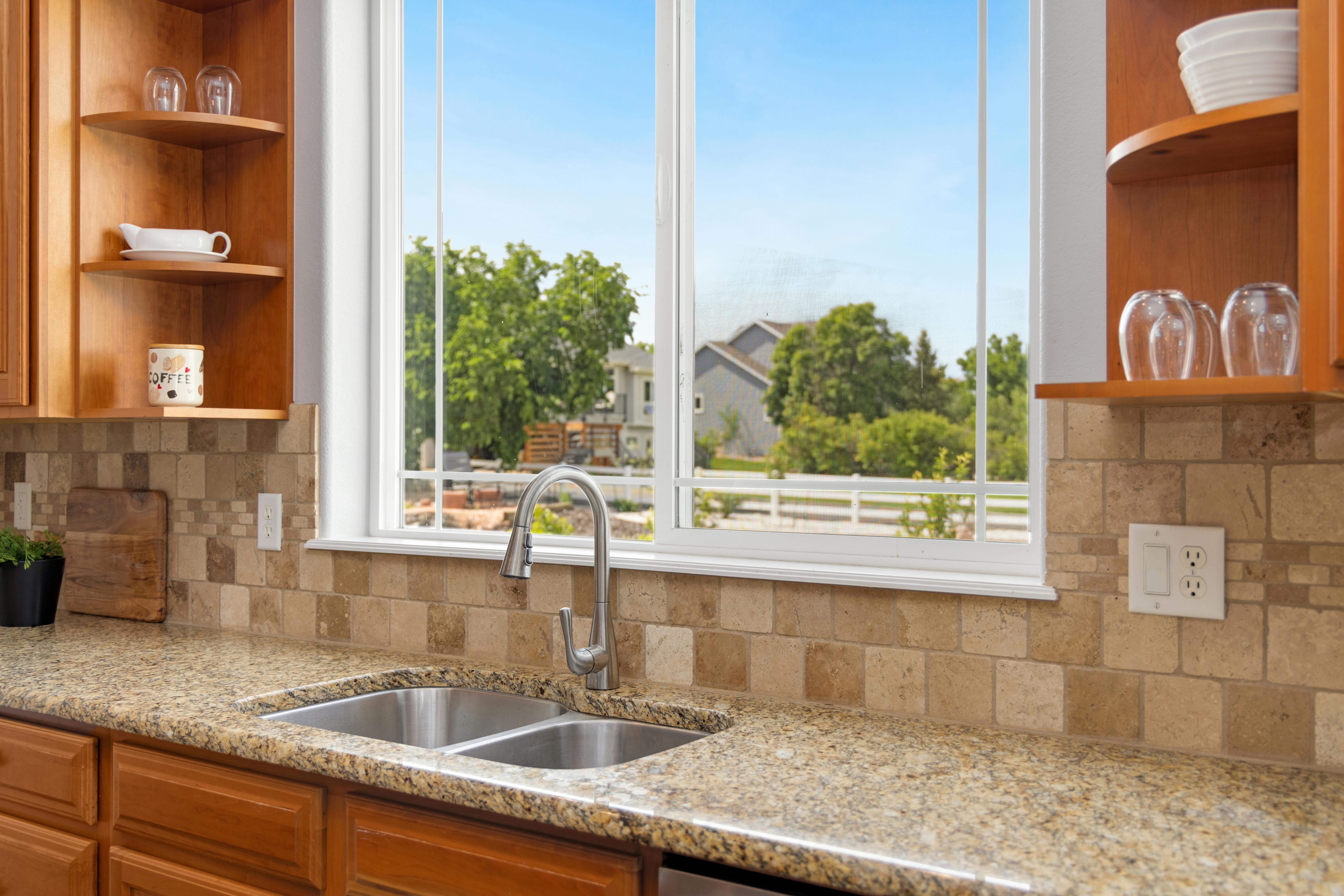
    Best kitchen backsplash tile sizes including subway, mosaic, and large-format tiles
    Popular kitchen backsplash tile sizes for modern and traditional kitchens.

    Walk into a tile showroom without a plan and you’ll leave more confused than when you walked in. Sizes range from one-inch mosaic chips to porcelain slabs the size of a door, and the listing rarely explains what actually changes between them beyond the price tag.

    The short answer: there’s no single correct size, but there is a right size for your specific kitchen, based on its dimensions, how much grout you’re willing to clean, and whether you’re going for a classic look or a more modern one. This guide breaks down standard backsplash tile size, the tradeoffs between small and large format, and what’s actually trending in 2026, so you can walk back into that showroom with an answer instead of a guess.

    What Is the Standard Kitchen Backsplash Tile Size?

    There’s no single industry-mandated standard backsplash tile size, but 3×6 inches is the closest thing to a default. It’s the classic subway tile dimension, and it’s stayed popular for a simple reason: a 2:1 ratio reads as proportional on almost any wall, it’s cheap to produce, and the grout lines fall in a pattern most people find visually calm rather than busy.

    Before 3×6 subway became the default, 4×4 tile held that spot for decades, and you’ll still see it in older homes and budget renovations. Today, “standard” really means whichever size falls in the middle of the range, roughly 3×6 to 6×6, since anything smaller reads as a mosaic and anything larger moves into large-format territory.

    Best Tile Sizes for Kitchen Backsplashes

    The right backsplash tile size depends on the effect you’re after more than any fixed rule. These four sizes cover most kitchens well:

    2×2Mosaic
    4×4Classic
    3×6Subway
    4×8Modern Subway
    12×24Large Format

    Swatches shown at roughly the same relative scale, sized down to fit the page. Grid lines represent a 1-inch reference.

    3×6 subway: the safest, most versatile choice, works in traditional and modern kitchens alike.
    4×4: a retro-leaning option, especially in a checkerboard or color-blocked layout.
    2-inch hexagon: adds texture without the full commitment of an all-mosaic wall.
    12×24 large format: the modern, low-maintenance choice, with far fewer grout lines to clean.

    Small vs. Large Backsplash Tiles

    The tradeoffs between small and large backsplash tiles come down to three things: how much grout you’ll maintain, how much material gets wasted in cuts, and how the finished wall reads visually.

    Factor Small Tile (Under 4 in) Large Tile (12 in+)
    Grout lines More lines, more upkeep Fewer lines, easier to clean
    Visual effect Adds texture and detail Reads open and modern
    Cutting waste Lower, tiles are cheap to trim Higher, mistakes cost more
    Installation time Slower, more pieces to set Faster per square foot
    Best for Small accent areas, patterns Full walls, small kitchens

    Rule of thumb: if you hate cleaning grout, size up. If you want a backsplash with real texture and pattern, size down and accept the extra maintenance.

    Choosing the Right Backsplash Tile Size

    A few practical factors matter more than personal taste alone:

    Kitchen size. Larger tiles tend to make a small kitchen feel more open, since fewer grout lines mean less visual clutter. In a bigger kitchen, smaller tiles can add welcome texture without feeling busy.

    Existing finishes. A heavily veined stone countertop competes with a small, busy tile pattern. A plain quartz or laminate counter has more room for a detailed backsplash.

    Natural light. Kitchens with limited daylight benefit from lighter, larger tile, which reflects more light across the wall. Darker or smaller tile can work well in a kitchen that already gets plenty of sun.

    Maintenance tolerance. Be honest about how often you’ll actually seal and scrub grout. This alone pushes a lot of buyers toward large format tile.

    Installation method. Large tiles need a flatter wall and more precise cuts, which usually means hiring a professional. Small tiles and mosaics are more forgiving for a first DIY attempt.

    Most Popular Kitchen Backsplash Tile Sizes

    Based on current design coverage heading into 2026, five sizes account for most kitchen backsplash installs:

    Rank Size / Style Why It’s Popular
    1 3×6 subway Still the most common pick in American kitchens
    2 Hexagon (2-4 in) Retro shape with a modern resurgence
    3 12×24 large format Minimal grout, favored in modern kitchens
    4 Zellige (small, irregular) Handmade look, trending for texture and character
    5 Full slab / large porcelain panel Near-zero grout, used for full-height walls

    Subway Tile vs. Large Format Tile

    Is 3×6 subway tile still in style? Yes. Design coverage heading into 2026 consistently names it the most common kitchen backsplash choice in the US, though the classic horizontal brick layout is increasingly swapped for vertical stacking or herringbone to feel more current.

    Are large tiles better for kitchen backsplashes? Better depends on the goal. Large format tile (12×24 and up) wins on cleaning ease and a seamless, modern look, and it’s the size most associated with the full-height, minimal-grout backsplashes trending this year. Subway tile wins on cost, DIY-friendliness, and timelessness, since it’s been a safe choice for decades and shows no sign of dating a kitchen the way some trend-driven finishes eventually do.

    Backsplash Tile Size for Small Kitchens

    What size backsplash tile makes a kitchen look bigger? Large format tile, generally 12×12 or larger. Fewer grout lines mean less visual interruption, so the eye reads the wall as one continuous surface instead of a grid, which makes the room feel more open. A vertical tile layout, even at a mid-size like 4×8, adds the same effect by drawing the eye upward.

    Small kitchens can still use smaller tile successfully, but it works best as an accent rather than covering every wall, for example, a small mosaic strip behind the range with large format tile everywhere else.

    Kitchen Backsplash Trends for 2026

    A few clear patterns are showing up across kitchen design coverage this year:

    Full-height backsplashes. Tile running from the countertop straight to the ceiling or upper cabinets, instead of stopping at a standard height, continues to gain ground, especially paired with large format tile to minimize grout lines across the full wall.

    Warmer, darker tones. The all-white and gray kitchen backsplash is giving way to warmer neutrals, deep greens, and spice tones, a shift away from the flatter, cooler palettes that dominated the past several years.

    Zellige and handmade texture. Irregular, hand-glazed tiles with visible variation in color and surface are having a real moment, adding texture that a perfectly uniform tile can’t replicate.

    Geometric and picket layouts. Elongated picket shapes and herringbone patterns are replacing flat, uniform grids, especially behind the range, where the pattern doubles as a focal point.

    Mixed materials. Combining two tile types, glass and stone, or a patterned tile with a plain field tile, is showing up more often instead of a single tile covering the whole wall.

    Common Mistakes When Choosing Backsplash Tiles

    01
    Ignoring grout color and width

    A dark grout on a small white tile creates a completely different look than the same tile with white grout. Sample the grout, not just the tile.

    02
    Mismatching tile scale to room size

    An oversized tile in a tiny galley kitchen, or a busy mosaic across a huge open-plan wall, both fight the room instead of working with it.

    03
    Forgetting outlets and switches

    Tile size affects how cleanly outlets and switches sit within the pattern. Map outlet locations against your chosen tile size before ordering.

    04
    Skipping a sample in your own kitchen

    Tile reads differently under a showroom’s lighting than it will under your kitchen’s fixtures. Bring a sample home before committing.

    05
    Treating the whole wall as one height

    The wall behind a range typically needs more coverage, up to the range hood, than the rest of the backsplash, even in a partial-height design.

    06
    Chasing a trend over a timeless choice

    Bold, of-the-moment tile can date a kitchen faster than a neutral size and color that simply pairs well with whatever comes next.

    Frequently Asked Questions About Kitchen Backsplash Tile Sizes

    What is the standard backsplash tile size?

    There’s no single official standard, but 3×6 inch subway tile is the closest thing to a default choice in American kitchens, with 4×4 as an older alternative still common in existing homes.

    Is 3×6 subway tile still in style?

    Yes. It remains the most common kitchen backsplash size going into 2026, though many kitchens now install it in a vertical stack or herringbone layout instead of the traditional horizontal brick pattern.

    Are large tiles better for kitchen backsplashes?

    They’re better for easier cleaning and a modern, seamless look, since fewer grout lines mean less maintenance. Subway and smaller tile remain better for budget, DIY installation, and a more classic appearance.

    What size backsplash tile makes a kitchen look bigger?

    Large format tile, generally 12×12 inches or larger, minimizes grout lines and reads as one continuous surface, which makes a small kitchen feel more open.

    How high should a kitchen backsplash be?

    The standard height is 18 inches, covering the gap between the countertop and the bottom of the upper cabinets. Behind a range, it’s common to extend the backsplash to 24 to 36 inches or up to the range hood. Full-height backsplashes, running to the ceiling, are increasingly common in 2026 kitchens.

    Can you use large format tile for backsplash?

    Yes, and it’s one of the most popular current choices. It requires a flatter wall and more precise cuts than smaller tile, so professional installation is recommended.

    Which backsplash tile is easiest to clean?

    Large format tile, since fewer grout lines mean less surface area for grease and grime to collect. Glossy finishes also wipe clean more easily than matte or heavily textured tile.

    What is the most popular kitchen backsplash tile?

    3×6 subway tile remains the most widely chosen size and shape, though hexagon, zellige, and large format tile are all gaining ground heading into 2026.

    Should backsplash tiles go behind the range?

    Yes, and that area typically needs more coverage than the rest of the kitchen, extending up to the range hood or 24 to 36 inches, to handle heat, grease, and splatter.

    What tile shape is best for kitchen backsplash?

    Rectangular subway tile remains the most versatile shape for most kitchens. Hexagon and picket shapes add more visual interest but suit a more deliberate, design-forward kitchen better than an all-purpose choice.

  • What Size Tile for Kitchen Backsplash? A Complete Sizing Guide


    :root{
    –ink:#2B2E33;
    –ink-soft:#5B5F66;
    –paper:#F3F2ED;
    –paper-raised:#FFFFFF;
    –line:#DEDCD3;
    –sage:#6B7F76;
    –sage-dark:#4F5F58;
    –sage-bg:#EAEEEC;
    –clay:#A85D45;
    –clay-bg:#F3E7E2;
    }
    *{ box-sizing:border-box; }
    body{ margin:0; background:var(–paper); color:var(–ink); font-family:’Inter’,-apple-system,sans-serif; font-size:16.5px; line-height:1.72; }
    .wrap{ max-width:820px; margin:0 auto; padding:0 22px 50px; }
    h1,h2,h3{ font-family:’Fraunces’,Georgia,serif; color:var(–ink); margin:0; }
    .mono{ font-family:’JetBrains Mono’,monospace; }
    a{ color:var(–sage-dark); }
    p{ margin:0 0 15px; }

    /* ———- header / grout-line motif ———- */
    .header-band{ background:var(–ink); color:var(–paper); padding:44px 0 30px; }
    .header-band .eyebrow{ font-family:’JetBrains Mono’,monospace; font-size:11.5px; letter-spacing:0.18em; text-transform:uppercase; color:#B7C4BE; margin-bottom:14px; }
    .header-band h1{ font-size:clamp(28px,5vw,42px); font-weight:600; line-height:1.18; color:#fff; margin-bottom:14px; max-width:680px; }
    .header-band p.lede{ color:#C7C9C6; font-size:16.5px; max-width:620px; margin-bottom:0; }
    .grout-strip{ height:8px; display:flex; }
    .grout-strip span{ flex:1; border-right:2px solid var(–paper); }
    .grout-strip span:last-child{ border-right:none; }

    h2{ font-size:26px; font-weight:600; margin:48px 0 14px; padding-bottom:10px; border-bottom:2px solid var(–ink); }
    h3{ font-size:19px; font-weight:600; margin:24px 0 8px; }

    /* ———- to-scale tile comparison (signature element) ———- */
    .scale-compare{ display:flex; align-items:flex-end; gap:18px; flex-wrap:wrap; margin:22px 0 8px; padding:24px 20px 18px; background:var(–paper-raised); border:1px solid var(–line); border-radius:8px; }
    .scale-item{ display:flex; flex-direction:column; align-items:center; gap:8px; }
    .scale-swatch{ background:var(–sage-bg); border:1.5px solid var(–sage-dark); border-radius:3px; background-image:
    linear-gradient(var(–line) 1px, transparent 1px),
    linear-gradient(90deg, var(–line) 1px, transparent 1px);
    }
    .scale-item .lbl{ font-family:’JetBrains Mono’,monospace; font-size:11.5px; text-align:center; color:var(–ink-soft); }
    .scale-item .lbl strong{ display:block; color:var(–ink); font-size:12.5px; }
    .scale-note{ font-family:’JetBrains Mono’,monospace; font-size:11.5px; color:var(–ink-soft); margin-top:14px; }

    /* ———- comparison tables ———- */
    .table-wrap{ overflow-x:auto; border:1px solid var(–line); border-radius:6px; margin:16px 0; }
    table.compare{ width:100%; border-collapse:collapse; font-size:14.5px; min-width:600px; }
    table.compare th{ background:var(–ink); color:#fff; text-align:left; padding:10px 13px; font-family:’JetBrains Mono’,monospace; font-size:10.5px; letter-spacing:0.05em; text-transform:uppercase; }
    table.compare td{ padding:10px 13px; border-bottom:1px solid var(–line); }
    table.compare tr:nth-child(even) td{ background:#FAFAF7; }
    table.compare td:first-child{ font-weight:600; }

    /* ———- callout box ———- */
    .callout{ background:var(–sage-bg); border-left:4px solid var(–sage-dark); border-radius:4px; padding:14px 18px; margin:18px 0; }
    .callout p{ margin:0; font-size:15px; color:var(–sage-dark); }
    .callout p strong{ color:var(–ink); }

    /* ———- mistake list ———- */
    .mistake-list{ display:flex; flex-direction:column; gap:12px; margin:18px 0; }
    .mistake-list .item{ display:flex; gap:14px; background:var(–paper-raised); border:1px solid var(–line); border-radius:6px; padding:14px 16px; }
    .mistake-list .num{ font-family:’Fraunces’,serif; font-weight:600; font-size:22px; color:var(–clay); flex-shrink:0; line-height:1.3; }
    .mistake-list .txt strong{ display:block; font-size:15.5px; margin-bottom:3px; }
    .mistake-list .txt p{ margin:0; font-size:14.5px; color:var(–ink-soft); }

    /* ———- FAQ ———- */
    .faq-item{ border-top:1px solid var(–line); padding:18px 0; }
    .faq-item:last-child{ border-bottom:1px solid var(–line); }
    .faq-item .q{ font-family:’Fraunces’,serif; font-weight:600; font-size:17px; margin-bottom:6px; }
    .faq-item .a{ font-size:15px; margin:0; color:var(–ink-soft); }

    @media (max-width:600px){
    .scale-compare{ gap:12px; padding:18px 14px; }
    }

    Kitchen Design Guide · Updated 2026

    What Size Tile for Kitchen Backsplash? A Complete Sizing Guide

    Tile size changes how a backsplash looks, how much it costs to install, and how much grout you’ll be scrubbing five years from now. Here’s how to actually choose, with real dimensions and current 2026 trends.

    Best kitchen backsplash tile sizes including subway, mosaic, and large-format tiles
    Popular kitchen backsplash tile sizes for modern and traditional kitchens.

    Walk into a tile showroom without a plan and you’ll leave more confused than when you walked in. Sizes range from one-inch mosaic chips to porcelain slabs the size of a door, and the listing rarely explains what actually changes between them beyond the price tag.

    The short answer: there’s no single correct size, but there is a right size for your specific kitchen, based on its dimensions, how much grout you’re willing to clean, and whether you’re going for a classic look or a more modern one. This guide breaks down standard backsplash tile size, the tradeoffs between small and large format, and what’s actually trending in 2026, so you can walk back into that showroom with an answer instead of a guess.

    What Is the Standard Kitchen Backsplash Tile Size?

    There’s no single industry-mandated standard backsplash tile size, but 3×6 inches is the closest thing to a default. It’s the classic subway tile dimension, and it’s stayed popular for a simple reason: a 2:1 ratio reads as proportional on almost any wall, it’s cheap to produce, and the grout lines fall in a pattern most people find visually calm rather than busy.

    Before 3×6 subway became the default, 4×4 tile held that spot for decades, and you’ll still see it in older homes and budget renovations. Today, “standard” really means whichever size falls in the middle of the range, roughly 3×6 to 6×6, since anything smaller reads as a mosaic and anything larger moves into large-format territory.

    Best Tile Sizes for Kitchen Backsplashes

    The right backsplash tile size depends on the effect you’re after more than any fixed rule. These four sizes cover most kitchens well:

    2×2Mosaic
    4×4Classic
    3×6Subway
    4×8Modern Subway
    12×24Large Format

    Swatches shown at roughly the same relative scale, sized down to fit the page. Grid lines represent a 1-inch reference.

    3×6 subway: the safest, most versatile choice, works in traditional and modern kitchens alike.
    4×4: a retro-leaning option, especially in a checkerboard or color-blocked layout.
    2-inch hexagon: adds texture without the full commitment of an all-mosaic wall.
    12×24 large format: the modern, low-maintenance choice, with far fewer grout lines to clean.

    Small vs. Large Backsplash Tiles

    The tradeoffs between small and large backsplash tiles come down to three things: how much grout you’ll maintain, how much material gets wasted in cuts, and how the finished wall reads visually.

    Factor Small Tile (Under 4 in) Large Tile (12 in+)
    Grout lines More lines, more upkeep Fewer lines, easier to clean
    Visual effect Adds texture and detail Reads open and modern
    Cutting waste Lower, tiles are cheap to trim Higher, mistakes cost more
    Installation time Slower, more pieces to set Faster per square foot
    Best for Small accent areas, patterns Full walls, small kitchens

    Rule of thumb: if you hate cleaning grout, size up. If you want a backsplash with real texture and pattern, size down and accept the extra maintenance.

    Choosing the Right Backsplash Tile Size

    A few practical factors matter more than personal taste alone:

    Kitchen size. Larger tiles tend to make a small kitchen feel more open, since fewer grout lines mean less visual clutter. In a bigger kitchen, smaller tiles can add welcome texture without feeling busy.

    Existing finishes. A heavily veined stone countertop competes with a small, busy tile pattern. A plain quartz or laminate counter has more room for a detailed backsplash.

    Natural light. Kitchens with limited daylight benefit from lighter, larger tile, which reflects more light across the wall. Darker or smaller tile can work well in a kitchen that already gets plenty of sun.

    Maintenance tolerance. Be honest about how often you’ll actually seal and scrub grout. This alone pushes a lot of buyers toward large format tile.

    Installation method. Large tiles need a flatter wall and more precise cuts, which usually means hiring a professional. Small tiles and mosaics are more forgiving for a first DIY attempt.

    Most Popular Kitchen Backsplash Tile Sizes

    Based on current design coverage heading into 2026, five sizes account for most kitchen backsplash installs:

    Rank Size / Style Why It’s Popular
    1 3×6 subway Still the most common pick in American kitchens
    2 Hexagon (2-4 in) Retro shape with a modern resurgence
    3 12×24 large format Minimal grout, favored in modern kitchens
    4 Zellige (small, irregular) Handmade look, trending for texture and character
    5 Full slab / large porcelain panel Near-zero grout, used for full-height walls

    Subway Tile vs. Large Format Tile

    Is 3×6 subway tile still in style? Yes. Design coverage heading into 2026 consistently names it the most common kitchen backsplash choice in the US, though the classic horizontal brick layout is increasingly swapped for vertical stacking or herringbone to feel more current.

    Are large tiles better for kitchen backsplashes? Better depends on the goal. Large format tile (12×24 and up) wins on cleaning ease and a seamless, modern look, and it’s the size most associated with the full-height, minimal-grout backsplashes trending this year. Subway tile wins on cost, DIY-friendliness, and timelessness, since it’s been a safe choice for decades and shows no sign of dating a kitchen the way some trend-driven finishes eventually do.

    Backsplash Tile Size for Small Kitchens

    What size backsplash tile makes a kitchen look bigger? Large format tile, generally 12×12 or larger. Fewer grout lines mean less visual interruption, so the eye reads the wall as one continuous surface instead of a grid, which makes the room feel more open. A vertical tile layout, even at a mid-size like 4×8, adds the same effect by drawing the eye upward.

    Small kitchens can still use smaller tile successfully, but it works best as an accent rather than covering every wall, for example, a small mosaic strip behind the range with large format tile everywhere else.

    Kitchen Backsplash Trends for 2026

    A few clear patterns are showing up across kitchen design coverage this year:

    Full-height backsplashes. Tile running from the countertop straight to the ceiling or upper cabinets, instead of stopping at a standard height, continues to gain ground, especially paired with large format tile to minimize grout lines across the full wall.

    Warmer, darker tones. The all-white and gray kitchen backsplash is giving way to warmer neutrals, deep greens, and spice tones, a shift away from the flatter, cooler palettes that dominated the past several years.

    Zellige and handmade texture. Irregular, hand-glazed tiles with visible variation in color and surface are having a real moment, adding texture that a perfectly uniform tile can’t replicate.

    Geometric and picket layouts. Elongated picket shapes and herringbone patterns are replacing flat, uniform grids, especially behind the range, where the pattern doubles as a focal point.

    Mixed materials. Combining two tile types, glass and stone, or a patterned tile with a plain field tile, is showing up more often instead of a single tile covering the whole wall.

    Common Mistakes When Choosing Backsplash Tiles

    01
    Ignoring grout color and width

    A dark grout on a small white tile creates a completely different look than the same tile with white grout. Sample the grout, not just the tile.

    02
    Mismatching tile scale to room size

    An oversized tile in a tiny galley kitchen, or a busy mosaic across a huge open-plan wall, both fight the room instead of working with it.

    03
    Forgetting outlets and switches

    Tile size affects how cleanly outlets and switches sit within the pattern. Map outlet locations against your chosen tile size before ordering.

    04
    Skipping a sample in your own kitchen

    Tile reads differently under a showroom’s lighting than it will under your kitchen’s fixtures. Bring a sample home before committing.

    05
    Treating the whole wall as one height

    The wall behind a range typically needs more coverage, up to the range hood, than the rest of the backsplash, even in a partial-height design.

    06
    Chasing a trend over a timeless choice

    Bold, of-the-moment tile can date a kitchen faster than a neutral size and color that simply pairs well with whatever comes next.

    Frequently Asked Questions About Kitchen Backsplash Tile Sizes

    What is the standard backsplash tile size?

    There’s no single official standard, but 3×6 inch subway tile is the closest thing to a default choice in American kitchens, with 4×4 as an older alternative still common in existing homes.

    Is 3×6 subway tile still in style?

    Yes. It remains the most common kitchen backsplash size going into 2026, though many kitchens now install it in a vertical stack or herringbone layout instead of the traditional horizontal brick pattern.

    Are large tiles better for kitchen backsplashes?

    They’re better for easier cleaning and a modern, seamless look, since fewer grout lines mean less maintenance. Subway and smaller tile remain better for budget, DIY installation, and a more classic appearance.

    What size backsplash tile makes a kitchen look bigger?

    Large format tile, generally 12×12 inches or larger, minimizes grout lines and reads as one continuous surface, which makes a small kitchen feel more open.

    How high should a kitchen backsplash be?

    The standard height is 18 inches, covering the gap between the countertop and the bottom of the upper cabinets. Behind a range, it’s common to extend the backsplash to 24 to 36 inches or up to the range hood. Full-height backsplashes, running to the ceiling, are increasingly common in 2026 kitchens.

    Can you use large format tile for backsplash?

    Yes, and it’s one of the most popular current choices. It requires a flatter wall and more precise cuts than smaller tile, so professional installation is recommended.

    Which backsplash tile is easiest to clean?

    Large format tile, since fewer grout lines mean less surface area for grease and grime to collect. Glossy finishes also wipe clean more easily than matte or heavily textured tile.

    What is the most popular kitchen backsplash tile?

    3×6 subway tile remains the most widely chosen size and shape, though hexagon, zellige, and large format tile are all gaining ground heading into 2026.

    Should backsplash tiles go behind the range?

    Yes, and that area typically needs more coverage than the rest of the kitchen, extending up to the range hood or 24 to 36 inches, to handle heat, grease, and splatter.

    What tile shape is best for kitchen backsplash?

    Rectangular subway tile remains the most versatile shape for most kitchens. Hexagon and picket shapes add more visual interest but suit a more deliberate, design-forward kitchen better than an all-purpose choice.

  • What Size Tile for Kitchen Backsplash? A Complete Sizing Guide


    :root{
    –ink:#2B2E33;
    –ink-soft:#5B5F66;
    –paper:#F3F2ED;
    –paper-raised:#FFFFFF;
    –line:#DEDCD3;
    –sage:#6B7F76;
    –sage-dark:#4F5F58;
    –sage-bg:#EAEEEC;
    –clay:#A85D45;
    –clay-bg:#F3E7E2;
    }
    *{ box-sizing:border-box; }
    body{ margin:0; background:var(–paper); color:var(–ink); font-family:’Inter’,-apple-system,sans-serif; font-size:16.5px; line-height:1.72; }
    .wrap{ max-width:820px; margin:0 auto; padding:0 22px 50px; }
    h1,h2,h3{ font-family:’Fraunces’,Georgia,serif; color:var(–ink); margin:0; }
    .mono{ font-family:’JetBrains Mono’,monospace; }
    a{ color:var(–sage-dark); }
    p{ margin:0 0 15px; }

    /* ———- header / grout-line motif ———- */
    .header-band{ background:var(–ink); color:var(–paper); padding:44px 0 30px; }
    .header-band .eyebrow{ font-family:’JetBrains Mono’,monospace; font-size:11.5px; letter-spacing:0.18em; text-transform:uppercase; color:#B7C4BE; margin-bottom:14px; }
    .header-band h1{ font-size:clamp(28px,5vw,42px); font-weight:600; line-height:1.18; color:#fff; margin-bottom:14px; max-width:680px; }
    .header-band p.lede{ color:#C7C9C6; font-size:16.5px; max-width:620px; margin-bottom:0; }
    .grout-strip{ height:8px; display:flex; }
    .grout-strip span{ flex:1; border-right:2px solid var(–paper); }
    .grout-strip span:last-child{ border-right:none; }

    h2{ font-size:26px; font-weight:600; margin:48px 0 14px; padding-bottom:10px; border-bottom:2px solid var(–ink); }
    h3{ font-size:19px; font-weight:600; margin:24px 0 8px; }

    /* ———- to-scale tile comparison (signature element) ———- */
    .scale-compare{ display:flex; align-items:flex-end; gap:18px; flex-wrap:wrap; margin:22px 0 8px; padding:24px 20px 18px; background:var(–paper-raised); border:1px solid var(–line); border-radius:8px; }
    .scale-item{ display:flex; flex-direction:column; align-items:center; gap:8px; }
    .scale-swatch{ background:var(–sage-bg); border:1.5px solid var(–sage-dark); border-radius:3px; background-image:
    linear-gradient(var(–line) 1px, transparent 1px),
    linear-gradient(90deg, var(–line) 1px, transparent 1px);
    }
    .scale-item .lbl{ font-family:’JetBrains Mono’,monospace; font-size:11.5px; text-align:center; color:var(–ink-soft); }
    .scale-item .lbl strong{ display:block; color:var(–ink); font-size:12.5px; }
    .scale-note{ font-family:’JetBrains Mono’,monospace; font-size:11.5px; color:var(–ink-soft); margin-top:14px; }

    /* ———- comparison tables ———- */
    .table-wrap{ overflow-x:auto; border:1px solid var(–line); border-radius:6px; margin:16px 0; }
    table.compare{ width:100%; border-collapse:collapse; font-size:14.5px; min-width:600px; }
    table.compare th{ background:var(–ink); color:#fff; text-align:left; padding:10px 13px; font-family:’JetBrains Mono’,monospace; font-size:10.5px; letter-spacing:0.05em; text-transform:uppercase; }
    table.compare td{ padding:10px 13px; border-bottom:1px solid var(–line); }
    table.compare tr:nth-child(even) td{ background:#FAFAF7; }
    table.compare td:first-child{ font-weight:600; }

    /* ———- callout box ———- */
    .callout{ background:var(–sage-bg); border-left:4px solid var(–sage-dark); border-radius:4px; padding:14px 18px; margin:18px 0; }
    .callout p{ margin:0; font-size:15px; color:var(–sage-dark); }
    .callout p strong{ color:var(–ink); }

    /* ———- mistake list ———- */
    .mistake-list{ display:flex; flex-direction:column; gap:12px; margin:18px 0; }
    .mistake-list .item{ display:flex; gap:14px; background:var(–paper-raised); border:1px solid var(–line); border-radius:6px; padding:14px 16px; }
    .mistake-list .num{ font-family:’Fraunces’,serif; font-weight:600; font-size:22px; color:var(–clay); flex-shrink:0; line-height:1.3; }
    .mistake-list .txt strong{ display:block; font-size:15.5px; margin-bottom:3px; }
    .mistake-list .txt p{ margin:0; font-size:14.5px; color:var(–ink-soft); }

    /* ———- FAQ ———- */
    .faq-item{ border-top:1px solid var(–line); padding:18px 0; }
    .faq-item:last-child{ border-bottom:1px solid var(–line); }
    .faq-item .q{ font-family:’Fraunces’,serif; font-weight:600; font-size:17px; margin-bottom:6px; }
    .faq-item .a{ font-size:15px; margin:0; color:var(–ink-soft); }

    @media (max-width:600px){
    .scale-compare{ gap:12px; padding:18px 14px; }
    }

    Kitchen Design Guide · Updated 2026

    What Size Tile for Kitchen Backsplash? A Complete Sizing Guide

    Tile size changes how a backsplash looks, how much it costs to install, and how much grout you’ll be scrubbing five years from now. Here’s how to actually choose, with real dimensions and current 2026 trends.

    Best kitchen backsplash tile sizes including subway, mosaic, and large-format tiles
    Popular kitchen backsplash tile sizes for modern and traditional kitchens.

    Walk into a tile showroom without a plan and you’ll leave more confused than when you walked in. Sizes range from one-inch mosaic chips to porcelain slabs the size of a door, and the listing rarely explains what actually changes between them beyond the price tag.

    The short answer: there’s no single correct size, but there is a right size for your specific kitchen, based on its dimensions, how much grout you’re willing to clean, and whether you’re going for a classic look or a more modern one. This guide breaks down standard backsplash tile size, the tradeoffs between small and large format, and what’s actually trending in 2026, so you can walk back into that showroom with an answer instead of a guess.

    What Is the Standard Kitchen Backsplash Tile Size?

    There’s no single industry-mandated standard backsplash tile size, but 3×6 inches is the closest thing to a default. It’s the classic subway tile dimension, and it’s stayed popular for a simple reason: a 2:1 ratio reads as proportional on almost any wall, it’s cheap to produce, and the grout lines fall in a pattern most people find visually calm rather than busy.

    Before 3×6 subway became the default, 4×4 tile held that spot for decades, and you’ll still see it in older homes and budget renovations. Today, “standard” really means whichever size falls in the middle of the range, roughly 3×6 to 6×6, since anything smaller reads as a mosaic and anything larger moves into large-format territory.

    Best Tile Sizes for Kitchen Backsplashes

    The right backsplash tile size depends on the effect you’re after more than any fixed rule. These four sizes cover most kitchens well:

    2×2Mosaic
    4×4Classic
    3×6Subway
    4×8Modern Subway
    12×24Large Format

    Swatches shown at roughly the same relative scale, sized down to fit the page. Grid lines represent a 1-inch reference.

    3×6 subway: the safest, most versatile choice, works in traditional and modern kitchens alike.
    4×4: a retro-leaning option, especially in a checkerboard or color-blocked layout.
    2-inch hexagon: adds texture without the full commitment of an all-mosaic wall.
    12×24 large format: the modern, low-maintenance choice, with far fewer grout lines to clean.

    Small vs. Large Backsplash Tiles

    The tradeoffs between small and large backsplash tiles come down to three things: how much grout you’ll maintain, how much material gets wasted in cuts, and how the finished wall reads visually.

    Factor Small Tile (Under 4 in) Large Tile (12 in+)
    Grout lines More lines, more upkeep Fewer lines, easier to clean
    Visual effect Adds texture and detail Reads open and modern
    Cutting waste Lower, tiles are cheap to trim Higher, mistakes cost more
    Installation time Slower, more pieces to set Faster per square foot
    Best for Small accent areas, patterns Full walls, small kitchens

    Rule of thumb: if you hate cleaning grout, size up. If you want a backsplash with real texture and pattern, size down and accept the extra maintenance.

    Choosing the Right Backsplash Tile Size

    A few practical factors matter more than personal taste alone:

    Kitchen size. Larger tiles tend to make a small kitchen feel more open, since fewer grout lines mean less visual clutter. In a bigger kitchen, smaller tiles can add welcome texture without feeling busy.

    Existing finishes. A heavily veined stone countertop competes with a small, busy tile pattern. A plain quartz or laminate counter has more room for a detailed backsplash.

    Natural light. Kitchens with limited daylight benefit from lighter, larger tile, which reflects more light across the wall. Darker or smaller tile can work well in a kitchen that already gets plenty of sun.

    Maintenance tolerance. Be honest about how often you’ll actually seal and scrub grout. This alone pushes a lot of buyers toward large format tile.

    Installation method. Large tiles need a flatter wall and more precise cuts, which usually means hiring a professional. Small tiles and mosaics are more forgiving for a first DIY attempt.

    Most Popular Kitchen Backsplash Tile Sizes

    Based on current design coverage heading into 2026, five sizes account for most kitchen backsplash installs:

    Rank Size / Style Why It’s Popular
    1 3×6 subway Still the most common pick in American kitchens
    2 Hexagon (2-4 in) Retro shape with a modern resurgence
    3 12×24 large format Minimal grout, favored in modern kitchens
    4 Zellige (small, irregular) Handmade look, trending for texture and character
    5 Full slab / large porcelain panel Near-zero grout, used for full-height walls

    Subway Tile vs. Large Format Tile

    Is 3×6 subway tile still in style? Yes. Design coverage heading into 2026 consistently names it the most common kitchen backsplash choice in the US, though the classic horizontal brick layout is increasingly swapped for vertical stacking or herringbone to feel more current.

    Are large tiles better for kitchen backsplashes? Better depends on the goal. Large format tile (12×24 and up) wins on cleaning ease and a seamless, modern look, and it’s the size most associated with the full-height, minimal-grout backsplashes trending this year. Subway tile wins on cost, DIY-friendliness, and timelessness, since it’s been a safe choice for decades and shows no sign of dating a kitchen the way some trend-driven finishes eventually do.

    Backsplash Tile Size for Small Kitchens

    What size backsplash tile makes a kitchen look bigger? Large format tile, generally 12×12 or larger. Fewer grout lines mean less visual interruption, so the eye reads the wall as one continuous surface instead of a grid, which makes the room feel more open. A vertical tile layout, even at a mid-size like 4×8, adds the same effect by drawing the eye upward.

    Small kitchens can still use smaller tile successfully, but it works best as an accent rather than covering every wall, for example, a small mosaic strip behind the range with large format tile everywhere else.

    Kitchen Backsplash Trends for 2026

    A few clear patterns are showing up across kitchen design coverage this year:

    Full-height backsplashes. Tile running from the countertop straight to the ceiling or upper cabinets, instead of stopping at a standard height, continues to gain ground, especially paired with large format tile to minimize grout lines across the full wall.

    Warmer, darker tones. The all-white and gray kitchen backsplash is giving way to warmer neutrals, deep greens, and spice tones, a shift away from the flatter, cooler palettes that dominated the past several years.

    Zellige and handmade texture. Irregular, hand-glazed tiles with visible variation in color and surface are having a real moment, adding texture that a perfectly uniform tile can’t replicate.

    Geometric and picket layouts. Elongated picket shapes and herringbone patterns are replacing flat, uniform grids, especially behind the range, where the pattern doubles as a focal point.

    Mixed materials. Combining two tile types, glass and stone, or a patterned tile with a plain field tile, is showing up more often instead of a single tile covering the whole wall.

    Common Mistakes When Choosing Backsplash Tiles

    01
    Ignoring grout color and width

    A dark grout on a small white tile creates a completely different look than the same tile with white grout. Sample the grout, not just the tile.

    02
    Mismatching tile scale to room size

    An oversized tile in a tiny galley kitchen, or a busy mosaic across a huge open-plan wall, both fight the room instead of working with it.

    03
    Forgetting outlets and switches

    Tile size affects how cleanly outlets and switches sit within the pattern. Map outlet locations against your chosen tile size before ordering.

    04
    Skipping a sample in your own kitchen

    Tile reads differently under a showroom’s lighting than it will under your kitchen’s fixtures. Bring a sample home before committing.

    05
    Treating the whole wall as one height

    The wall behind a range typically needs more coverage, up to the range hood, than the rest of the backsplash, even in a partial-height design.

    06
    Chasing a trend over a timeless choice

    Bold, of-the-moment tile can date a kitchen faster than a neutral size and color that simply pairs well with whatever comes next.

    Frequently Asked Questions About Kitchen Backsplash Tile Sizes

    What is the standard backsplash tile size?

    There’s no single official standard, but 3×6 inch subway tile is the closest thing to a default choice in American kitchens, with 4×4 as an older alternative still common in existing homes.

    Is 3×6 subway tile still in style?

    Yes. It remains the most common kitchen backsplash size going into 2026, though many kitchens now install it in a vertical stack or herringbone layout instead of the traditional horizontal brick pattern.

    Are large tiles better for kitchen backsplashes?

    They’re better for easier cleaning and a modern, seamless look, since fewer grout lines mean less maintenance. Subway and smaller tile remain better for budget, DIY installation, and a more classic appearance.

    What size backsplash tile makes a kitchen look bigger?

    Large format tile, generally 12×12 inches or larger, minimizes grout lines and reads as one continuous surface, which makes a small kitchen feel more open.

    How high should a kitchen backsplash be?

    The standard height is 18 inches, covering the gap between the countertop and the bottom of the upper cabinets. Behind a range, it’s common to extend the backsplash to 24 to 36 inches or up to the range hood. Full-height backsplashes, running to the ceiling, are increasingly common in 2026 kitchens.

    Can you use large format tile for backsplash?

    Yes, and it’s one of the most popular current choices. It requires a flatter wall and more precise cuts than smaller tile, so professional installation is recommended.

    Which backsplash tile is easiest to clean?

    Large format tile, since fewer grout lines mean less surface area for grease and grime to collect. Glossy finishes also wipe clean more easily than matte or heavily textured tile.

    What is the most popular kitchen backsplash tile?

    3×6 subway tile remains the most widely chosen size and shape, though hexagon, zellige, and large format tile are all gaining ground heading into 2026.

    Should backsplash tiles go behind the range?

    Yes, and that area typically needs more coverage than the rest of the kitchen, extending up to the range hood or 24 to 36 inches, to handle heat, grease, and splatter.

    What tile shape is best for kitchen backsplash?

    Rectangular subway tile remains the most versatile shape for most kitchens. Hexagon and picket shapes add more visual interest but suit a more deliberate, design-forward kitchen better than an all-purpose choice.

  • What Size Tile for Kitchen Backsplash? A Complete Sizing Guide


    :root{
    –ink:#2B2E33;
    –ink-soft:#5B5F66;
    –paper:#F3F2ED;
    –paper-raised:#FFFFFF;
    –line:#DEDCD3;
    –sage:#6B7F76;
    –sage-dark:#4F5F58;
    –sage-bg:#EAEEEC;
    –clay:#A85D45;
    –clay-bg:#F3E7E2;
    }
    *{ box-sizing:border-box; }
    body{ margin:0; background:var(–paper); color:var(–ink); font-family:’Inter’,-apple-system,sans-serif; font-size:16.5px; line-height:1.72; }
    .wrap{ max-width:820px; margin:0 auto; padding:0 22px 50px; }
    h1,h2,h3{ font-family:’Fraunces’,Georgia,serif; color:var(–ink); margin:0; }
    .mono{ font-family:’JetBrains Mono’,monospace; }
    a{ color:var(–sage-dark); }
    p{ margin:0 0 15px; }

    /* ———- header / grout-line motif ———- */
    .header-band{ background:var(–ink); color:var(–paper); padding:44px 0 30px; }
    .header-band .eyebrow{ font-family:’JetBrains Mono’,monospace; font-size:11.5px; letter-spacing:0.18em; text-transform:uppercase; color:#B7C4BE; margin-bottom:14px; }
    .header-band h1{ font-size:clamp(28px,5vw,42px); font-weight:600; line-height:1.18; color:#fff; margin-bottom:14px; max-width:680px; }
    .header-band p.lede{ color:#C7C9C6; font-size:16.5px; max-width:620px; margin-bottom:0; }
    .grout-strip{ height:8px; display:flex; }
    .grout-strip span{ flex:1; border-right:2px solid var(–paper); }
    .grout-strip span:last-child{ border-right:none; }

    h2{ font-size:26px; font-weight:600; margin:48px 0 14px; padding-bottom:10px; border-bottom:2px solid var(–ink); }
    h3{ font-size:19px; font-weight:600; margin:24px 0 8px; }

    /* ———- to-scale tile comparison (signature element) ———- */
    .scale-compare{ display:flex; align-items:flex-end; gap:18px; flex-wrap:wrap; margin:22px 0 8px; padding:24px 20px 18px; background:var(–paper-raised); border:1px solid var(–line); border-radius:8px; }
    .scale-item{ display:flex; flex-direction:column; align-items:center; gap:8px; }
    .scale-swatch{ background:var(–sage-bg); border:1.5px solid var(–sage-dark); border-radius:3px; background-image:
    linear-gradient(var(–line) 1px, transparent 1px),
    linear-gradient(90deg, var(–line) 1px, transparent 1px);
    }
    .scale-item .lbl{ font-family:’JetBrains Mono’,monospace; font-size:11.5px; text-align:center; color:var(–ink-soft); }
    .scale-item .lbl strong{ display:block; color:var(–ink); font-size:12.5px; }
    .scale-note{ font-family:’JetBrains Mono’,monospace; font-size:11.5px; color:var(–ink-soft); margin-top:14px; }

    /* ———- comparison tables ———- */
    .table-wrap{ overflow-x:auto; border:1px solid var(–line); border-radius:6px; margin:16px 0; }
    table.compare{ width:100%; border-collapse:collapse; font-size:14.5px; min-width:600px; }
    table.compare th{ background:var(–ink); color:#fff; text-align:left; padding:10px 13px; font-family:’JetBrains Mono’,monospace; font-size:10.5px; letter-spacing:0.05em; text-transform:uppercase; }
    table.compare td{ padding:10px 13px; border-bottom:1px solid var(–line); }
    table.compare tr:nth-child(even) td{ background:#FAFAF7; }
    table.compare td:first-child{ font-weight:600; }

    /* ———- callout box ———- */
    .callout{ background:var(–sage-bg); border-left:4px solid var(–sage-dark); border-radius:4px; padding:14px 18px; margin:18px 0; }
    .callout p{ margin:0; font-size:15px; color:var(–sage-dark); }
    .callout p strong{ color:var(–ink); }

    /* ———- mistake list ———- */
    .mistake-list{ display:flex; flex-direction:column; gap:12px; margin:18px 0; }
    .mistake-list .item{ display:flex; gap:14px; background:var(–paper-raised); border:1px solid var(–line); border-radius:6px; padding:14px 16px; }
    .mistake-list .num{ font-family:’Fraunces’,serif; font-weight:600; font-size:22px; color:var(–clay); flex-shrink:0; line-height:1.3; }
    .mistake-list .txt strong{ display:block; font-size:15.5px; margin-bottom:3px; }
    .mistake-list .txt p{ margin:0; font-size:14.5px; color:var(–ink-soft); }

    /* ———- FAQ ———- */
    .faq-item{ border-top:1px solid var(–line); padding:18px 0; }
    .faq-item:last-child{ border-bottom:1px solid var(–line); }
    .faq-item .q{ font-family:’Fraunces’,serif; font-weight:600; font-size:17px; margin-bottom:6px; }
    .faq-item .a{ font-size:15px; margin:0; color:var(–ink-soft); }

    @media (max-width:600px){
    .scale-compare{ gap:12px; padding:18px 14px; }
    }

    Kitchen Design Guide · Updated 2026

    What Size Tile for Kitchen Backsplash? A Complete Sizing Guide

    Tile size changes how a backsplash looks, how much it costs to install, and how much grout you’ll be scrubbing five years from now. Here’s how to actually choose, with real dimensions and current 2026 trends.

    Best kitchen backsplash tile sizes including subway, mosaic, and large-format tiles
    Popular kitchen backsplash tile sizes for modern and traditional kitchens.

    Walk into a tile showroom without a plan and you’ll leave more confused than when you walked in. Sizes range from one-inch mosaic chips to porcelain slabs the size of a door, and the listing rarely explains what actually changes between them beyond the price tag.

    The short answer: there’s no single correct size, but there is a right size for your specific kitchen, based on its dimensions, how much grout you’re willing to clean, and whether you’re going for a classic look or a more modern one. This guide breaks down standard backsplash tile size, the tradeoffs between small and large format, and what’s actually trending in 2026, so you can walk back into that showroom with an answer instead of a guess.

    What Is the Standard Kitchen Backsplash Tile Size?

    There’s no single industry-mandated standard backsplash tile size, but 3×6 inches is the closest thing to a default. It’s the classic subway tile dimension, and it’s stayed popular for a simple reason: a 2:1 ratio reads as proportional on almost any wall, it’s cheap to produce, and the grout lines fall in a pattern most people find visually calm rather than busy.

    Before 3×6 subway became the default, 4×4 tile held that spot for decades, and you’ll still see it in older homes and budget renovations. Today, “standard” really means whichever size falls in the middle of the range, roughly 3×6 to 6×6, since anything smaller reads as a mosaic and anything larger moves into large-format territory.

    Best Tile Sizes for Kitchen Backsplashes

    The right backsplash tile size depends on the effect you’re after more than any fixed rule. These four sizes cover most kitchens well:

    2×2Mosaic
    4×4Classic
    3×6Subway
    4×8Modern Subway
    12×24Large Format

    Swatches shown at roughly the same relative scale, sized down to fit the page. Grid lines represent a 1-inch reference.

    3×6 subway: the safest, most versatile choice, works in traditional and modern kitchens alike.
    4×4: a retro-leaning option, especially in a checkerboard or color-blocked layout.
    2-inch hexagon: adds texture without the full commitment of an all-mosaic wall.
    12×24 large format: the modern, low-maintenance choice, with far fewer grout lines to clean.

    Small vs. Large Backsplash Tiles

    The tradeoffs between small and large backsplash tiles come down to three things: how much grout you’ll maintain, how much material gets wasted in cuts, and how the finished wall reads visually.

    Factor Small Tile (Under 4 in) Large Tile (12 in+)
    Grout lines More lines, more upkeep Fewer lines, easier to clean
    Visual effect Adds texture and detail Reads open and modern
    Cutting waste Lower, tiles are cheap to trim Higher, mistakes cost more
    Installation time Slower, more pieces to set Faster per square foot
    Best for Small accent areas, patterns Full walls, small kitchens

    Rule of thumb: if you hate cleaning grout, size up. If you want a backsplash with real texture and pattern, size down and accept the extra maintenance.

    Choosing the Right Backsplash Tile Size

    A few practical factors matter more than personal taste alone:

    Kitchen size. Larger tiles tend to make a small kitchen feel more open, since fewer grout lines mean less visual clutter. In a bigger kitchen, smaller tiles can add welcome texture without feeling busy.

    Existing finishes. A heavily veined stone countertop competes with a small, busy tile pattern. A plain quartz or laminate counter has more room for a detailed backsplash.

    Natural light. Kitchens with limited daylight benefit from lighter, larger tile, which reflects more light across the wall. Darker or smaller tile can work well in a kitchen that already gets plenty of sun.

    Maintenance tolerance. Be honest about how often you’ll actually seal and scrub grout. This alone pushes a lot of buyers toward large format tile.

    Installation method. Large tiles need a flatter wall and more precise cuts, which usually means hiring a professional. Small tiles and mosaics are more forgiving for a first DIY attempt.

    Most Popular Kitchen Backsplash Tile Sizes

    Based on current design coverage heading into 2026, five sizes account for most kitchen backsplash installs:

    Rank Size / Style Why It’s Popular
    1 3×6 subway Still the most common pick in American kitchens
    2 Hexagon (2-4 in) Retro shape with a modern resurgence
    3 12×24 large format Minimal grout, favored in modern kitchens
    4 Zellige (small, irregular) Handmade look, trending for texture and character
    5 Full slab / large porcelain panel Near-zero grout, used for full-height walls

    Subway Tile vs. Large Format Tile

    Is 3×6 subway tile still in style? Yes. Design coverage heading into 2026 consistently names it the most common kitchen backsplash choice in the US, though the classic horizontal brick layout is increasingly swapped for vertical stacking or herringbone to feel more current.

    Are large tiles better for kitchen backsplashes? Better depends on the goal. Large format tile (12×24 and up) wins on cleaning ease and a seamless, modern look, and it’s the size most associated with the full-height, minimal-grout backsplashes trending this year. Subway tile wins on cost, DIY-friendliness, and timelessness, since it’s been a safe choice for decades and shows no sign of dating a kitchen the way some trend-driven finishes eventually do.

    Backsplash Tile Size for Small Kitchens

    What size backsplash tile makes a kitchen look bigger? Large format tile, generally 12×12 or larger. Fewer grout lines mean less visual interruption, so the eye reads the wall as one continuous surface instead of a grid, which makes the room feel more open. A vertical tile layout, even at a mid-size like 4×8, adds the same effect by drawing the eye upward.

    Small kitchens can still use smaller tile successfully, but it works best as an accent rather than covering every wall, for example, a small mosaic strip behind the range with large format tile everywhere else.

    Kitchen Backsplash Trends for 2026

    A few clear patterns are showing up across kitchen design coverage this year:

    Full-height backsplashes. Tile running from the countertop straight to the ceiling or upper cabinets, instead of stopping at a standard height, continues to gain ground, especially paired with large format tile to minimize grout lines across the full wall.

    Warmer, darker tones. The all-white and gray kitchen backsplash is giving way to warmer neutrals, deep greens, and spice tones, a shift away from the flatter, cooler palettes that dominated the past several years.

    Zellige and handmade texture. Irregular, hand-glazed tiles with visible variation in color and surface are having a real moment, adding texture that a perfectly uniform tile can’t replicate.

    Geometric and picket layouts. Elongated picket shapes and herringbone patterns are replacing flat, uniform grids, especially behind the range, where the pattern doubles as a focal point.

    Mixed materials. Combining two tile types, glass and stone, or a patterned tile with a plain field tile, is showing up more often instead of a single tile covering the whole wall.

    Common Mistakes When Choosing Backsplash Tiles

    01
    Ignoring grout color and width

    A dark grout on a small white tile creates a completely different look than the same tile with white grout. Sample the grout, not just the tile.

    02
    Mismatching tile scale to room size

    An oversized tile in a tiny galley kitchen, or a busy mosaic across a huge open-plan wall, both fight the room instead of working with it.

    03
    Forgetting outlets and switches

    Tile size affects how cleanly outlets and switches sit within the pattern. Map outlet locations against your chosen tile size before ordering.

    04
    Skipping a sample in your own kitchen

    Tile reads differently under a showroom’s lighting than it will under your kitchen’s fixtures. Bring a sample home before committing.

    05
    Treating the whole wall as one height

    The wall behind a range typically needs more coverage, up to the range hood, than the rest of the backsplash, even in a partial-height design.

    06
    Chasing a trend over a timeless choice

    Bold, of-the-moment tile can date a kitchen faster than a neutral size and color that simply pairs well with whatever comes next.

    Frequently Asked Questions About Kitchen Backsplash Tile Sizes

    What is the standard backsplash tile size?

    There’s no single official standard, but 3×6 inch subway tile is the closest thing to a default choice in American kitchens, with 4×4 as an older alternative still common in existing homes.

    Is 3×6 subway tile still in style?

    Yes. It remains the most common kitchen backsplash size going into 2026, though many kitchens now install it in a vertical stack or herringbone layout instead of the traditional horizontal brick pattern.

    Are large tiles better for kitchen backsplashes?

    They’re better for easier cleaning and a modern, seamless look, since fewer grout lines mean less maintenance. Subway and smaller tile remain better for budget, DIY installation, and a more classic appearance.

    What size backsplash tile makes a kitchen look bigger?

    Large format tile, generally 12×12 inches or larger, minimizes grout lines and reads as one continuous surface, which makes a small kitchen feel more open.

    How high should a kitchen backsplash be?

    The standard height is 18 inches, covering the gap between the countertop and the bottom of the upper cabinets. Behind a range, it’s common to extend the backsplash to 24 to 36 inches or up to the range hood. Full-height backsplashes, running to the ceiling, are increasingly common in 2026 kitchens.

    Can you use large format tile for backsplash?

    Yes, and it’s one of the most popular current choices. It requires a flatter wall and more precise cuts than smaller tile, so professional installation is recommended.

    Which backsplash tile is easiest to clean?

    Large format tile, since fewer grout lines mean less surface area for grease and grime to collect. Glossy finishes also wipe clean more easily than matte or heavily textured tile.

    What is the most popular kitchen backsplash tile?

    3×6 subway tile remains the most widely chosen size and shape, though hexagon, zellige, and large format tile are all gaining ground heading into 2026.

    Should backsplash tiles go behind the range?

    Yes, and that area typically needs more coverage than the rest of the kitchen, extending up to the range hood or 24 to 36 inches, to handle heat, grease, and splatter.

    What tile shape is best for kitchen backsplash?

    Rectangular subway tile remains the most versatile shape for most kitchens. Hexagon and picket shapes add more visual interest but suit a more deliberate, design-forward kitchen better than an all-purpose choice.

  • What Size Tile for Kitchen Backsplash? A Complete Sizing Guide


    :root{
    –ink:#2B2E33;
    –ink-soft:#5B5F66;
    –paper:#F3F2ED;
    –paper-raised:#FFFFFF;
    –line:#DEDCD3;
    –sage:#6B7F76;
    –sage-dark:#4F5F58;
    –sage-bg:#EAEEEC;
    –clay:#A85D45;
    –clay-bg:#F3E7E2;
    }
    *{ box-sizing:border-box; }
    body{ margin:0; background:var(–paper); color:var(–ink); font-family:’Inter’,-apple-system,sans-serif; font-size:16.5px; line-height:1.72; }
    .wrap{ max-width:820px; margin:0 auto; padding:0 22px 50px; }
    h1,h2,h3{ font-family:’Fraunces’,Georgia,serif; color:var(–ink); margin:0; }
    .mono{ font-family:’JetBrains Mono’,monospace; }
    a{ color:var(–sage-dark); }
    p{ margin:0 0 15px; }

    /* ———- header / grout-line motif ———- */
    .header-band{ background:var(–ink); color:var(–paper); padding:44px 0 30px; }
    .header-band .eyebrow{ font-family:’JetBrains Mono’,monospace; font-size:11.5px; letter-spacing:0.18em; text-transform:uppercase; color:#B7C4BE; margin-bottom:14px; }
    .header-band h1{ font-size:clamp(28px,5vw,42px); font-weight:600; line-height:1.18; color:#fff; margin-bottom:14px; max-width:680px; }
    .header-band p.lede{ color:#C7C9C6; font-size:16.5px; max-width:620px; margin-bottom:0; }
    .grout-strip{ height:8px; display:flex; }
    .grout-strip span{ flex:1; border-right:2px solid var(–paper); }
    .grout-strip span:last-child{ border-right:none; }

    h2{ font-size:26px; font-weight:600; margin:48px 0 14px; padding-bottom:10px; border-bottom:2px solid var(–ink); }
    h3{ font-size:19px; font-weight:600; margin:24px 0 8px; }

    /* ———- to-scale tile comparison (signature element) ———- */
    .scale-compare{ display:flex; align-items:flex-end; gap:18px; flex-wrap:wrap; margin:22px 0 8px; padding:24px 20px 18px; background:var(–paper-raised); border:1px solid var(–line); border-radius:8px; }
    .scale-item{ display:flex; flex-direction:column; align-items:center; gap:8px; }
    .scale-swatch{ background:var(–sage-bg); border:1.5px solid var(–sage-dark); border-radius:3px; background-image:
    linear-gradient(var(–line) 1px, transparent 1px),
    linear-gradient(90deg, var(–line) 1px, transparent 1px);
    }
    .scale-item .lbl{ font-family:’JetBrains Mono’,monospace; font-size:11.5px; text-align:center; color:var(–ink-soft); }
    .scale-item .lbl strong{ display:block; color:var(–ink); font-size:12.5px; }
    .scale-note{ font-family:’JetBrains Mono’,monospace; font-size:11.5px; color:var(–ink-soft); margin-top:14px; }

    /* ———- comparison tables ———- */
    .table-wrap{ overflow-x:auto; border:1px solid var(–line); border-radius:6px; margin:16px 0; }
    table.compare{ width:100%; border-collapse:collapse; font-size:14.5px; min-width:600px; }
    table.compare th{ background:var(–ink); color:#fff; text-align:left; padding:10px 13px; font-family:’JetBrains Mono’,monospace; font-size:10.5px; letter-spacing:0.05em; text-transform:uppercase; }
    table.compare td{ padding:10px 13px; border-bottom:1px solid var(–line); }
    table.compare tr:nth-child(even) td{ background:#FAFAF7; }
    table.compare td:first-child{ font-weight:600; }

    /* ———- callout box ———- */
    .callout{ background:var(–sage-bg); border-left:4px solid var(–sage-dark); border-radius:4px; padding:14px 18px; margin:18px 0; }
    .callout p{ margin:0; font-size:15px; color:var(–sage-dark); }
    .callout p strong{ color:var(–ink); }

    /* ———- mistake list ———- */
    .mistake-list{ display:flex; flex-direction:column; gap:12px; margin:18px 0; }
    .mistake-list .item{ display:flex; gap:14px; background:var(–paper-raised); border:1px solid var(–line); border-radius:6px; padding:14px 16px; }
    .mistake-list .num{ font-family:’Fraunces’,serif; font-weight:600; font-size:22px; color:var(–clay); flex-shrink:0; line-height:1.3; }
    .mistake-list .txt strong{ display:block; font-size:15.5px; margin-bottom:3px; }
    .mistake-list .txt p{ margin:0; font-size:14.5px; color:var(–ink-soft); }

    /* ———- FAQ ———- */
    .faq-item{ border-top:1px solid var(–line); padding:18px 0; }
    .faq-item:last-child{ border-bottom:1px solid var(–line); }
    .faq-item .q{ font-family:’Fraunces’,serif; font-weight:600; font-size:17px; margin-bottom:6px; }
    .faq-item .a{ font-size:15px; margin:0; color:var(–ink-soft); }

    @media (max-width:600px){
    .scale-compare{ gap:12px; padding:18px 14px; }
    }

    Kitchen Design Guide · Updated 2026

    What Size Tile for Kitchen Backsplash? A Complete Sizing Guide

    Tile size changes how a backsplash looks, how much it costs to install, and how much grout you’ll be scrubbing five years from now. Here’s how to actually choose, with real dimensions and current 2026 trends.

    Best kitchen backsplash tile sizes including subway, mosaic, and large-format tiles
    Popular kitchen backsplash tile sizes for modern and traditional kitchens.

    Walk into a tile showroom without a plan and you’ll leave more confused than when you walked in. Sizes range from one-inch mosaic chips to porcelain slabs the size of a door, and the listing rarely explains what actually changes between them beyond the price tag.

    The short answer: there’s no single correct size, but there is a right size for your specific kitchen, based on its dimensions, how much grout you’re willing to clean, and whether you’re going for a classic look or a more modern one. This guide breaks down standard backsplash tile size, the tradeoffs between small and large format, and what’s actually trending in 2026, so you can walk back into that showroom with an answer instead of a guess.

    What Is the Standard Kitchen Backsplash Tile Size?

    There’s no single industry-mandated standard backsplash tile size, but 3×6 inches is the closest thing to a default. It’s the classic subway tile dimension, and it’s stayed popular for a simple reason: a 2:1 ratio reads as proportional on almost any wall, it’s cheap to produce, and the grout lines fall in a pattern most people find visually calm rather than busy.

    Before 3×6 subway became the default, 4×4 tile held that spot for decades, and you’ll still see it in older homes and budget renovations. Today, “standard” really means whichever size falls in the middle of the range, roughly 3×6 to 6×6, since anything smaller reads as a mosaic and anything larger moves into large-format territory.

    Best Tile Sizes for Kitchen Backsplashes

    The right backsplash tile size depends on the effect you’re after more than any fixed rule. These four sizes cover most kitchens well:

    2×2Mosaic
    4×4Classic
    3×6Subway
    4×8Modern Subway
    12×24Large Format

    Swatches shown at roughly the same relative scale, sized down to fit the page. Grid lines represent a 1-inch reference.

    3×6 subway: the safest, most versatile choice, works in traditional and modern kitchens alike.
    4×4: a retro-leaning option, especially in a checkerboard or color-blocked layout.
    2-inch hexagon: adds texture without the full commitment of an all-mosaic wall.
    12×24 large format: the modern, low-maintenance choice, with far fewer grout lines to clean.

    Small vs. Large Backsplash Tiles

    The tradeoffs between small and large backsplash tiles come down to three things: how much grout you’ll maintain, how much material gets wasted in cuts, and how the finished wall reads visually.

    Factor Small Tile (Under 4 in) Large Tile (12 in+)
    Grout lines More lines, more upkeep Fewer lines, easier to clean
    Visual effect Adds texture and detail Reads open and modern
    Cutting waste Lower, tiles are cheap to trim Higher, mistakes cost more
    Installation time Slower, more pieces to set Faster per square foot
    Best for Small accent areas, patterns Full walls, small kitchens

    Rule of thumb: if you hate cleaning grout, size up. If you want a backsplash with real texture and pattern, size down and accept the extra maintenance.

    Choosing the Right Backsplash Tile Size

    A few practical factors matter more than personal taste alone:

    Kitchen size. Larger tiles tend to make a small kitchen feel more open, since fewer grout lines mean less visual clutter. In a bigger kitchen, smaller tiles can add welcome texture without feeling busy.

    Existing finishes. A heavily veined stone countertop competes with a small, busy tile pattern. A plain quartz or laminate counter has more room for a detailed backsplash.

    Natural light. Kitchens with limited daylight benefit from lighter, larger tile, which reflects more light across the wall. Darker or smaller tile can work well in a kitchen that already gets plenty of sun.

    Maintenance tolerance. Be honest about how often you’ll actually seal and scrub grout. This alone pushes a lot of buyers toward large format tile.

    Installation method. Large tiles need a flatter wall and more precise cuts, which usually means hiring a professional. Small tiles and mosaics are more forgiving for a first DIY attempt.

    Most Popular Kitchen Backsplash Tile Sizes

    Based on current design coverage heading into 2026, five sizes account for most kitchen backsplash installs:

    Rank Size / Style Why It’s Popular
    1 3×6 subway Still the most common pick in American kitchens
    2 Hexagon (2-4 in) Retro shape with a modern resurgence
    3 12×24 large format Minimal grout, favored in modern kitchens
    4 Zellige (small, irregular) Handmade look, trending for texture and character
    5 Full slab / large porcelain panel Near-zero grout, used for full-height walls

    Subway Tile vs. Large Format Tile

    Is 3×6 subway tile still in style? Yes. Design coverage heading into 2026 consistently names it the most common kitchen backsplash choice in the US, though the classic horizontal brick layout is increasingly swapped for vertical stacking or herringbone to feel more current.

    Are large tiles better for kitchen backsplashes? Better depends on the goal. Large format tile (12×24 and up) wins on cleaning ease and a seamless, modern look, and it’s the size most associated with the full-height, minimal-grout backsplashes trending this year. Subway tile wins on cost, DIY-friendliness, and timelessness, since it’s been a safe choice for decades and shows no sign of dating a kitchen the way some trend-driven finishes eventually do.

    Backsplash Tile Size for Small Kitchens

    What size backsplash tile makes a kitchen look bigger? Large format tile, generally 12×12 or larger. Fewer grout lines mean less visual interruption, so the eye reads the wall as one continuous surface instead of a grid, which makes the room feel more open. A vertical tile layout, even at a mid-size like 4×8, adds the same effect by drawing the eye upward.

    Small kitchens can still use smaller tile successfully, but it works best as an accent rather than covering every wall, for example, a small mosaic strip behind the range with large format tile everywhere else.

    Kitchen Backsplash Trends for 2026

    A few clear patterns are showing up across kitchen design coverage this year:

    Full-height backsplashes. Tile running from the countertop straight to the ceiling or upper cabinets, instead of stopping at a standard height, continues to gain ground, especially paired with large format tile to minimize grout lines across the full wall.

    Warmer, darker tones. The all-white and gray kitchen backsplash is giving way to warmer neutrals, deep greens, and spice tones, a shift away from the flatter, cooler palettes that dominated the past several years.

    Zellige and handmade texture. Irregular, hand-glazed tiles with visible variation in color and surface are having a real moment, adding texture that a perfectly uniform tile can’t replicate.

    Geometric and picket layouts. Elongated picket shapes and herringbone patterns are replacing flat, uniform grids, especially behind the range, where the pattern doubles as a focal point.

    Mixed materials. Combining two tile types, glass and stone, or a patterned tile with a plain field tile, is showing up more often instead of a single tile covering the whole wall.

    Common Mistakes When Choosing Backsplash Tiles

    01
    Ignoring grout color and width

    A dark grout on a small white tile creates a completely different look than the same tile with white grout. Sample the grout, not just the tile.

    02
    Mismatching tile scale to room size

    An oversized tile in a tiny galley kitchen, or a busy mosaic across a huge open-plan wall, both fight the room instead of working with it.

    03
    Forgetting outlets and switches

    Tile size affects how cleanly outlets and switches sit within the pattern. Map outlet locations against your chosen tile size before ordering.

    04
    Skipping a sample in your own kitchen

    Tile reads differently under a showroom’s lighting than it will under your kitchen’s fixtures. Bring a sample home before committing.

    05
    Treating the whole wall as one height

    The wall behind a range typically needs more coverage, up to the range hood, than the rest of the backsplash, even in a partial-height design.

    06
    Chasing a trend over a timeless choice

    Bold, of-the-moment tile can date a kitchen faster than a neutral size and color that simply pairs well with whatever comes next.

    Frequently Asked Questions About Kitchen Backsplash Tile Sizes

    What is the standard backsplash tile size?

    There’s no single official standard, but 3×6 inch subway tile is the closest thing to a default choice in American kitchens, with 4×4 as an older alternative still common in existing homes.

    Is 3×6 subway tile still in style?

    Yes. It remains the most common kitchen backsplash size going into 2026, though many kitchens now install it in a vertical stack or herringbone layout instead of the traditional horizontal brick pattern.

    Are large tiles better for kitchen backsplashes?

    They’re better for easier cleaning and a modern, seamless look, since fewer grout lines mean less maintenance. Subway and smaller tile remain better for budget, DIY installation, and a more classic appearance.

    What size backsplash tile makes a kitchen look bigger?

    Large format tile, generally 12×12 inches or larger, minimizes grout lines and reads as one continuous surface, which makes a small kitchen feel more open.

    How high should a kitchen backsplash be?

    The standard height is 18 inches, covering the gap between the countertop and the bottom of the upper cabinets. Behind a range, it’s common to extend the backsplash to 24 to 36 inches or up to the range hood. Full-height backsplashes, running to the ceiling, are increasingly common in 2026 kitchens.

    Can you use large format tile for backsplash?

    Yes, and it’s one of the most popular current choices. It requires a flatter wall and more precise cuts than smaller tile, so professional installation is recommended.

    Which backsplash tile is easiest to clean?

    Large format tile, since fewer grout lines mean less surface area for grease and grime to collect. Glossy finishes also wipe clean more easily than matte or heavily textured tile.

    What is the most popular kitchen backsplash tile?

    3×6 subway tile remains the most widely chosen size and shape, though hexagon, zellige, and large format tile are all gaining ground heading into 2026.

    Should backsplash tiles go behind the range?

    Yes, and that area typically needs more coverage than the rest of the kitchen, extending up to the range hood or 24 to 36 inches, to handle heat, grease, and splatter.

    What tile shape is best for kitchen backsplash?

    Rectangular subway tile remains the most versatile shape for most kitchens. Hexagon and picket shapes add more visual interest but suit a more deliberate, design-forward kitchen better than an all-purpose choice.

  • What Size Tile for Kitchen Backsplash? A Complete Sizing Guide


    :root{
    –ink:#2B2E33;
    –ink-soft:#5B5F66;
    –paper:#F3F2ED;
    –paper-raised:#FFFFFF;
    –line:#DEDCD3;
    –sage:#6B7F76;
    –sage-dark:#4F5F58;
    –sage-bg:#EAEEEC;
    –clay:#A85D45;
    –clay-bg:#F3E7E2;
    }
    *{ box-sizing:border-box; }
    body{ margin:0; background:var(–paper); color:var(–ink); font-family:’Inter’,-apple-system,sans-serif; font-size:16.5px; line-height:1.72; }
    .wrap{ max-width:820px; margin:0 auto; padding:0 22px 50px; }
    h1,h2,h3{ font-family:’Fraunces’,Georgia,serif; color:var(–ink); margin:0; }
    .mono{ font-family:’JetBrains Mono’,monospace; }
    a{ color:var(–sage-dark); }
    p{ margin:0 0 15px; }

    /* ———- header / grout-line motif ———- */
    .header-band{ background:var(–ink); color:var(–paper); padding:44px 0 30px; }
    .header-band .eyebrow{ font-family:’JetBrains Mono’,monospace; font-size:11.5px; letter-spacing:0.18em; text-transform:uppercase; color:#B7C4BE; margin-bottom:14px; }
    .header-band h1{ font-size:clamp(28px,5vw,42px); font-weight:600; line-height:1.18; color:#fff; margin-bottom:14px; max-width:680px; }
    .header-band p.lede{ color:#C7C9C6; font-size:16.5px; max-width:620px; margin-bottom:0; }
    .grout-strip{ height:8px; display:flex; }
    .grout-strip span{ flex:1; border-right:2px solid var(–paper); }
    .grout-strip span:last-child{ border-right:none; }

    h2{ font-size:26px; font-weight:600; margin:48px 0 14px; padding-bottom:10px; border-bottom:2px solid var(–ink); }
    h3{ font-size:19px; font-weight:600; margin:24px 0 8px; }

    /* ———- to-scale tile comparison (signature element) ———- */
    .scale-compare{ display:flex; align-items:flex-end; gap:18px; flex-wrap:wrap; margin:22px 0 8px; padding:24px 20px 18px; background:var(–paper-raised); border:1px solid var(–line); border-radius:8px; }
    .scale-item{ display:flex; flex-direction:column; align-items:center; gap:8px; }
    .scale-swatch{ background:var(–sage-bg); border:1.5px solid var(–sage-dark); border-radius:3px; background-image:
    linear-gradient(var(–line) 1px, transparent 1px),
    linear-gradient(90deg, var(–line) 1px, transparent 1px);
    }
    .scale-item .lbl{ font-family:’JetBrains Mono’,monospace; font-size:11.5px; text-align:center; color:var(–ink-soft); }
    .scale-item .lbl strong{ display:block; color:var(–ink); font-size:12.5px; }
    .scale-note{ font-family:’JetBrains Mono’,monospace; font-size:11.5px; color:var(–ink-soft); margin-top:14px; }

    /* ———- comparison tables ———- */
    .table-wrap{ overflow-x:auto; border:1px solid var(–line); border-radius:6px; margin:16px 0; }
    table.compare{ width:100%; border-collapse:collapse; font-size:14.5px; min-width:600px; }
    table.compare th{ background:var(–ink); color:#fff; text-align:left; padding:10px 13px; font-family:’JetBrains Mono’,monospace; font-size:10.5px; letter-spacing:0.05em; text-transform:uppercase; }
    table.compare td{ padding:10px 13px; border-bottom:1px solid var(–line); }
    table.compare tr:nth-child(even) td{ background:#FAFAF7; }
    table.compare td:first-child{ font-weight:600; }

    /* ———- callout box ———- */
    .callout{ background:var(–sage-bg); border-left:4px solid var(–sage-dark); border-radius:4px; padding:14px 18px; margin:18px 0; }
    .callout p{ margin:0; font-size:15px; color:var(–sage-dark); }
    .callout p strong{ color:var(–ink); }

    /* ———- mistake list ———- */
    .mistake-list{ display:flex; flex-direction:column; gap:12px; margin:18px 0; }
    .mistake-list .item{ display:flex; gap:14px; background:var(–paper-raised); border:1px solid var(–line); border-radius:6px; padding:14px 16px; }
    .mistake-list .num{ font-family:’Fraunces’,serif; font-weight:600; font-size:22px; color:var(–clay); flex-shrink:0; line-height:1.3; }
    .mistake-list .txt strong{ display:block; font-size:15.5px; margin-bottom:3px; }
    .mistake-list .txt p{ margin:0; font-size:14.5px; color:var(–ink-soft); }

    /* ———- FAQ ———- */
    .faq-item{ border-top:1px solid var(–line); padding:18px 0; }
    .faq-item:last-child{ border-bottom:1px solid var(–line); }
    .faq-item .q{ font-family:’Fraunces’,serif; font-weight:600; font-size:17px; margin-bottom:6px; }
    .faq-item .a{ font-size:15px; margin:0; color:var(–ink-soft); }

    @media (max-width:600px){
    .scale-compare{ gap:12px; padding:18px 14px; }
    }

    Kitchen Design Guide · Updated 2026

    What Size Tile for Kitchen Backsplash? A Complete Sizing Guide

    Tile size changes how a backsplash looks, how much it costs to install, and how much grout you’ll be scrubbing five years from now. Here’s how to actually choose, with real dimensions and current 2026 trends.

    Best kitchen backsplash tile sizes including subway, mosaic, and large-format tiles
    Popular kitchen backsplash tile sizes for modern and traditional kitchens.

    Walk into a tile showroom without a plan and you’ll leave more confused than when you walked in. Sizes range from one-inch mosaic chips to porcelain slabs the size of a door, and the listing rarely explains what actually changes between them beyond the price tag.

    The short answer: there’s no single correct size, but there is a right size for your specific kitchen, based on its dimensions, how much grout you’re willing to clean, and whether you’re going for a classic look or a more modern one. This guide breaks down standard backsplash tile size, the tradeoffs between small and large format, and what’s actually trending in 2026, so you can walk back into that showroom with an answer instead of a guess.

    What Is the Standard Kitchen Backsplash Tile Size?

    There’s no single industry-mandated standard backsplash tile size, but 3×6 inches is the closest thing to a default. It’s the classic subway tile dimension, and it’s stayed popular for a simple reason: a 2:1 ratio reads as proportional on almost any wall, it’s cheap to produce, and the grout lines fall in a pattern most people find visually calm rather than busy.

    Before 3×6 subway became the default, 4×4 tile held that spot for decades, and you’ll still see it in older homes and budget renovations. Today, “standard” really means whichever size falls in the middle of the range, roughly 3×6 to 6×6, since anything smaller reads as a mosaic and anything larger moves into large-format territory.

    Best Tile Sizes for Kitchen Backsplashes

    The right backsplash tile size depends on the effect you’re after more than any fixed rule. These four sizes cover most kitchens well:

    2×2Mosaic
    4×4Classic
    3×6Subway
    4×8Modern Subway
    12×24Large Format

    Swatches shown at roughly the same relative scale, sized down to fit the page. Grid lines represent a 1-inch reference.

    3×6 subway: the safest, most versatile choice, works in traditional and modern kitchens alike.
    4×4: a retro-leaning option, especially in a checkerboard or color-blocked layout.
    2-inch hexagon: adds texture without the full commitment of an all-mosaic wall.
    12×24 large format: the modern, low-maintenance choice, with far fewer grout lines to clean.

    Small vs. Large Backsplash Tiles

    The tradeoffs between small and large backsplash tiles come down to three things: how much grout you’ll maintain, how much material gets wasted in cuts, and how the finished wall reads visually.

    Factor Small Tile (Under 4 in) Large Tile (12 in+)
    Grout lines More lines, more upkeep Fewer lines, easier to clean
    Visual effect Adds texture and detail Reads open and modern
    Cutting waste Lower, tiles are cheap to trim Higher, mistakes cost more
    Installation time Slower, more pieces to set Faster per square foot
    Best for Small accent areas, patterns Full walls, small kitchens

    Rule of thumb: if you hate cleaning grout, size up. If you want a backsplash with real texture and pattern, size down and accept the extra maintenance.

    Choosing the Right Backsplash Tile Size

    A few practical factors matter more than personal taste alone:

    Kitchen size. Larger tiles tend to make a small kitchen feel more open, since fewer grout lines mean less visual clutter. In a bigger kitchen, smaller tiles can add welcome texture without feeling busy.

    Existing finishes. A heavily veined stone countertop competes with a small, busy tile pattern. A plain quartz or laminate counter has more room for a detailed backsplash.

    Natural light. Kitchens with limited daylight benefit from lighter, larger tile, which reflects more light across the wall. Darker or smaller tile can work well in a kitchen that already gets plenty of sun.

    Maintenance tolerance. Be honest about how often you’ll actually seal and scrub grout. This alone pushes a lot of buyers toward large format tile.

    Installation method. Large tiles need a flatter wall and more precise cuts, which usually means hiring a professional. Small tiles and mosaics are more forgiving for a first DIY attempt.

    Most Popular Kitchen Backsplash Tile Sizes

    Based on current design coverage heading into 2026, five sizes account for most kitchen backsplash installs:

    Rank Size / Style Why It’s Popular
    1 3×6 subway Still the most common pick in American kitchens
    2 Hexagon (2-4 in) Retro shape with a modern resurgence
    3 12×24 large format Minimal grout, favored in modern kitchens
    4 Zellige (small, irregular) Handmade look, trending for texture and character
    5 Full slab / large porcelain panel Near-zero grout, used for full-height walls

    Subway Tile vs. Large Format Tile

    Is 3×6 subway tile still in style? Yes. Design coverage heading into 2026 consistently names it the most common kitchen backsplash choice in the US, though the classic horizontal brick layout is increasingly swapped for vertical stacking or herringbone to feel more current.

    Are large tiles better for kitchen backsplashes? Better depends on the goal. Large format tile (12×24 and up) wins on cleaning ease and a seamless, modern look, and it’s the size most associated with the full-height, minimal-grout backsplashes trending this year. Subway tile wins on cost, DIY-friendliness, and timelessness, since it’s been a safe choice for decades and shows no sign of dating a kitchen the way some trend-driven finishes eventually do.

    Backsplash Tile Size for Small Kitchens

    What size backsplash tile makes a kitchen look bigger? Large format tile, generally 12×12 or larger. Fewer grout lines mean less visual interruption, so the eye reads the wall as one continuous surface instead of a grid, which makes the room feel more open. A vertical tile layout, even at a mid-size like 4×8, adds the same effect by drawing the eye upward.

    Small kitchens can still use smaller tile successfully, but it works best as an accent rather than covering every wall, for example, a small mosaic strip behind the range with large format tile everywhere else.

    Kitchen Backsplash Trends for 2026

    A few clear patterns are showing up across kitchen design coverage this year:

    Full-height backsplashes. Tile running from the countertop straight to the ceiling or upper cabinets, instead of stopping at a standard height, continues to gain ground, especially paired with large format tile to minimize grout lines across the full wall.

    Warmer, darker tones. The all-white and gray kitchen backsplash is giving way to warmer neutrals, deep greens, and spice tones, a shift away from the flatter, cooler palettes that dominated the past several years.

    Zellige and handmade texture. Irregular, hand-glazed tiles with visible variation in color and surface are having a real moment, adding texture that a perfectly uniform tile can’t replicate.

    Geometric and picket layouts. Elongated picket shapes and herringbone patterns are replacing flat, uniform grids, especially behind the range, where the pattern doubles as a focal point.

    Mixed materials. Combining two tile types, glass and stone, or a patterned tile with a plain field tile, is showing up more often instead of a single tile covering the whole wall.

    Common Mistakes When Choosing Backsplash Tiles

    01
    Ignoring grout color and width

    A dark grout on a small white tile creates a completely different look than the same tile with white grout. Sample the grout, not just the tile.

    02
    Mismatching tile scale to room size

    An oversized tile in a tiny galley kitchen, or a busy mosaic across a huge open-plan wall, both fight the room instead of working with it.

    03
    Forgetting outlets and switches

    Tile size affects how cleanly outlets and switches sit within the pattern. Map outlet locations against your chosen tile size before ordering.

    04
    Skipping a sample in your own kitchen

    Tile reads differently under a showroom’s lighting than it will under your kitchen’s fixtures. Bring a sample home before committing.

    05
    Treating the whole wall as one height

    The wall behind a range typically needs more coverage, up to the range hood, than the rest of the backsplash, even in a partial-height design.

    06
    Chasing a trend over a timeless choice

    Bold, of-the-moment tile can date a kitchen faster than a neutral size and color that simply pairs well with whatever comes next.

    Frequently Asked Questions About Kitchen Backsplash Tile Sizes

    What is the standard backsplash tile size?

    There’s no single official standard, but 3×6 inch subway tile is the closest thing to a default choice in American kitchens, with 4×4 as an older alternative still common in existing homes.

    Is 3×6 subway tile still in style?

    Yes. It remains the most common kitchen backsplash size going into 2026, though many kitchens now install it in a vertical stack or herringbone layout instead of the traditional horizontal brick pattern.

    Are large tiles better for kitchen backsplashes?

    They’re better for easier cleaning and a modern, seamless look, since fewer grout lines mean less maintenance. Subway and smaller tile remain better for budget, DIY installation, and a more classic appearance.

    What size backsplash tile makes a kitchen look bigger?

    Large format tile, generally 12×12 inches or larger, minimizes grout lines and reads as one continuous surface, which makes a small kitchen feel more open.

    How high should a kitchen backsplash be?

    The standard height is 18 inches, covering the gap between the countertop and the bottom of the upper cabinets. Behind a range, it’s common to extend the backsplash to 24 to 36 inches or up to the range hood. Full-height backsplashes, running to the ceiling, are increasingly common in 2026 kitchens.

    Can you use large format tile for backsplash?

    Yes, and it’s one of the most popular current choices. It requires a flatter wall and more precise cuts than smaller tile, so professional installation is recommended.

    Which backsplash tile is easiest to clean?

    Large format tile, since fewer grout lines mean less surface area for grease and grime to collect. Glossy finishes also wipe clean more easily than matte or heavily textured tile.

    What is the most popular kitchen backsplash tile?

    3×6 subway tile remains the most widely chosen size and shape, though hexagon, zellige, and large format tile are all gaining ground heading into 2026.

    Should backsplash tiles go behind the range?

    Yes, and that area typically needs more coverage than the rest of the kitchen, extending up to the range hood or 24 to 36 inches, to handle heat, grease, and splatter.

    What tile shape is best for kitchen backsplash?

    Rectangular subway tile remains the most versatile shape for most kitchens. Hexagon and picket shapes add more visual interest but suit a more deliberate, design-forward kitchen better than an all-purpose choice.

  • What Size Tile for Kitchen Backsplash? A Complete Sizing Guide


    :root{
    –ink:#2B2E33;
    –ink-soft:#5B5F66;
    –paper:#F3F2ED;
    –paper-raised:#FFFFFF;
    –line:#DEDCD3;
    –sage:#6B7F76;
    –sage-dark:#4F5F58;
    –sage-bg:#EAEEEC;
    –clay:#A85D45;
    –clay-bg:#F3E7E2;
    }
    *{ box-sizing:border-box; }
    body{ margin:0; background:var(–paper); color:var(–ink); font-family:’Inter’,-apple-system,sans-serif; font-size:16.5px; line-height:1.72; }
    .wrap{ max-width:820px; margin:0 auto; padding:0 22px 50px; }
    h1,h2,h3{ font-family:’Fraunces’,Georgia,serif; color:var(–ink); margin:0; }
    .mono{ font-family:’JetBrains Mono’,monospace; }
    a{ color:var(–sage-dark); }
    p{ margin:0 0 15px; }

    /* ———- header / grout-line motif ———- */
    .header-band{ background:var(–ink); color:var(–paper); padding:44px 0 30px; }
    .header-band .eyebrow{ font-family:’JetBrains Mono’,monospace; font-size:11.5px; letter-spacing:0.18em; text-transform:uppercase; color:#B7C4BE; margin-bottom:14px; }
    .header-band h1{ font-size:clamp(28px,5vw,42px); font-weight:600; line-height:1.18; color:#fff; margin-bottom:14px; max-width:680px; }
    .header-band p.lede{ color:#C7C9C6; font-size:16.5px; max-width:620px; margin-bottom:0; }
    .grout-strip{ height:8px; display:flex; }
    .grout-strip span{ flex:1; border-right:2px solid var(–paper); }
    .grout-strip span:last-child{ border-right:none; }

    h2{ font-size:26px; font-weight:600; margin:48px 0 14px; padding-bottom:10px; border-bottom:2px solid var(–ink); }
    h3{ font-size:19px; font-weight:600; margin:24px 0 8px; }

    /* ———- to-scale tile comparison (signature element) ———- */
    .scale-compare{ display:flex; align-items:flex-end; gap:18px; flex-wrap:wrap; margin:22px 0 8px; padding:24px 20px 18px; background:var(–paper-raised); border:1px solid var(–line); border-radius:8px; }
    .scale-item{ display:flex; flex-direction:column; align-items:center; gap:8px; }
    .scale-swatch{ background:var(–sage-bg); border:1.5px solid var(–sage-dark); border-radius:3px; background-image:
    linear-gradient(var(–line) 1px, transparent 1px),
    linear-gradient(90deg, var(–line) 1px, transparent 1px);
    }
    .scale-item .lbl{ font-family:’JetBrains Mono’,monospace; font-size:11.5px; text-align:center; color:var(–ink-soft); }
    .scale-item .lbl strong{ display:block; color:var(–ink); font-size:12.5px; }
    .scale-note{ font-family:’JetBrains Mono’,monospace; font-size:11.5px; color:var(–ink-soft); margin-top:14px; }

    /* ———- comparison tables ———- */
    .table-wrap{ overflow-x:auto; border:1px solid var(–line); border-radius:6px; margin:16px 0; }
    table.compare{ width:100%; border-collapse:collapse; font-size:14.5px; min-width:600px; }
    table.compare th{ background:var(–ink); color:#fff; text-align:left; padding:10px 13px; font-family:’JetBrains Mono’,monospace; font-size:10.5px; letter-spacing:0.05em; text-transform:uppercase; }
    table.compare td{ padding:10px 13px; border-bottom:1px solid var(–line); }
    table.compare tr:nth-child(even) td{ background:#FAFAF7; }
    table.compare td:first-child{ font-weight:600; }

    /* ———- callout box ———- */
    .callout{ background:var(–sage-bg); border-left:4px solid var(–sage-dark); border-radius:4px; padding:14px 18px; margin:18px 0; }
    .callout p{ margin:0; font-size:15px; color:var(–sage-dark); }
    .callout p strong{ color:var(–ink); }

    /* ———- mistake list ———- */
    .mistake-list{ display:flex; flex-direction:column; gap:12px; margin:18px 0; }
    .mistake-list .item{ display:flex; gap:14px; background:var(–paper-raised); border:1px solid var(–line); border-radius:6px; padding:14px 16px; }
    .mistake-list .num{ font-family:’Fraunces’,serif; font-weight:600; font-size:22px; color:var(–clay); flex-shrink:0; line-height:1.3; }
    .mistake-list .txt strong{ display:block; font-size:15.5px; margin-bottom:3px; }
    .mistake-list .txt p{ margin:0; font-size:14.5px; color:var(–ink-soft); }

    /* ———- FAQ ———- */
    .faq-item{ border-top:1px solid var(–line); padding:18px 0; }
    .faq-item:last-child{ border-bottom:1px solid var(–line); }
    .faq-item .q{ font-family:’Fraunces’,serif; font-weight:600; font-size:17px; margin-bottom:6px; }
    .faq-item .a{ font-size:15px; margin:0; color:var(–ink-soft); }

    @media (max-width:600px){
    .scale-compare{ gap:12px; padding:18px 14px; }
    }

    Kitchen Design Guide · Updated 2026

    What Size Tile for Kitchen Backsplash? A Complete Sizing Guide

    Tile size changes how a backsplash looks, how much it costs to install, and how much grout you’ll be scrubbing five years from now. Here’s how to actually choose, with real dimensions and current 2026 trends.

    Best kitchen backsplash tile sizes including subway, mosaic, and large-format tiles
    Popular kitchen backsplash tile sizes for modern and traditional kitchens.

    Walk into a tile showroom without a plan and you’ll leave more confused than when you walked in. Sizes range from one-inch mosaic chips to porcelain slabs the size of a door, and the listing rarely explains what actually changes between them beyond the price tag.

    The short answer: there’s no single correct size, but there is a right size for your specific kitchen, based on its dimensions, how much grout you’re willing to clean, and whether you’re going for a classic look or a more modern one. This guide breaks down standard backsplash tile size, the tradeoffs between small and large format, and what’s actually trending in 2026, so you can walk back into that showroom with an answer instead of a guess.

    What Is the Standard Kitchen Backsplash Tile Size?

    There’s no single industry-mandated standard backsplash tile size, but 3×6 inches is the closest thing to a default. It’s the classic subway tile dimension, and it’s stayed popular for a simple reason: a 2:1 ratio reads as proportional on almost any wall, it’s cheap to produce, and the grout lines fall in a pattern most people find visually calm rather than busy.

    Before 3×6 subway became the default, 4×4 tile held that spot for decades, and you’ll still see it in older homes and budget renovations. Today, “standard” really means whichever size falls in the middle of the range, roughly 3×6 to 6×6, since anything smaller reads as a mosaic and anything larger moves into large-format territory.

    Best Tile Sizes for Kitchen Backsplashes

    The right backsplash tile size depends on the effect you’re after more than any fixed rule. These four sizes cover most kitchens well:

    2×2Mosaic
    4×4Classic
    3×6Subway
    4×8Modern Subway
    12×24Large Format

    Swatches shown at roughly the same relative scale, sized down to fit the page. Grid lines represent a 1-inch reference.

    3×6 subway: the safest, most versatile choice, works in traditional and modern kitchens alike.
    4×4: a retro-leaning option, especially in a checkerboard or color-blocked layout.
    2-inch hexagon: adds texture without the full commitment of an all-mosaic wall.
    12×24 large format: the modern, low-maintenance choice, with far fewer grout lines to clean.

    Small vs. Large Backsplash Tiles

    The tradeoffs between small and large backsplash tiles come down to three things: how much grout you’ll maintain, how much material gets wasted in cuts, and how the finished wall reads visually.

    Factor Small Tile (Under 4 in) Large Tile (12 in+)
    Grout lines More lines, more upkeep Fewer lines, easier to clean
    Visual effect Adds texture and detail Reads open and modern
    Cutting waste Lower, tiles are cheap to trim Higher, mistakes cost more
    Installation time Slower, more pieces to set Faster per square foot
    Best for Small accent areas, patterns Full walls, small kitchens

    Rule of thumb: if you hate cleaning grout, size up. If you want a backsplash with real texture and pattern, size down and accept the extra maintenance.

    Choosing the Right Backsplash Tile Size

    A few practical factors matter more than personal taste alone:

    Kitchen size. Larger tiles tend to make a small kitchen feel more open, since fewer grout lines mean less visual clutter. In a bigger kitchen, smaller tiles can add welcome texture without feeling busy.

    Existing finishes. A heavily veined stone countertop competes with a small, busy tile pattern. A plain quartz or laminate counter has more room for a detailed backsplash.

    Natural light. Kitchens with limited daylight benefit from lighter, larger tile, which reflects more light across the wall. Darker or smaller tile can work well in a kitchen that already gets plenty of sun.

    Maintenance tolerance. Be honest about how often you’ll actually seal and scrub grout. This alone pushes a lot of buyers toward large format tile.

    Installation method. Large tiles need a flatter wall and more precise cuts, which usually means hiring a professional. Small tiles and mosaics are more forgiving for a first DIY attempt.

    Most Popular Kitchen Backsplash Tile Sizes

    Based on current design coverage heading into 2026, five sizes account for most kitchen backsplash installs:

    Rank Size / Style Why It’s Popular
    1 3×6 subway Still the most common pick in American kitchens
    2 Hexagon (2-4 in) Retro shape with a modern resurgence
    3 12×24 large format Minimal grout, favored in modern kitchens
    4 Zellige (small, irregular) Handmade look, trending for texture and character
    5 Full slab / large porcelain panel Near-zero grout, used for full-height walls

    Subway Tile vs. Large Format Tile

    Is 3×6 subway tile still in style? Yes. Design coverage heading into 2026 consistently names it the most common kitchen backsplash choice in the US, though the classic horizontal brick layout is increasingly swapped for vertical stacking or herringbone to feel more current.

    Are large tiles better for kitchen backsplashes? Better depends on the goal. Large format tile (12×24 and up) wins on cleaning ease and a seamless, modern look, and it’s the size most associated with the full-height, minimal-grout backsplashes trending this year. Subway tile wins on cost, DIY-friendliness, and timelessness, since it’s been a safe choice for decades and shows no sign of dating a kitchen the way some trend-driven finishes eventually do.

    Backsplash Tile Size for Small Kitchens

    What size backsplash tile makes a kitchen look bigger? Large format tile, generally 12×12 or larger. Fewer grout lines mean less visual interruption, so the eye reads the wall as one continuous surface instead of a grid, which makes the room feel more open. A vertical tile layout, even at a mid-size like 4×8, adds the same effect by drawing the eye upward.

    Small kitchens can still use smaller tile successfully, but it works best as an accent rather than covering every wall, for example, a small mosaic strip behind the range with large format tile everywhere else.

    Kitchen Backsplash Trends for 2026

    A few clear patterns are showing up across kitchen design coverage this year:

    Full-height backsplashes. Tile running from the countertop straight to the ceiling or upper cabinets, instead of stopping at a standard height, continues to gain ground, especially paired with large format tile to minimize grout lines across the full wall.

    Warmer, darker tones. The all-white and gray kitchen backsplash is giving way to warmer neutrals, deep greens, and spice tones, a shift away from the flatter, cooler palettes that dominated the past several years.

    Zellige and handmade texture. Irregular, hand-glazed tiles with visible variation in color and surface are having a real moment, adding texture that a perfectly uniform tile can’t replicate.

    Geometric and picket layouts. Elongated picket shapes and herringbone patterns are replacing flat, uniform grids, especially behind the range, where the pattern doubles as a focal point.

    Mixed materials. Combining two tile types, glass and stone, or a patterned tile with a plain field tile, is showing up more often instead of a single tile covering the whole wall.

    Common Mistakes When Choosing Backsplash Tiles

    01
    Ignoring grout color and width

    A dark grout on a small white tile creates a completely different look than the same tile with white grout. Sample the grout, not just the tile.

    02
    Mismatching tile scale to room size

    An oversized tile in a tiny galley kitchen, or a busy mosaic across a huge open-plan wall, both fight the room instead of working with it.

    03
    Forgetting outlets and switches

    Tile size affects how cleanly outlets and switches sit within the pattern. Map outlet locations against your chosen tile size before ordering.

    04
    Skipping a sample in your own kitchen

    Tile reads differently under a showroom’s lighting than it will under your kitchen’s fixtures. Bring a sample home before committing.

    05
    Treating the whole wall as one height

    The wall behind a range typically needs more coverage, up to the range hood, than the rest of the backsplash, even in a partial-height design.

    06
    Chasing a trend over a timeless choice

    Bold, of-the-moment tile can date a kitchen faster than a neutral size and color that simply pairs well with whatever comes next.

    Frequently Asked Questions About Kitchen Backsplash Tile Sizes

    What is the standard backsplash tile size?

    There’s no single official standard, but 3×6 inch subway tile is the closest thing to a default choice in American kitchens, with 4×4 as an older alternative still common in existing homes.

    Is 3×6 subway tile still in style?

    Yes. It remains the most common kitchen backsplash size going into 2026, though many kitchens now install it in a vertical stack or herringbone layout instead of the traditional horizontal brick pattern.

    Are large tiles better for kitchen backsplashes?

    They’re better for easier cleaning and a modern, seamless look, since fewer grout lines mean less maintenance. Subway and smaller tile remain better for budget, DIY installation, and a more classic appearance.

    What size backsplash tile makes a kitchen look bigger?

    Large format tile, generally 12×12 inches or larger, minimizes grout lines and reads as one continuous surface, which makes a small kitchen feel more open.

    How high should a kitchen backsplash be?

    The standard height is 18 inches, covering the gap between the countertop and the bottom of the upper cabinets. Behind a range, it’s common to extend the backsplash to 24 to 36 inches or up to the range hood. Full-height backsplashes, running to the ceiling, are increasingly common in 2026 kitchens.

    Can you use large format tile for backsplash?

    Yes, and it’s one of the most popular current choices. It requires a flatter wall and more precise cuts than smaller tile, so professional installation is recommended.

    Which backsplash tile is easiest to clean?

    Large format tile, since fewer grout lines mean less surface area for grease and grime to collect. Glossy finishes also wipe clean more easily than matte or heavily textured tile.

    What is the most popular kitchen backsplash tile?

    3×6 subway tile remains the most widely chosen size and shape, though hexagon, zellige, and large format tile are all gaining ground heading into 2026.

    Should backsplash tiles go behind the range?

    Yes, and that area typically needs more coverage than the rest of the kitchen, extending up to the range hood or 24 to 36 inches, to handle heat, grease, and splatter.

    What tile shape is best for kitchen backsplash?

    Rectangular subway tile remains the most versatile shape for most kitchens. Hexagon and picket shapes add more visual interest but suit a more deliberate, design-forward kitchen better than an all-purpose choice.

  • What Size Tile for Kitchen Backsplash? A Complete Sizing Guide


    :root{
    –ink:#2B2E33;
    –ink-soft:#5B5F66;
    –paper:#F3F2ED;
    –paper-raised:#FFFFFF;
    –line:#DEDCD3;
    –sage:#6B7F76;
    –sage-dark:#4F5F58;
    –sage-bg:#EAEEEC;
    –clay:#A85D45;
    –clay-bg:#F3E7E2;
    }
    *{ box-sizing:border-box; }
    body{ margin:0; background:var(–paper); color:var(–ink); font-family:’Inter’,-apple-system,sans-serif; font-size:16.5px; line-height:1.72; }
    .wrap{ max-width:820px; margin:0 auto; padding:0 22px 50px; }
    h1,h2,h3{ font-family:’Fraunces’,Georgia,serif; color:var(–ink); margin:0; }
    .mono{ font-family:’JetBrains Mono’,monospace; }
    a{ color:var(–sage-dark); }
    p{ margin:0 0 15px; }

    /* ———- header / grout-line motif ———- */
    .header-band{ background:var(–ink); color:var(–paper); padding:44px 0 30px; }
    .header-band .eyebrow{ font-family:’JetBrains Mono’,monospace; font-size:11.5px; letter-spacing:0.18em; text-transform:uppercase; color:#B7C4BE; margin-bottom:14px; }
    .header-band h1{ font-size:clamp(28px,5vw,42px); font-weight:600; line-height:1.18; color:#fff; margin-bottom:14px; max-width:680px; }
    .header-band p.lede{ color:#C7C9C6; font-size:16.5px; max-width:620px; margin-bottom:0; }
    .grout-strip{ height:8px; display:flex; }
    .grout-strip span{ flex:1; border-right:2px solid var(–paper); }
    .grout-strip span:last-child{ border-right:none; }

    h2{ font-size:26px; font-weight:600; margin:48px 0 14px; padding-bottom:10px; border-bottom:2px solid var(–ink); }
    h3{ font-size:19px; font-weight:600; margin:24px 0 8px; }

    /* ———- to-scale tile comparison (signature element) ———- */
    .scale-compare{ display:flex; align-items:flex-end; gap:18px; flex-wrap:wrap; margin:22px 0 8px; padding:24px 20px 18px; background:var(–paper-raised); border:1px solid var(–line); border-radius:8px; }
    .scale-item{ display:flex; flex-direction:column; align-items:center; gap:8px; }
    .scale-swatch{ background:var(–sage-bg); border:1.5px solid var(–sage-dark); border-radius:3px; background-image:
    linear-gradient(var(–line) 1px, transparent 1px),
    linear-gradient(90deg, var(–line) 1px, transparent 1px);
    }
    .scale-item .lbl{ font-family:’JetBrains Mono’,monospace; font-size:11.5px; text-align:center; color:var(–ink-soft); }
    .scale-item .lbl strong{ display:block; color:var(–ink); font-size:12.5px; }
    .scale-note{ font-family:’JetBrains Mono’,monospace; font-size:11.5px; color:var(–ink-soft); margin-top:14px; }

    /* ———- comparison tables ———- */
    .table-wrap{ overflow-x:auto; border:1px solid var(–line); border-radius:6px; margin:16px 0; }
    table.compare{ width:100%; border-collapse:collapse; font-size:14.5px; min-width:600px; }
    table.compare th{ background:var(–ink); color:#fff; text-align:left; padding:10px 13px; font-family:’JetBrains Mono’,monospace; font-size:10.5px; letter-spacing:0.05em; text-transform:uppercase; }
    table.compare td{ padding:10px 13px; border-bottom:1px solid var(–line); }
    table.compare tr:nth-child(even) td{ background:#FAFAF7; }
    table.compare td:first-child{ font-weight:600; }

    /* ———- callout box ———- */
    .callout{ background:var(–sage-bg); border-left:4px solid var(–sage-dark); border-radius:4px; padding:14px 18px; margin:18px 0; }
    .callout p{ margin:0; font-size:15px; color:var(–sage-dark); }
    .callout p strong{ color:var(–ink); }

    /* ———- mistake list ———- */
    .mistake-list{ display:flex; flex-direction:column; gap:12px; margin:18px 0; }
    .mistake-list .item{ display:flex; gap:14px; background:var(–paper-raised); border:1px solid var(–line); border-radius:6px; padding:14px 16px; }
    .mistake-list .num{ font-family:’Fraunces’,serif; font-weight:600; font-size:22px; color:var(–clay); flex-shrink:0; line-height:1.3; }
    .mistake-list .txt strong{ display:block; font-size:15.5px; margin-bottom:3px; }
    .mistake-list .txt p{ margin:0; font-size:14.5px; color:var(–ink-soft); }

    /* ———- FAQ ———- */
    .faq-item{ border-top:1px solid var(–line); padding:18px 0; }
    .faq-item:last-child{ border-bottom:1px solid var(–line); }
    .faq-item .q{ font-family:’Fraunces’,serif; font-weight:600; font-size:17px; margin-bottom:6px; }
    .faq-item .a{ font-size:15px; margin:0; color:var(–ink-soft); }

    @media (max-width:600px){
    .scale-compare{ gap:12px; padding:18px 14px; }
    }

    Kitchen Design Guide · Updated 2026

    What Size Tile for Kitchen Backsplash? A Complete Sizing Guide

    Tile size changes how a backsplash looks, how much it costs to install, and how much grout you’ll be scrubbing five years from now. Here’s how to actually choose, with real dimensions and current 2026 trends.

    Best kitchen backsplash tile sizes including subway, mosaic, and large-format tiles
    Popular kitchen backsplash tile sizes for modern and traditional kitchens.

    Walk into a tile showroom without a plan and you’ll leave more confused than when you walked in. Sizes range from one-inch mosaic chips to porcelain slabs the size of a door, and the listing rarely explains what actually changes between them beyond the price tag.

    The short answer: there’s no single correct size, but there is a right size for your specific kitchen, based on its dimensions, how much grout you’re willing to clean, and whether you’re going for a classic look or a more modern one. This guide breaks down standard backsplash tile size, the tradeoffs between small and large format, and what’s actually trending in 2026, so you can walk back into that showroom with an answer instead of a guess.

    What Is the Standard Kitchen Backsplash Tile Size?

    There’s no single industry-mandated standard backsplash tile size, but 3×6 inches is the closest thing to a default. It’s the classic subway tile dimension, and it’s stayed popular for a simple reason: a 2:1 ratio reads as proportional on almost any wall, it’s cheap to produce, and the grout lines fall in a pattern most people find visually calm rather than busy.

    Before 3×6 subway became the default, 4×4 tile held that spot for decades, and you’ll still see it in older homes and budget renovations. Today, “standard” really means whichever size falls in the middle of the range, roughly 3×6 to 6×6, since anything smaller reads as a mosaic and anything larger moves into large-format territory.

    Best Tile Sizes for Kitchen Backsplashes

    The right backsplash tile size depends on the effect you’re after more than any fixed rule. These four sizes cover most kitchens well:

    2×2Mosaic
    4×4Classic
    3×6Subway
    4×8Modern Subway
    12×24Large Format

    Swatches shown at roughly the same relative scale, sized down to fit the page. Grid lines represent a 1-inch reference.

    3×6 subway: the safest, most versatile choice, works in traditional and modern kitchens alike.
    4×4: a retro-leaning option, especially in a checkerboard or color-blocked layout.
    2-inch hexagon: adds texture without the full commitment of an all-mosaic wall.
    12×24 large format: the modern, low-maintenance choice, with far fewer grout lines to clean.

    Small vs. Large Backsplash Tiles

    The tradeoffs between small and large backsplash tiles come down to three things: how much grout you’ll maintain, how much material gets wasted in cuts, and how the finished wall reads visually.

    Factor Small Tile (Under 4 in) Large Tile (12 in+)
    Grout lines More lines, more upkeep Fewer lines, easier to clean
    Visual effect Adds texture and detail Reads open and modern
    Cutting waste Lower, tiles are cheap to trim Higher, mistakes cost more
    Installation time Slower, more pieces to set Faster per square foot
    Best for Small accent areas, patterns Full walls, small kitchens

    Rule of thumb: if you hate cleaning grout, size up. If you want a backsplash with real texture and pattern, size down and accept the extra maintenance.

    Choosing the Right Backsplash Tile Size

    A few practical factors matter more than personal taste alone:

    Kitchen size. Larger tiles tend to make a small kitchen feel more open, since fewer grout lines mean less visual clutter. In a bigger kitchen, smaller tiles can add welcome texture without feeling busy.

    Existing finishes. A heavily veined stone countertop competes with a small, busy tile pattern. A plain quartz or laminate counter has more room for a detailed backsplash.

    Natural light. Kitchens with limited daylight benefit from lighter, larger tile, which reflects more light across the wall. Darker or smaller tile can work well in a kitchen that already gets plenty of sun.

    Maintenance tolerance. Be honest about how often you’ll actually seal and scrub grout. This alone pushes a lot of buyers toward large format tile.

    Installation method. Large tiles need a flatter wall and more precise cuts, which usually means hiring a professional. Small tiles and mosaics are more forgiving for a first DIY attempt.

    Most Popular Kitchen Backsplash Tile Sizes

    Based on current design coverage heading into 2026, five sizes account for most kitchen backsplash installs:

    Rank Size / Style Why It’s Popular
    1 3×6 subway Still the most common pick in American kitchens
    2 Hexagon (2-4 in) Retro shape with a modern resurgence
    3 12×24 large format Minimal grout, favored in modern kitchens
    4 Zellige (small, irregular) Handmade look, trending for texture and character
    5 Full slab / large porcelain panel Near-zero grout, used for full-height walls

    Subway Tile vs. Large Format Tile

    Is 3×6 subway tile still in style? Yes. Design coverage heading into 2026 consistently names it the most common kitchen backsplash choice in the US, though the classic horizontal brick layout is increasingly swapped for vertical stacking or herringbone to feel more current.

    Are large tiles better for kitchen backsplashes? Better depends on the goal. Large format tile (12×24 and up) wins on cleaning ease and a seamless, modern look, and it’s the size most associated with the full-height, minimal-grout backsplashes trending this year. Subway tile wins on cost, DIY-friendliness, and timelessness, since it’s been a safe choice for decades and shows no sign of dating a kitchen the way some trend-driven finishes eventually do.

    Backsplash Tile Size for Small Kitchens

    What size backsplash tile makes a kitchen look bigger? Large format tile, generally 12×12 or larger. Fewer grout lines mean less visual interruption, so the eye reads the wall as one continuous surface instead of a grid, which makes the room feel more open. A vertical tile layout, even at a mid-size like 4×8, adds the same effect by drawing the eye upward.

    Small kitchens can still use smaller tile successfully, but it works best as an accent rather than covering every wall, for example, a small mosaic strip behind the range with large format tile everywhere else.

    Kitchen Backsplash Trends for 2026

    A few clear patterns are showing up across kitchen design coverage this year:

    Full-height backsplashes. Tile running from the countertop straight to the ceiling or upper cabinets, instead of stopping at a standard height, continues to gain ground, especially paired with large format tile to minimize grout lines across the full wall.

    Warmer, darker tones. The all-white and gray kitchen backsplash is giving way to warmer neutrals, deep greens, and spice tones, a shift away from the flatter, cooler palettes that dominated the past several years.

    Zellige and handmade texture. Irregular, hand-glazed tiles with visible variation in color and surface are having a real moment, adding texture that a perfectly uniform tile can’t replicate.

    Geometric and picket layouts. Elongated picket shapes and herringbone patterns are replacing flat, uniform grids, especially behind the range, where the pattern doubles as a focal point.

    Mixed materials. Combining two tile types, glass and stone, or a patterned tile with a plain field tile, is showing up more often instead of a single tile covering the whole wall.

    Common Mistakes When Choosing Backsplash Tiles

    01
    Ignoring grout color and width

    A dark grout on a small white tile creates a completely different look than the same tile with white grout. Sample the grout, not just the tile.

    02
    Mismatching tile scale to room size

    An oversized tile in a tiny galley kitchen, or a busy mosaic across a huge open-plan wall, both fight the room instead of working with it.

    03
    Forgetting outlets and switches

    Tile size affects how cleanly outlets and switches sit within the pattern. Map outlet locations against your chosen tile size before ordering.

    04
    Skipping a sample in your own kitchen

    Tile reads differently under a showroom’s lighting than it will under your kitchen’s fixtures. Bring a sample home before committing.

    05
    Treating the whole wall as one height

    The wall behind a range typically needs more coverage, up to the range hood, than the rest of the backsplash, even in a partial-height design.

    06
    Chasing a trend over a timeless choice

    Bold, of-the-moment tile can date a kitchen faster than a neutral size and color that simply pairs well with whatever comes next.

    Frequently Asked Questions About Kitchen Backsplash Tile Sizes

    What is the standard backsplash tile size?

    There’s no single official standard, but 3×6 inch subway tile is the closest thing to a default choice in American kitchens, with 4×4 as an older alternative still common in existing homes.

    Is 3×6 subway tile still in style?

    Yes. It remains the most common kitchen backsplash size going into 2026, though many kitchens now install it in a vertical stack or herringbone layout instead of the traditional horizontal brick pattern.

    Are large tiles better for kitchen backsplashes?

    They’re better for easier cleaning and a modern, seamless look, since fewer grout lines mean less maintenance. Subway and smaller tile remain better for budget, DIY installation, and a more classic appearance.

    What size backsplash tile makes a kitchen look bigger?

    Large format tile, generally 12×12 inches or larger, minimizes grout lines and reads as one continuous surface, which makes a small kitchen feel more open.

    How high should a kitchen backsplash be?

    The standard height is 18 inches, covering the gap between the countertop and the bottom of the upper cabinets. Behind a range, it’s common to extend the backsplash to 24 to 36 inches or up to the range hood. Full-height backsplashes, running to the ceiling, are increasingly common in 2026 kitchens.

    Can you use large format tile for backsplash?

    Yes, and it’s one of the most popular current choices. It requires a flatter wall and more precise cuts than smaller tile, so professional installation is recommended.

    Which backsplash tile is easiest to clean?

    Large format tile, since fewer grout lines mean less surface area for grease and grime to collect. Glossy finishes also wipe clean more easily than matte or heavily textured tile.

    What is the most popular kitchen backsplash tile?

    3×6 subway tile remains the most widely chosen size and shape, though hexagon, zellige, and large format tile are all gaining ground heading into 2026.

    Should backsplash tiles go behind the range?

    Yes, and that area typically needs more coverage than the rest of the kitchen, extending up to the range hood or 24 to 36 inches, to handle heat, grease, and splatter.

    What tile shape is best for kitchen backsplash?

    Rectangular subway tile remains the most versatile shape for most kitchens. Hexagon and picket shapes add more visual interest but suit a more deliberate, design-forward kitchen better than an all-purpose choice.

  • What Size Tile for Kitchen Backsplash? A Complete Sizing Guide


    :root{
    –ink:#2B2E33;
    –ink-soft:#5B5F66;
    –paper:#F3F2ED;
    –paper-raised:#FFFFFF;
    –line:#DEDCD3;
    –sage:#6B7F76;
    –sage-dark:#4F5F58;
    –sage-bg:#EAEEEC;
    –clay:#A85D45;
    –clay-bg:#F3E7E2;
    }
    *{ box-sizing:border-box; }
    body{ margin:0; background:var(–paper); color:var(–ink); font-family:’Inter’,-apple-system,sans-serif; font-size:16.5px; line-height:1.72; }
    .wrap{ max-width:820px; margin:0 auto; padding:0 22px 50px; }
    h1,h2,h3{ font-family:’Fraunces’,Georgia,serif; color:var(–ink); margin:0; }
    .mono{ font-family:’JetBrains Mono’,monospace; }
    a{ color:var(–sage-dark); }
    p{ margin:0 0 15px; }

    /* ———- header / grout-line motif ———- */
    .header-band{ background:var(–ink); color:var(–paper); padding:44px 0 30px; }
    .header-band .eyebrow{ font-family:’JetBrains Mono’,monospace; font-size:11.5px; letter-spacing:0.18em; text-transform:uppercase; color:#B7C4BE; margin-bottom:14px; }
    .header-band h1{ font-size:clamp(28px,5vw,42px); font-weight:600; line-height:1.18; color:#fff; margin-bottom:14px; max-width:680px; }
    .header-band p.lede{ color:#C7C9C6; font-size:16.5px; max-width:620px; margin-bottom:0; }
    .grout-strip{ height:8px; display:flex; }
    .grout-strip span{ flex:1; border-right:2px solid var(–paper); }
    .grout-strip span:last-child{ border-right:none; }

    h2{ font-size:26px; font-weight:600; margin:48px 0 14px; padding-bottom:10px; border-bottom:2px solid var(–ink); }
    h3{ font-size:19px; font-weight:600; margin:24px 0 8px; }

    /* ———- to-scale tile comparison (signature element) ———- */
    .scale-compare{ display:flex; align-items:flex-end; gap:18px; flex-wrap:wrap; margin:22px 0 8px; padding:24px 20px 18px; background:var(–paper-raised); border:1px solid var(–line); border-radius:8px; }
    .scale-item{ display:flex; flex-direction:column; align-items:center; gap:8px; }
    .scale-swatch{ background:var(–sage-bg); border:1.5px solid var(–sage-dark); border-radius:3px; background-image:
    linear-gradient(var(–line) 1px, transparent 1px),
    linear-gradient(90deg, var(–line) 1px, transparent 1px);
    }
    .scale-item .lbl{ font-family:’JetBrains Mono’,monospace; font-size:11.5px; text-align:center; color:var(–ink-soft); }
    .scale-item .lbl strong{ display:block; color:var(–ink); font-size:12.5px; }
    .scale-note{ font-family:’JetBrains Mono’,monospace; font-size:11.5px; color:var(–ink-soft); margin-top:14px; }

    /* ———- comparison tables ———- */
    .table-wrap{ overflow-x:auto; border:1px solid var(–line); border-radius:6px; margin:16px 0; }
    table.compare{ width:100%; border-collapse:collapse; font-size:14.5px; min-width:600px; }
    table.compare th{ background:var(–ink); color:#fff; text-align:left; padding:10px 13px; font-family:’JetBrains Mono’,monospace; font-size:10.5px; letter-spacing:0.05em; text-transform:uppercase; }
    table.compare td{ padding:10px 13px; border-bottom:1px solid var(–line); }
    table.compare tr:nth-child(even) td{ background:#FAFAF7; }
    table.compare td:first-child{ font-weight:600; }

    /* ———- callout box ———- */
    .callout{ background:var(–sage-bg); border-left:4px solid var(–sage-dark); border-radius:4px; padding:14px 18px; margin:18px 0; }
    .callout p{ margin:0; font-size:15px; color:var(–sage-dark); }
    .callout p strong{ color:var(–ink); }

    /* ———- mistake list ———- */
    .mistake-list{ display:flex; flex-direction:column; gap:12px; margin:18px 0; }
    .mistake-list .item{ display:flex; gap:14px; background:var(–paper-raised); border:1px solid var(–line); border-radius:6px; padding:14px 16px; }
    .mistake-list .num{ font-family:’Fraunces’,serif; font-weight:600; font-size:22px; color:var(–clay); flex-shrink:0; line-height:1.3; }
    .mistake-list .txt strong{ display:block; font-size:15.5px; margin-bottom:3px; }
    .mistake-list .txt p{ margin:0; font-size:14.5px; color:var(–ink-soft); }

    /* ———- FAQ ———- */
    .faq-item{ border-top:1px solid var(–line); padding:18px 0; }
    .faq-item:last-child{ border-bottom:1px solid var(–line); }
    .faq-item .q{ font-family:’Fraunces’,serif; font-weight:600; font-size:17px; margin-bottom:6px; }
    .faq-item .a{ font-size:15px; margin:0; color:var(–ink-soft); }

    @media (max-width:600px){
    .scale-compare{ gap:12px; padding:18px 14px; }
    }

    Kitchen Design Guide · Updated 2026

    What Size Tile for Kitchen Backsplash? A Complete Sizing Guide

    Tile size changes how a backsplash looks, how much it costs to install, and how much grout you’ll be scrubbing five years from now. Here’s how to actually choose, with real dimensions and current 2026 trends.

    Best kitchen backsplash tile sizes including subway, mosaic, and large-format tiles
    Popular kitchen backsplash tile sizes for modern and traditional kitchens.

    Walk into a tile showroom without a plan and you’ll leave more confused than when you walked in. Sizes range from one-inch mosaic chips to porcelain slabs the size of a door, and the listing rarely explains what actually changes between them beyond the price tag.

    The short answer: there’s no single correct size, but there is a right size for your specific kitchen, based on its dimensions, how much grout you’re willing to clean, and whether you’re going for a classic look or a more modern one. This guide breaks down standard backsplash tile size, the tradeoffs between small and large format, and what’s actually trending in 2026, so you can walk back into that showroom with an answer instead of a guess.

    What Is the Standard Kitchen Backsplash Tile Size?

    There’s no single industry-mandated standard backsplash tile size, but 3×6 inches is the closest thing to a default. It’s the classic subway tile dimension, and it’s stayed popular for a simple reason: a 2:1 ratio reads as proportional on almost any wall, it’s cheap to produce, and the grout lines fall in a pattern most people find visually calm rather than busy.

    Before 3×6 subway became the default, 4×4 tile held that spot for decades, and you’ll still see it in older homes and budget renovations. Today, “standard” really means whichever size falls in the middle of the range, roughly 3×6 to 6×6, since anything smaller reads as a mosaic and anything larger moves into large-format territory.

    Best Tile Sizes for Kitchen Backsplashes

    The right backsplash tile size depends on the effect you’re after more than any fixed rule. These four sizes cover most kitchens well:

    2×2Mosaic
    4×4Classic
    3×6Subway
    4×8Modern Subway
    12×24Large Format

    Swatches shown at roughly the same relative scale, sized down to fit the page. Grid lines represent a 1-inch reference.

    3×6 subway: the safest, most versatile choice, works in traditional and modern kitchens alike.
    4×4: a retro-leaning option, especially in a checkerboard or color-blocked layout.
    2-inch hexagon: adds texture without the full commitment of an all-mosaic wall.
    12×24 large format: the modern, low-maintenance choice, with far fewer grout lines to clean.

    Small vs. Large Backsplash Tiles

    The tradeoffs between small and large backsplash tiles come down to three things: how much grout you’ll maintain, how much material gets wasted in cuts, and how the finished wall reads visually.

    Factor Small Tile (Under 4 in) Large Tile (12 in+)
    Grout lines More lines, more upkeep Fewer lines, easier to clean
    Visual effect Adds texture and detail Reads open and modern
    Cutting waste Lower, tiles are cheap to trim Higher, mistakes cost more
    Installation time Slower, more pieces to set Faster per square foot
    Best for Small accent areas, patterns Full walls, small kitchens

    Rule of thumb: if you hate cleaning grout, size up. If you want a backsplash with real texture and pattern, size down and accept the extra maintenance.

    Choosing the Right Backsplash Tile Size

    A few practical factors matter more than personal taste alone:

    Kitchen size. Larger tiles tend to make a small kitchen feel more open, since fewer grout lines mean less visual clutter. In a bigger kitchen, smaller tiles can add welcome texture without feeling busy.

    Existing finishes. A heavily veined stone countertop competes with a small, busy tile pattern. A plain quartz or laminate counter has more room for a detailed backsplash.

    Natural light. Kitchens with limited daylight benefit from lighter, larger tile, which reflects more light across the wall. Darker or smaller tile can work well in a kitchen that already gets plenty of sun.

    Maintenance tolerance. Be honest about how often you’ll actually seal and scrub grout. This alone pushes a lot of buyers toward large format tile.

    Installation method. Large tiles need a flatter wall and more precise cuts, which usually means hiring a professional. Small tiles and mosaics are more forgiving for a first DIY attempt.

    Most Popular Kitchen Backsplash Tile Sizes

    Based on current design coverage heading into 2026, five sizes account for most kitchen backsplash installs:

    Rank Size / Style Why It’s Popular
    1 3×6 subway Still the most common pick in American kitchens
    2 Hexagon (2-4 in) Retro shape with a modern resurgence
    3 12×24 large format Minimal grout, favored in modern kitchens
    4 Zellige (small, irregular) Handmade look, trending for texture and character
    5 Full slab / large porcelain panel Near-zero grout, used for full-height walls

    Subway Tile vs. Large Format Tile

    Is 3×6 subway tile still in style? Yes. Design coverage heading into 2026 consistently names it the most common kitchen backsplash choice in the US, though the classic horizontal brick layout is increasingly swapped for vertical stacking or herringbone to feel more current.

    Are large tiles better for kitchen backsplashes? Better depends on the goal. Large format tile (12×24 and up) wins on cleaning ease and a seamless, modern look, and it’s the size most associated with the full-height, minimal-grout backsplashes trending this year. Subway tile wins on cost, DIY-friendliness, and timelessness, since it’s been a safe choice for decades and shows no sign of dating a kitchen the way some trend-driven finishes eventually do.

    Backsplash Tile Size for Small Kitchens

    What size backsplash tile makes a kitchen look bigger? Large format tile, generally 12×12 or larger. Fewer grout lines mean less visual interruption, so the eye reads the wall as one continuous surface instead of a grid, which makes the room feel more open. A vertical tile layout, even at a mid-size like 4×8, adds the same effect by drawing the eye upward.

    Small kitchens can still use smaller tile successfully, but it works best as an accent rather than covering every wall, for example, a small mosaic strip behind the range with large format tile everywhere else.

    Kitchen Backsplash Trends for 2026

    A few clear patterns are showing up across kitchen design coverage this year:

    Full-height backsplashes. Tile running from the countertop straight to the ceiling or upper cabinets, instead of stopping at a standard height, continues to gain ground, especially paired with large format tile to minimize grout lines across the full wall.

    Warmer, darker tones. The all-white and gray kitchen backsplash is giving way to warmer neutrals, deep greens, and spice tones, a shift away from the flatter, cooler palettes that dominated the past several years.

    Zellige and handmade texture. Irregular, hand-glazed tiles with visible variation in color and surface are having a real moment, adding texture that a perfectly uniform tile can’t replicate.

    Geometric and picket layouts. Elongated picket shapes and herringbone patterns are replacing flat, uniform grids, especially behind the range, where the pattern doubles as a focal point.

    Mixed materials. Combining two tile types, glass and stone, or a patterned tile with a plain field tile, is showing up more often instead of a single tile covering the whole wall.

    Common Mistakes When Choosing Backsplash Tiles

    01
    Ignoring grout color and width

    A dark grout on a small white tile creates a completely different look than the same tile with white grout. Sample the grout, not just the tile.

    02
    Mismatching tile scale to room size

    An oversized tile in a tiny galley kitchen, or a busy mosaic across a huge open-plan wall, both fight the room instead of working with it.

    03
    Forgetting outlets and switches

    Tile size affects how cleanly outlets and switches sit within the pattern. Map outlet locations against your chosen tile size before ordering.

    04
    Skipping a sample in your own kitchen

    Tile reads differently under a showroom’s lighting than it will under your kitchen’s fixtures. Bring a sample home before committing.

    05
    Treating the whole wall as one height

    The wall behind a range typically needs more coverage, up to the range hood, than the rest of the backsplash, even in a partial-height design.

    06
    Chasing a trend over a timeless choice

    Bold, of-the-moment tile can date a kitchen faster than a neutral size and color that simply pairs well with whatever comes next.

    Frequently Asked Questions About Kitchen Backsplash Tile Sizes

    What is the standard backsplash tile size?

    There’s no single official standard, but 3×6 inch subway tile is the closest thing to a default choice in American kitchens, with 4×4 as an older alternative still common in existing homes.

    Is 3×6 subway tile still in style?

    Yes. It remains the most common kitchen backsplash size going into 2026, though many kitchens now install it in a vertical stack or herringbone layout instead of the traditional horizontal brick pattern.

    Are large tiles better for kitchen backsplashes?

    They’re better for easier cleaning and a modern, seamless look, since fewer grout lines mean less maintenance. Subway and smaller tile remain better for budget, DIY installation, and a more classic appearance.

    What size backsplash tile makes a kitchen look bigger?

    Large format tile, generally 12×12 inches or larger, minimizes grout lines and reads as one continuous surface, which makes a small kitchen feel more open.

    How high should a kitchen backsplash be?

    The standard height is 18 inches, covering the gap between the countertop and the bottom of the upper cabinets. Behind a range, it’s common to extend the backsplash to 24 to 36 inches or up to the range hood. Full-height backsplashes, running to the ceiling, are increasingly common in 2026 kitchens.

    Can you use large format tile for backsplash?

    Yes, and it’s one of the most popular current choices. It requires a flatter wall and more precise cuts than smaller tile, so professional installation is recommended.

    Which backsplash tile is easiest to clean?

    Large format tile, since fewer grout lines mean less surface area for grease and grime to collect. Glossy finishes also wipe clean more easily than matte or heavily textured tile.

    What is the most popular kitchen backsplash tile?

    3×6 subway tile remains the most widely chosen size and shape, though hexagon, zellige, and large format tile are all gaining ground heading into 2026.

    Should backsplash tiles go behind the range?

    Yes, and that area typically needs more coverage than the rest of the kitchen, extending up to the range hood or 24 to 36 inches, to handle heat, grease, and splatter.

    What tile shape is best for kitchen backsplash?

    Rectangular subway tile remains the most versatile shape for most kitchens. Hexagon and picket shapes add more visual interest but suit a more deliberate, design-forward kitchen better than an all-purpose choice.