Category: Outdoor Livings

  • 20 Fall Front Porch Decor Ideas on a Budget – Real Costs & Product Picks (2026)

    Budget Porch Decor Guide · Updated 2026

    20 Fall Front Porch Decor Ideas on a Budget

    Most fall porch roundups are forty photos and zero numbers. Here’s what pumpkins, mums, wreaths, and lights actually cost this year, what’s worth buying once, and where the real fire risks are hiding.
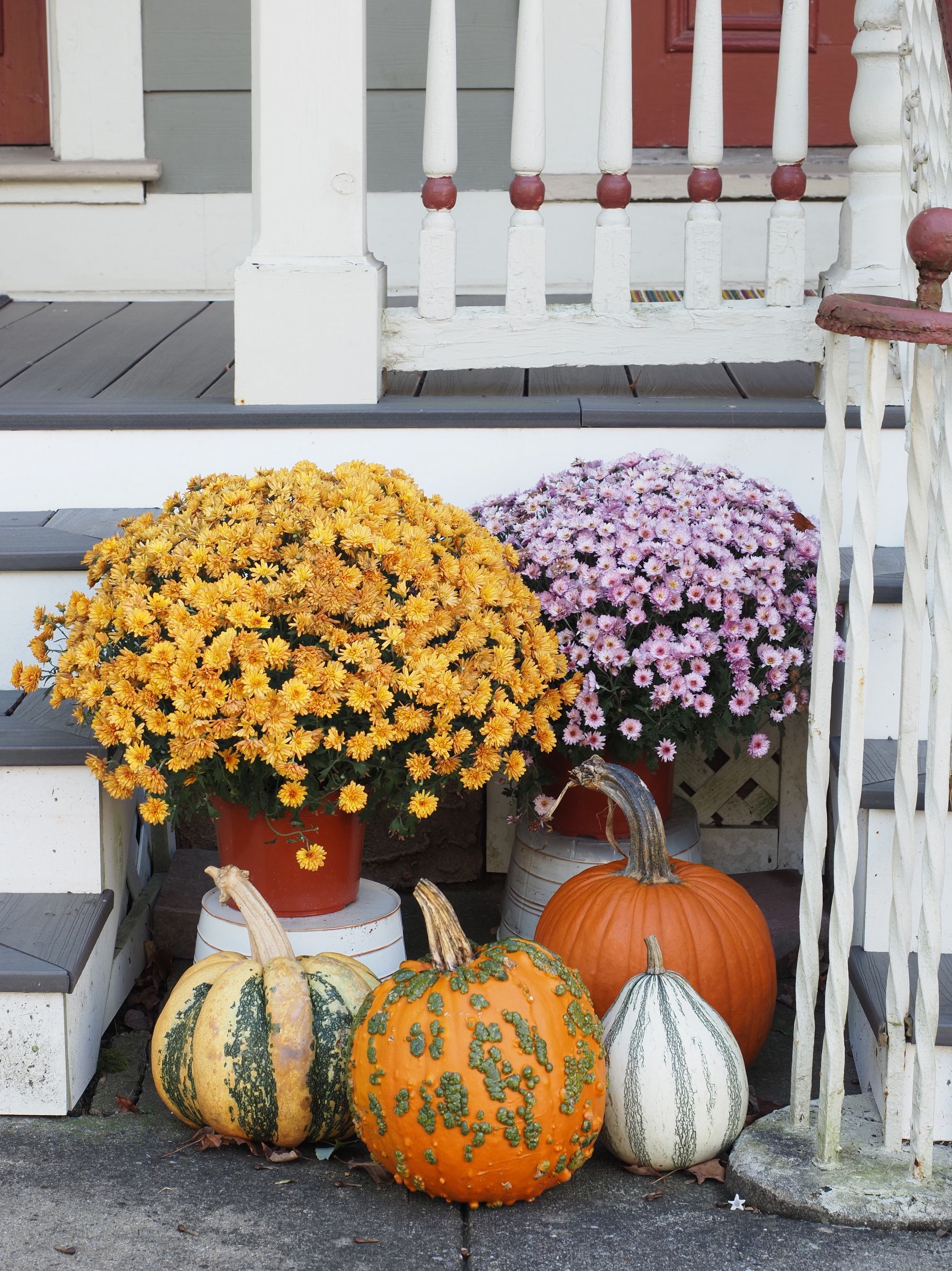
    Fall front porch decorated with mums and pumpkins
    A repeated color palette and a couple of anchor pieces do more work than a dozen small trinkets.

    The front porch is the one part of fall decorating everyone actually sees: neighbors on a walk, trick-or-treaters, the delivery driver, anyone pulling into the driveway. That’s probably why so much of the advice about it is just a photo grid with captions like “add a wreath” and “layer in some pumpkins.” Nobody tells you what the wreath costs, how long the pumpkins actually hold up outside, or that lit candles in jack-o-lanterns are a documented fire risk and not just a mood-lighting choice.

    This guide covers what a real fall porch refresh costs in 2026, which materials are worth buying once versus rebuying every year, and 20 specific ideas with real prices attached, plus a few actual product picks instead of another stock photo of a pumpkin.

    Quick answer: A DIY fall refresh for a small porch, one wreath, a couple of mums, a handful of pumpkins, a doormat, and a strand of lights, runs about $125 to $235 in materials. Add pillow covers, a wood sign, and a couple of faux pumpkins that carry over every year, and a fuller display lands around $165 to $325. Hiring a “pumpkin concierge” service to source and install it for you starts around $259 to $300 for a modest package and can climb past $1,000, even to $1,275, for a large, pumpkin-heavy entryway. The National Retail Federation’s 2025 Halloween survey found that 78 percent of shoppers planned to buy decorations, spending a combined $4.2 billion nationally, so a $150 porch is already leaner than what most households budget for the season.

    Why the Budget Is Worth Planning First

    A porch is a small, high-visibility space, which cuts both ways. It doesn’t take much to make it look finished, but it also doesn’t take much clutter to make it look chaotic. The advice that works for a whole yard, buy in bulk, layer everything, add one of each seasonal item, tends to overwhelm a porch that’s ten feet wide.

    It also helps to know that decorating porches for money is now an actual industry. Fox Business and Axios have both covered the rise of “pumpkin concierge” services, businesses that source, deliver, and arrange a full pumpkin display for a fee that starts around $259 to $300 and regularly runs past $1,000 for a large installation. That’s useful context for a DIY budget: even a $200 porch is already doing more, for less, than a lot of households are paying someone else to do.

    Small space, high visibility Real vs. faux changes the math Fire safety isn’t optional

    What a Small Porch Fall Refresh Actually Costs

    These are current retail ranges for the core pieces of a small porch display, not the cheapest possible option or the nicest possible one.

    Wreath (artificial)
    $25-$50
    Mums (2 potted)
    $12-$24
    Pumpkins & gourds
    $15-$35
    Doormat
    $20-$30
    String lights (25ft)
    $20-$35
    Lanterns or candles
    $25-$40
    Garland or cornstalks
    $10-$20

    Core total for a small porch: roughly $125-$235. Skip any one row (most porches don’t need all seven) and the total drops accordingly.
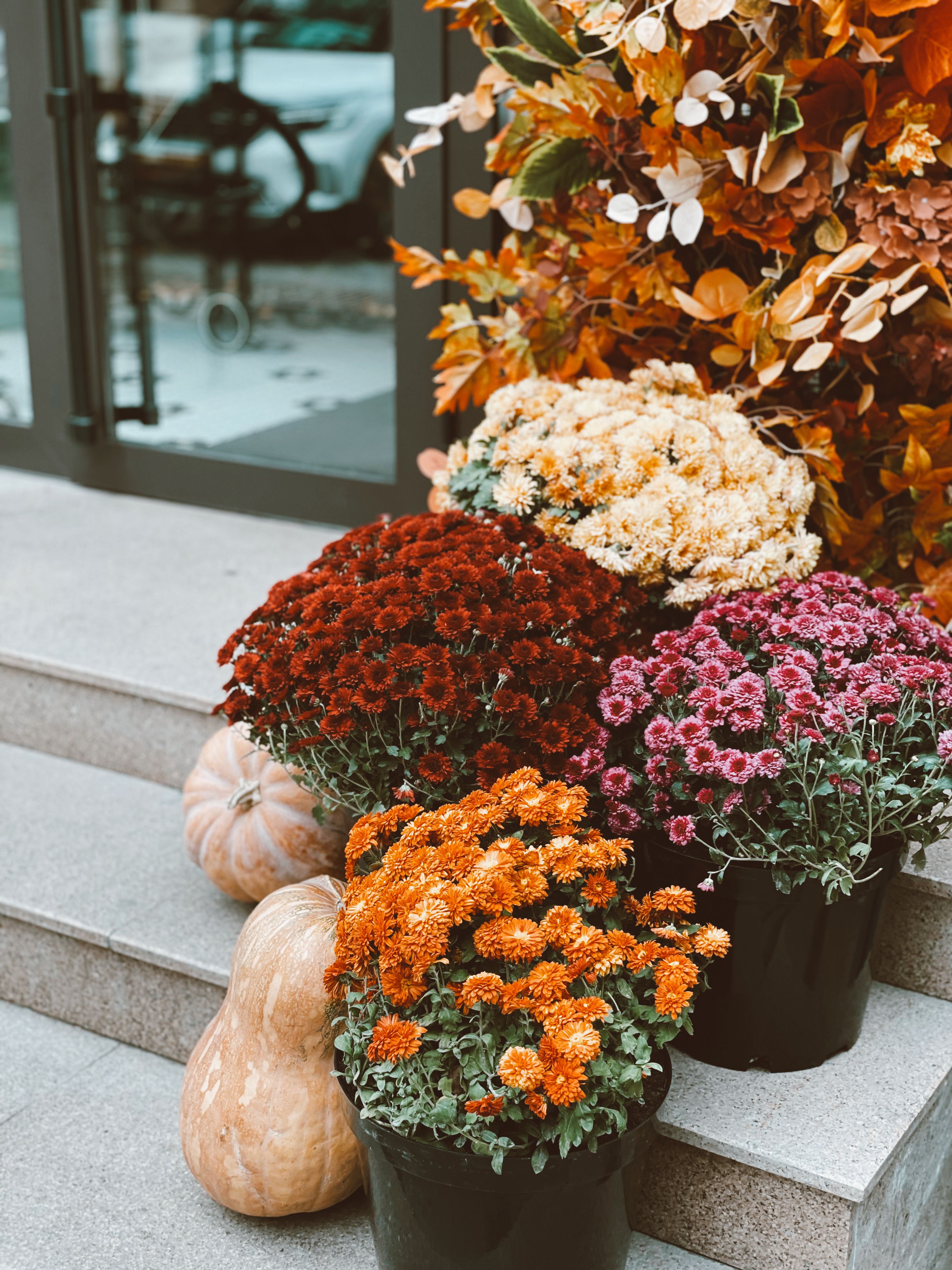
    Mums and pumpkins stacked on stone steps for a fall display
    Steps do a lot of the display work for free. Stack pumpkins by size instead of spreading them flat.

    Real vs. Faux: What’s Worth Buying Once

    This is the comparison almost nobody runs, and it’s where most of the long-term savings actually live. Some fall porch materials are genuinely single-season; others pay for themselves after year two.

    Real carving pumpkin
    4-8 wks, $4-$20 ea/yr
    Faux/foam pumpkin
    5-10+ yrs, $8-$25 once
    Straw bale, cornstalks
    One season, $4.50-$14/yr
    Artificial wreath
    Many years, $25-$50 once

    Bar length shows how often you’re replacing it, not cost per item. A real pumpkin at a patch is $0.50-$0.75 a pound (about $4-$6 for an 8-pounder); the same pumpkin at a grocery or big-box store, priced closer to $1-$1.50 a pound, can run $14-$20 for a 10-14 pound jack-o-lantern.

    None of this means skip real pumpkins. A porch with zero real pumpkins usually looks a little stiff. The practical split most budget-conscious displays land on: a couple of real ones out front for carving and smell, faux ones doing the bulk of the color and height, since those get reused every October instead of rebought.

    DIY vs. Hiring a Porch Decorator

    Yes, this is a real choice now. “Pumpkin concierge” businesses have opened in Minneapolis, Denver, Washington D.C., Nashville, Charlotte, and several other cities over the past two seasons, according to reporting from Axios and Fox Business. They source the pumpkins, hay, and gourds, design the arrangement, install it, and in some cases haul it away afterward for a fee.

    FactorDIYPorch decorator
    Small porch cost$125-$235 in materials$259-$300 for a modest package
    Large, full-entryway cost$300-$500 in materials$750-$1,275+
    Time from youAn afternoon of sourcing and setupNone; delivered and arranged
    SourcingYou pick pumpkins, hunt for dealsIncluded in the package
    Off-season removalYour own trash or compostSometimes included, often for an extra fee
    Best fitAnyone with a free Saturday and a budget in mindBusy households who want it done and don’t mind paying for the labor

    For a single small porch, DIY wins on cost by a wide margin, and none of the steps here require special skill. Hiring it out mostly buys back time, not a better result.
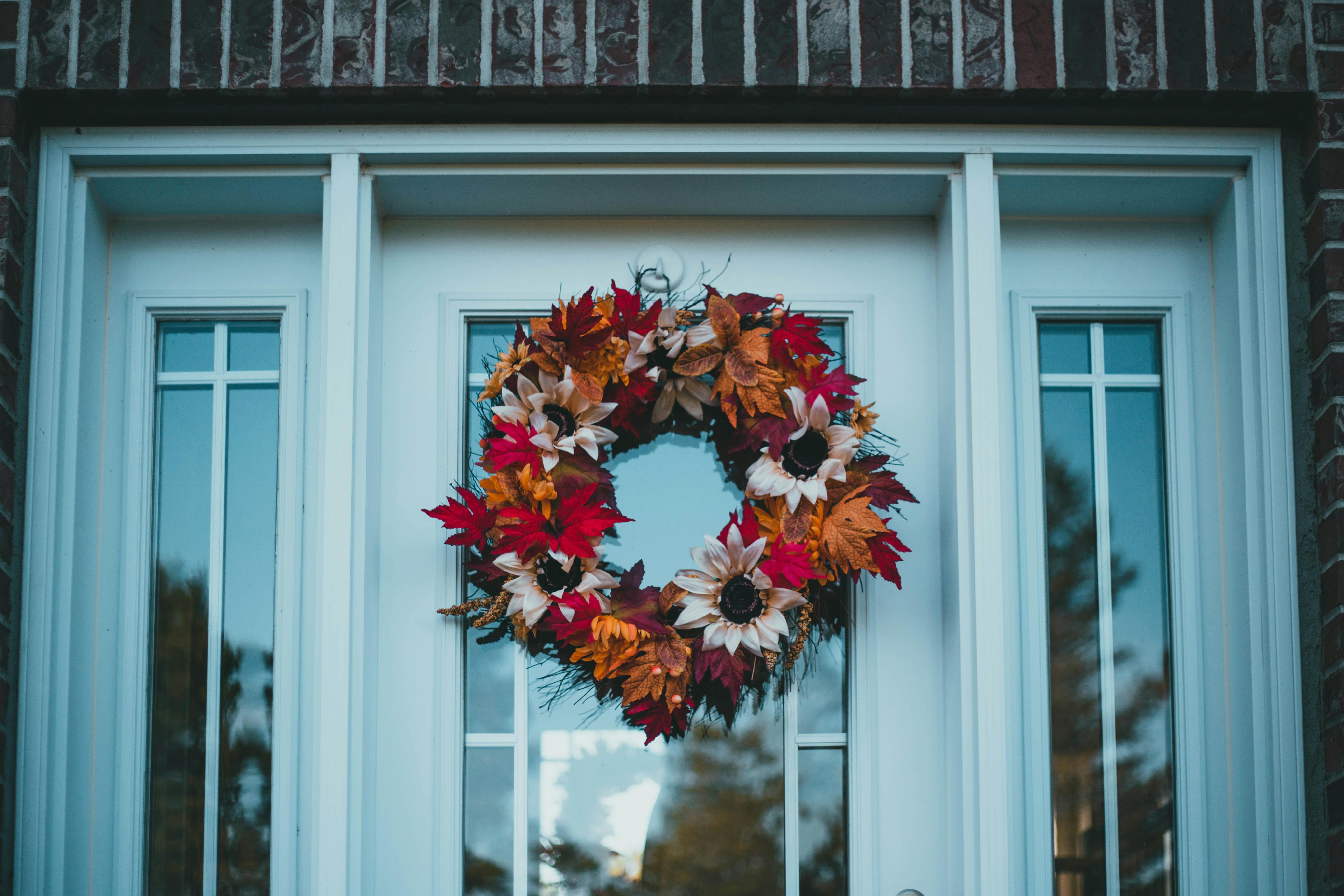
    Autumn wreath hanging on a front door
    One well-made wreath, reused every year, usually beats three smaller seasonal pieces bought new each time.

    20 Budget Fall Front Porch Decor Ideas

    Grouped by what they actually change on the porch, with a real cost attached to each and a product pick where one made sense.

    Pumpkins & Gourds
    01

    Buy Pumpkins by the Pound, Not by the Pumpkin

    Cuts the single biggest line item

    A local patch or farm stand almost always prices pumpkins by weight, typically $0.50 to $0.75 a pound, while grocery and big-box stores price by the pumpkin at a rate that works out closer to $1 to $1.50 a pound. On a 10 to 14 pound carving pumpkin, that’s the difference between about $6 and about $18 for the exact same size.

    BEST FOR: The one or two large carving pumpkins anchoring the displayCOST: $4-$8 at a patch versus $14-$20 at a grocery or big-box store for the same sizeTIP: Ask if the patch sells “seconds,” slightly bruised or oddly shaped pumpkins sold at a discount and just as good for a porch display
    02

    Mix Real Pumpkins with a Few Reusable Faux Ones

    Splits the cost across years

    Foam and plastic pumpkins hold their color and shape for five to ten years with basic off-season storage, so the upfront cost of $8 to $25 each amortizes down fast. Put them toward the back or on a step riser where texture matters more than authenticity, and save the real ones for the front where people actually touch and smell them.

    BEST FOR: Anyone tired of rebuying the same display every OctoberCOST: $8-$25 per faux pumpkin, one-time, versus $4-$20 per real one every yearTIP: Store faux pumpkins somewhere dry and out of direct sun between seasons; UV exposure is what fades them, not age
    03

    Paint or Gild Plain Pumpkins

    Elevates a $5 pumpkin for a few dollars more

    A can of matte spray paint or a small pot of gold leaf adhesive turns a plain orange pumpkin into something that looks intentional, without the higher price tag of specialty white or heirloom varieties at the patch. Metallic and black-and-white palettes photograph especially well against brick or a painted door.

    BEST FOR: A modern or monochrome porch aestheticCOST: $8-$14 for spray paint or a small gold leaf kit, enough for several pumpkinsTIP: Paint outdoors and let pumpkins dry fully before moving them; wet paint smears if pumpkins are stacked too soon
    04

    Cluster Mini Pumpkins and Gourds on the Steps

    Cheapest per-piece item on this list

    Mini pumpkins and gourds typically run $1 to $3 each, or less when bought by the half dozen, and a cluster of eight or ten adds color and texture without needing a single large (and pricier) pumpkin at all.

    BEST FOR: Narrow steps or a railing where a large pumpkin won’t fitCOST: $1-$3 each, or roughly $10 for six at most farm standsTIP: Group by color rather than spacing them evenly; three or four of the same shade read as more intentional than one of everything
    Mums, Planters & Greenery
    05

    Buy Mums in the Grower Pot, Skip the Decorative One

    Same flower, lower price

    A mum in its plain plastic grower pot costs $6 to $10 for a small 6 to 8 inch plant, versus $18 to $20 or more once it’s already potted into a decorative ceramic or whiskey-barrel-style container at a garden center. Buy the plant on its own and drop it into a planter you already have.

    BEST FOR: Anyone who already owns porch planters or urnsCOST: $6-$10 for a small potted mum, up to $18-$20 for a fuller 10-12 inch potTIP: Mums wilt fast in full sun without water; check the soil daily during the first hot week after buying
    06

    Flank the Door with Planters You Already Own

    Reuses what’s already on the porch

    Summer’s planters don’t need replacing, just refilling. Pull the spent annuals, add a mum or two and a few stems of ornamental grass, and the same urns that held petunias in July do the job for fall at a fraction of buying new containers.

    BEST FOR: Porches with existing urn or planter pairs by the doorCOST: $12-$24 in new plants if the containers are already on handTIP: If starting from scratch, a mum pre-planted in a small barrel-style planter runs about $20-$25 for a pair and skips the extra step entirely
    Costa Farms Fall Mums in Whiskey Barrel Planter, Set of 2~$20-$28 Shop it →
    07

    Mix Ornamental Cabbage or Kale In with the Mums

    Adds texture without adding much cost

    Ornamental cabbage and kale cost about the same as a mum plant and hold up to frost far better, so they keep a planter looking full well past the point mums have dropped their blooms, straight through Thanksgiving in most climates.

    BEST FOR: Extending a display’s life into NovemberCOST: $4-$8 per plant, similar to a small mumTIP: Plant kale toward the back or center of a container; its structure works better as a backdrop than a front-row accent
    08

    Bundle Cornstalks at the Door Frame

    Height and texture, low material cost

    A bundle of two or three cornstalks tied to a porch post or door frame runs $4.50 to $10 at most garden centers. Farm stands that sell direct sometimes do noticeably better: one farm in Missouri bundles about 25 stalks for roughly what a big-box store charges for a dozen.

    BEST FOR: Framing a doorway or porch postCOST: $4.50-$10 for a small bundle, less per stalk when bought larger from a farm standTIP: Zip-tie stalks to a post rather than leaning them; wind knocks unsecured bundles over more often than people expect
    09

    Anchor the Display with a Straw or Hay Bale

    A tiered base for pumpkins and mums

    A full straw bale runs $11 to $14 at a garden center chain, though farm stands selling direct often charge closer to $6 to $8. Setting pumpkins and potted mums on top of one instead of flat on the porch floor adds height and makes a small pumpkin collection look considerably fuller.

    BEST FOR: A porch with floor space but not much built-in height, like a step or a railingCOST: $6-$14 depending on where it’s sourcedTIP: A bale left out through a rainy fall gets moldy and heavy fast; set it where it drains, not in a low spot that pools water
    Wreaths, Garlands & Door Accents
    10

    One Good Wreath Instead of Several Small Pieces

    Reusable for years

    A solid artificial fall wreath, pip berries, faux foliage, a simple bow, runs $25 to $50 and, stored indoors between seasons, lasts for years. That makes it a better long-term value than three or four smaller seasonal accents bought fresh every year for a similar combined price.

    BEST FOR: The single highest-visibility spot on the whole porch, the front doorCOST: $25-$50 once, reused for multiple seasonsTIP: A neutral base (natural greenery, wheat, or berries rather than bright orange) transitions from early fall through Thanksgiving without needing a swap
    Glitzhome Pip Berry Artificial Fall Wreath~$46-$50 Shop it →
    11

    Run a Leaf Garland Along the Railing

    Covers a lot of visual ground cheaply

    A single maple leaf garland, six to nine feet long, wraps a railing or door frame for $15 to $20 and reads as a much bigger gesture than its price suggests, since it covers a long visible line rather than a single point like a wreath does.

    BEST FOR: Railings, banisters, or a door frame without a wreath hookCOST: $15-$20 for a garland set of two 6-9 foot strandsTIP: Wire-wrap the garland to the railing every foot or so; a garland only tacked at the ends sags visibly within a week
    Lvydec Fall Maple Leaf Garland, Set of 2~$15-$18 Shop it →
    12

    DIY a Dried-Leaf or Grapevine Wreath

    Close to free

    A plain grapevine wreath base costs $5 to $10, and pressed leaves, dried hydrangea, or wheat stems gathered from a yard fill it in for nothing. It won’t last as many seasons as an artificial one, but for a single year’s display it’s the cheapest wreath option on this list by a wide margin.

    BEST FOR: A one-season display or anyone who enjoys the craft itselfCOST: $5-$10 for the base, often free for the fill materialTIP: Seal dried leaves with a light coat of clear spray sealant so they hold their color and don’t crumble in wind and rain
    Lighting & After-Dark Ambience
    13

    Flameless Lanterns Along the Steps

    Warmth without the fire risk

    A wood or metal candle lantern runs $25 to $40, and paired with battery-operated flameless candles instead of real ones, it gives the same warm glow at the door without an open flame sitting unattended on a step where trick-or-treaters, wind, or a dry cornstalk display can reach it.

    BEST FOR: Steps, railings, or flanking the front door after darkCOST: $25-$40 for a lantern, plus $10-$15 for a set of flameless candlesTIP: Look for flameless candles with a timer function so they turn on at dusk automatically instead of needing to be switched on by hand every evening
    Stonebriar Wooden Candle Lantern~$27 Shop it →
    14

    Warm-White String Lights on the Roofline or Railing

    Extends the porch’s use into evening

    A 25 foot strand of Edison-style outdoor string lights runs $20 to $35 and does more to make a porch feel finished after sunset than almost anything else on this list, since it lights the whole space rather than one accent piece.

    BEST FOR: A porch used for evening trick-or-treating or just sitting outside once it’s dark earlierCOST: $20-$35 for a 25 foot connectable strandTIP: Check that the strand is rated IP44 or higher for outdoor use before buying; indoor-rated string lights fail fast in rain
    Textiles & Seating
    15

    Swap Pillow Covers, Not the Whole Pillow

    A fraction of the cost of new pillows

    A set of two fall-print pillow covers runs $13 to $20 and slides over the same pillow inserts already on a porch bench or chair. Buying entirely new outdoor pillows for the same look easily runs three to four times as much.

    BEST FOR: Any porch with an existing bench, chair, or swingCOST: $13-$20 for a set of two coversTIP: Check the insert size before buying; covers a size smaller than the insert give pillows a fuller, less deflated look
    Anickal Fall Plaid Pillow Covers, Set of 2~$13-$17 Shop it →
    16

    Layer a Plaid or Buffalo-Check Throw

    Instant coziness for one item

    Draped over a bench arm or rocking chair, a single outdoor-rated throw blanket adds warmth and color for around $20 to $35 and photographs as “cozy” more reliably than almost any other single purchase on this list.

    BEST FOR: Porches with a bench, glider, or rocking chairsCOST: $20-$35 for one outdoor-rated throwTIP: Confirm it’s labeled outdoor or all-weather fabric; an indoor throw left out overnight in dew or rain mildews fast
    17

    A Seasonal Doormat, Layered Over a Plain One

    Sets the tone before anyone reaches the door

    A checked or plaid doormat runs $20 to $30 and, layered on top of a plain coir mat already at the door, adds a designed look without replacing anything. It’s also one of the few items on this list that gets literal daily foot traffic, so it’s worth choosing something durable over the cheapest option.

    BEST FOR: Layering over an existing plain doormatCOST: $20-$30 for a woven cotton or coir seasonal matTIP: Machine-washable cotton mats hold up better through a wet fall than printed vinyl ones, which crack in cold weather
    Earthall Checked Front Door Mat~$25-$30 Shop it →
    Finishing Touches
    18

    A Leaning Wood or Metal Welcome Sign

    Ties a simple display together

    A small hanging or leaning sign, a pumpkin cutout, a harvest phrase, a set of house numbers, costs as little as $9 to $25 and does a similar job to a fresh coat of paint on the door: it makes a modest display look finished rather than assembled piece by piece.

    BEST FOR: The gap between a wreath and a bare wall or door panelCOST: $9-$25 depending on size and materialTIP: Lean larger signs against the house rather than hanging them from a nail; wind is harder on a hanging sign than a leaning one
    Attraction Design Wood Pumpkin Hanging Fall Sign~$9-$13 Shop it →
    19

    One Painted Accent: the Door or the House Numbers

    Biggest visual return per dollar

    None of this is technically fall decor, but a freshly painted front door or a repainted set of house numbers pulls a simple pumpkin-and-mum display together more than another purchase would. A quart of exterior paint covers most doors for less than the cost of one wreath.

    BEST FOR: Anchoring the whole display around one accent colorCOST: $25-$40 for a quart of exterior door paintTIP: Match the door color to something already in the pumpkin or mum palette (deep red, black, or forest green) instead of introducing a new color to the porch
    20

    A DIY Scarecrow from Clothes Already in the Closet

    Often free

    An old flannel shirt, a pair of jeans, and straw stuffing (leftover from a hay bale works fine) make a scarecrow for close to nothing. It’s the single most photogenic item on this list relative to its cost, and it packs flat for storage once the season ends.
    BEST FOR: A porch chair, bench, or rocking chair that needs a focal pointCOST: Often free using clothes and straw already on handTIP: Stuff the head and hands with plastic grocery bags before straw; it holds shape better and won’t attract birds the way loose straw can
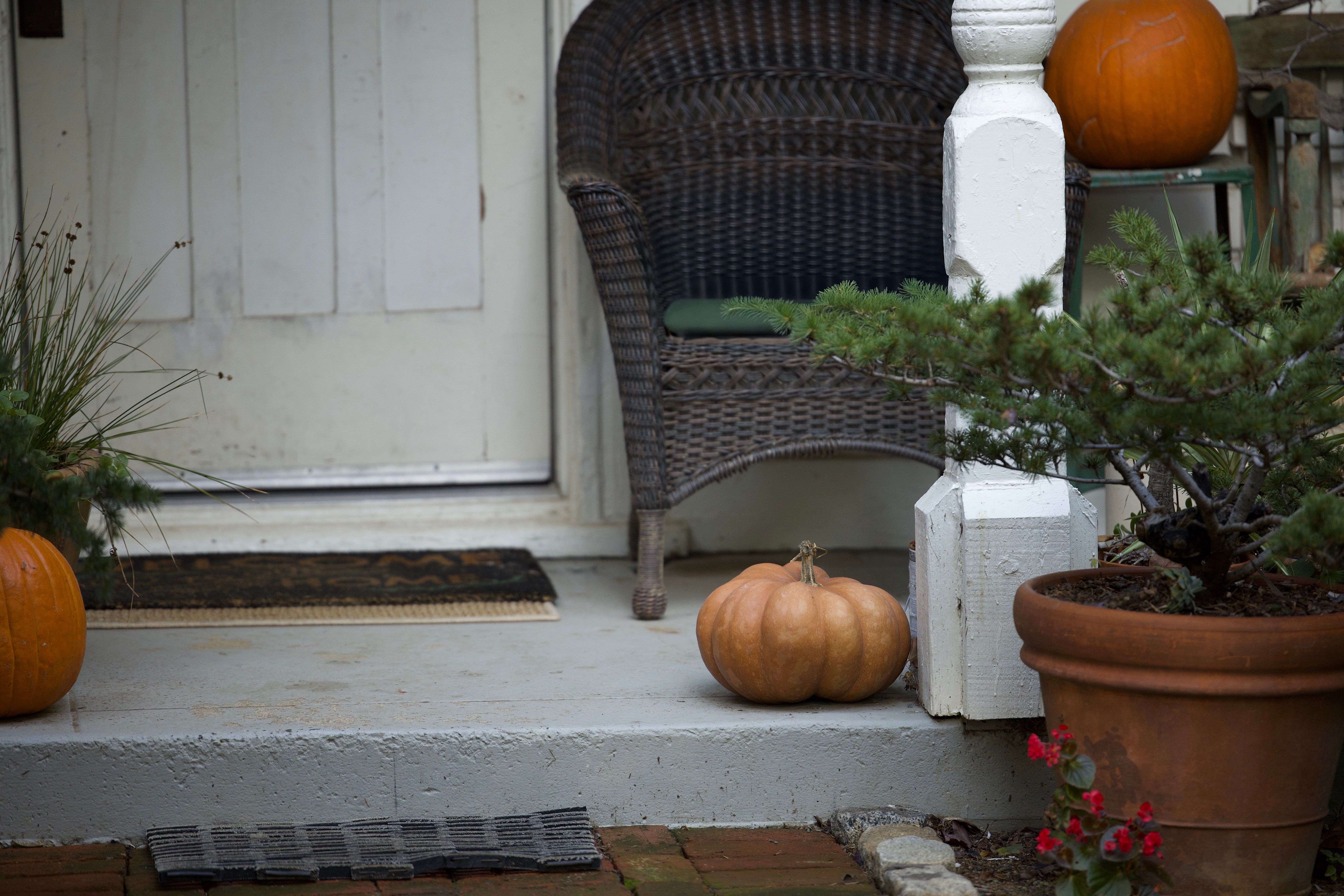
    Cozy fall porch with pumpkins and a wicker chair
    A single throw and a pair of pillow covers turn existing porch furniture into part of the display.

    Fire Safety Worth Building Into the Budget

    The numbers most fall decor guides skip: the National Fire Protection Association’s most recent data shows decorations were the first item ignited in an estimated 860 home structure fires a year, causing an average of one death, 41 injuries, and $13.4 million in property damage annually. Nearly half of those fires started because a decoration was too close to a heat source, and 38 percent were started by candles specifically. The NFPA also flags dried flowers, cornstalks, and crepe paper by name as materials that catch fire easily.

    None of that means skipping candles or cornstalks entirely. It means a few cheap swaps: flameless candles instead of real ones inside jack-o-lanterns and lanterns, cornstalk and hay bale displays kept a few feet from the door light or any wired fixture, and exits (the actual walkway to the door) left clear of decorations rather than narrowed by a wide pumpkin display. All three cost nothing extra and remove most of the risk this data points to.

    Common Budget Mistakes to Avoid

    01
    Real candles in pumpkins and lanterns near the door

    This is the single fire-risk swap worth making. Flameless candles cost a little more upfront and remove the leading cause of decoration fires according to NFPA data.

    02
    Buying a full-size pumpkin for every spot on the porch

    Mixing in mini pumpkins and gourds at $1-$3 each fills the same visual space as several $6-$8 pumpkins for a fraction of the cost.

    03
    Stacking dried cornstalks or hay against the doorway itself

    Beyond the fire-safety issue, a bale or bundle set right against the door blocks the exit path and gets in the way of anyone actually using it.

    04
    Replacing whole pillows instead of just the covers

    New outdoor pillows can run three to four times the cost of covers alone for the same seasonal look.

    05
    No plan before shopping

    Buying whatever’s discounted that week without a rough idea of the porch’s layout usually means mismatched colors, uneven heights, and leftover items that never get used.

    Where the Real Savings Are

    Buy pumpkins by weight at a patch, not by the piece at a store.

    The per-pound price at a farm stand runs roughly half of what grocery and big-box stores charge for the same size.

    Buy the wreath once, in a neutral palette.

    A reusable artificial wreath in natural tones works from September through Thanksgiving and saves buying a new one every year.

    Swap covers, not furniture.

    Pillow covers and a single throw update the whole seating area for a fraction of new cushions.

    Reuse containers already on the porch.

    Refilling existing planters with mums costs only the plants, not a new pot.

    Go faux for anything staying out more than one season.

    Foam pumpkins and artificial garland cost more upfront but stop being a yearly expense entirely.
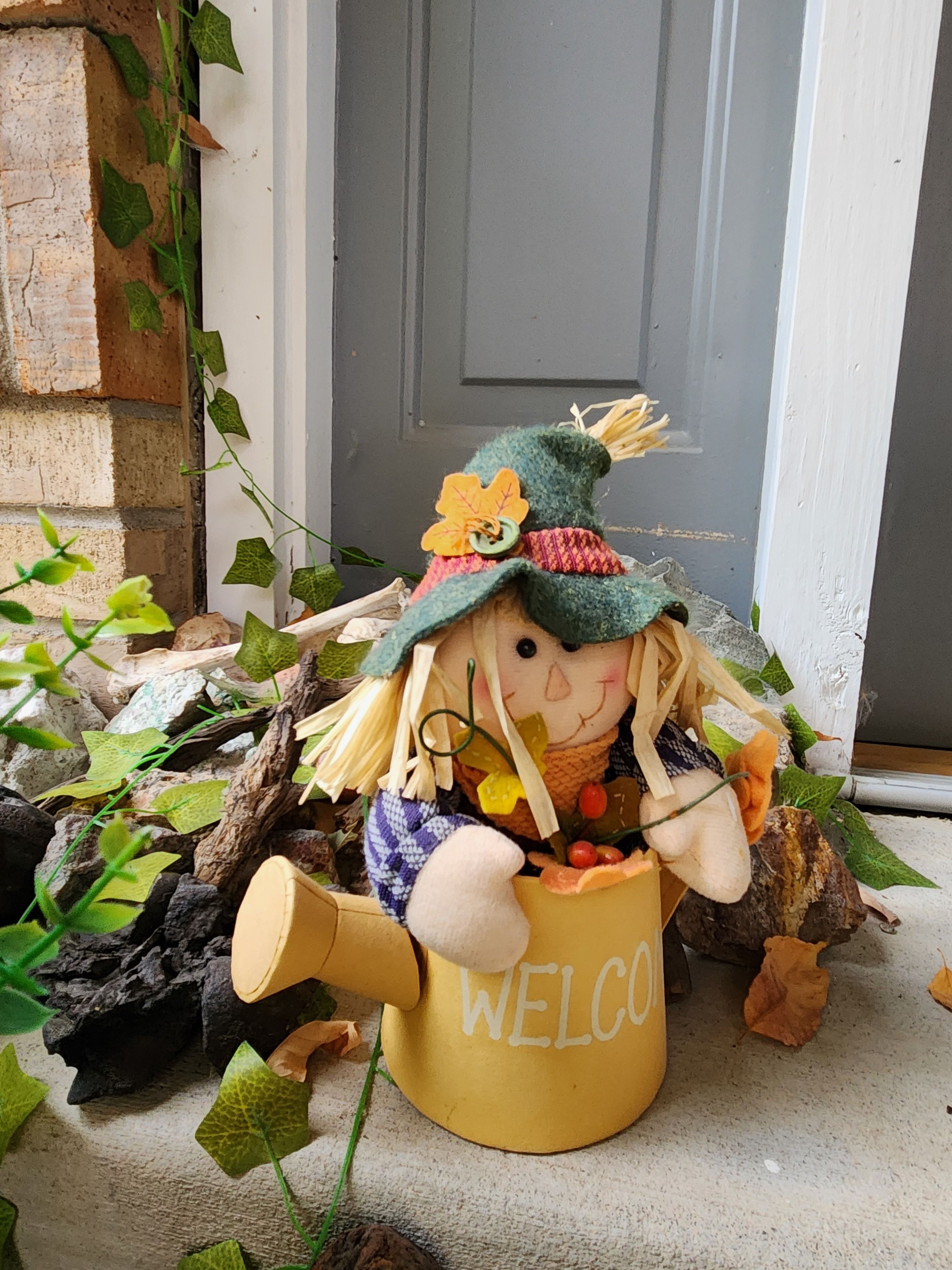
    Scarecrow decoration on a cozy autumn porch
    A scarecrow built from clothes already in the closet is often the cheapest single item on the whole porch.

    Which Approach Offers Better Value?

    For a single small porch, DIY wins on cost by a wide margin, and none of the twenty ideas above require special skills or tools beyond a staple gun or zip ties. The materials add up to $125-$325 depending on how full a display you’re after, well under even the least expensive professional package.

    A porch decorator starts to make more sense for a genuinely large entryway (a wide wraparound porch, a commercial storefront, or a household that simply doesn’t have a free afternoon) where the $750-$1,275+ packages include design, sourcing, and end-of-season removal as part of the price. For most homes, that’s paying for convenience, not a better-looking porch.

    Frequently Asked Questions

    How much does it cost to decorate a small front porch for fall?

    A DIY refresh with a wreath, mums, pumpkins, a doormat, and lights typically runs $125 to $235 in materials. A fuller display with pillow covers, a sign, and reusable faux pumpkins lands around $165 to $325.

    What is the cheapest way to decorate a porch for fall?

    Buy pumpkins by the pound at a patch instead of by the piece at a store, refill planters already on the porch instead of buying new ones, and swap pillow covers rather than whole pillows. A DIY grapevine wreath filled with dried leaves from the yard can bring the wreath cost close to zero.

    Are real or fake pumpkins cheaper in the long run?

    Real pumpkins are cheaper for a single season but need rebuying every year at $4-$20 each. Faux pumpkins cost more upfront, $8-$25 each, but last five to ten years, so they’re cheaper over multiple seasons. A mix of both is common: real ones for carving and smell, faux ones for the bulk of the display.

    Is it safe to use candles in porch decorations?

    NFPA data shows decorations were the first item ignited in an average of 860 home structure fires a year, with candles responsible for 38 percent of them. Battery-operated flameless candles give the same look without that risk and cost only slightly more than real ones.

    How much do professional pumpkin decorators charge?

    Reported pricing runs from about $259-$300 for a modest small-porch package up to $750-$1,275 or more for a large, pumpkin-heavy entryway, based on reporting from Axios and Fox Business on the growing “pumpkin concierge” industry.

    When should I put up fall porch decor?

    Most households start in early-to-mid September, ahead of Halloween shopping. Neutral pieces like a natural-tone wreath, mums, and pumpkins work straight through Thanksgiving without needing to be swapped out.

    Can I reuse fall porch decorations for both Halloween and Thanksgiving?

    Yes, if the palette stays neutral. Natural wreaths, mums, cornstalks, and unpainted pumpkins carry through both holidays. Anything explicitly Halloween-themed (spiderwebs, skeletons) typically needs swapping out after October 31.

    What’s the biggest fall porch decorating mistake?

    Buying a full-size pumpkin for every spot on the porch instead of mixing in cheaper mini pumpkins and gourds, and using real candles in jack-o-lanterns or lanterns near the door instead of flameless ones.

    Do I need real mums, or can artificial ones work?

    Real mums are inexpensive, $6-$10 for a small pot, and bloom for four to six weeks, which covers most of the fall season. Artificial mums cost more upfront but skip the watering and wilting issues, making them a reasonable choice for a porch that doesn’t get regular attention.

    How many pumpkins does a small front porch actually need?

    Most small-porch displays covered by professional decorators use somewhere between six and twelve pumpkins across mixed sizes. For a DIY budget version, two or three medium pumpkins plus a half dozen minis usually reads as full without overcrowding a narrow step or landing.

    Final Thoughts

    The honest budget math on a fall porch favors a few well-chosen pieces over a pile of small ones. A wreath bought once, mums in containers already on hand, pumpkins priced by the pound instead of the piece, and flameless candles instead of real ones covers most of what actually makes a porch look finished, for well under what a professional package costs and without the fire risk that real candles and dried cornstalks carry. Sketch the layout before shopping, buy the reusable pieces once, and let next year’s pumpkins be the only thing on the list that needs replacing.

  • What Is a Porch Goose? The Complete Guide to the Trend

    Home & Porch Trends · Updated 2026

    What Is a Porch Goose? The Complete Guide to the Trend

    History, sizing, materials, outfits, care, and real places to buy one, everything behind the statue that’s currently taking over American front porches.

    Stone porch goose statue on a garden step
    A concrete porch goose, the original heritage material behind the whole tradition.

    If you’ve seen a plastic or concrete goose wearing a tiny raincoat on someone’s front step and wondered what was going on, you’ve met a porch goose. It’s not a one-off joke yard decoration. It’s a genuine, decades-old American tradition that quietly disappeared for a while and then came roaring back through TikTok, Facebook groups, and a wave of national news coverage in 2025 and 2026.

    Most of what’s written about porch geese right now is either a quick trend explainer from a major outlet or a thin buying page from a retailer. This guide puts everything in one place: where the tradition actually started, why it’s back, what to actually buy, how to size and care for one, and how to join in without making the rookie mistakes that trip up first-time goose owners.

    Full history, not just “it’s trending” Material and sizing guide Real products, not just “search Amazon”

    Quick answer: A porch goose is a life-size decorative statue, usually 17 to 23 inches tall and made of concrete, resin, or plastic, that homeowners dress in seasonal outfits and display on their front porch or lawn. The tradition started in the Midwest in the 1980s, faded for a couple of decades, and made a major comeback starting around 2022 through TikTok’s #porchgoose community. A 23-inch resin goose and a starter outfit typically run $20 to $60 total.

    What Is a Porch Goose, Exactly?

    A porch goose is a decorative statue of a goose, standing roughly upright, usually somewhere between 13 and 23 inches tall, made from cast concrete, molded resin, or lightweight plastic. It’s placed on a front porch, by the door, or in a garden bed, and the entire point of owning one is dressing it in interchangeable outfits that change with the seasons, holidays, or just the owner’s mood. A goose in a Santa hat and scarf in December might be wearing a raincoat and rain boots by April and a swimsuit with sunglasses by July.

    It’s a close cousin to other American lawn ornament traditions, garden gnomes, pink flamingos, lawn jockeys, but the porch goose is distinct because the outfit-changing is the actual hobby, not an occasional novelty. Many owners name their goose, some join dedicated online communities built entirely around sharing outfit ideas, and the statue functions less like static decor and more like a low-stakes, ongoing creative project.

    The History of the Porch Goose Trend

    This isn’t a trend that started on the internet. It has real roots, and understanding them is most of what separates a genuinely useful guide from a quick news blurb.

    1980s
    The original Midwest tradition

    Concrete goose statues became a genuine porch fixture across the Midwest, with Ohio in particular known for households that dressed their goose for every season and holiday. The statues were typically cast concrete, heavy enough to stay put outdoors year-round without tipping.

    1990s-2010s
    A quiet fade

    The trend never fully disappeared, plenty of households kept their goose dressed through the decades, but it dropped out of the broader design conversation and mostly persisted as a regional, generational habit rather than a national one.

    2022-2024
    The TikTok revival

    The #porchgoose hashtag took off on TikTok, with homeowners sharing outfit reveals and seasonal transformations. Communities like The Porch Goose Club of America formed on Facebook, turning individual owners into an actual online community trading outfit ideas and goose-naming stories.

    2025-2026
    Mainstream breakout

    Retailers noticed. Walmart’s roughly $20 Mainstays resin porch goose became a viral bestseller, and major outlets including the Washington Post, NPR, and HGTV covered the trend as a genuine cultural moment, not just a niche decorating quirk. Long-running catalog brand Miles Kimball leaned into its decades-old Gaggleville® goose line as the “official” heritage option.

    Why Is the Porch Goose Trend Back?

    A few things are converging at once. There’s straightforward nostalgia, a lot of the people embracing the trend now grew up seeing a dressed goose on a grandparent’s or neighbor’s porch, and bringing one home taps directly into that memory. There’s also the fact that a porch goose is a genuinely low-cost, low-commitment way to add personality to a home’s exterior, a single statue plus a rotation of outfits costs far less than most other porch decor projects and can be swapped out in under a minute.

    And there’s the community layer, which is arguably what’s kept the trend going past a single viral moment. Naming a goose, choosing its outfits, and sharing the reveal online turns a static decoration into an ongoing, shareable activity, which is exactly the kind of format that spreads well on TikTok and sustains itself through group participation rather than a single influencer post.

    Concrete vs. Resin vs. Plastic: Choosing the Right Material

    This is the first real decision, and it matters more than color or brand.

    MaterialWeightDurabilityPrice rangeBest for
    ConcreteHeavy, 20-30+ lbsVery durable, but can crack in hard freeze-thaw cycles$60-$150+Permanent outdoor placement, windy areas
    ResinModerate, 6-10 lbsWeather-resistant, won’t crack from freezing$20-$50Most buyers, easiest balance of durability and price
    PlasticLight, 3-6 lbsDurable but can fade faster in direct sun$15-$35Budget buyers, moving the goose indoors seasonally

    Concrete is the original, heritage material and what most people picture from the 1980s tradition, but it’s genuinely heavy to move once it’s in place and can develop cracks over years of freeze-thaw cycles in colder climates. Resin has become the most popular current choice for good reason: it’s weatherproof, holds paint and detail well, and is light enough to bring inside during severe weather. Plastic is the budget option and the material behind most of the sub-$25 viral statues, a completely reasonable choice as long as you’re prepared to touch up or replace it after a few years of sun exposure.

    What Size Porch Goose Should You Get?

    Two sizes dominate the market, and they’re not interchangeable when it comes to outfits.

    23 inches is the standard size.

    The large majority of outfits sold, from single Halloween costumes to 8-piece holiday bundles, are cut specifically for a 23-inch statue. If you want the widest possible outfit selection, this is the size to buy.

    17 inches is the “baby goose” companion size.

    Sold as a pair with a 23-inch adult goose to create a small family scene, popular for anyone who wants a fuller porch display. Fewer outfits are made specifically for this size, so check compatibility before buying costumes.

    Measure your space before buying, not after.

    A 23-inch statue needs real clearance next to a door or on a step. Measure the actual spot you’re planning to use, porch steps and narrow stoops fill up faster than they look in photos.

    How to Dress and Accessorize Your Porch Goose

    Outfits are sold two ways: as single seasonal or holiday costumes, or as multi-piece bundles covering most of the year’s major holidays in one purchase. An 8-piece bundle covering Valentine’s Day, St. Patrick’s Day, Easter, the Fourth of July, summer, Halloween, Thanksgiving, and Christmas is the most common bundle format and the best value if you know you’ll dress your goose year-round rather than for one occasion.

    Bandanas and scarves are the easiest starting point.

    They fit almost any goose regardless of exact statue size and are the simplest way to try the hobby before committing to fitted costumes.

    DIY wings add a lot for very little effort.

    A popular community trick is repurposing a child’s costume wing set from a thrift store, wired or tied onto the goose, to give an outfit real dimension beyond a simple hat and bandana.

    Rotate outfits seasonally, not just for major holidays.

    Some of the most popular looks in online goose communities aren’t holiday-specific at all, sports team gear, a raincoat for a rainy week, sunglasses for a heat wave. The goose doesn’t need an occasion.

    Where to Buy a Porch Goose and Outfits

    A few real, currently available options worth knowing about, from the budget viral pick to the heritage brand:

    Statues

    Gaggleville® by Miles Kimball

    The closest thing to an “official” porch goose. Miles Kimball has sold this exact goose line for decades and leaned into the TikTok revival rather than getting caught off guard by it, including a large 23″ statue and a bundled large-plus-baby-goose family set.

    23″ H x 12″ L x 8″ W · resin construction
    Gaggleville goose →

    Budget resin 23″ statues

    Several sellers offer resin 23″ geese in the $20-$40 range, hand-painted with a smooth finish designed to make outfit changes easy. This is the size and price bracket the current viral wave is built on.

    23″ porch goose statues →
    Outfits

    8-set seasonal holiday bundles

    Multiple brands (CAMDUCK, Bafeil, Weysat, and others) sell nearly identical 8-piece bundles covering Valentine’s Day through Christmas, cut for 23″ statues, made of polyester meant to hold up outdoors.

    8-set outfit bundles →

    Single seasonal outfits

    Individual costumes for a specific holiday, Easter bunny sets, patriotic 4th of July looks, and summer/Hawaiian styles are all sold individually if you’d rather build a wardrobe piece by piece than buy a full bundle at once.

    Individual goose outfits →

    How to Care for and Maintain Your Porch Goose

    Weight it down in high wind, especially resin and plastic geese.

    Lighter materials can tip or blow over in a strong storm. A sandbag or decorative stone base inside a hollow statue solves this without changing the look.

    Bring concrete geese in, or cover them, ahead of hard freezes.

    Repeated freeze-thaw cycles are the main way concrete statues eventually crack. This isn’t a concern for resin or plastic.

    Wash outfits according to their care label, not the statue’s.

    Most fabric outfits are machine washable on a gentle cycle, but check the specific listing since bundle materials vary by brand.

    Touch up paint on plastic and resin geese with outdoor-rated acrylic paint.

    Sun exposure fades painted details, especially the beak and feet, faster than the body. A small acrylic touch-up kit extends the statue’s life by years.

    Porch Goose Etiquette and Joining the Community

    Part of what makes this trend different from a typical yard decoration purchase is the social layer around it. Naming your goose is close to universal among enthusiasts, and it’s common to see the name included in outfit-reveal posts rather than just referring to “my goose.” Online spaces like The Porch Goose Club of America on Facebook function as genuine hobbyist communities, trading outfit patterns, sourcing tips, and seasonal ideas the way any collector community would.

    One practical note before buying: if you live somewhere with a homeowners association, it’s worth a quick check of the HOA’s exterior decor rules before committing to a large statue, some HOAs have specific language about lawn ornaments that predates the current trend entirely.

    Common Mistakes to Avoid

    01
    Buying outfits before checking statue size

    Most outfits are cut specifically for 23″ statues. A 17″ goose in a 23″ outfit will look loose and won’t sit right.

    02
    Choosing concrete for a small porch or apartment balcony

    Concrete’s weight is a feature for permanent lawn placement and a real liability if you ever need to move it, especially up or down stairs.

    03
    Skipping wind protection on an elevated porch

    A lightweight resin or plastic goose on an exposed, elevated porch is far more likely to blow over than the same statue at ground level in a sheltered spot.

    04
    Not checking HOA rules first

    A quick look at the community’s exterior decor policy avoids an awkward conversation after the goose is already on the porch.

    Frequently Asked Questions

    What does “porch goose” mean?

    A porch goose is a decorative statue of a goose, typically 17 to 23 inches tall, placed on a front porch or lawn and dressed in interchangeable seasonal outfits. It’s a decorating trend with roots in 1980s Midwest lawn ornament culture.

    Where did the porch goose trend originate?

    It started in the American Midwest in the 1980s, with Ohio households especially known for keeping a dressed concrete goose on their porch year-round. The tradition faded from mainstream attention for a couple of decades before a major TikTok-driven revival starting around 2022.

    Is the porch goose trend still popular in 2026?

    Yes. It’s moved well past a single viral moment into sustained mainstream coverage, with major national outlets, dedicated retailer product lines, and active online hobbyist communities all still active.

    What size porch goose should I buy?

    23 inches is the standard size and has by far the widest selection of compatible outfits. A 17-inch “baby goose” is typically bought as a companion piece alongside a 23-inch adult goose.

    What material is best for a porch goose statue?

    Resin offers the best balance for most buyers: weatherproof, lighter than concrete, and less prone to cracking than concrete in cold climates. Concrete is the traditional, heaviest, most permanent option. Plastic is the lightest and most affordable, with a shorter lifespan in direct sun.

    How much does a porch goose cost?

    A resin or plastic statue typically runs $20 to $50. Concrete statues run higher, often $60 to $150 or more due to weight and material cost. Outfits run roughly $15 to $35 individually, or $30 to $60 for an 8-piece seasonal bundle.

    Do porch goose outfits fit all statue sizes?

    Most outfits are made specifically for 23-inch statues. Always check the listing for size compatibility before buying, especially if you own the smaller 17-inch companion goose.

    Can a porch goose stay outside year-round?

    Yes, resin and plastic geese are designed for year-round outdoor use. Concrete geese can also stay outside long-term but are more susceptible to cracking from repeated freezing and thawing in cold climates.

    Why do people name their porch goose?

    Naming is part of the hobby’s community culture. Many owners share their goose’s name alongside outfit-change posts online, and it’s one of the details that separates the current trend from a simple lawn decoration purchase.

    Are there online communities for porch goose owners?

    Yes, groups like The Porch Goose Club of America on Facebook bring together owners who share outfit ideas, sourcing tips, and seasonal displays, functioning as an active hobbyist community rather than just a shared purchase.

    Final Thoughts

    A porch goose isn’t really about the statue. It’s a decades-old tradition that happens to have found a second life through a format, quick outfit-reveal videos and a built-in community, that fits exactly how trends spread now. If you’re picking one up for the first time, resin in the 23-inch size gives you the easiest path in: durable enough to leave outside year-round, light enough to move if a storm rolls in, and sized to fit the widest range of outfits on the market. Everything past that decision is just picking out the goose’s first outfit.